Seoulful Impressions
Our third adventure together in Asia and my first taste of South Korea, the opening half of a two-country journey.
서울, 반갑습니다.
March 26, 2026 – April 1, 2026
🇰🇷: Seoul, Yeoncheon, Pocheon
I had wanted to visit South Korea for a while, but never really had a chance. But, with my job’s ties to Korea, I decided there was no better time to finally make it happen. Landing in Seoul felt like checking off something that had been sitting in the back of my mind for years. It didn’t disappoint. If anything, I barely scratched the surface. There’s still a lot I want to see and I already know I’ll be back as soon as I can, and hopefully for longer.
This trip was split in two — first Seoul, then Japan. Tokyo and Osaka would come later, but Seoul was where this trip began, and it immediately challenged a lot of assumptions I had about Korea.
Up until this trip, the only East Asian country I’d spent time in was Japan. Without thinking too much about it, I had assumed Korea might feel somewhat similar. Looking back, that was a lazy assumption. The two countries share geography and a deeply tangled history, but culturally they are unique with each being unmistakably, stubbornly its own.
The first thing that stood out was space.
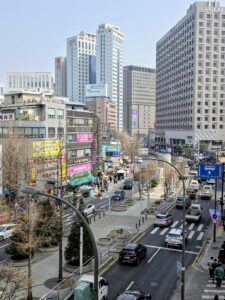
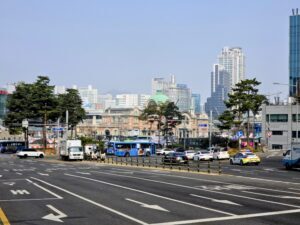
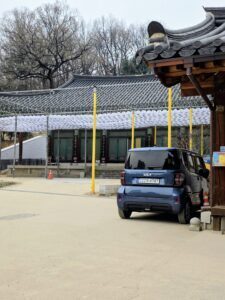
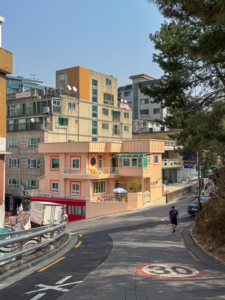
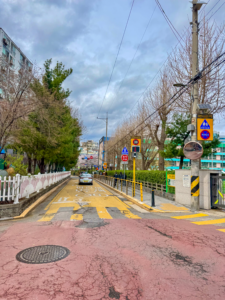
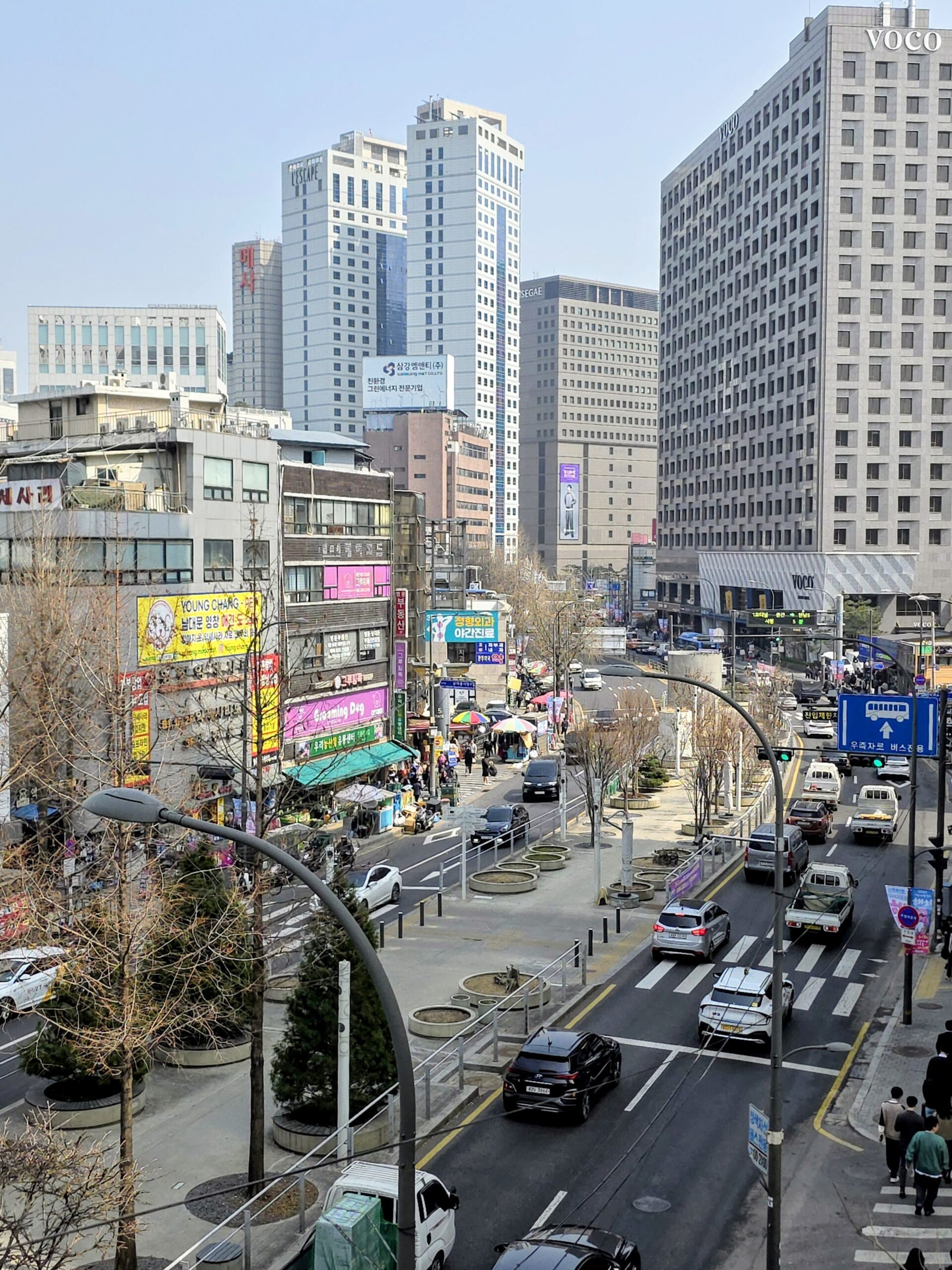
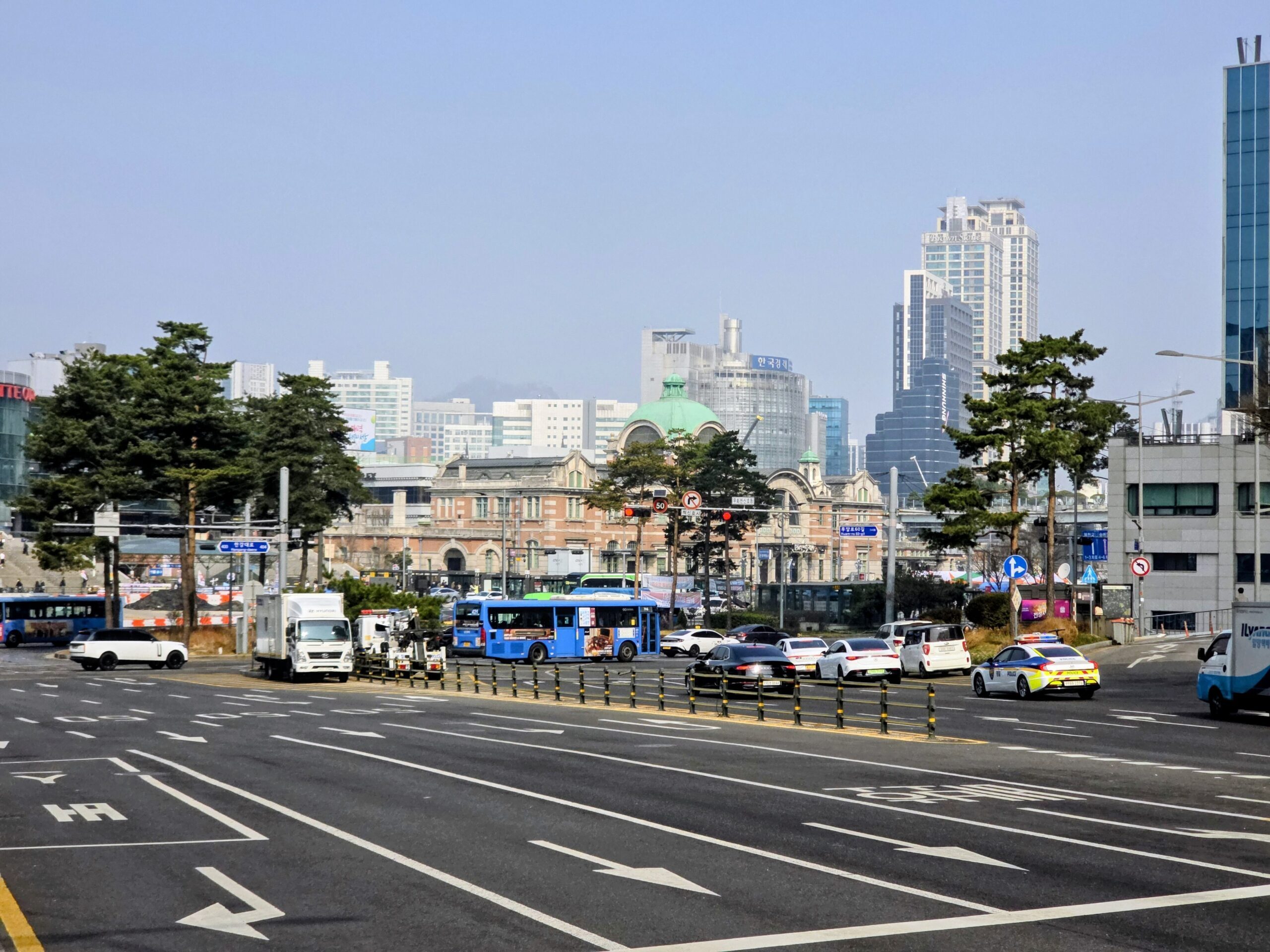
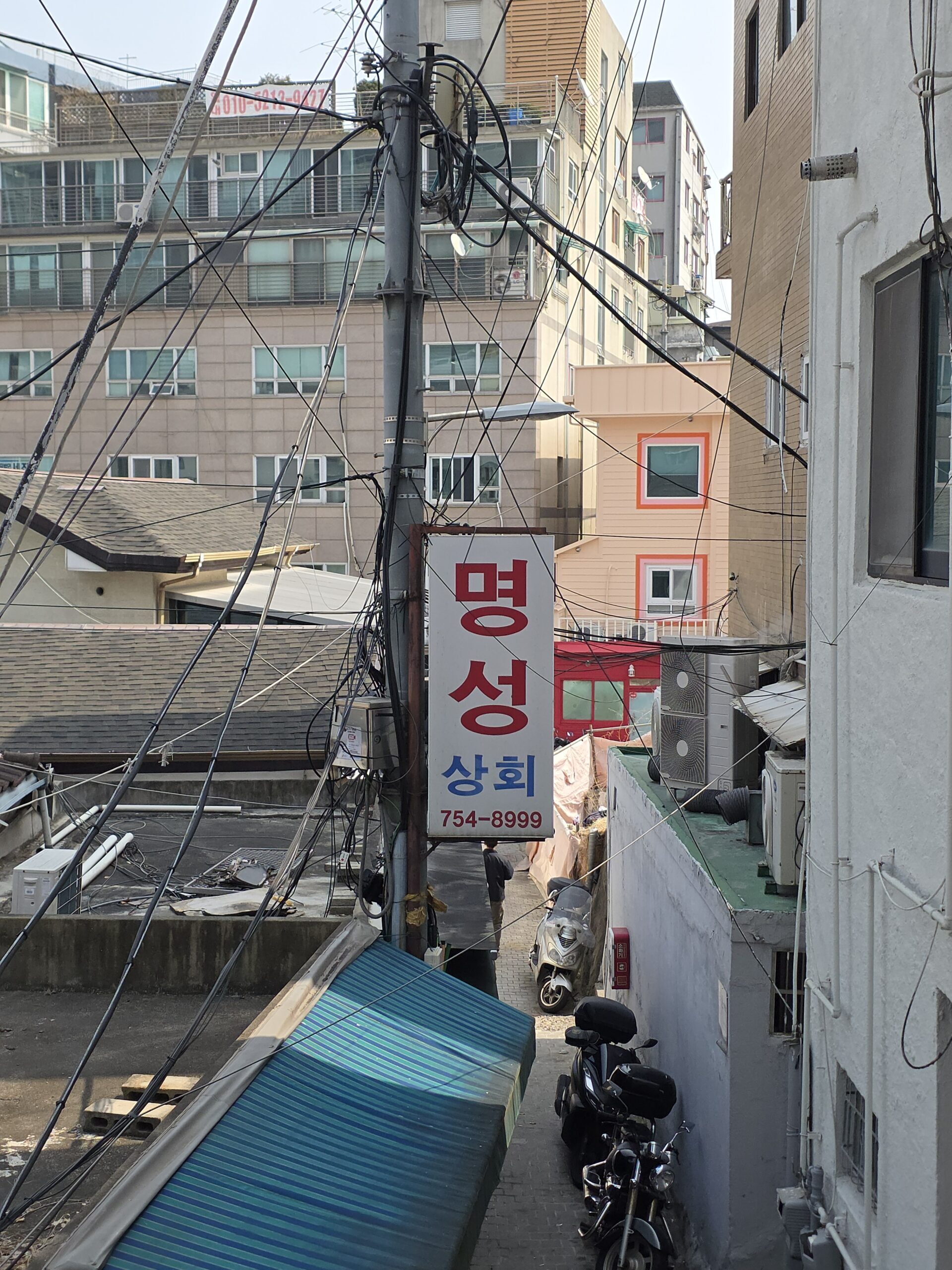
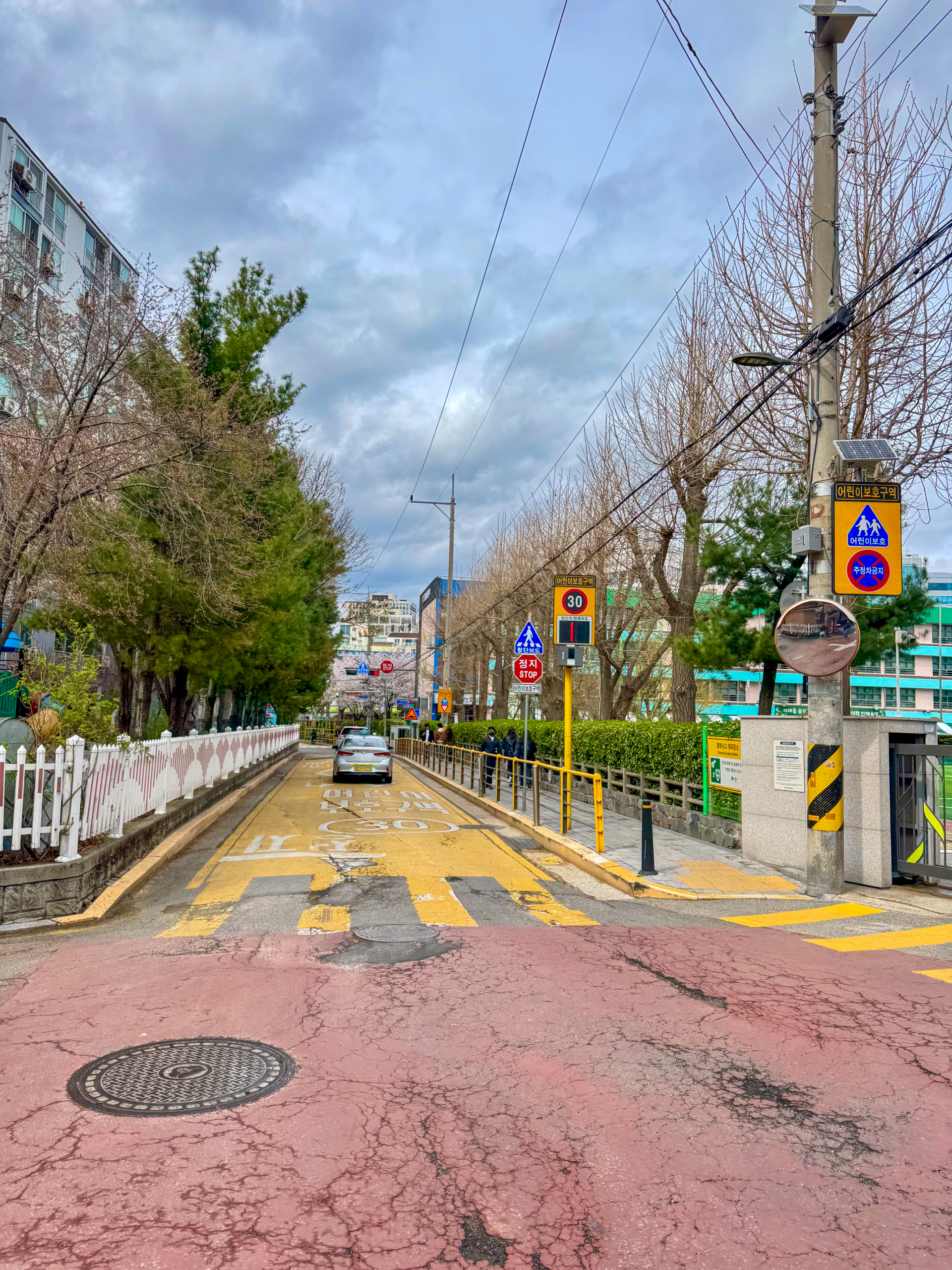
Seoul felt bigger in a physical sense. The roads were wider. Buildings seemed to sit farther apart. There was simply more breathing room in the way the city was laid out. Even the cars surprised me. I had expected the small, practical vehicles you see everywhere in Japan, but instead there were large SUVs and sedans that would look completely at home on any American highway.
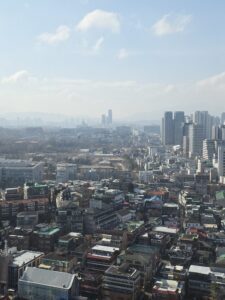
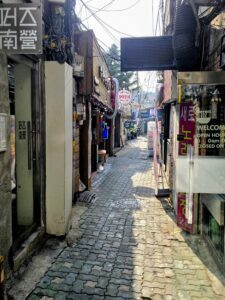
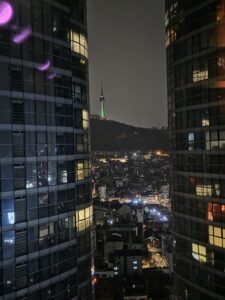
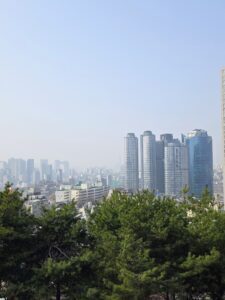
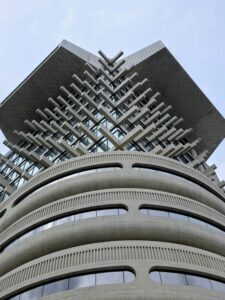
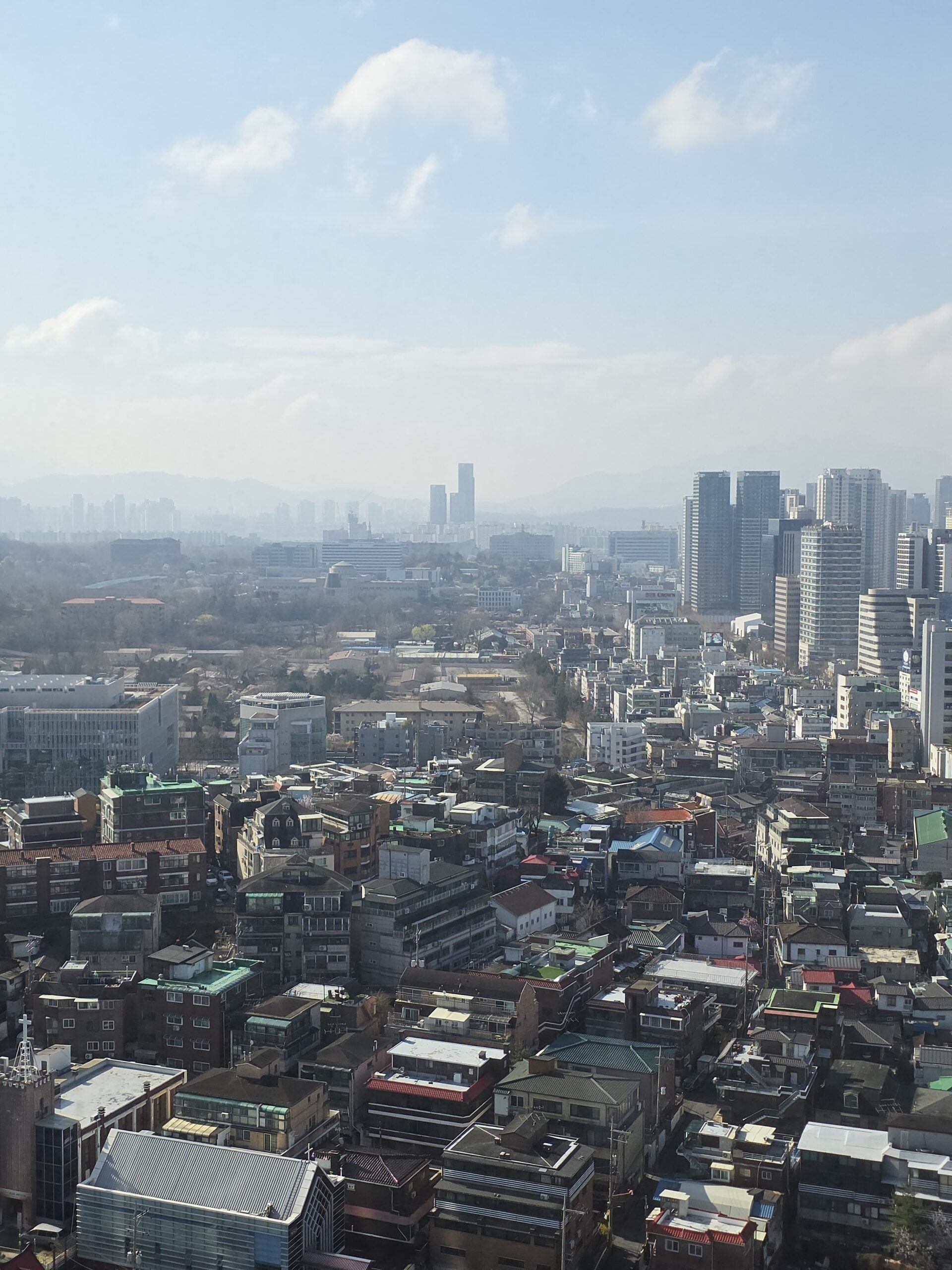
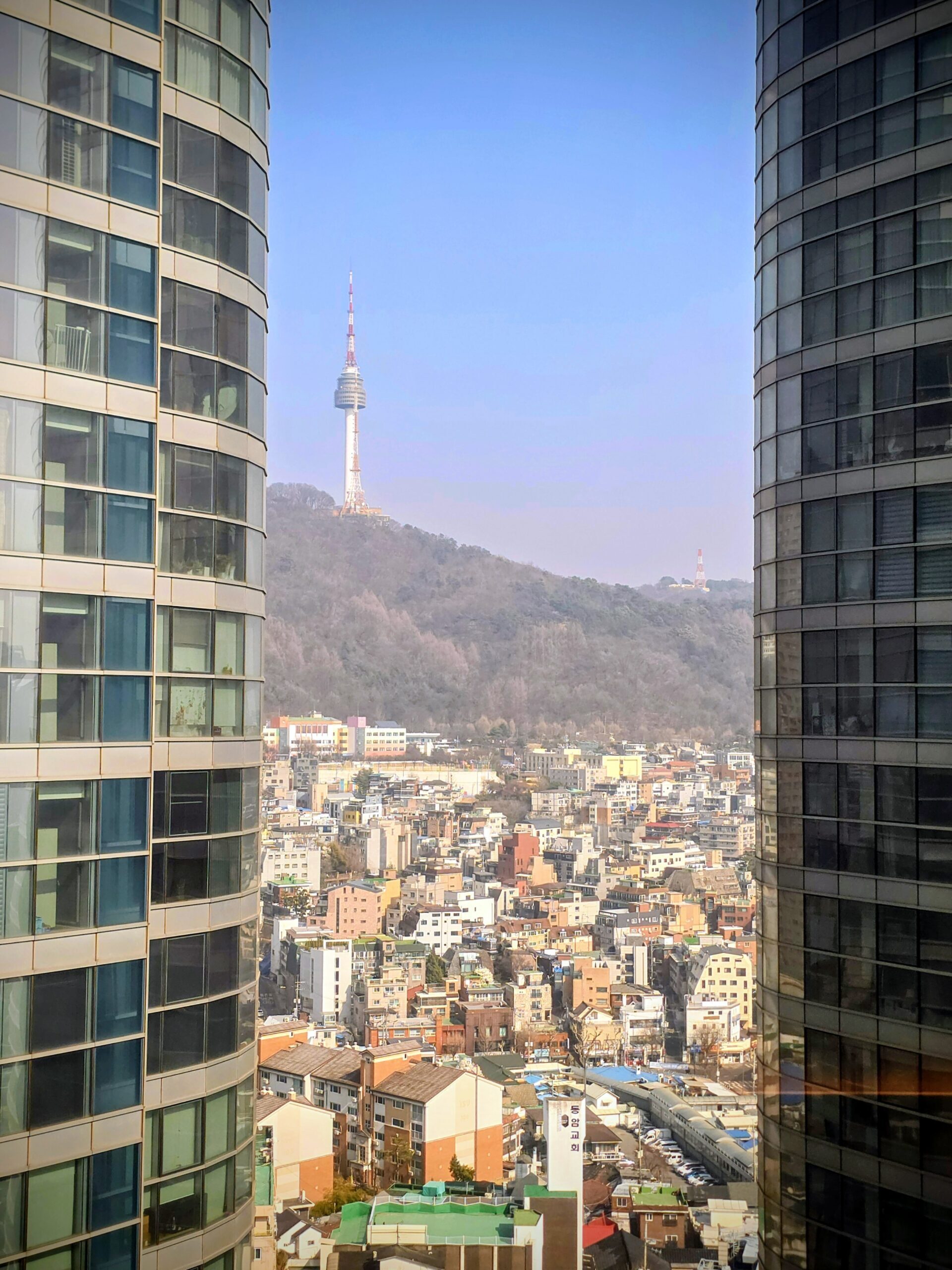
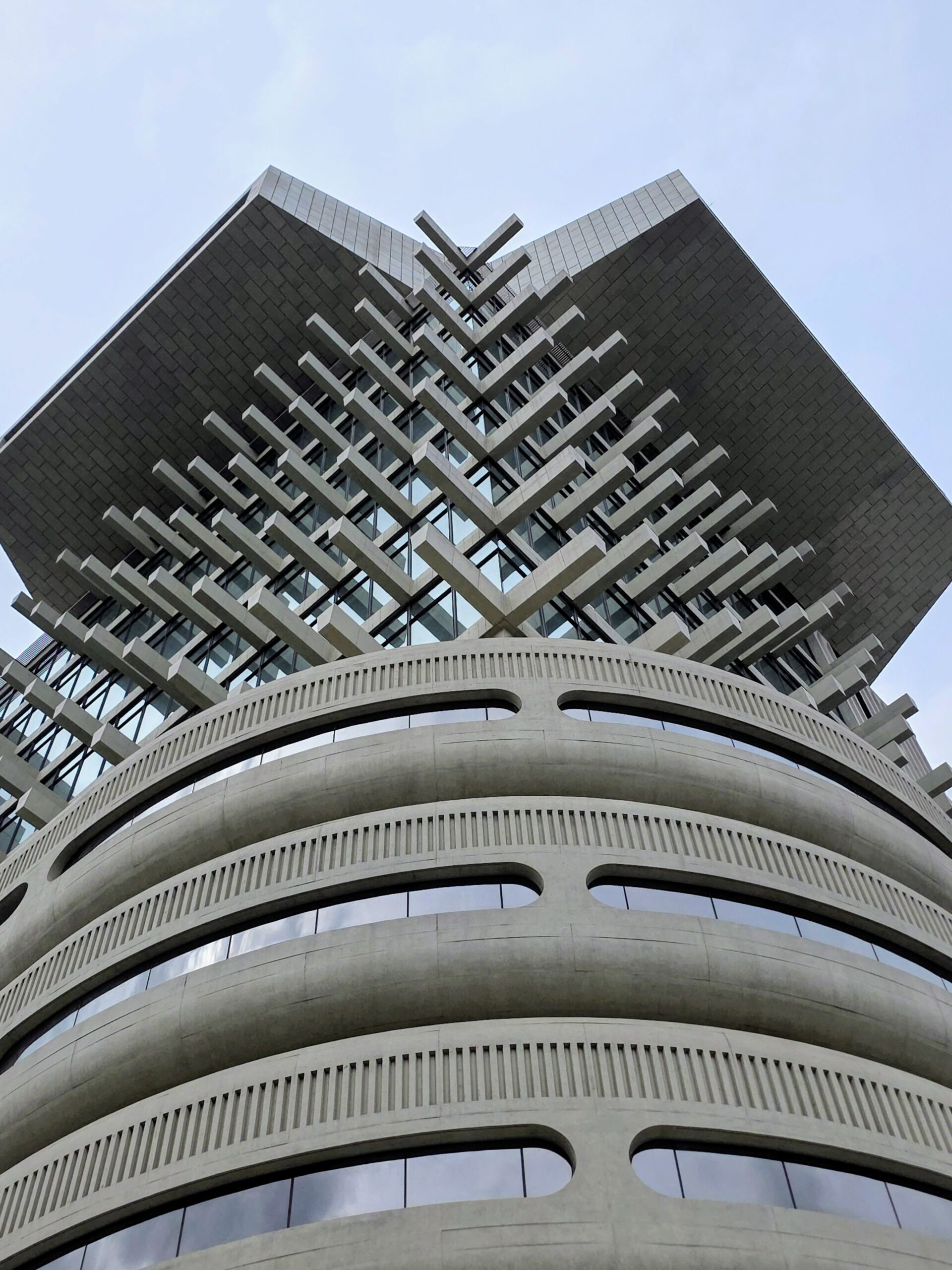
In some ways, parts of Seoul almost felt American. Not culturally, but in scale and infrastructure. Multi-lane boulevards, big intersections, traffic moving fast, clusters of large apartment towers rising up against the sky. The city felt built for movement. At times it reminded me more of a large North American city than the tightly packed neighborhoods I had grown used to in Japan. When you look at modern Korean history, that parallel isn’t surprising. The American presence on the peninsula after the Korean War shaped much of the country’s postwar development, and you can still see the fingerprints of that in the urban landscape today.
At the same time, other things felt unmistakably Korean.
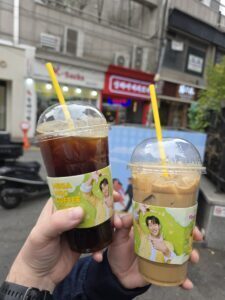
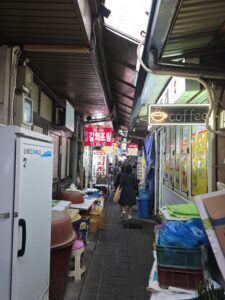
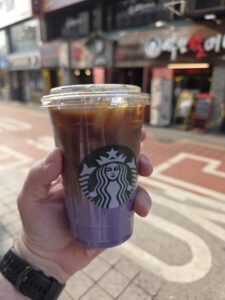
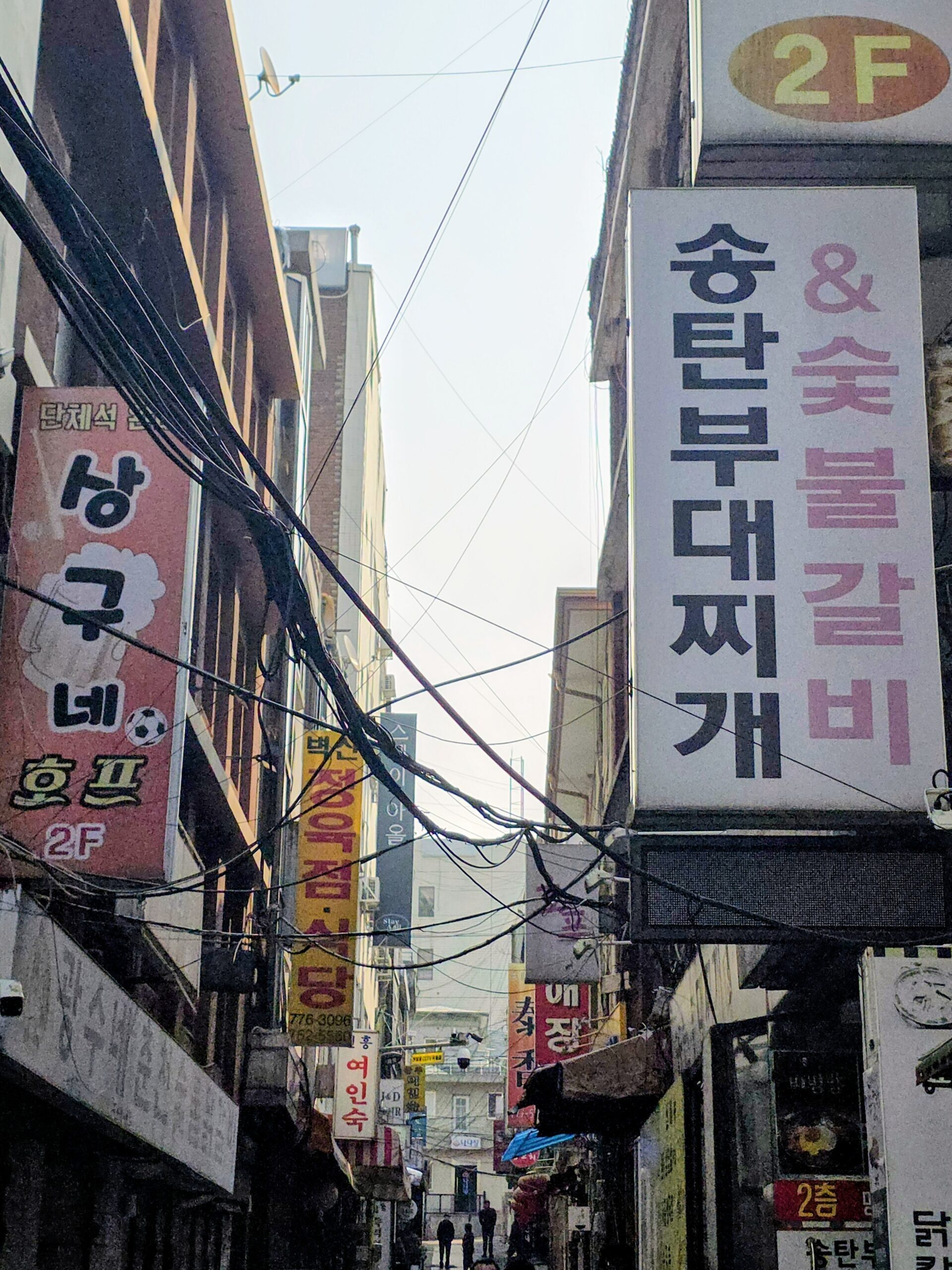
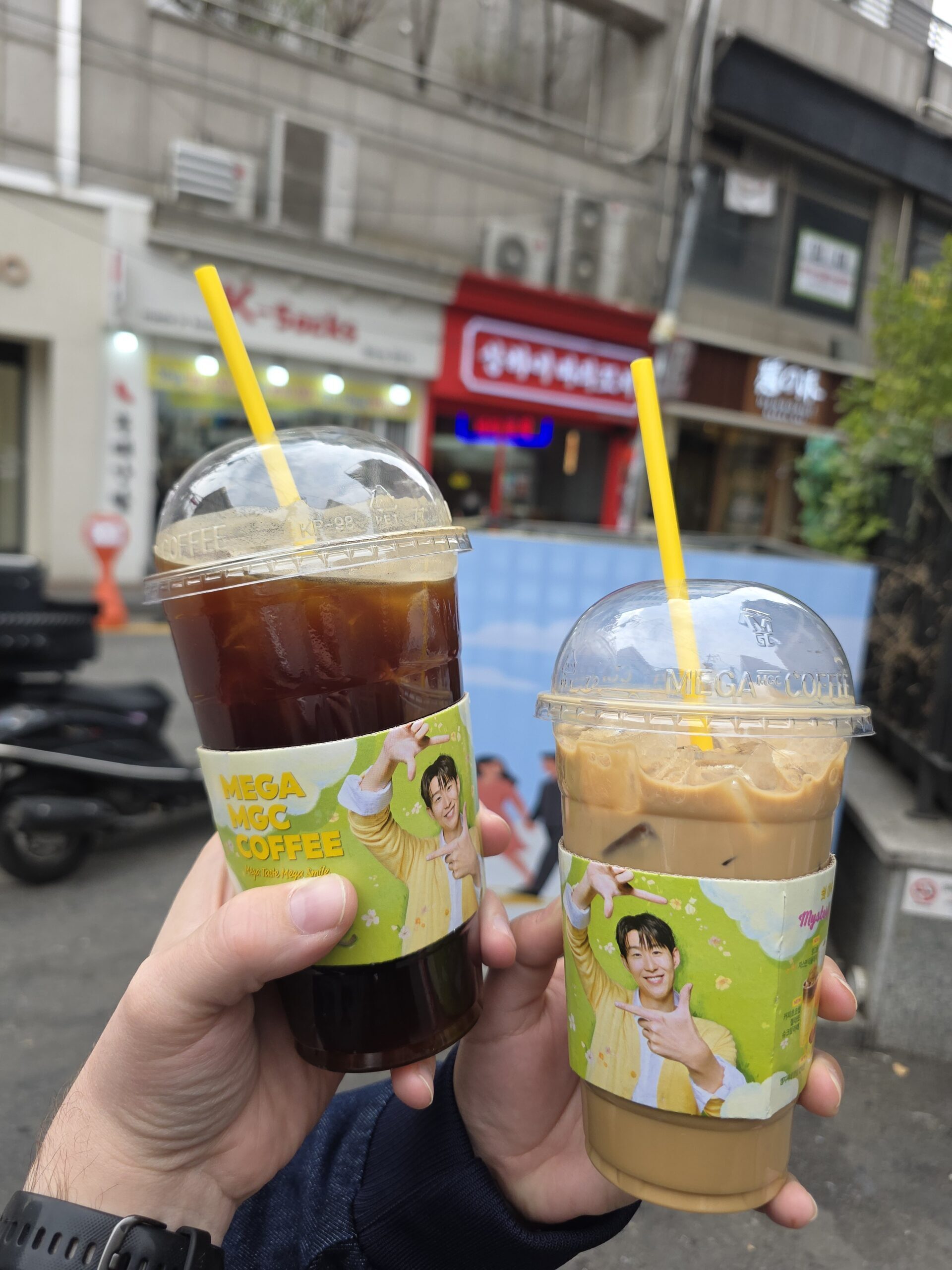
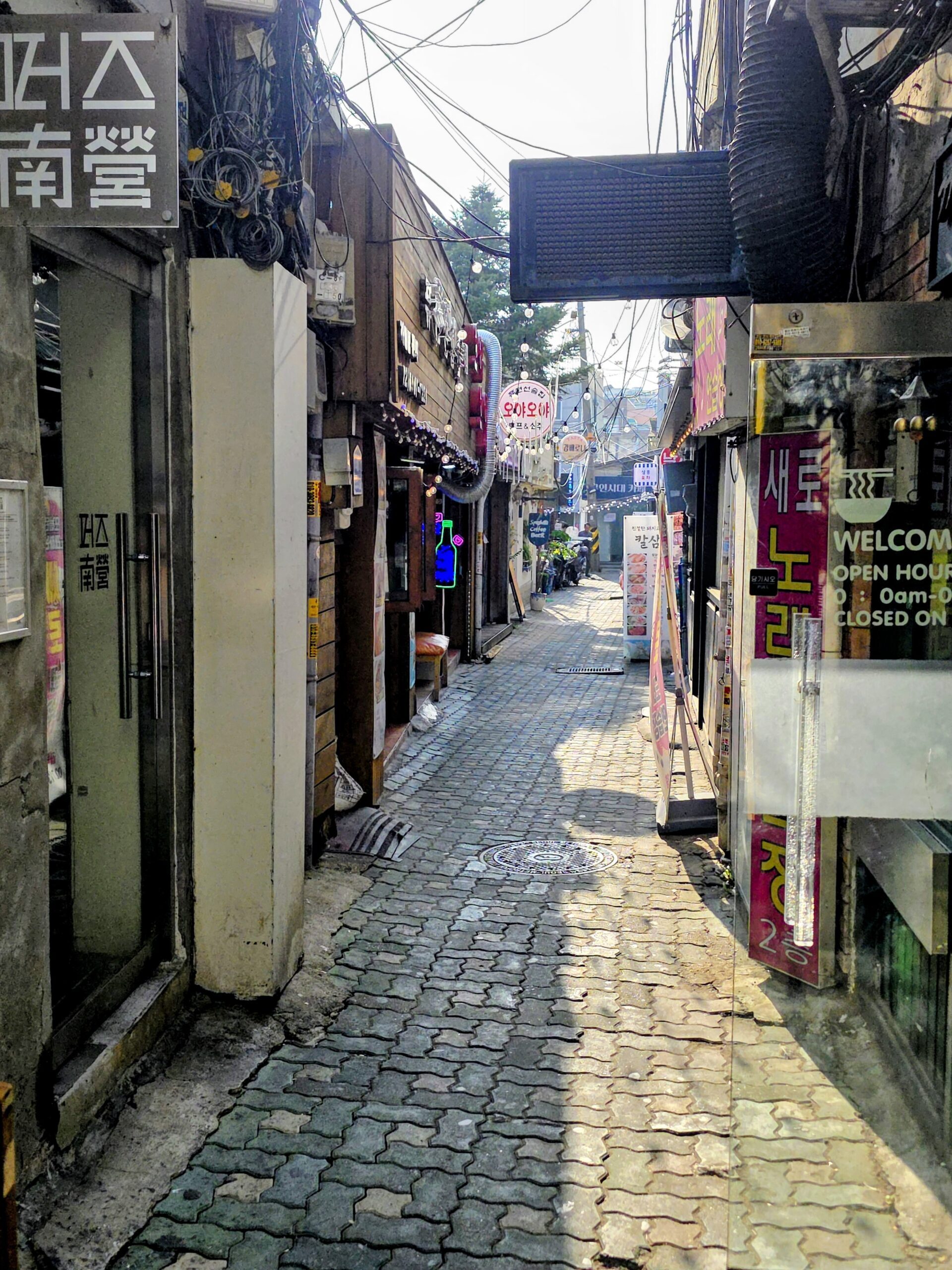
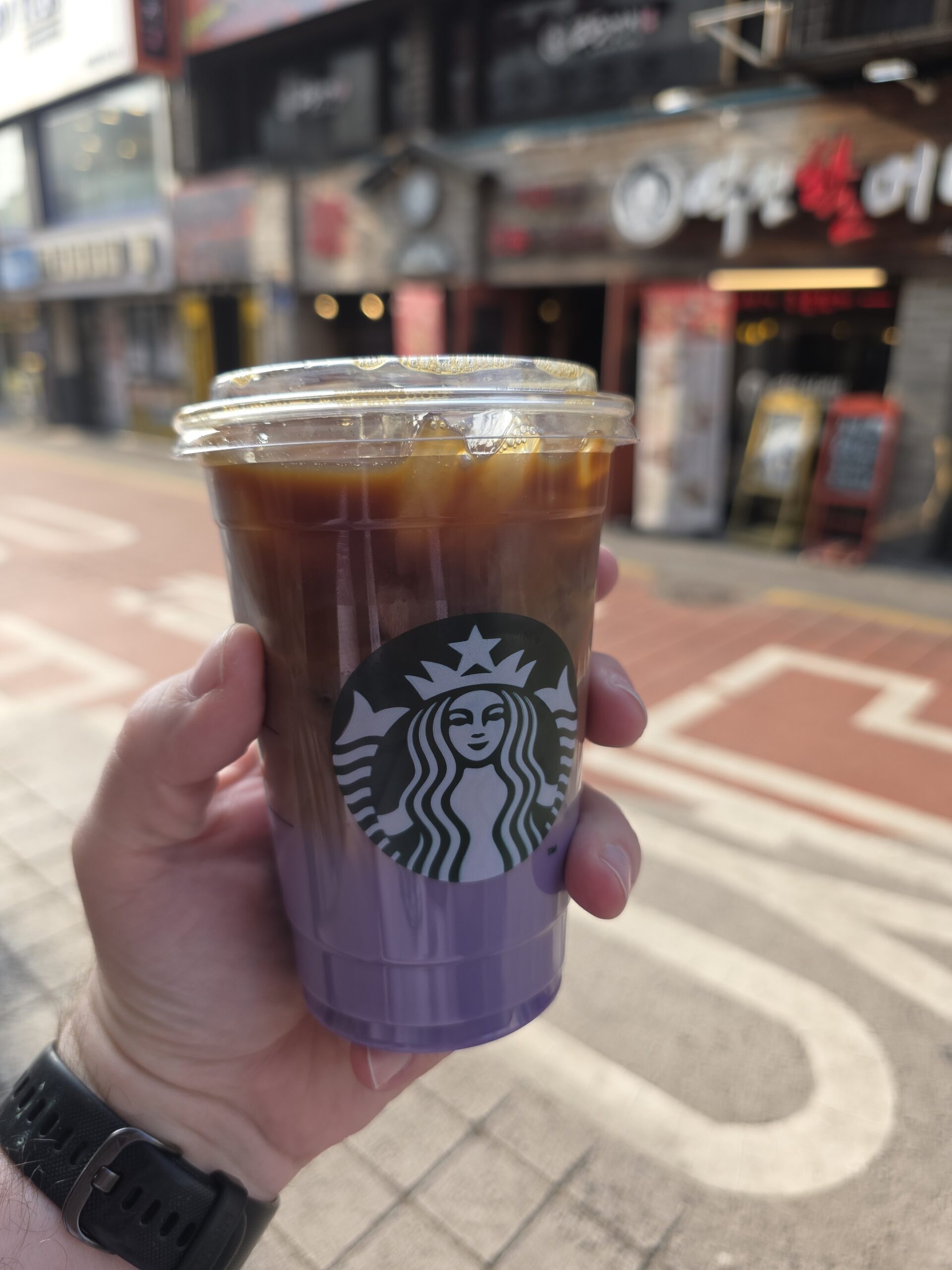
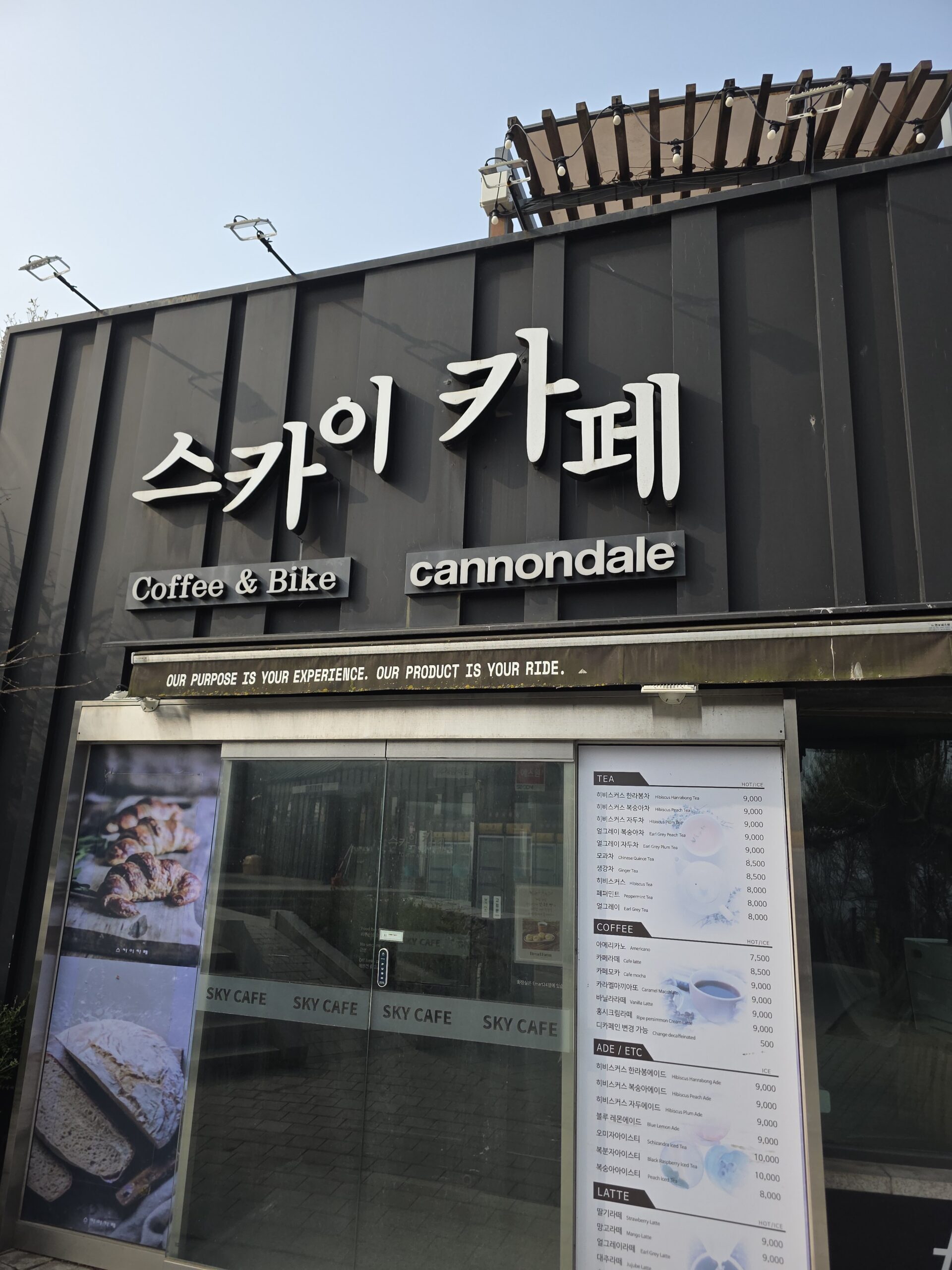
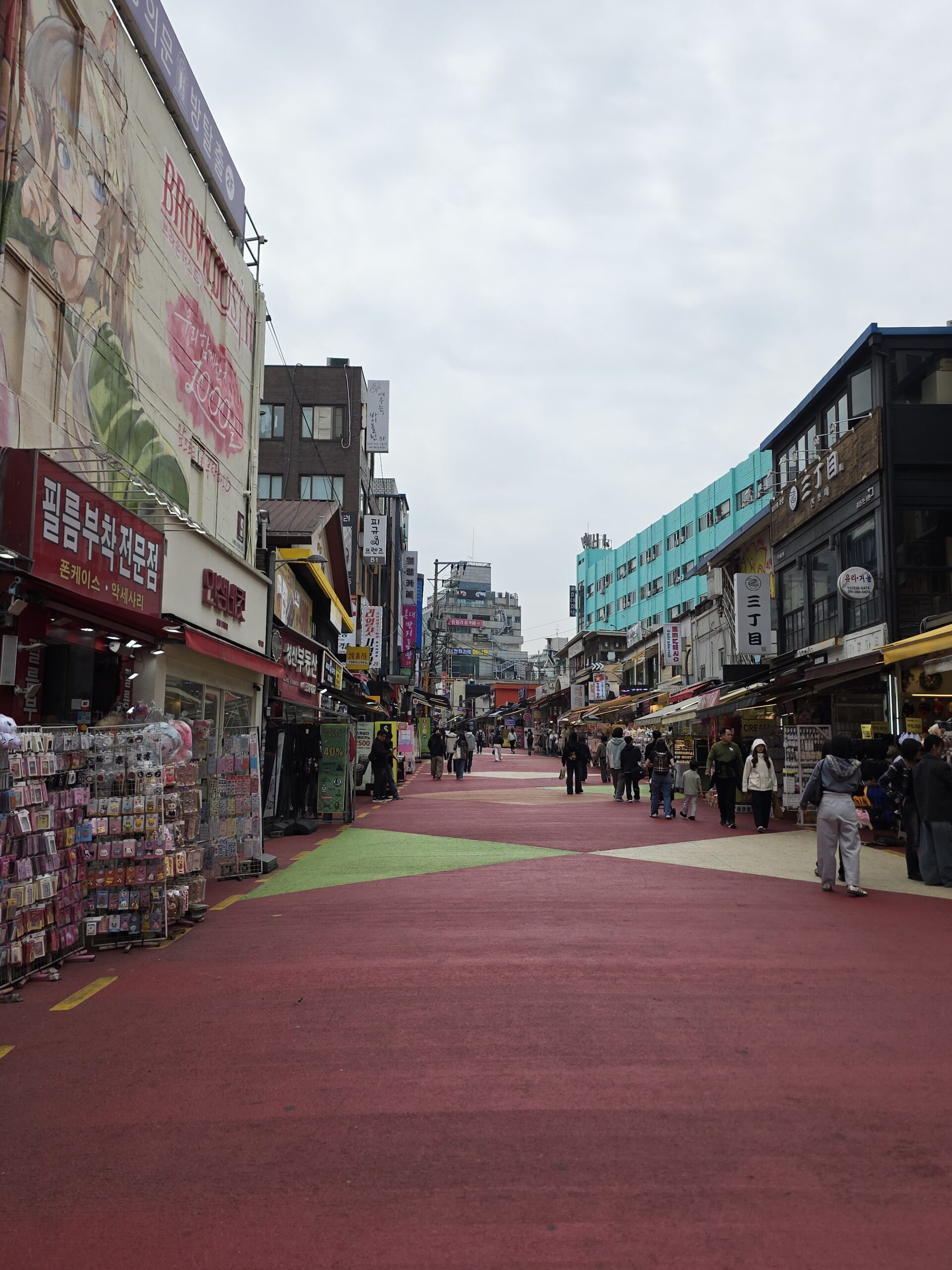
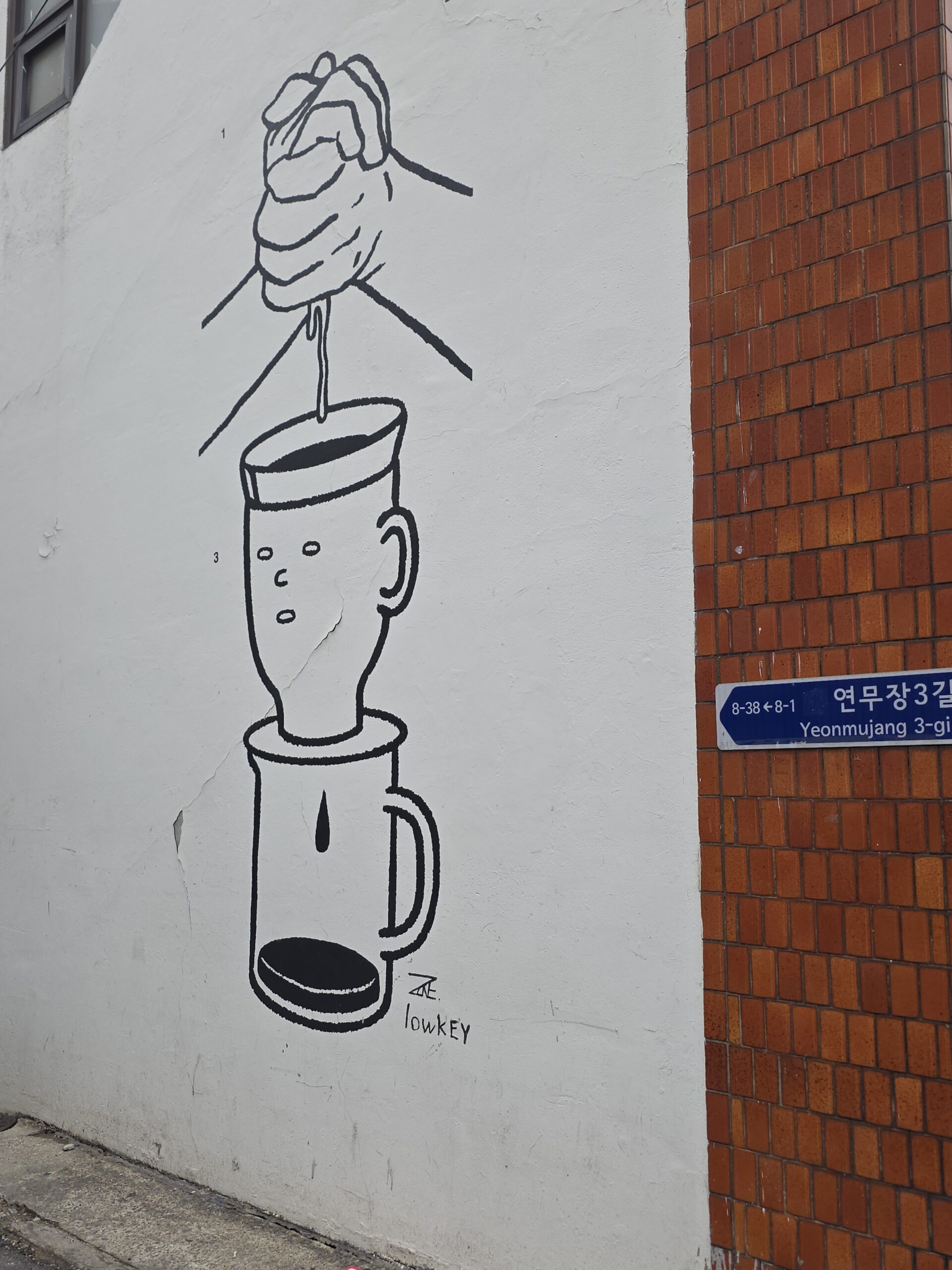
The café culture, for one, is a phenomenon of its own. I’m not exaggerating when I say you can barely walk a block without passing at least three coffee shops. Some are tiny storefronts wedged between buildings, others are sprawling multi-floor spaces modern interiors. Coffee in Seoul isn’t just something people grab on the way to work our of habit, its an integral part of life in Seoul.
I also noticed that people seemed more outwardly expressive than what I had grown used to in Japan. Fashion felt looser, more playful, more bright, and willing to take a risk. In Japan there’s often an unspoken grammar to how people dress, The Japanese have appropriate dress codes depending on the situation. In Seoul that grammar felt more flexible, more personal. People were experimenting, standing out, and doing it with comfortable ease. The overall style just felt more alive, thus, more interesting.
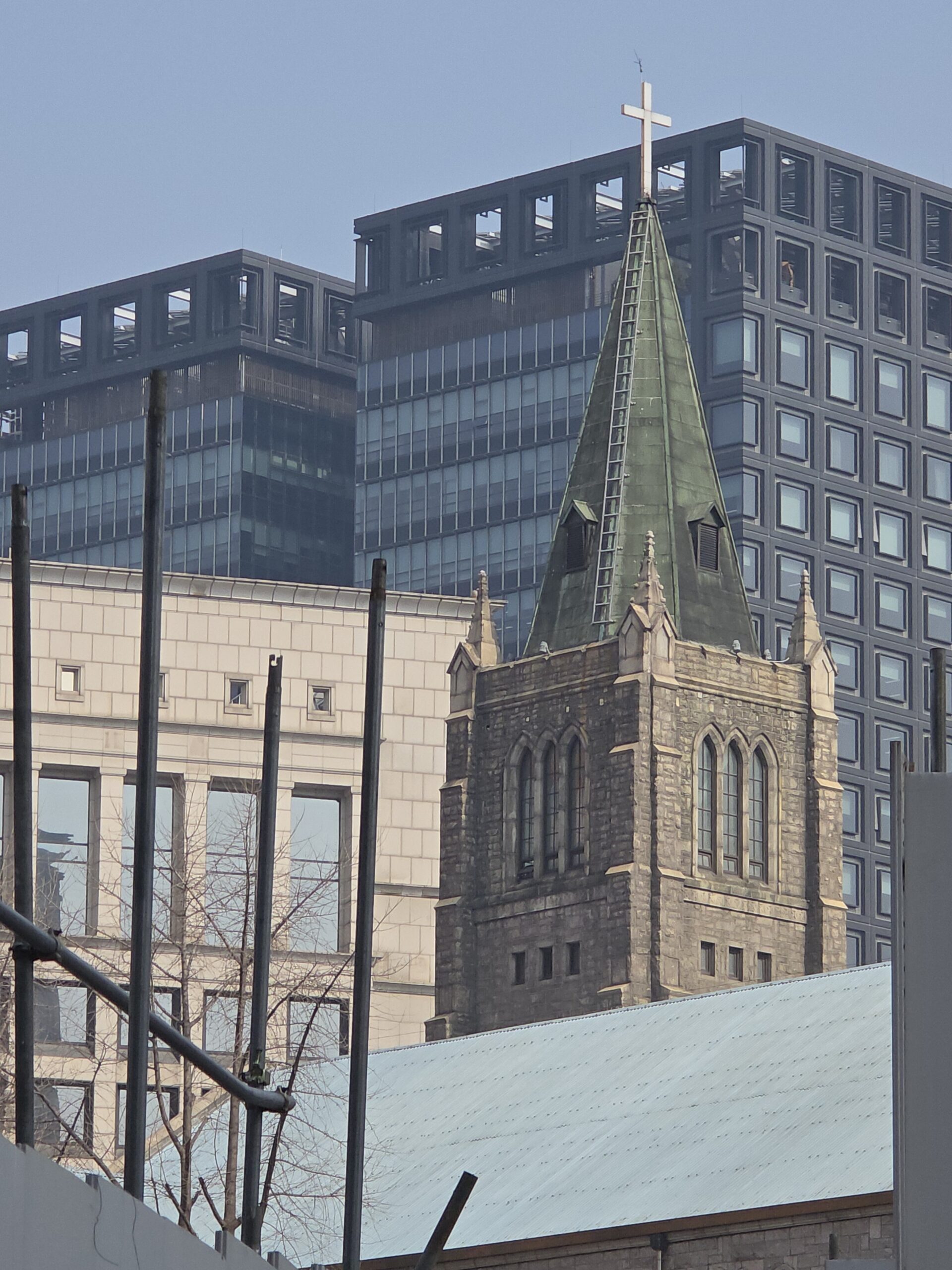
Another thing caught my attention almost immediately: the churches.
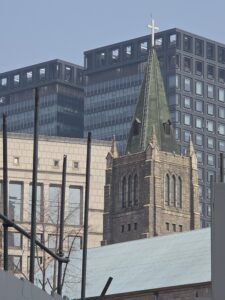
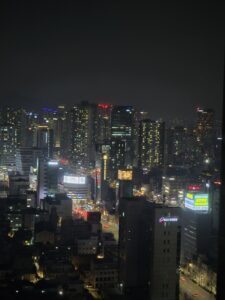
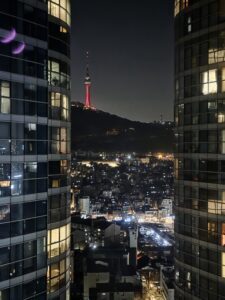
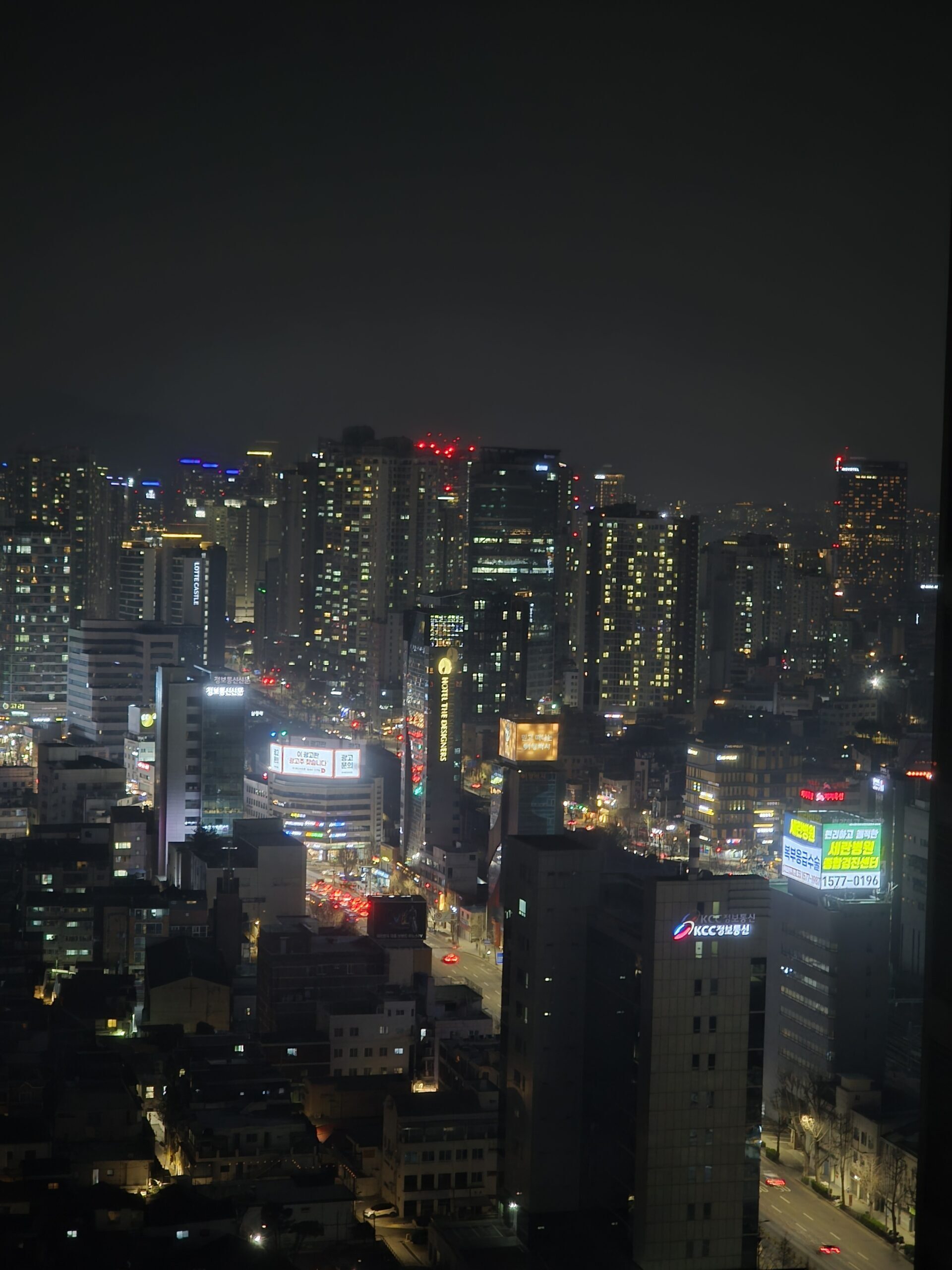
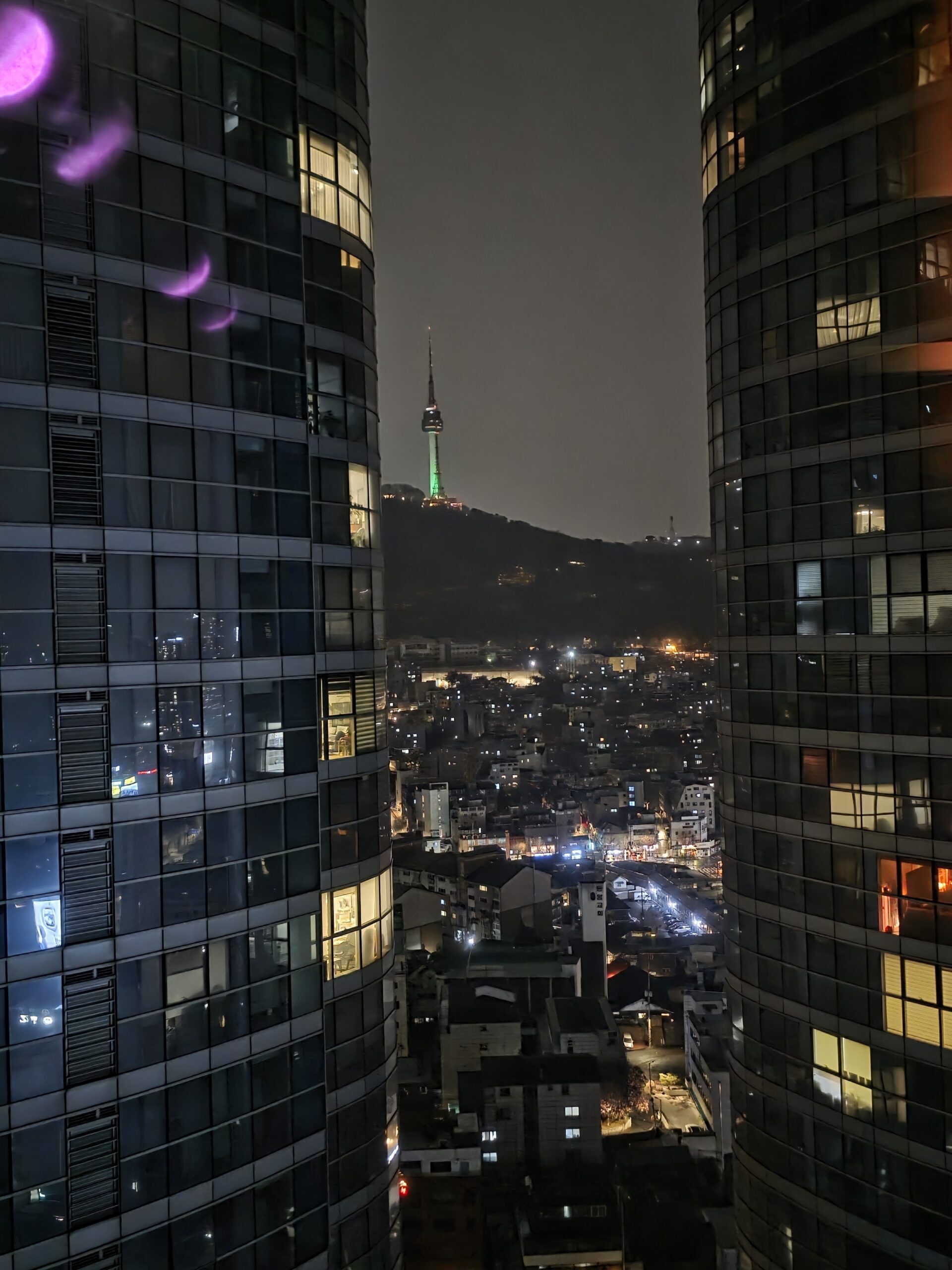
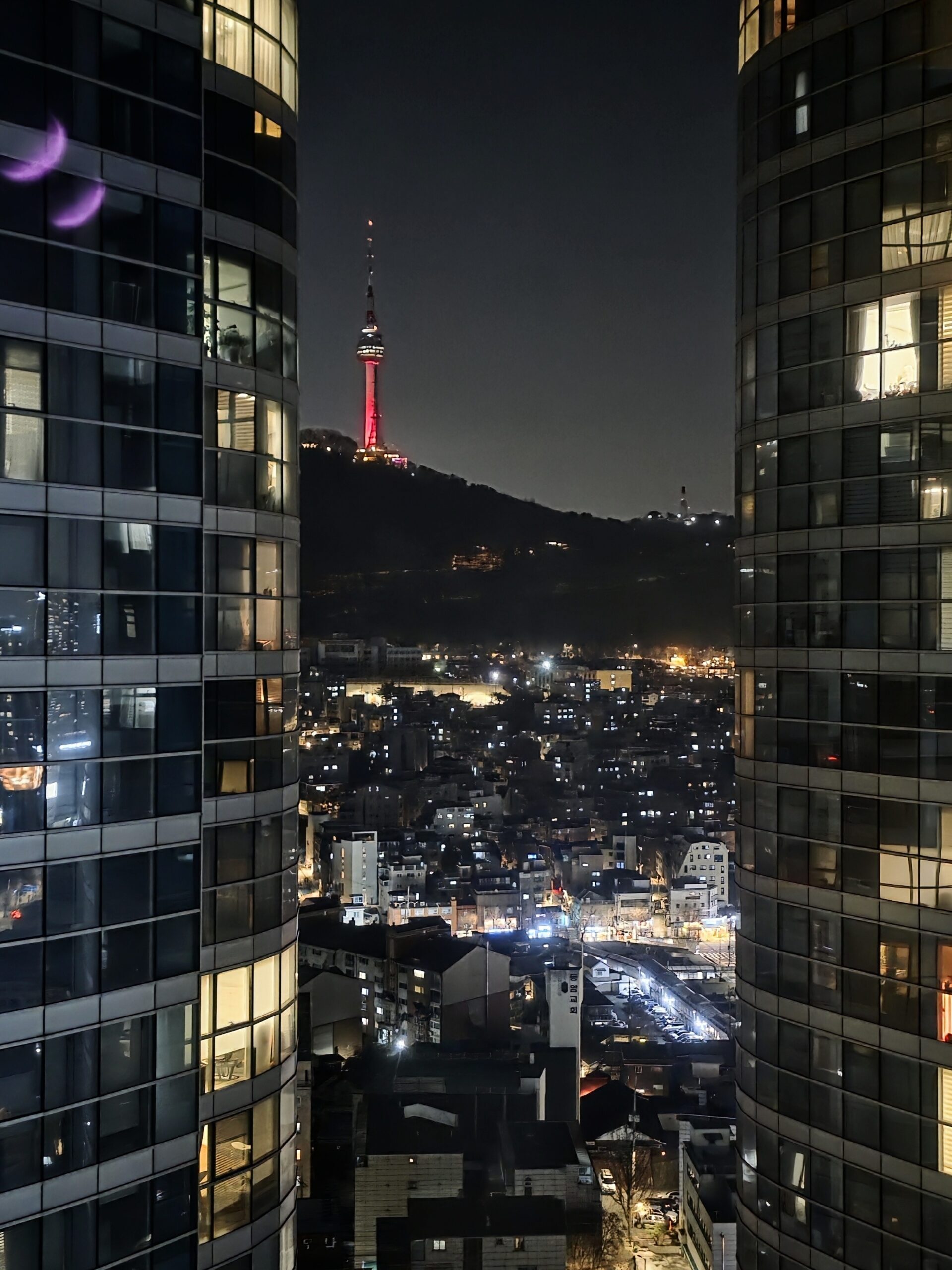
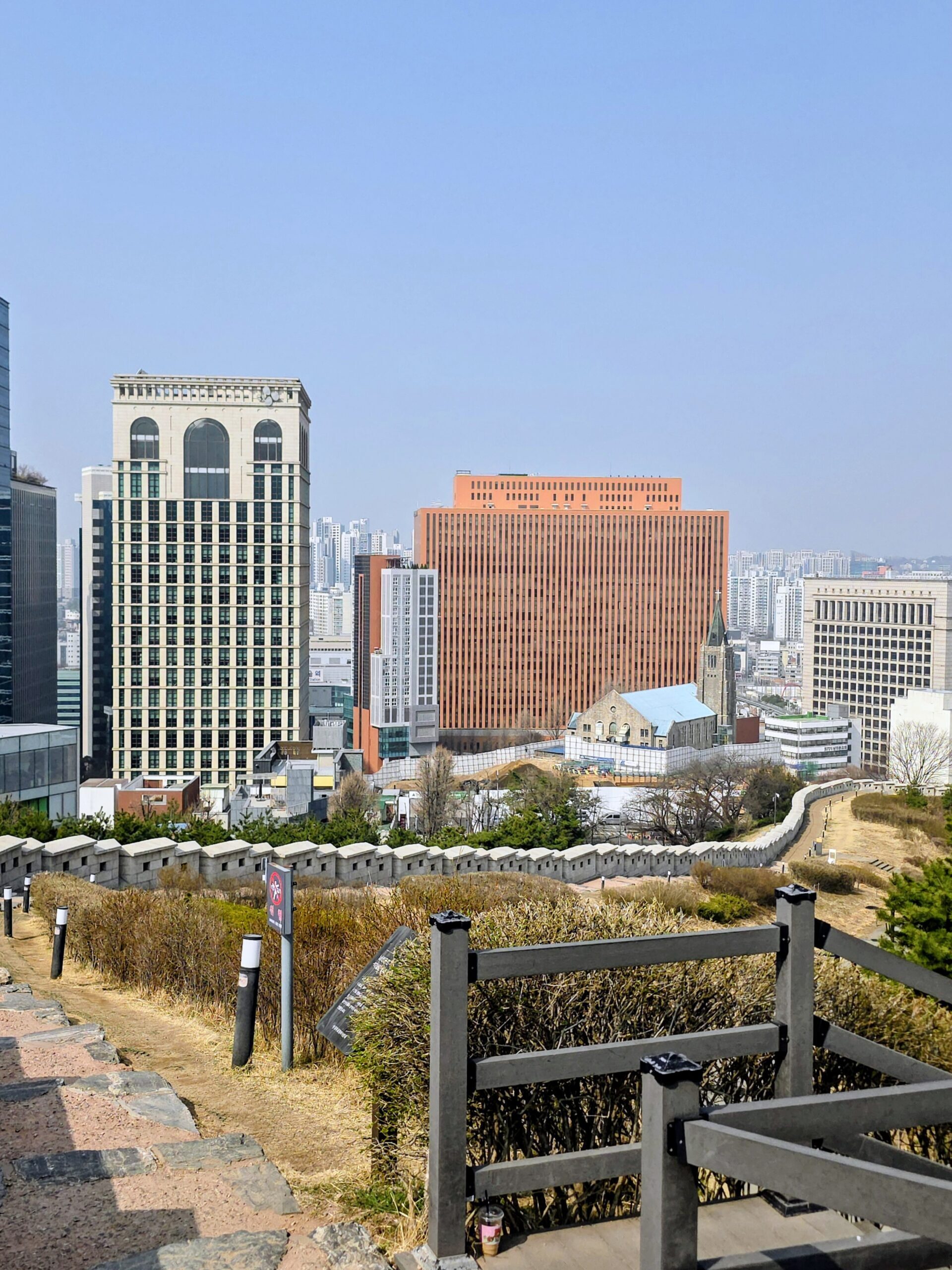
They’re everywhere. Steeples pushing up between apartment buildings and commercial complexes, crosses lit up against the night sky. Reminds me of the Bethlehem star back home. In Japan, it was temples and shrines dotting the landscape. In Korea, it was unmistakably Christian (with about 31% of the population identifying as so). I knew that there was a large Christian population in Korea, but I still expected to find more Buddhist shrines, or even discover a Korean analogue to Shinto.
Then there was something I hadn’t anticipated at all: the haze.
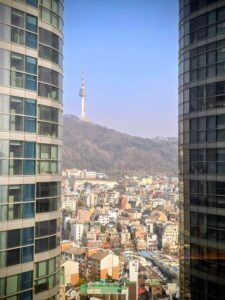
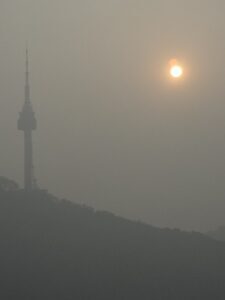
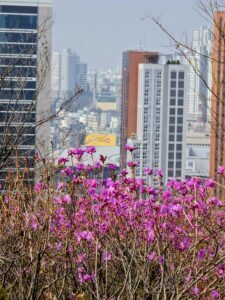
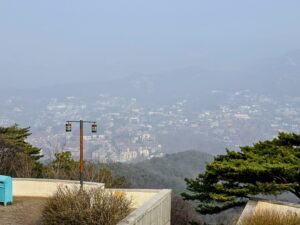
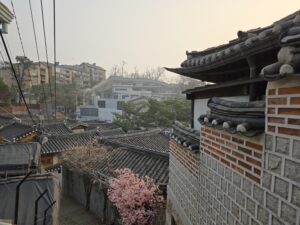
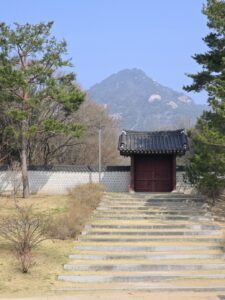
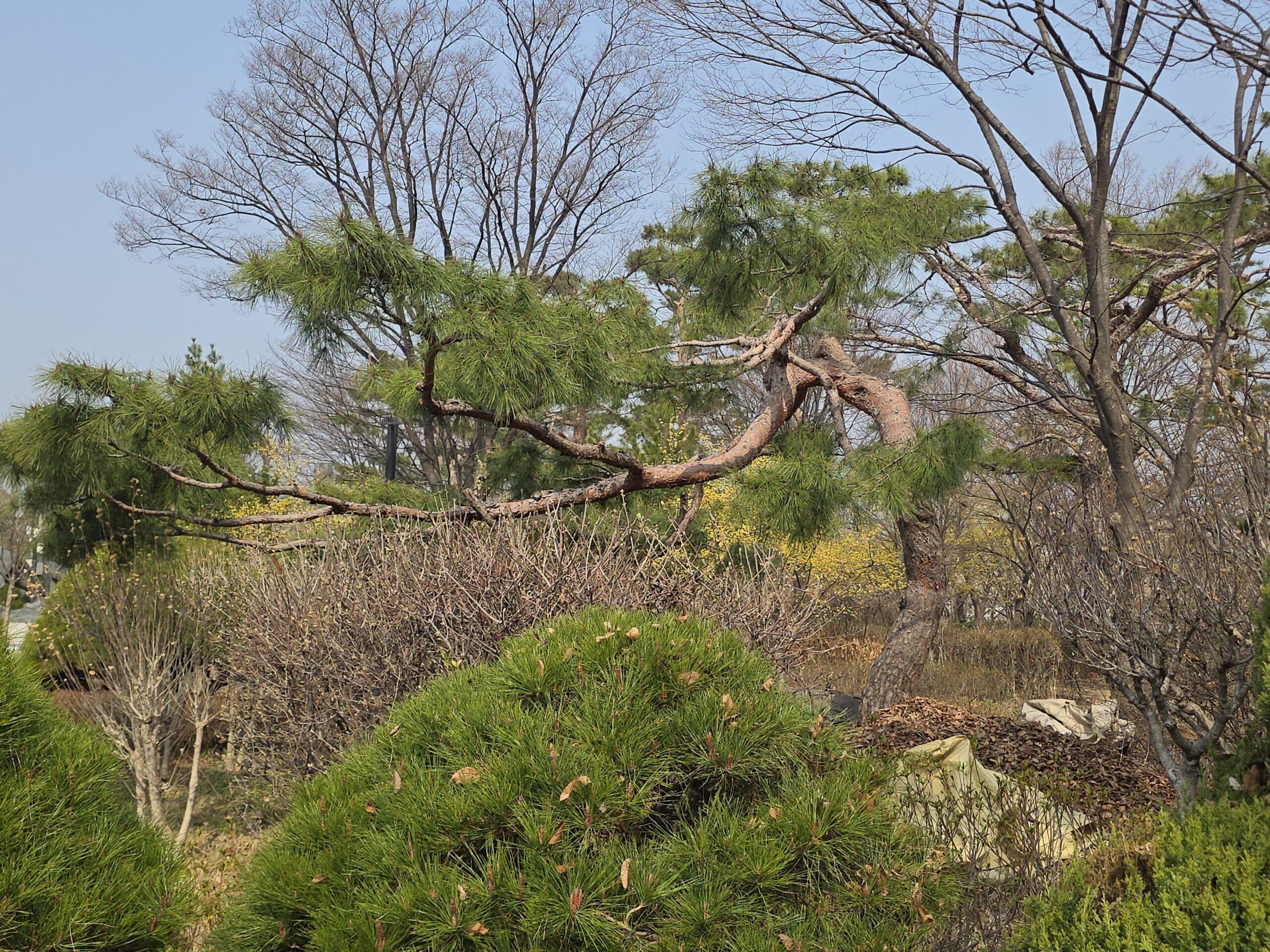
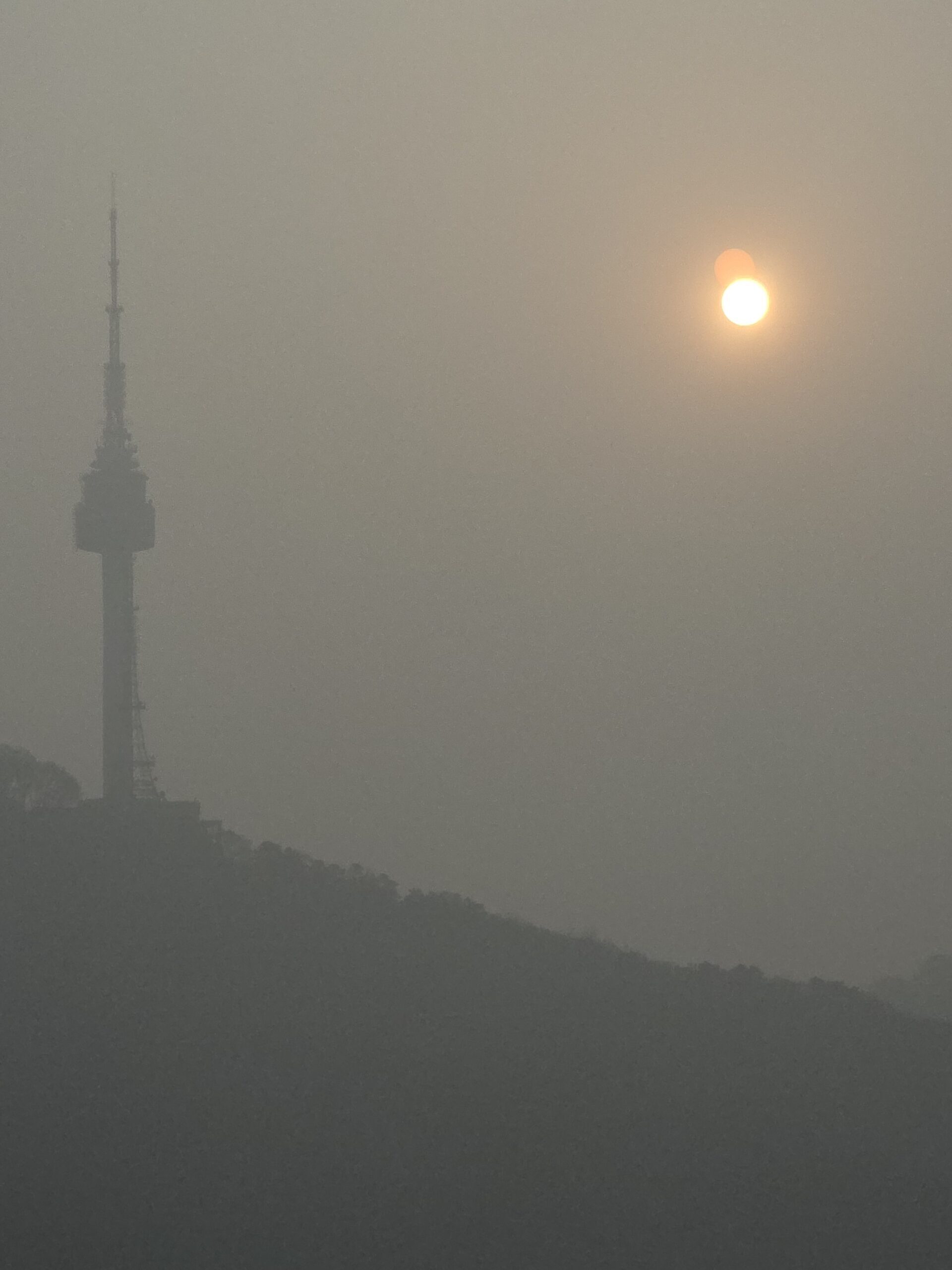
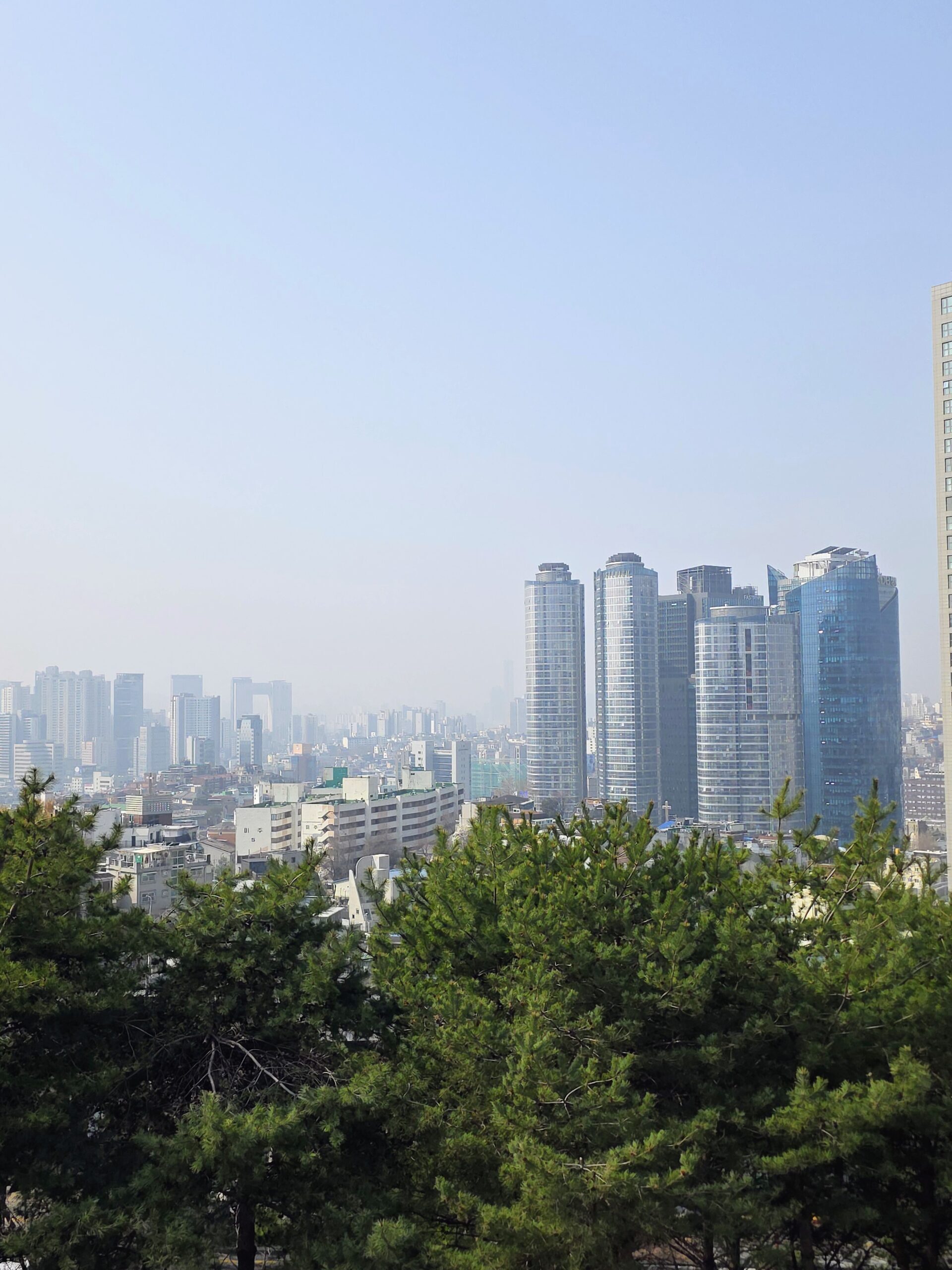
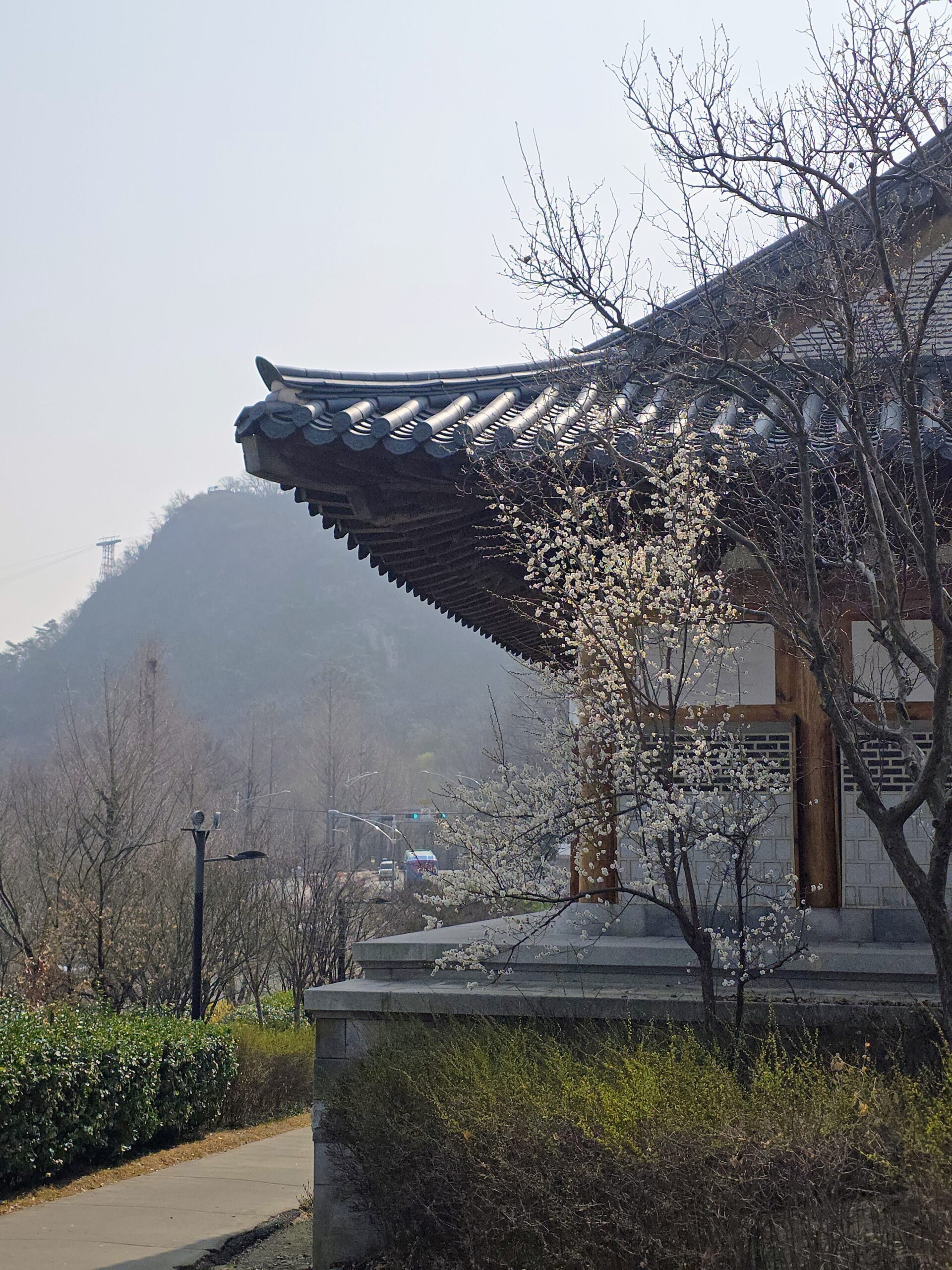
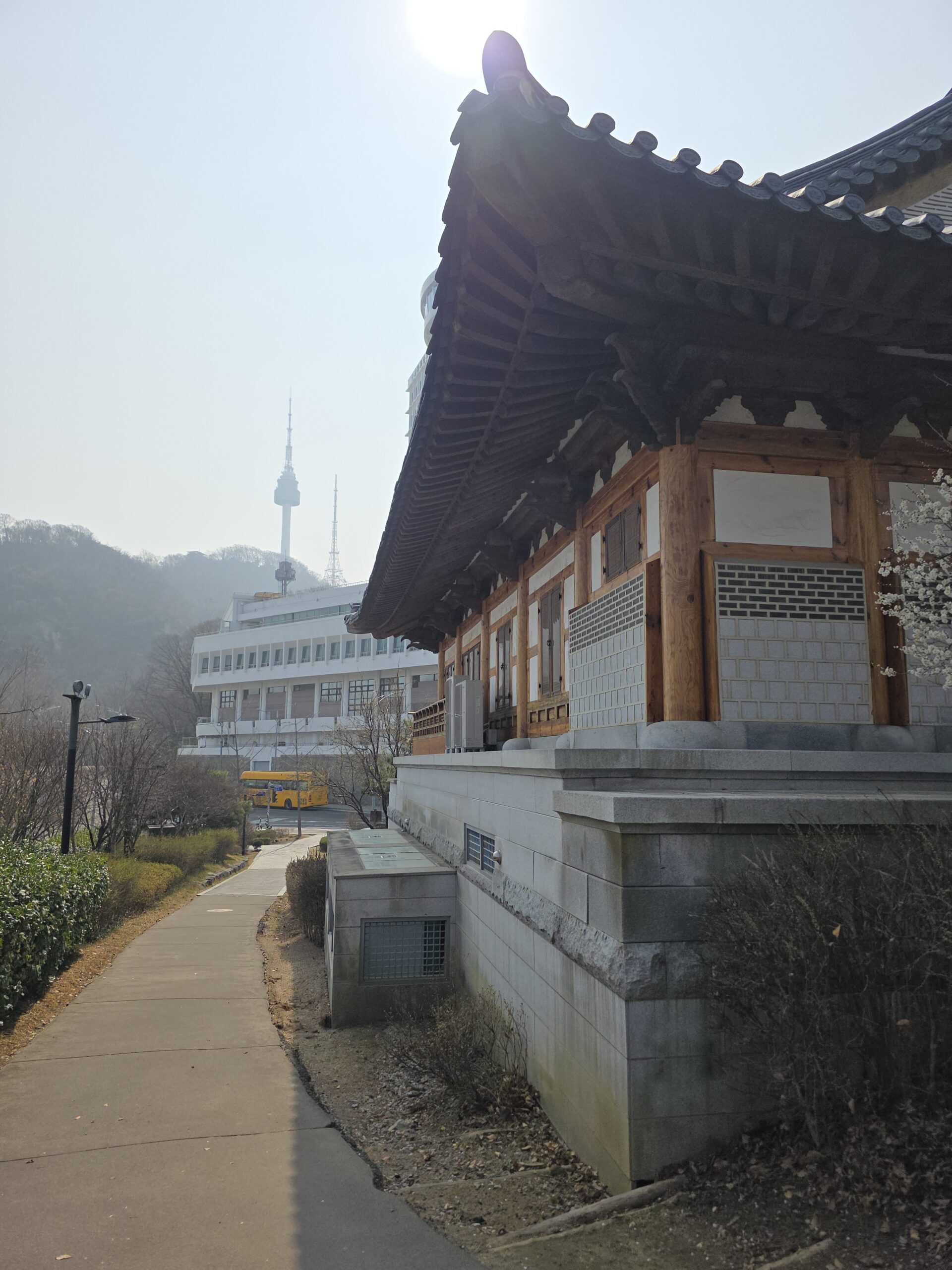
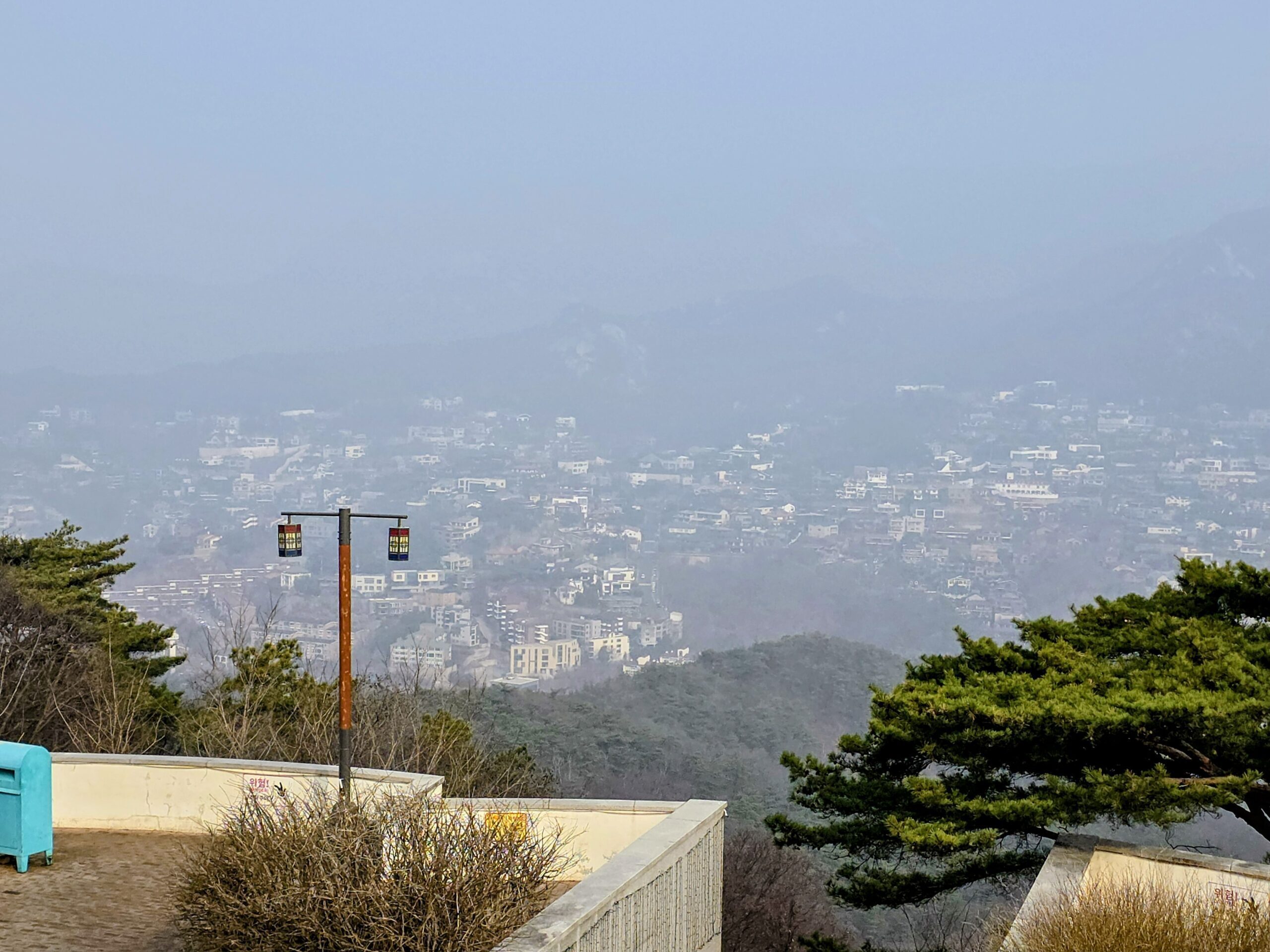
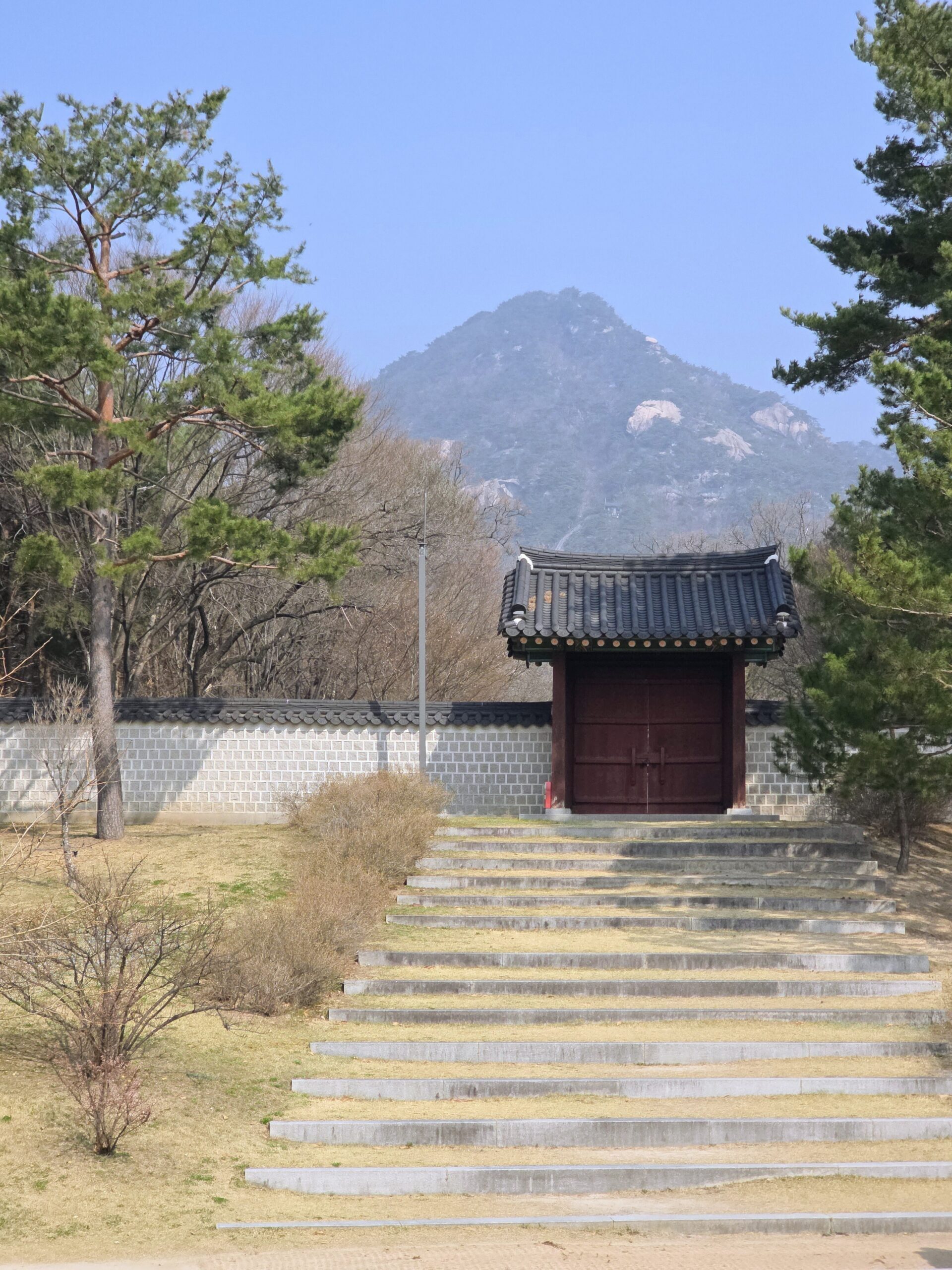
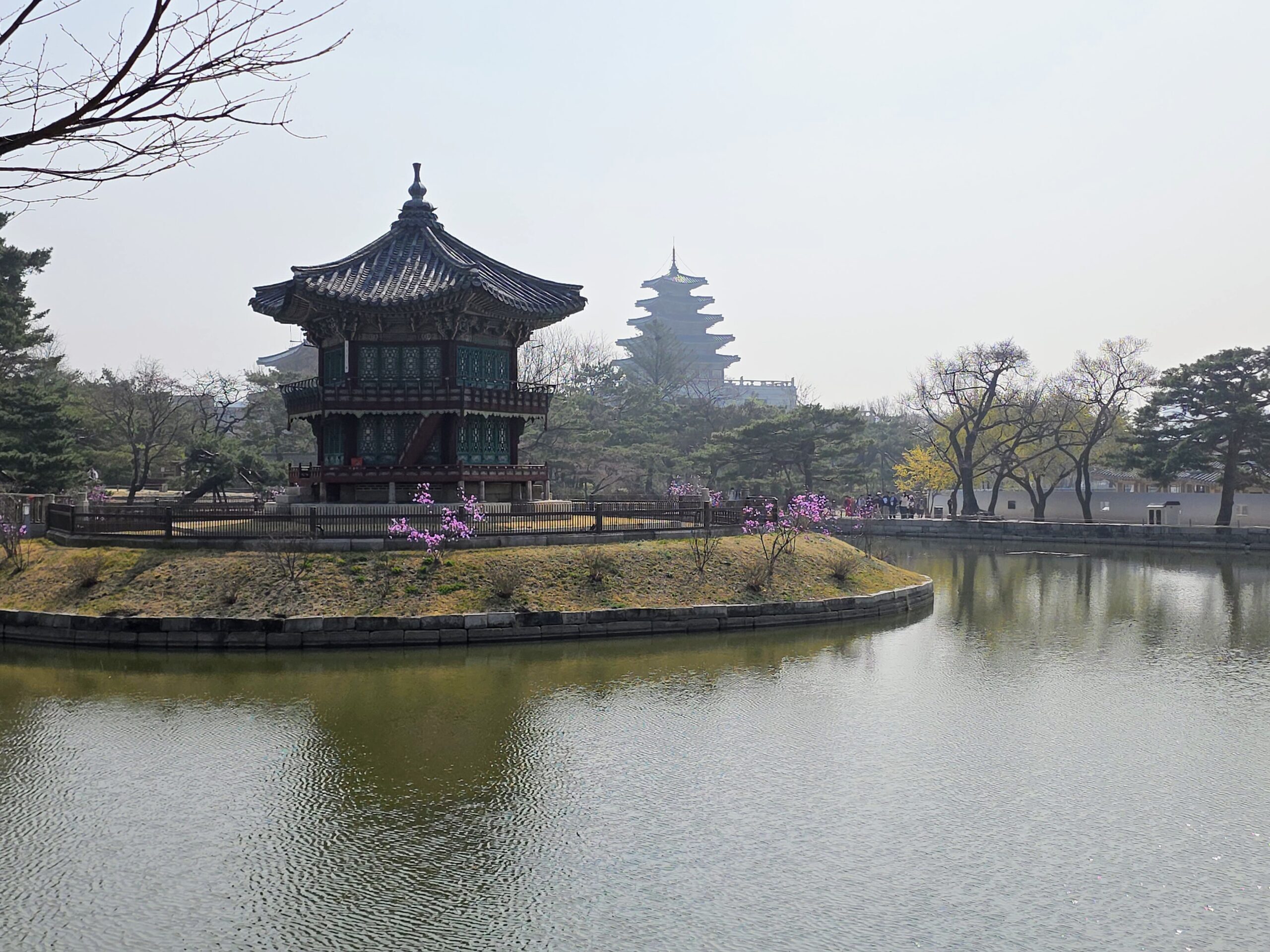
I had read about yellow dust before the trip, the fine particulate matter that drifts over from China and settles over the Korean peninsula. Seeing it in person was something else. Some days the air carried a faint grayish filter, softening the skyline and muting the city’s colors. Others, it drastically lowered the air quality. I didn’t find it overwhelming, but it was persistent, and enough to make all of my photos look washed out, with noticeable haze obscuring the silhouettes of mountains.
A Walk Through Namsan
We landed early, hours before we could check in. Rather than hover around the hotel lobby like lost luggage, we did what we always do in a new city — we wandered.
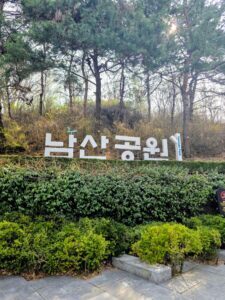
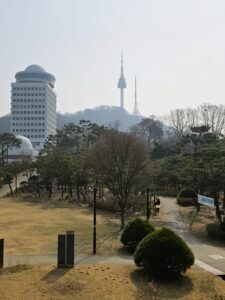
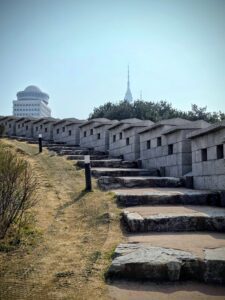
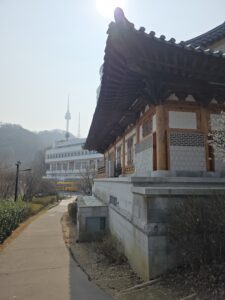
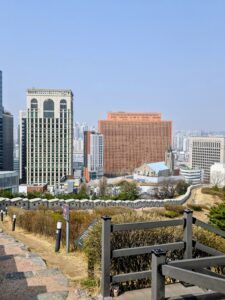
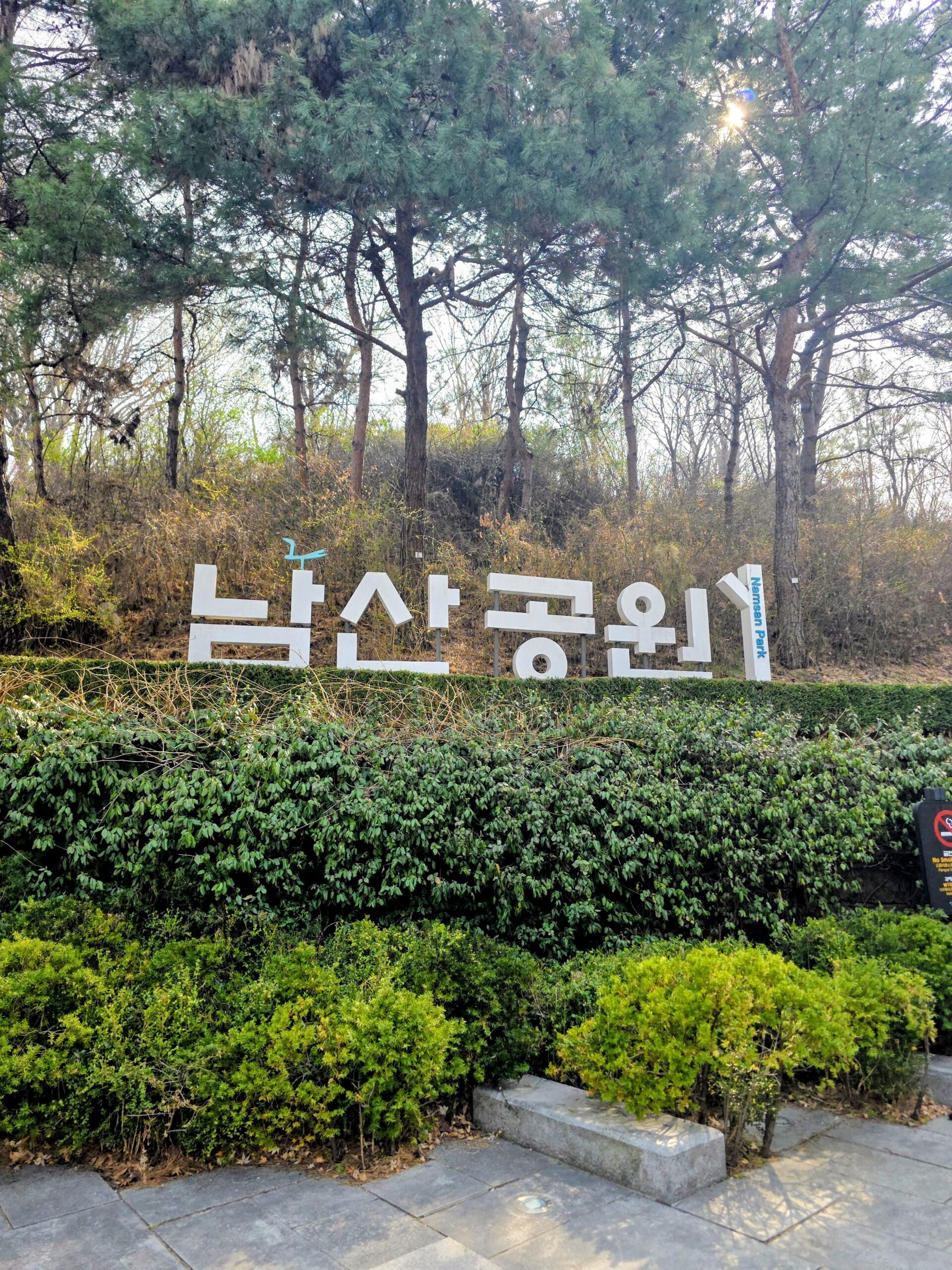
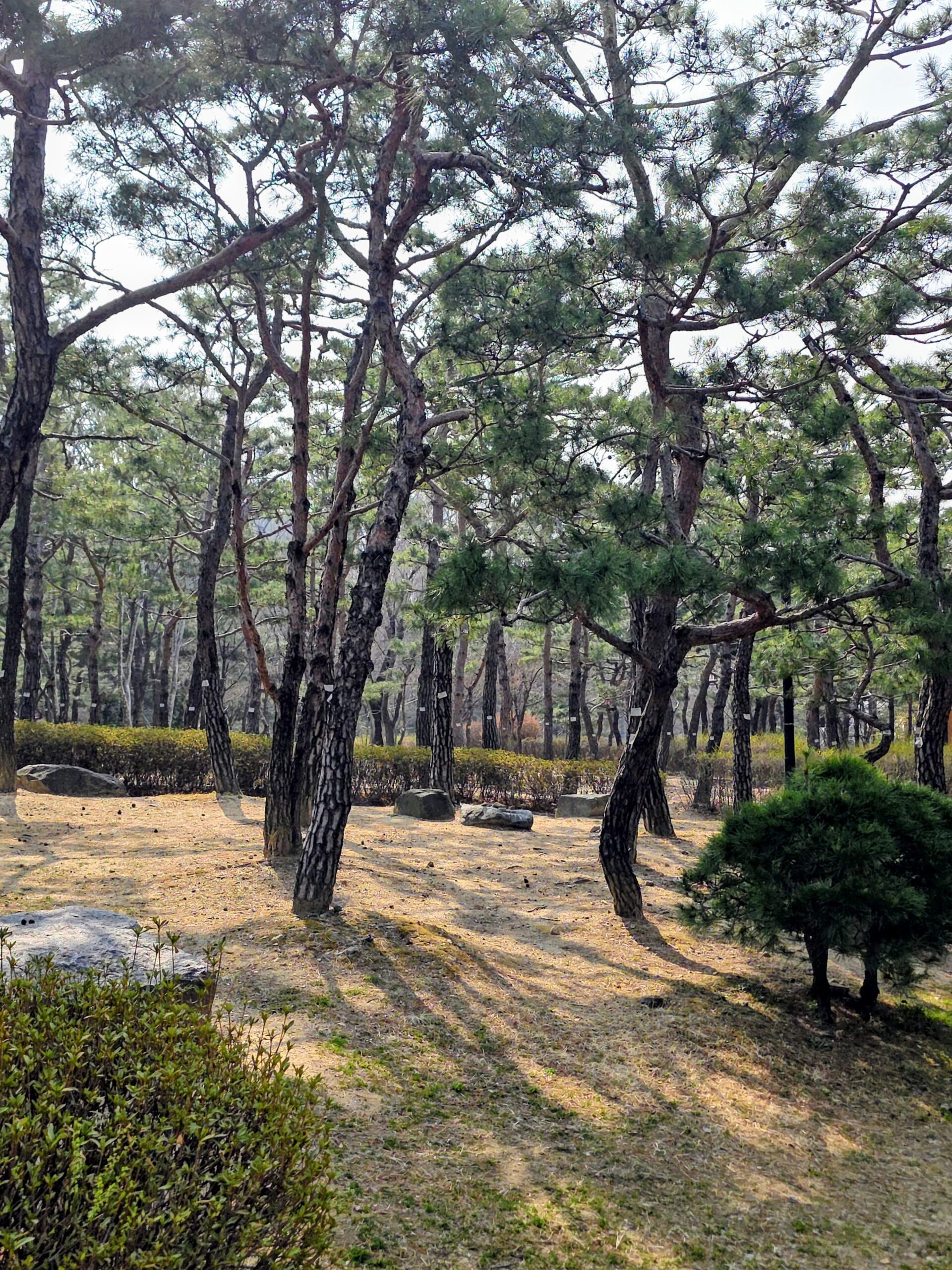
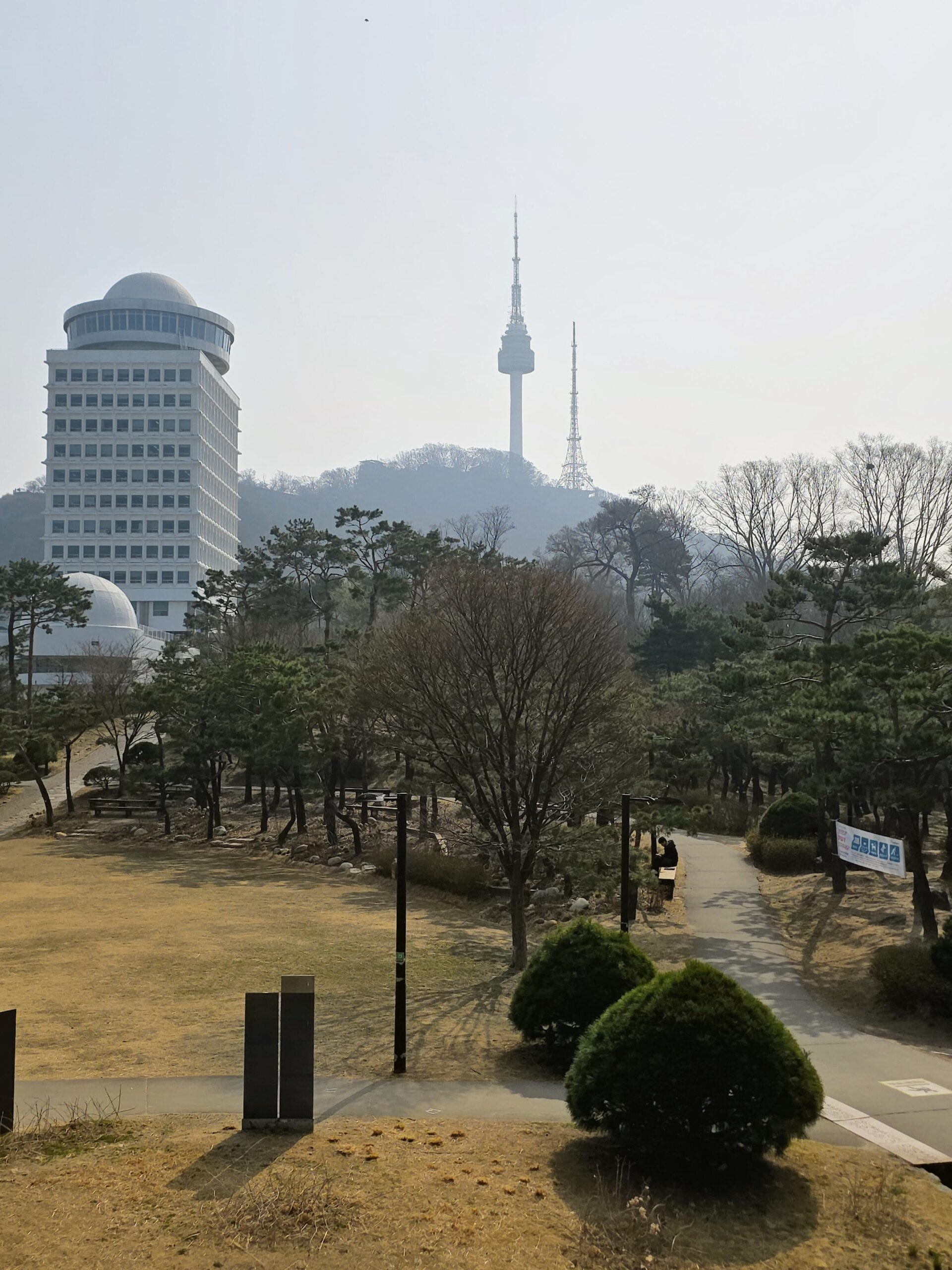
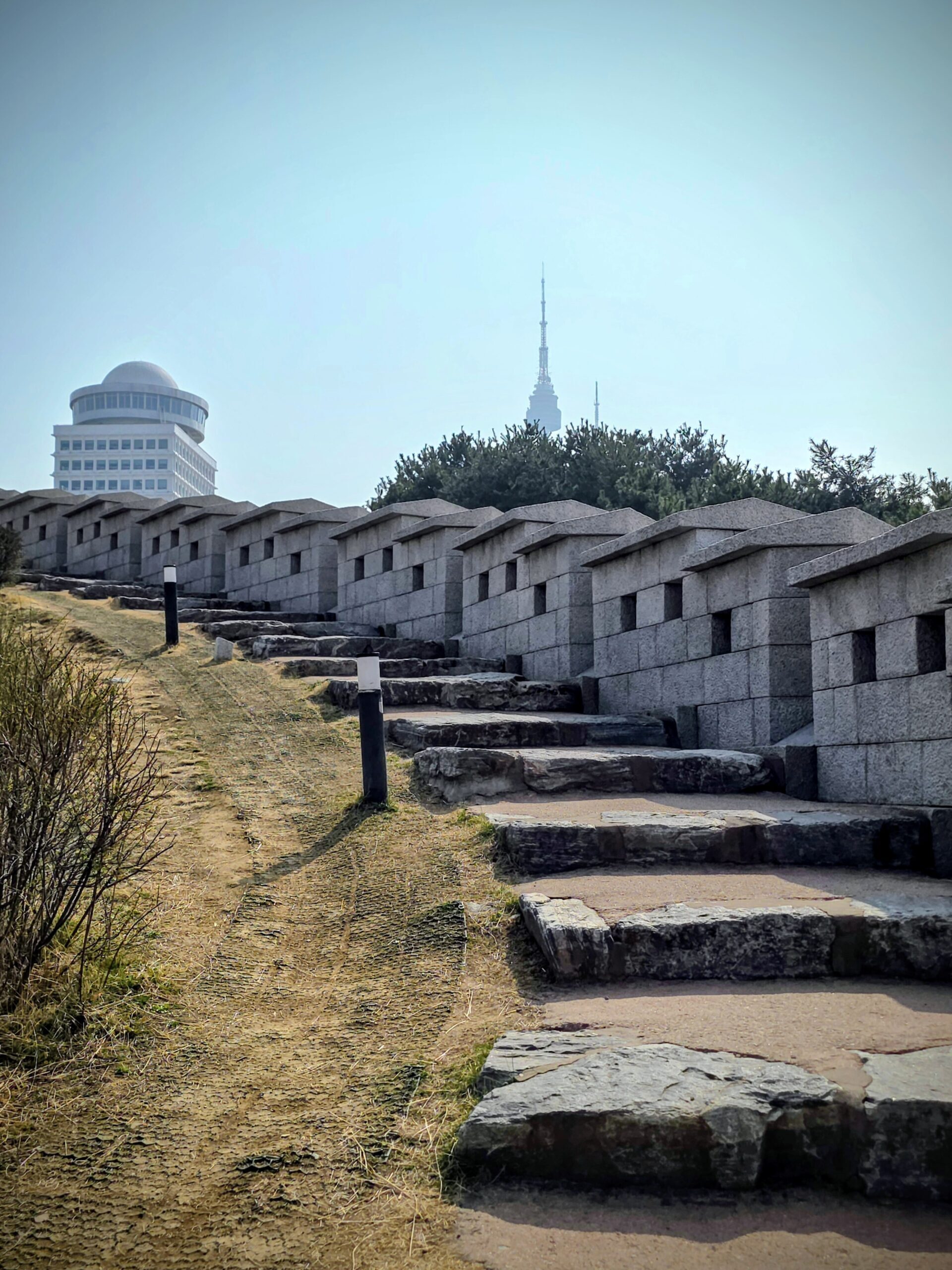
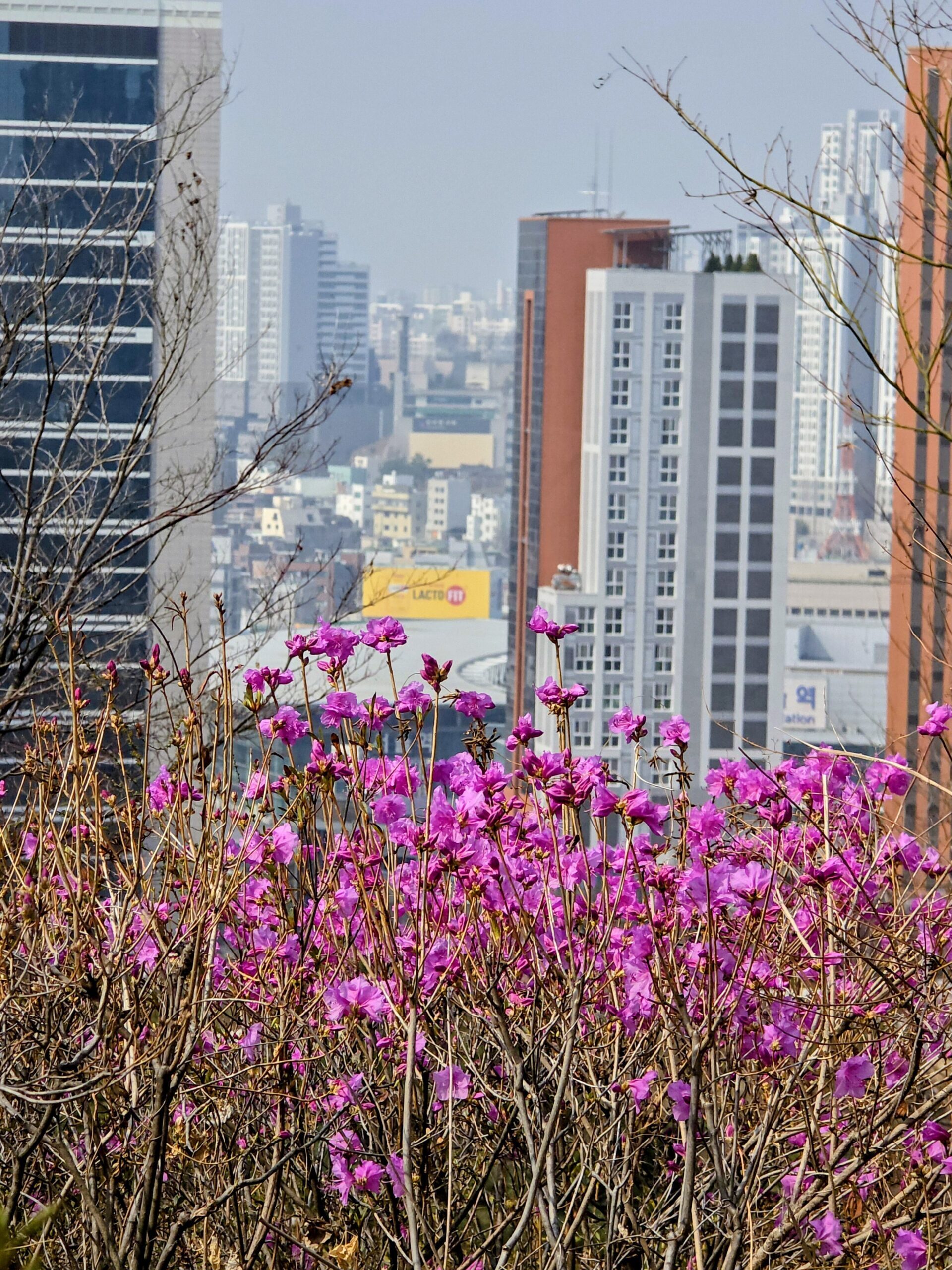
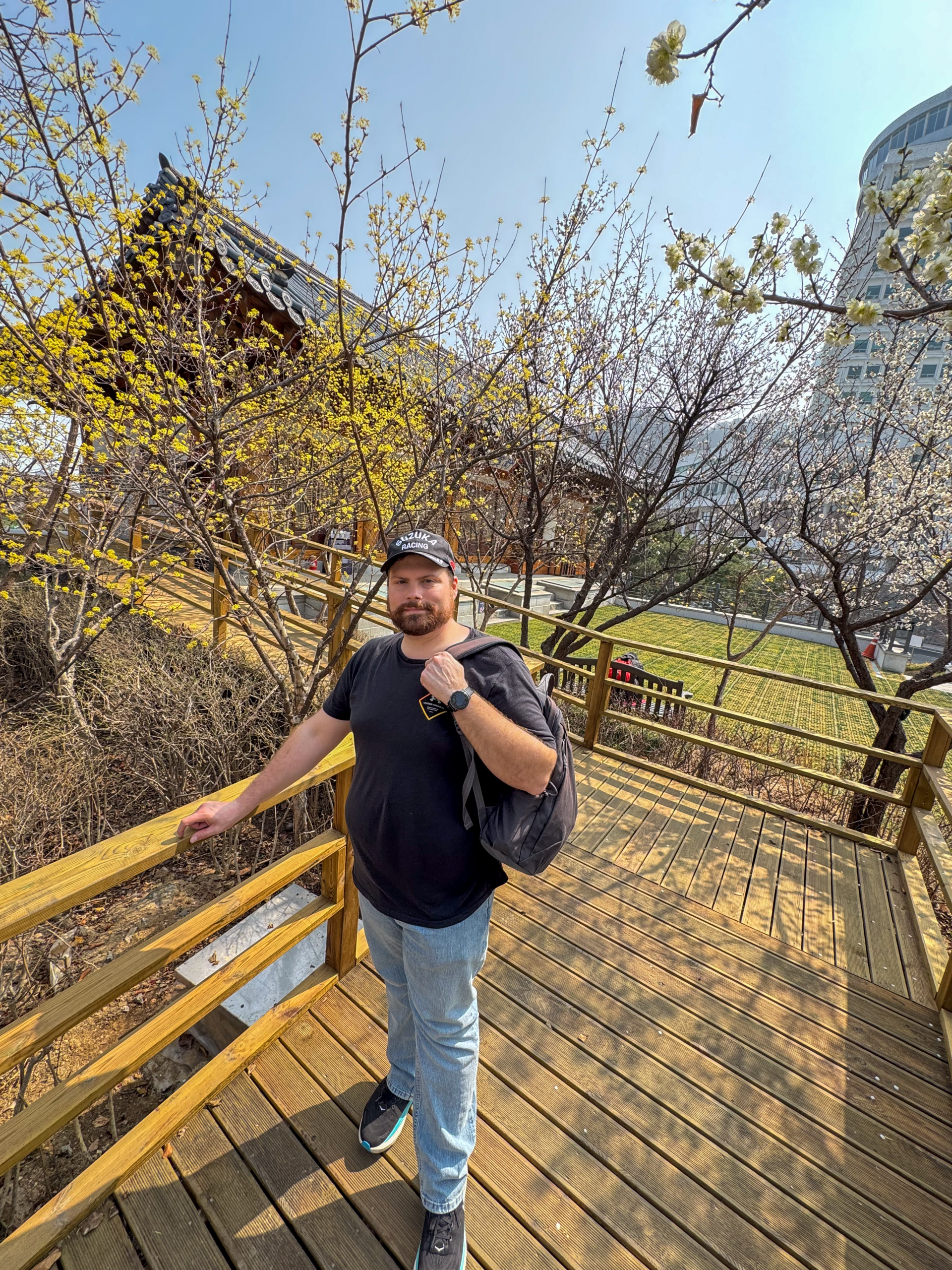
Namsan Park was a short stroll from where we were staying, and it was an excellent place to start the trip. The trails climb through woodland before the trees suddenly open up and Seoul spreads out below you in every direction. Dense neighborhoods stacking into more neighborhoods, rolling outward until they dissolve into a ring of distant mountains.
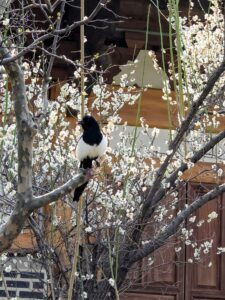
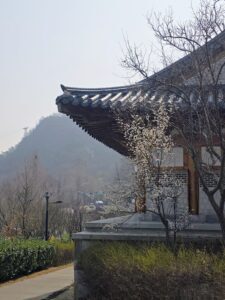
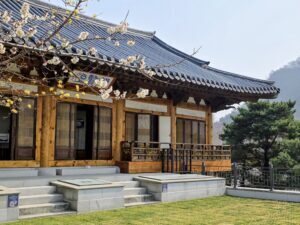
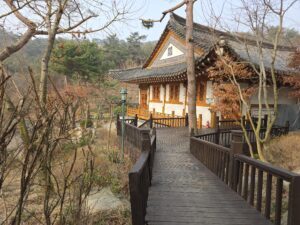
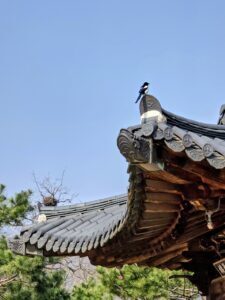
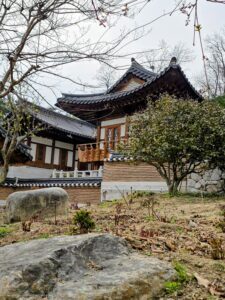
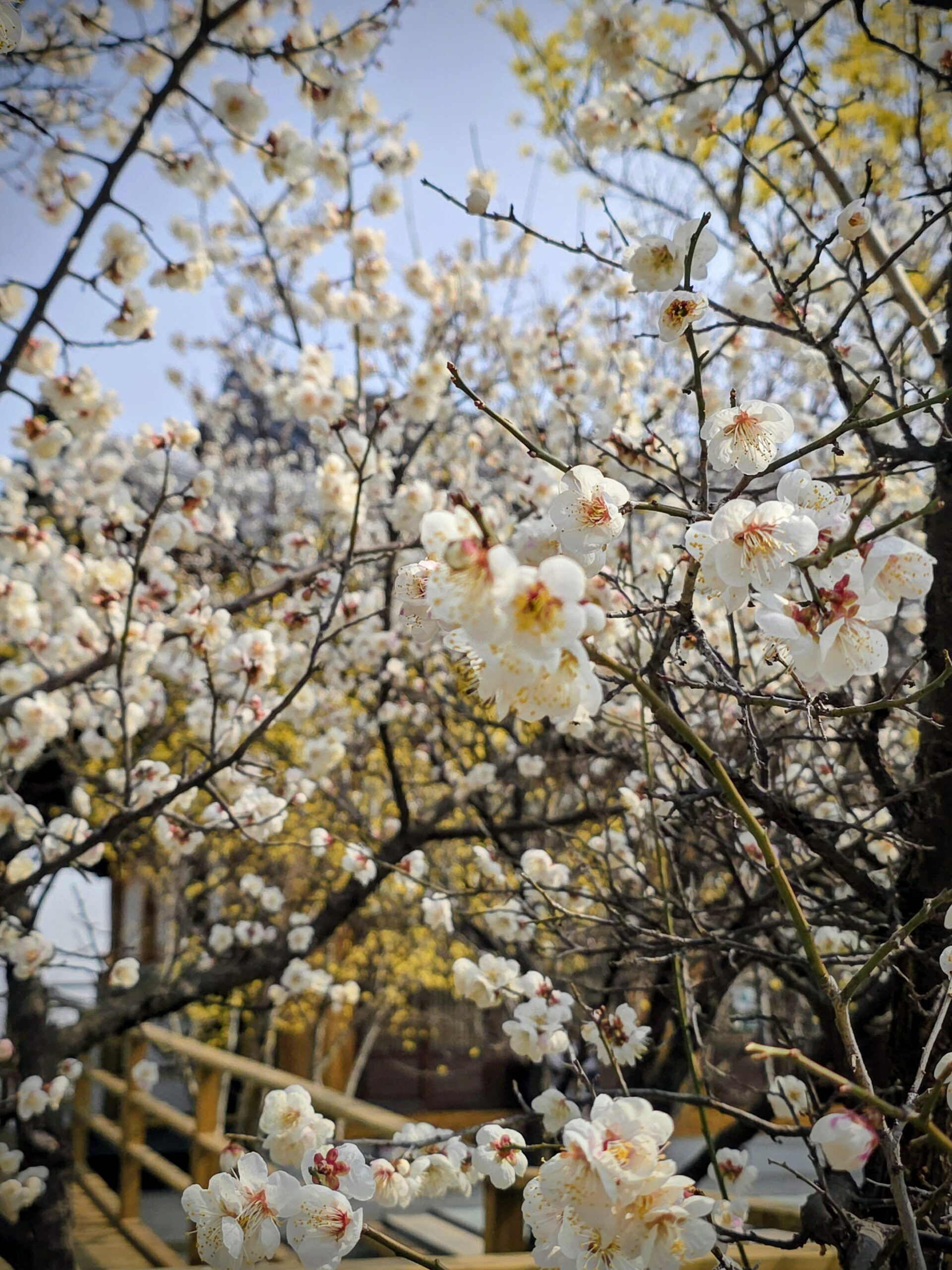
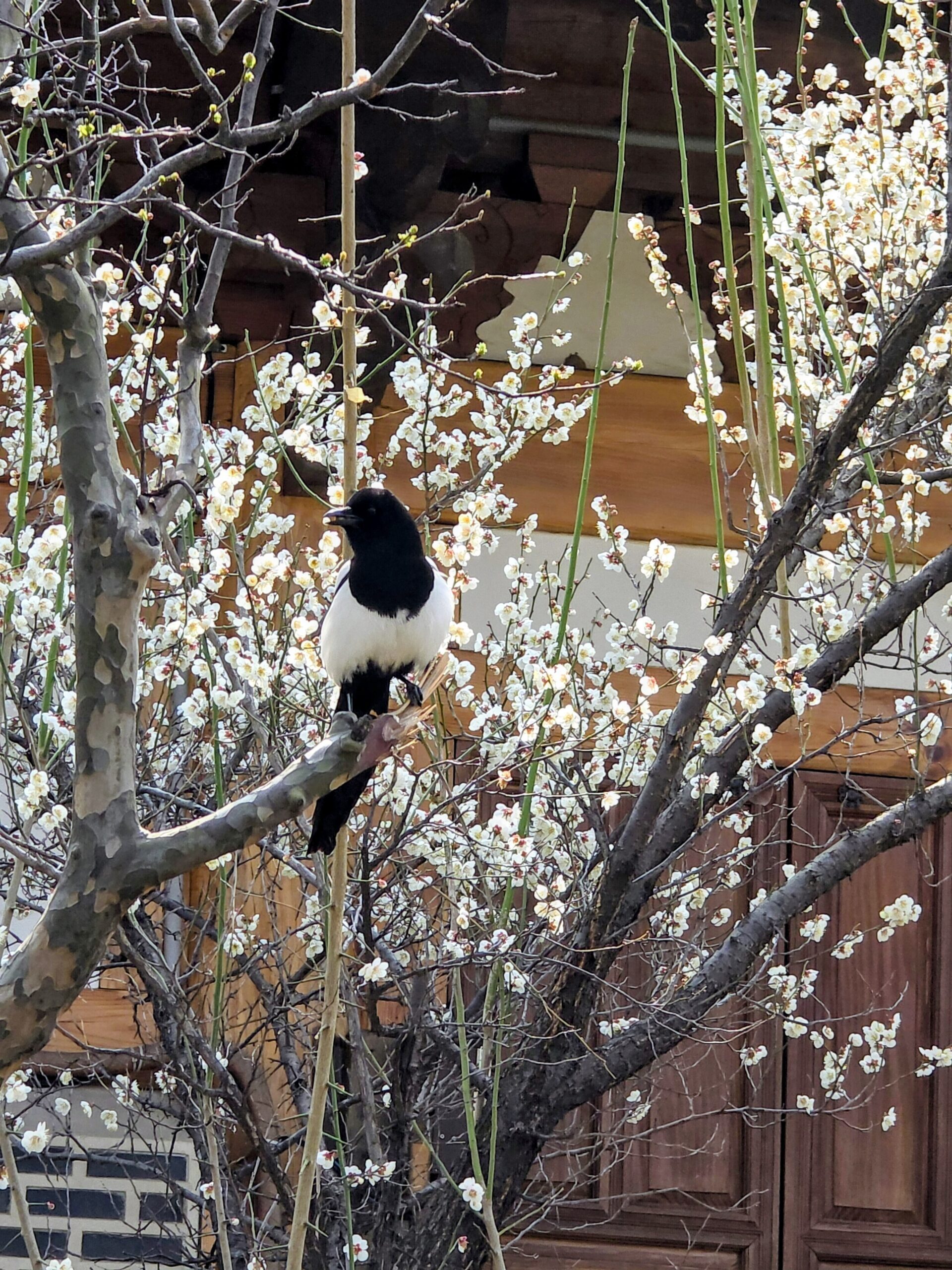
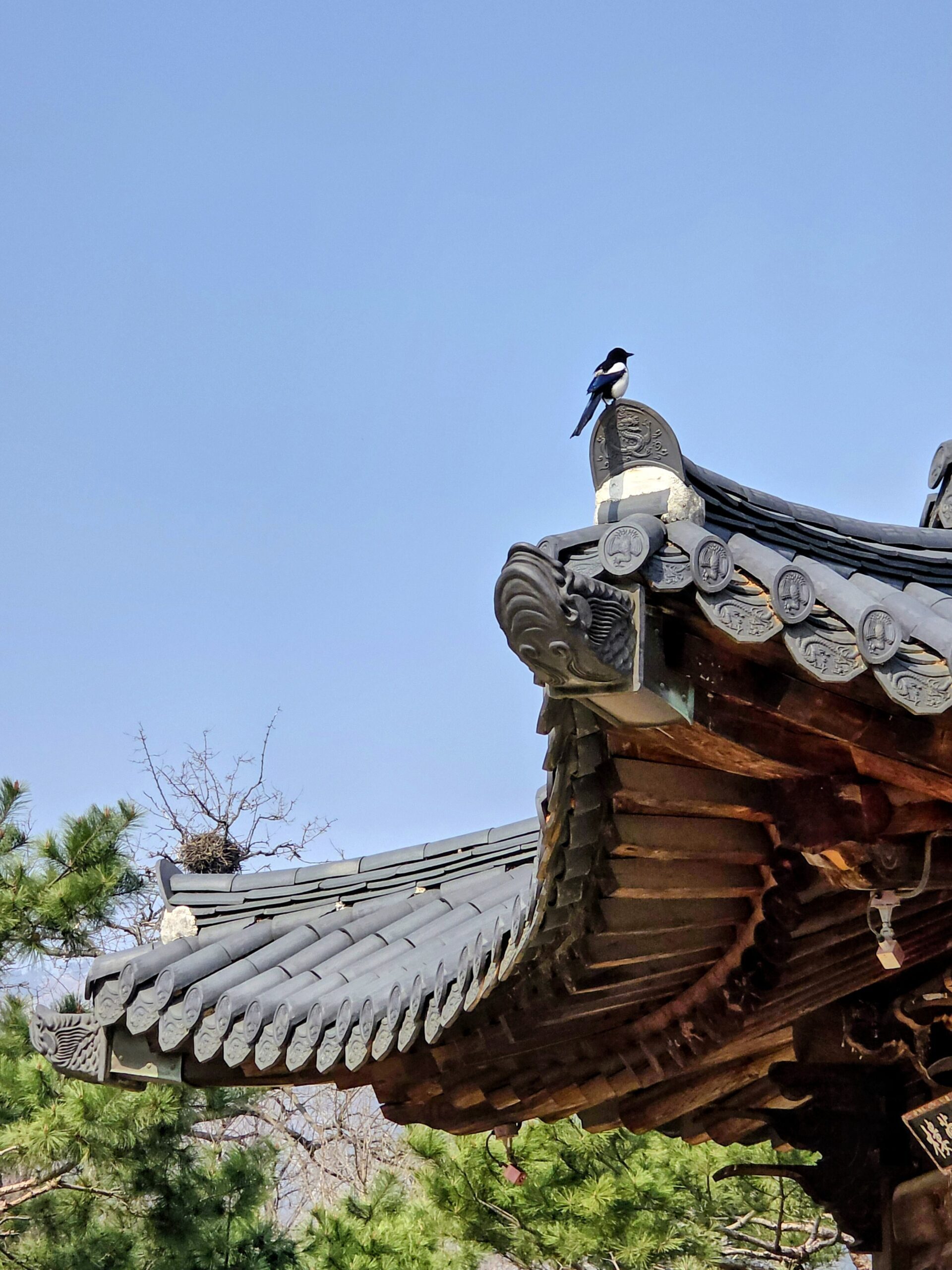
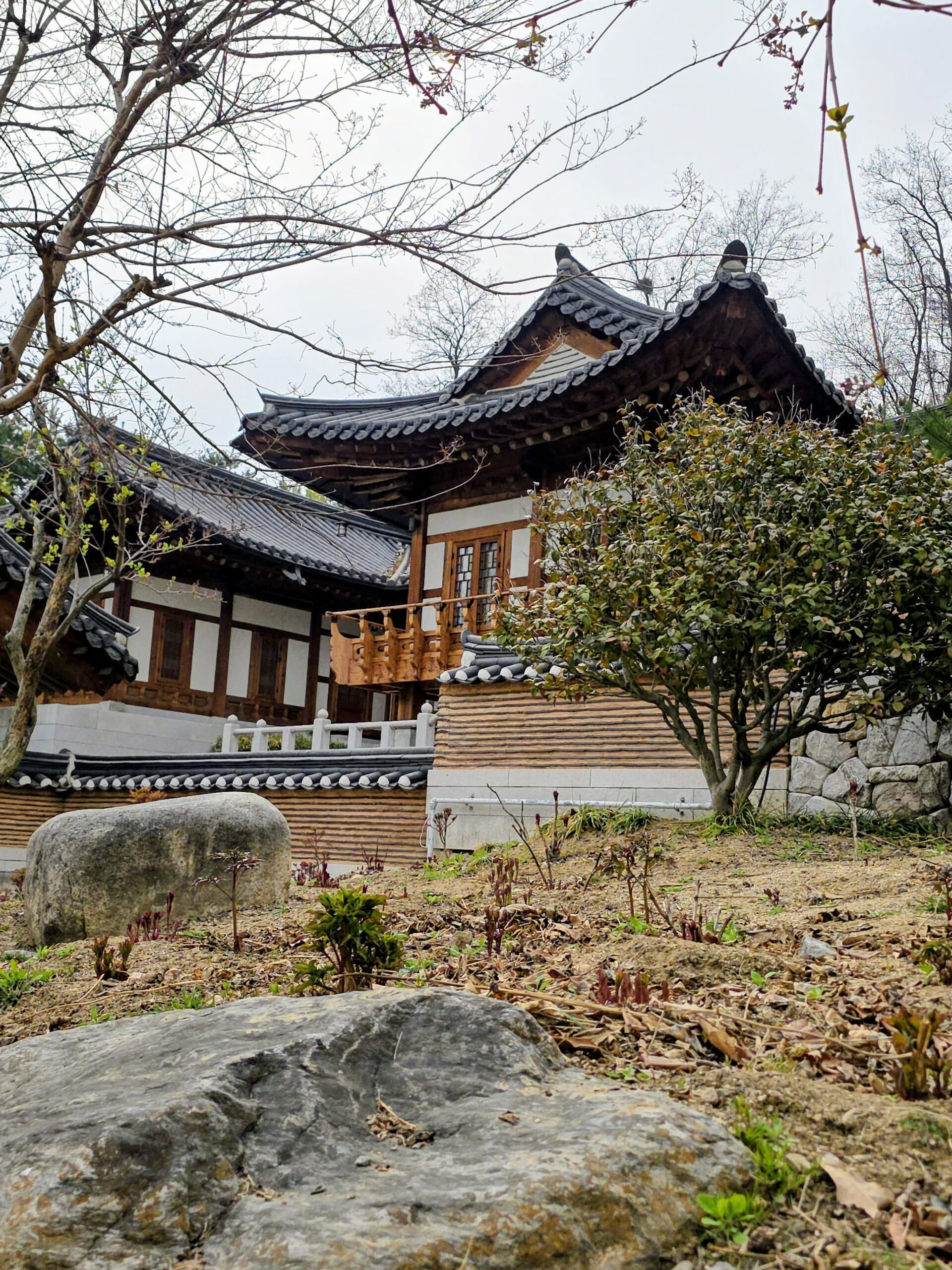
At some point along the path I stopped, and a magpie stopped with me, perched upon traditional style building. The bird was completely unbothered by my presence. I later learned that magpies are considered a symbol of good luck in Korea. I’ll take it.
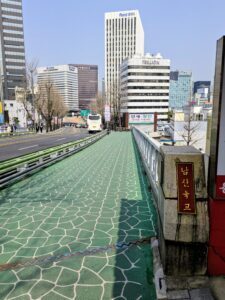
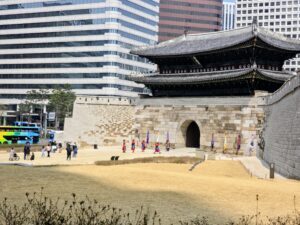
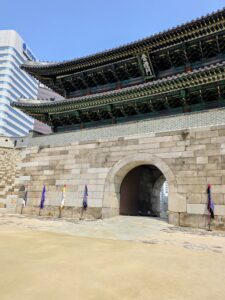
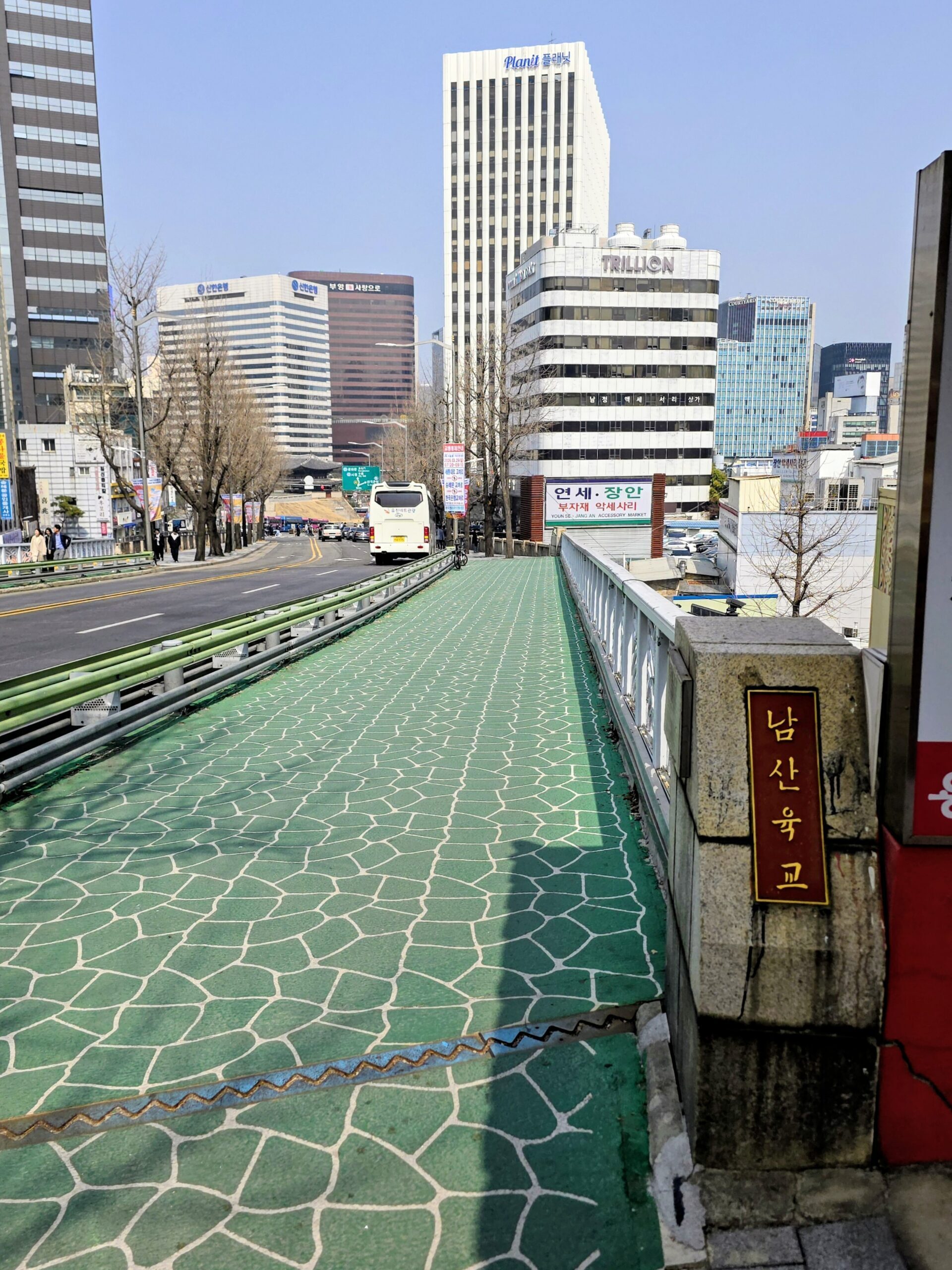
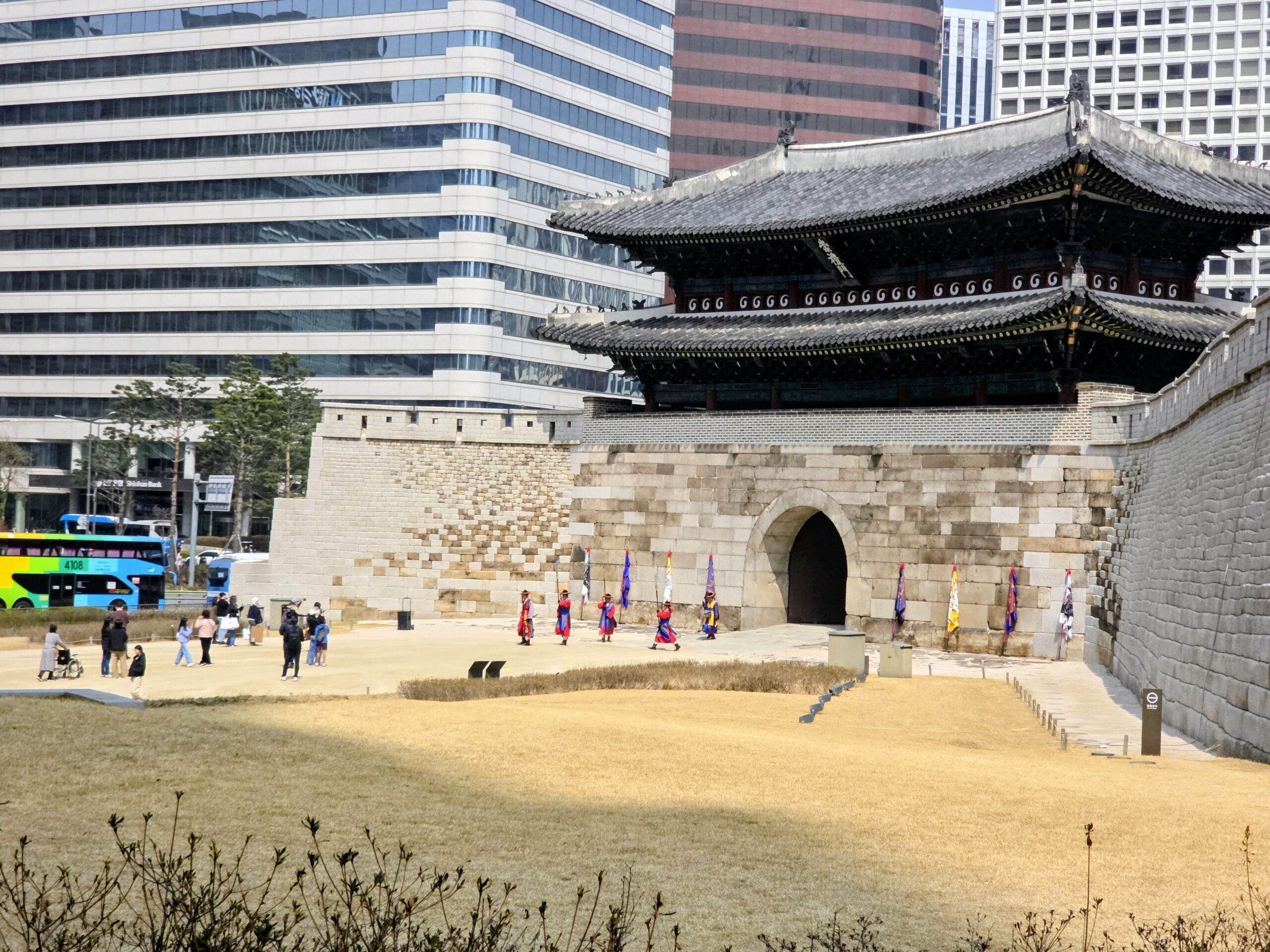
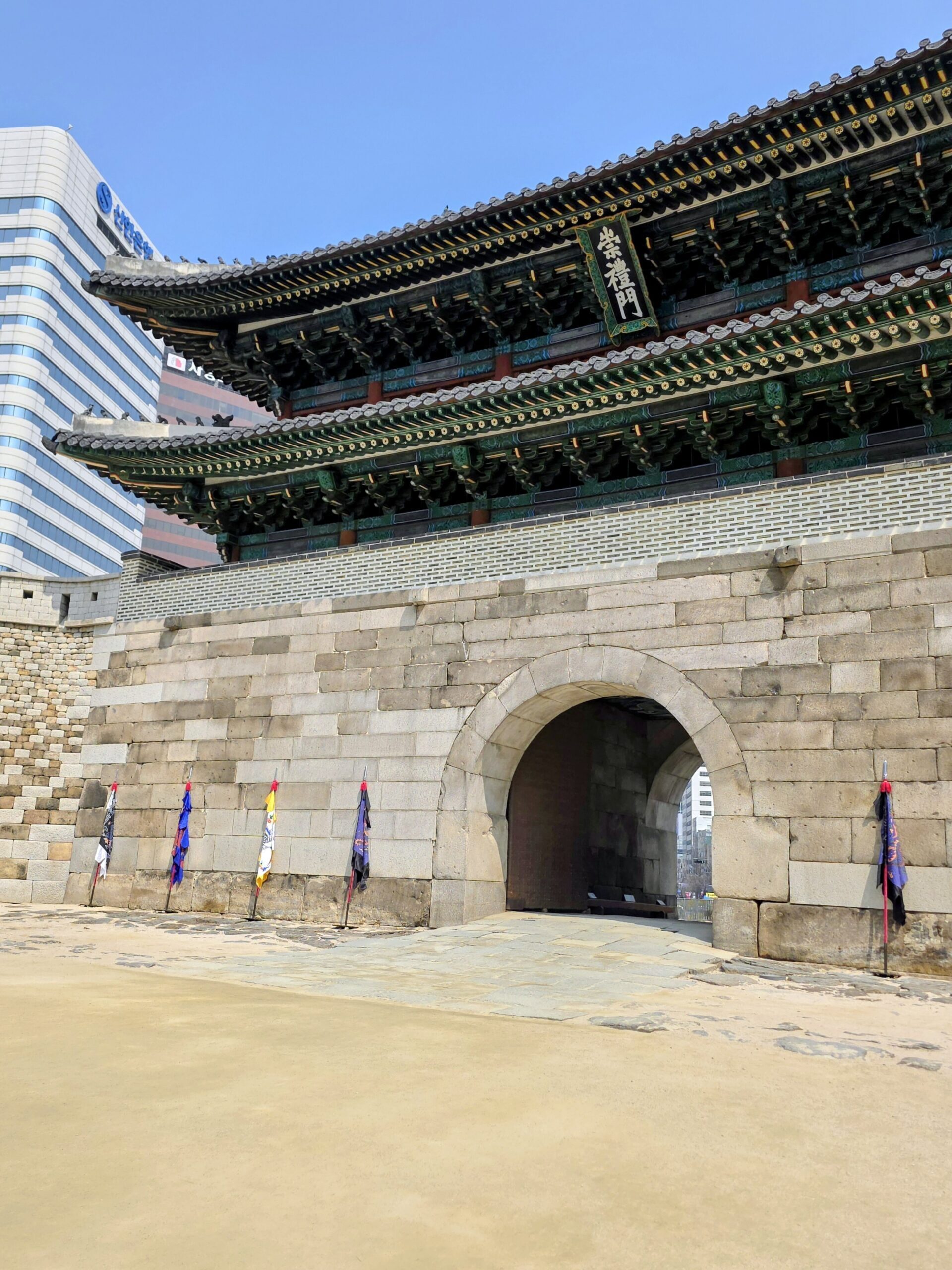
On the way back down we passed Sungnyemun Gate, also known as Namdaemun. It sits right in the middle of a busy traffic circle, surrounded by office buildings and constant traffic. The gate has been there for more than 600 years. Cars and buses move around it in every direction, but the structure itself hasn’t moved at all. It’s a pretty striking contrast that isn’t lost on me. A massive wooden gate from the 14th century standing quietly in the middle of a modern city. This is why I wander.
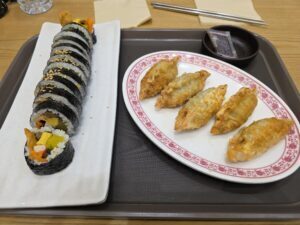
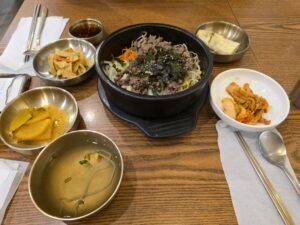
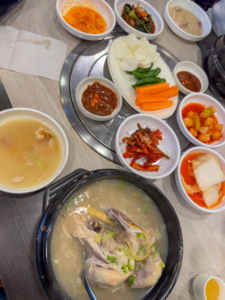
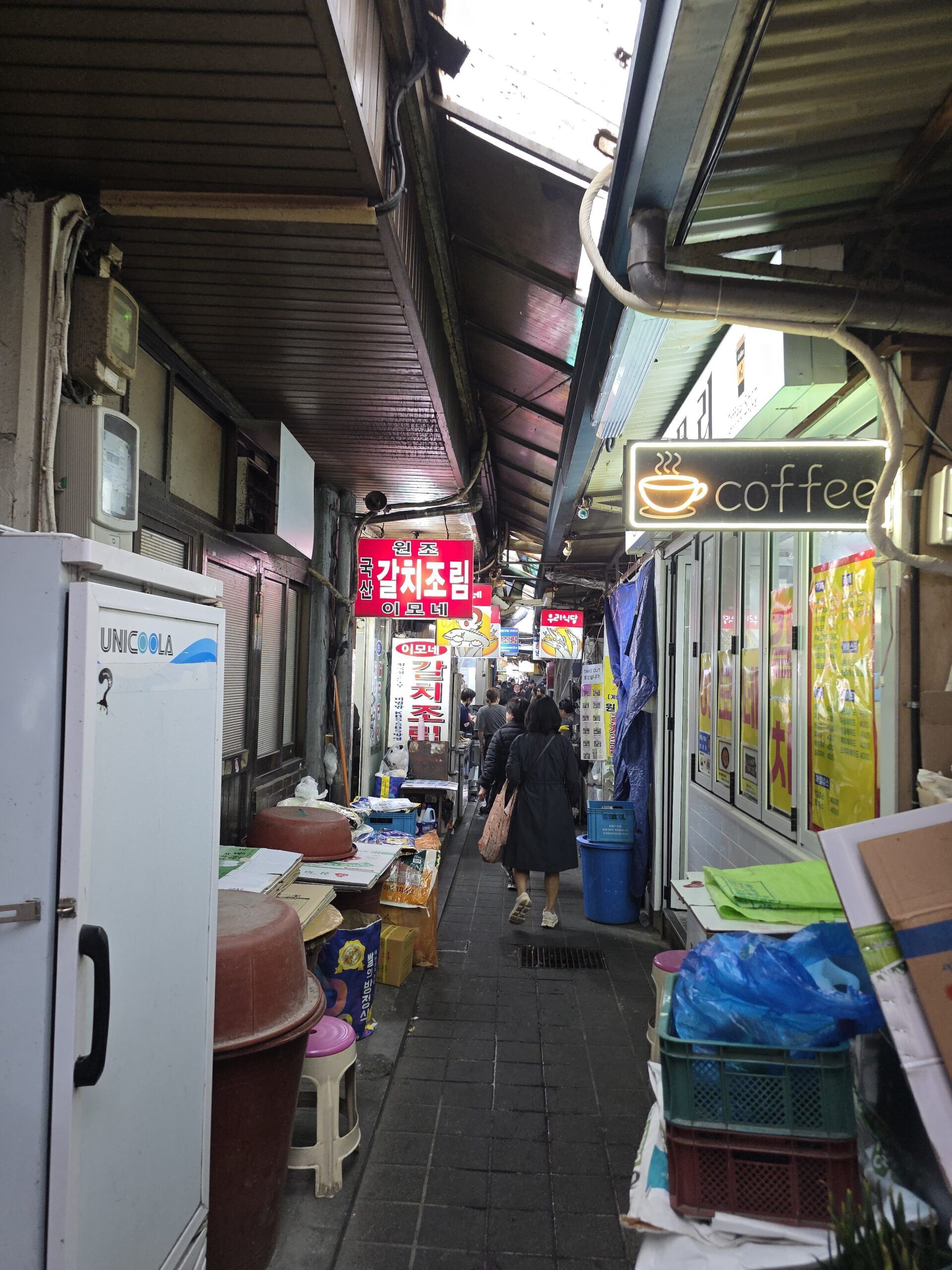
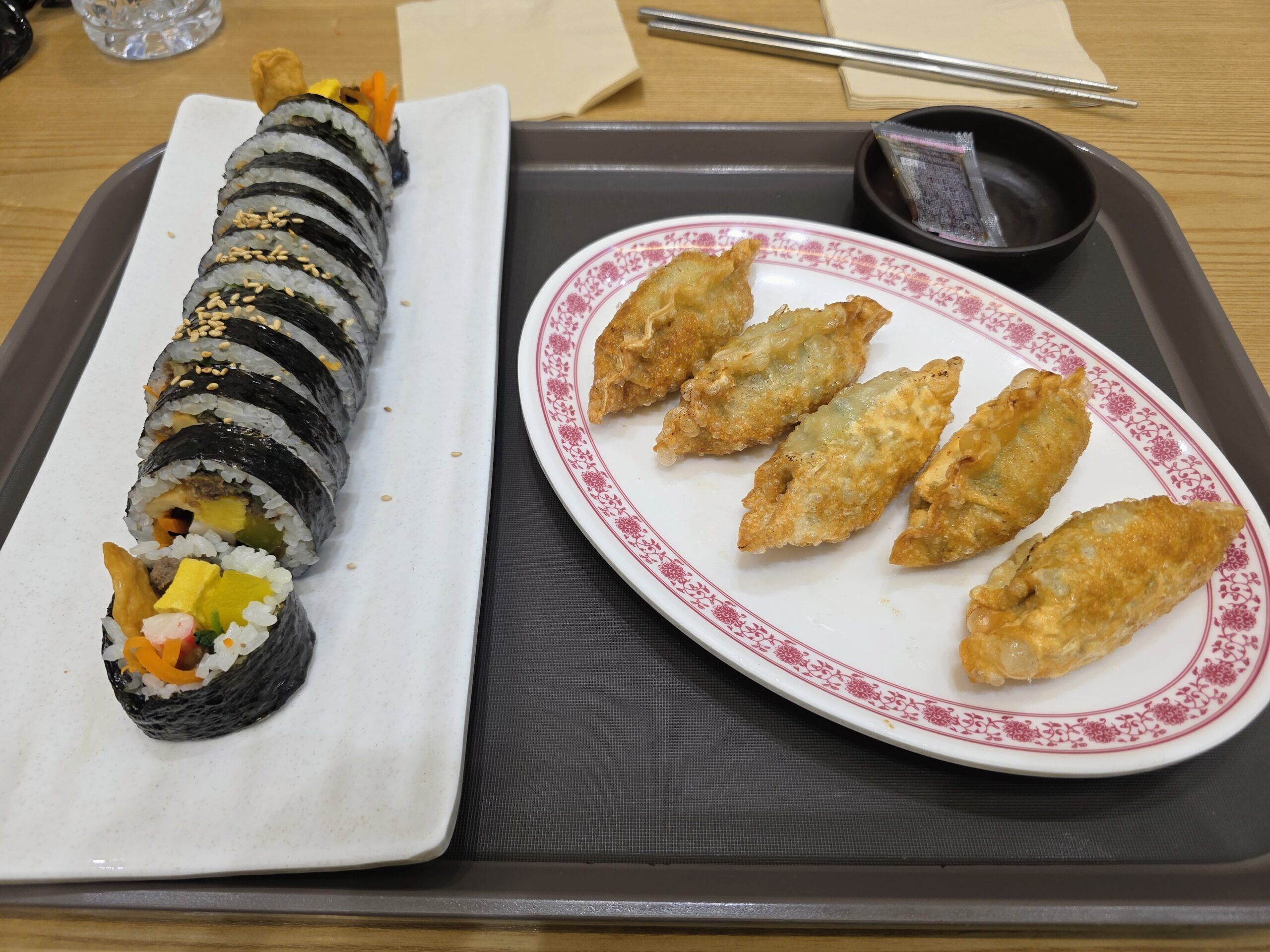
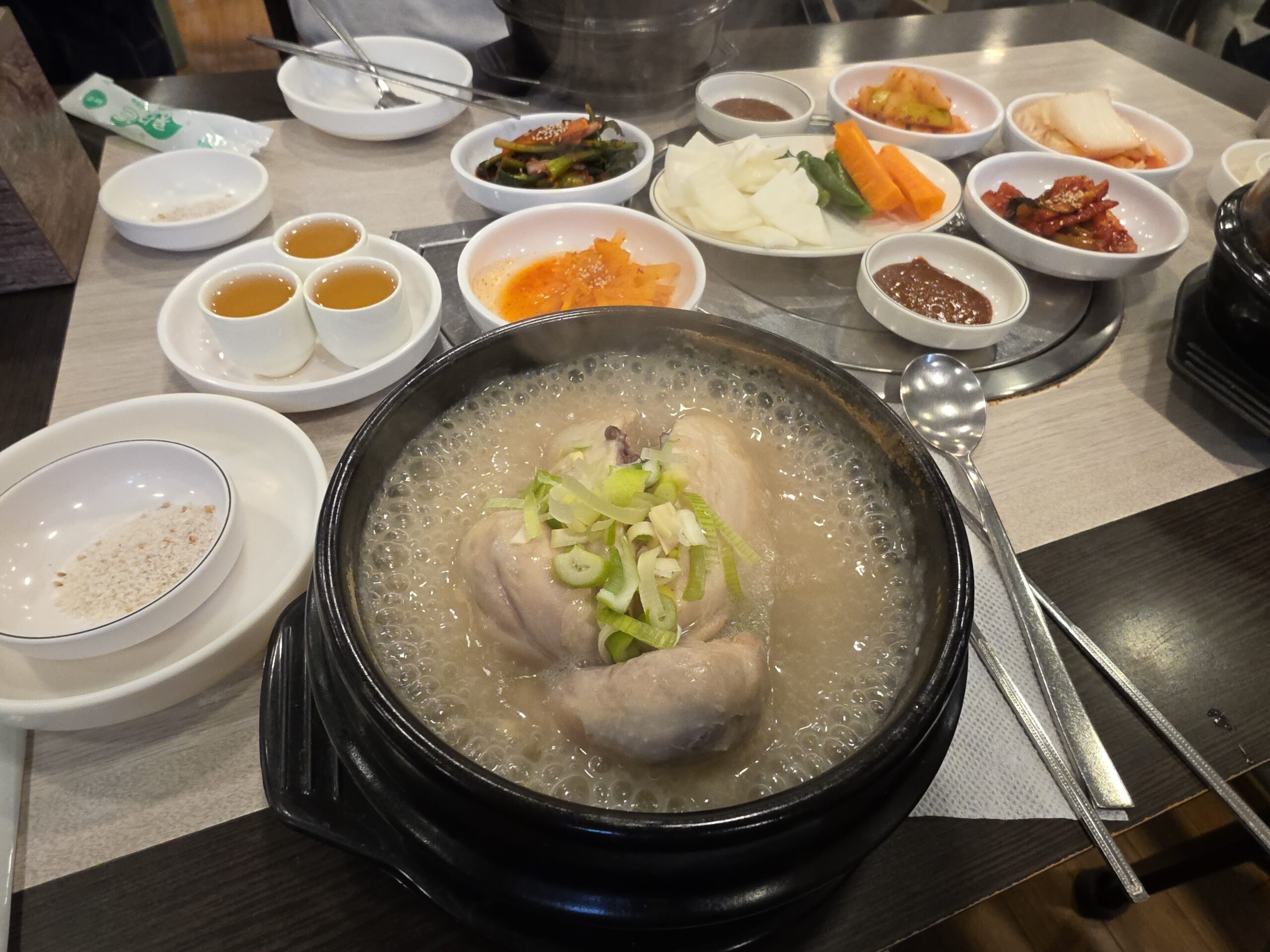
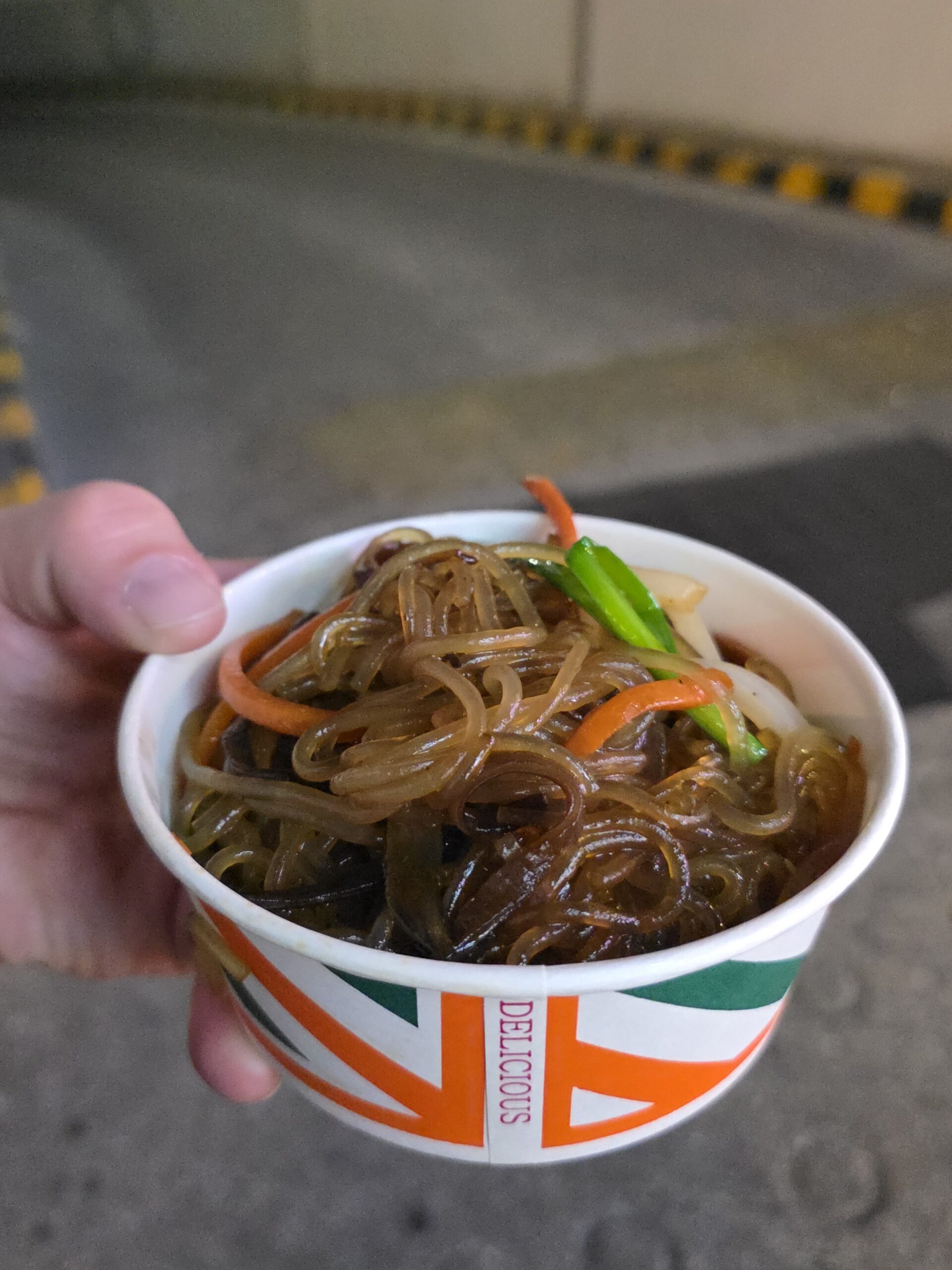
Lunch happened underground. We found Gimgane tucked below street level near Seoul Station, a place that exists entirely for locals. We ordered gimbap and mandu to keep the lunch simple and light. After a long flight and a morning of walking, that’s all we wanted. There’s something about simple food eaten in an unfamiliar city that fills me with joy. I can’t put my finger on as to why that is.
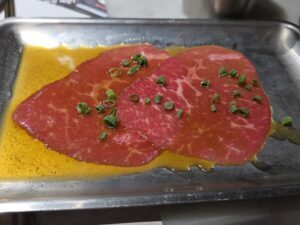
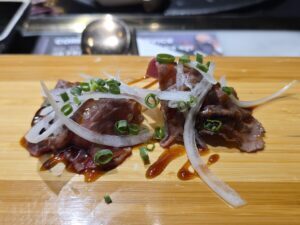
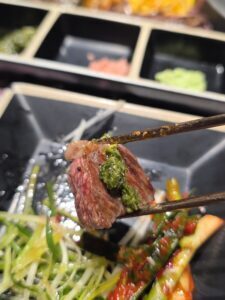
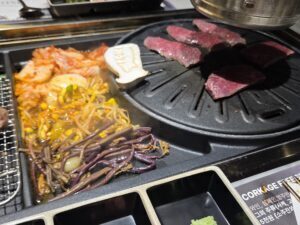
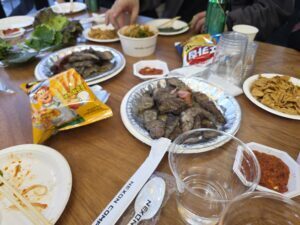
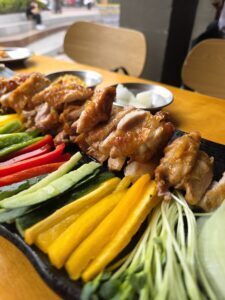
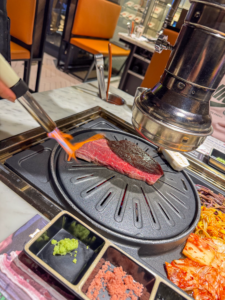
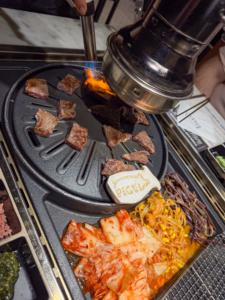
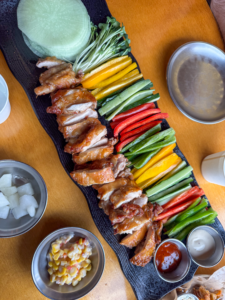
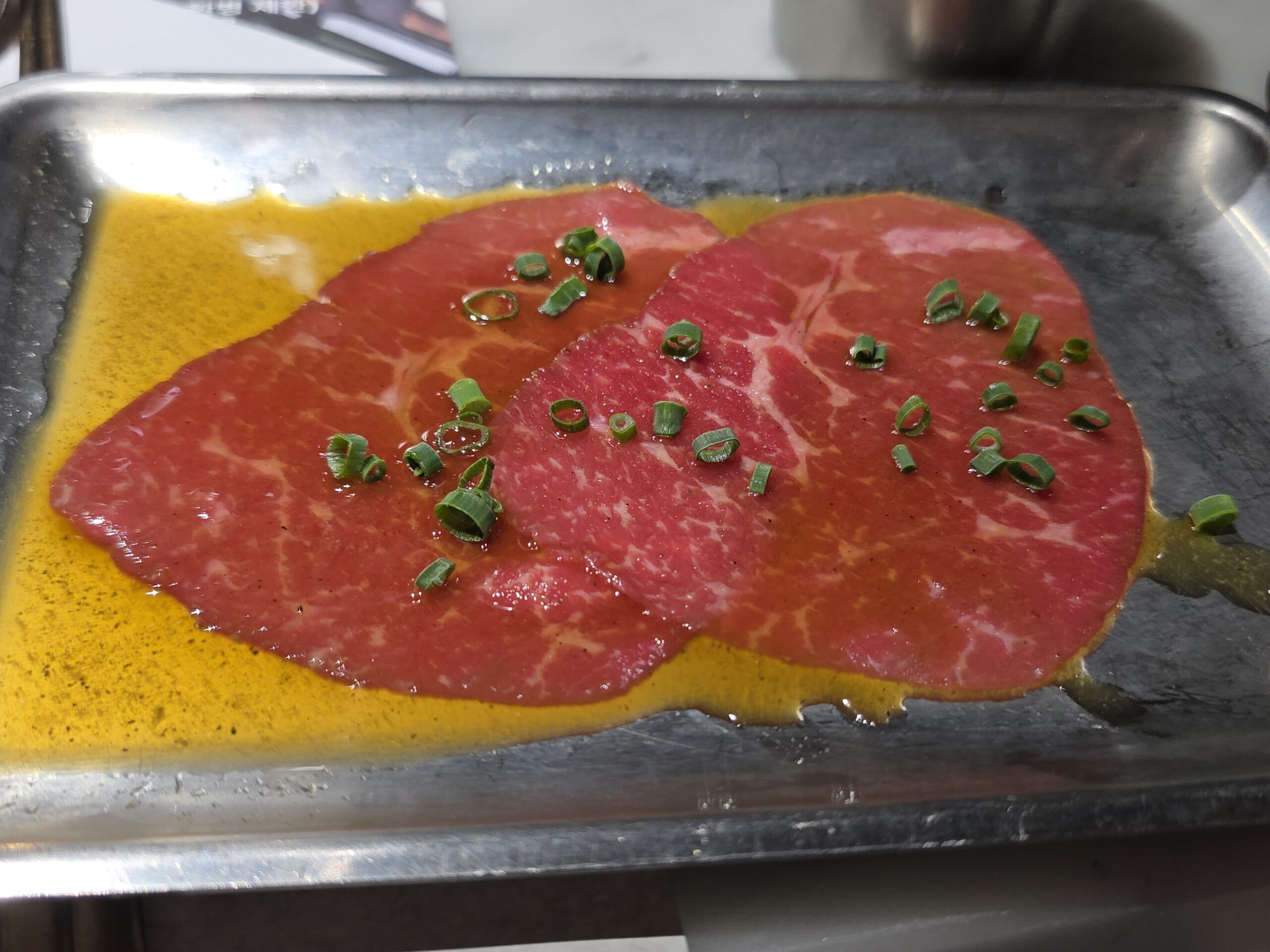
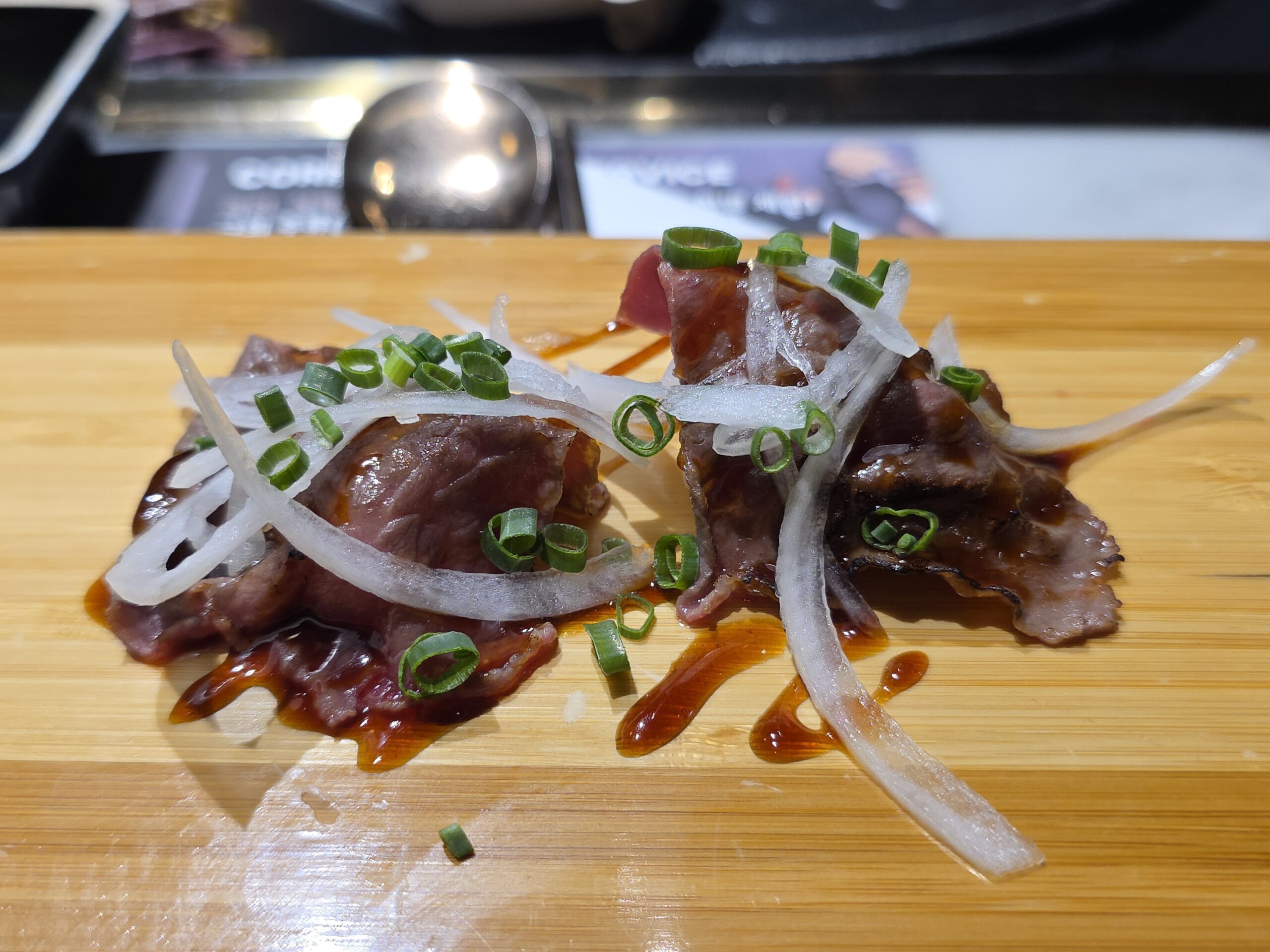
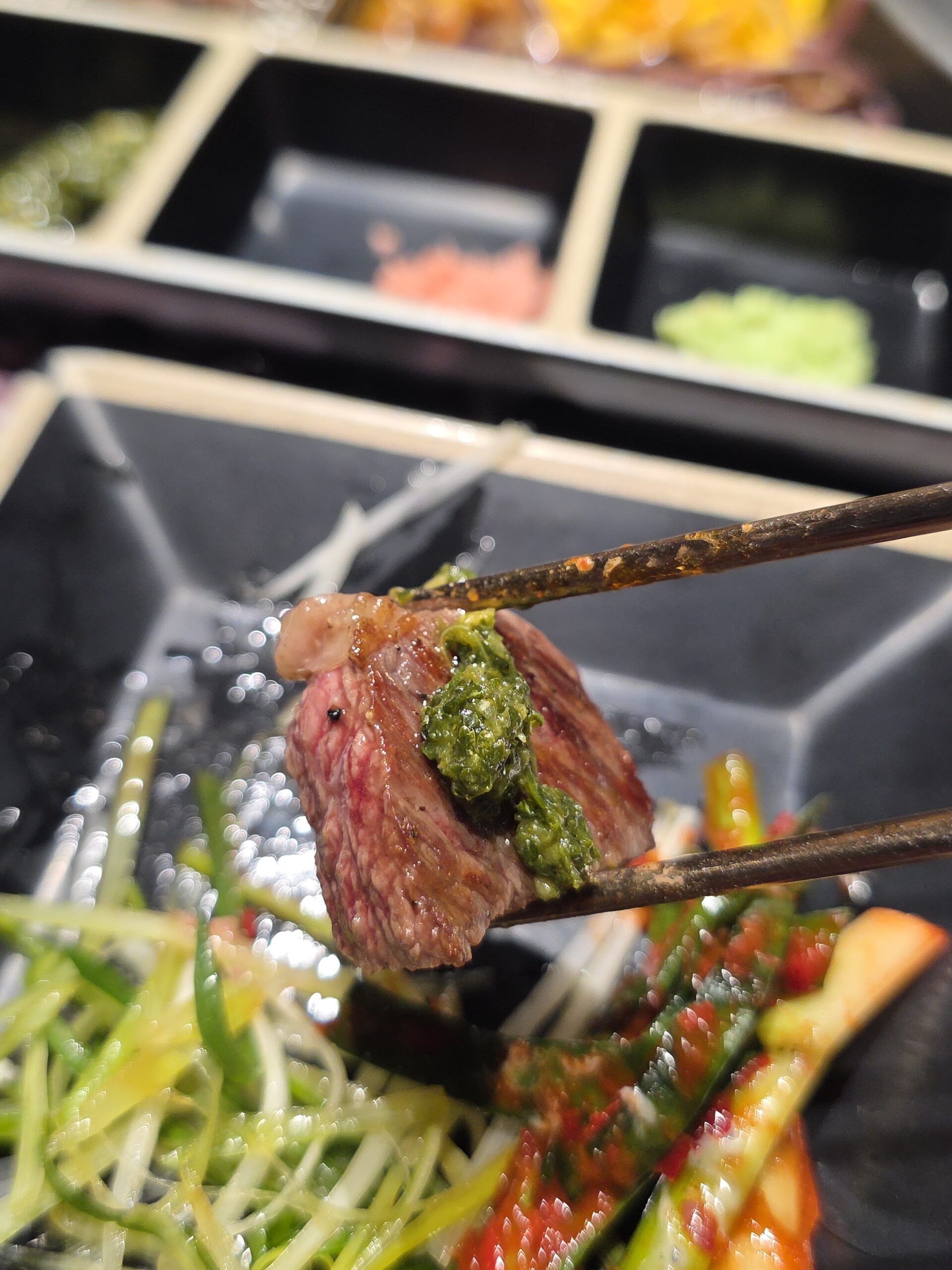
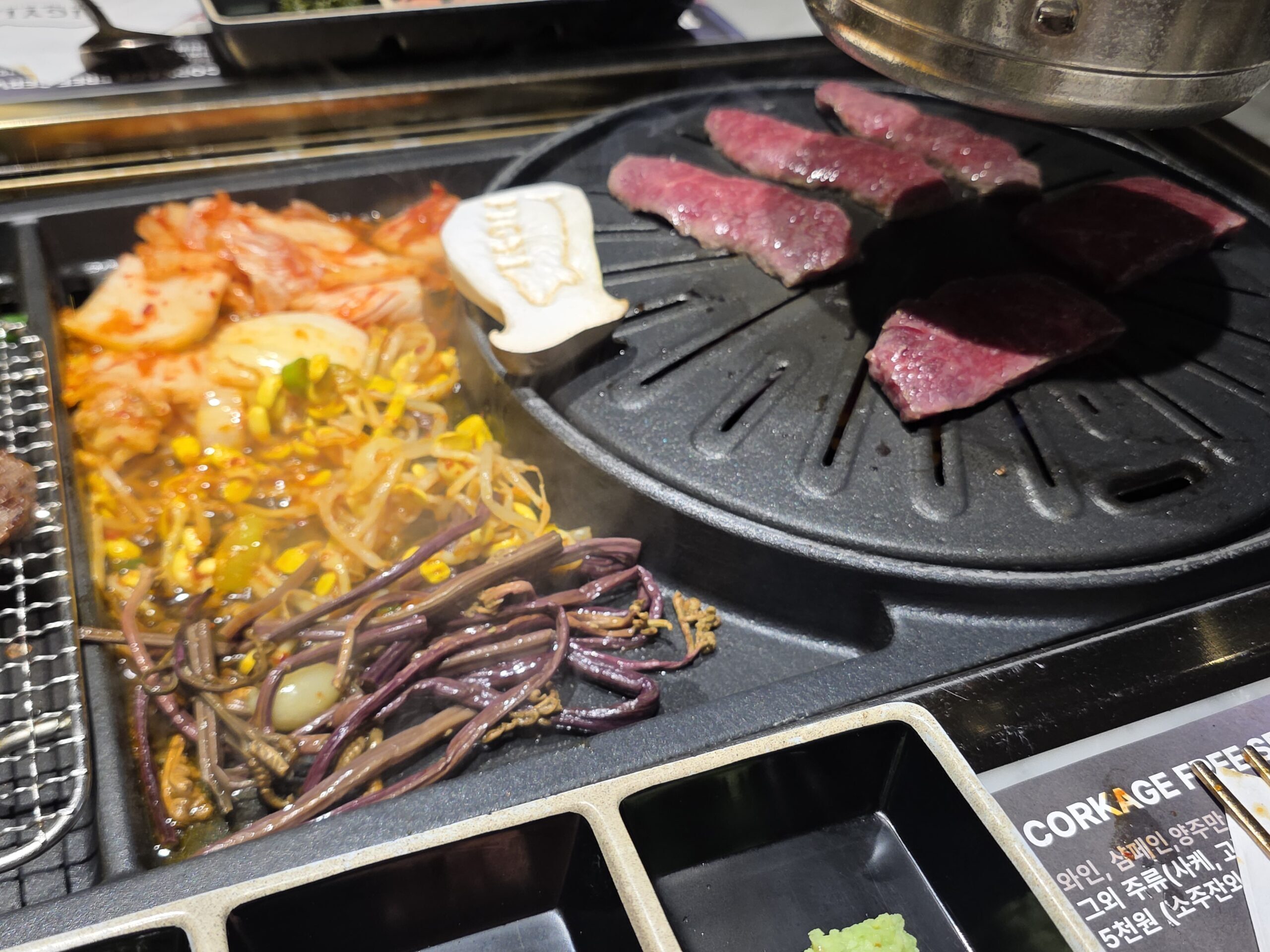
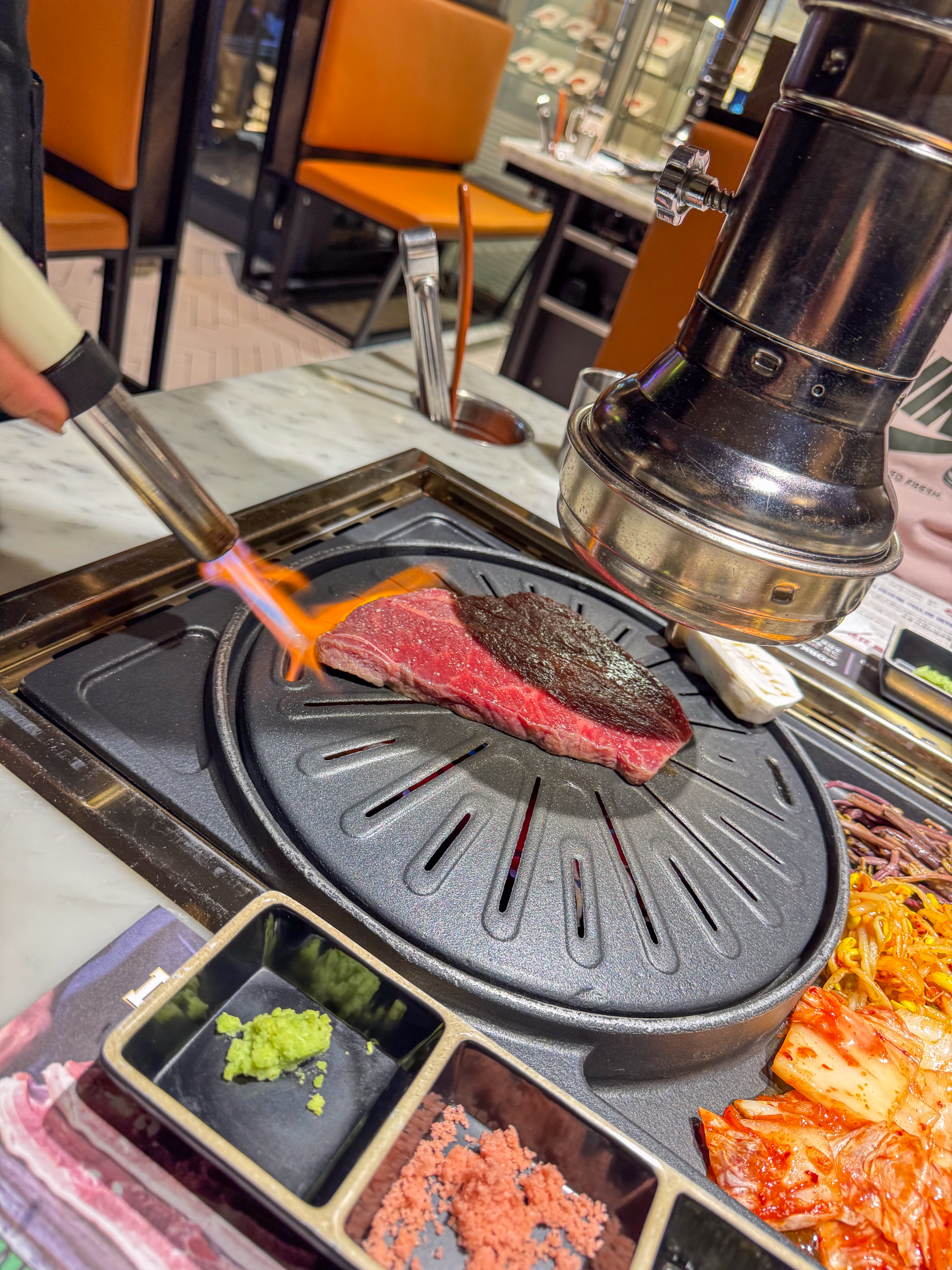
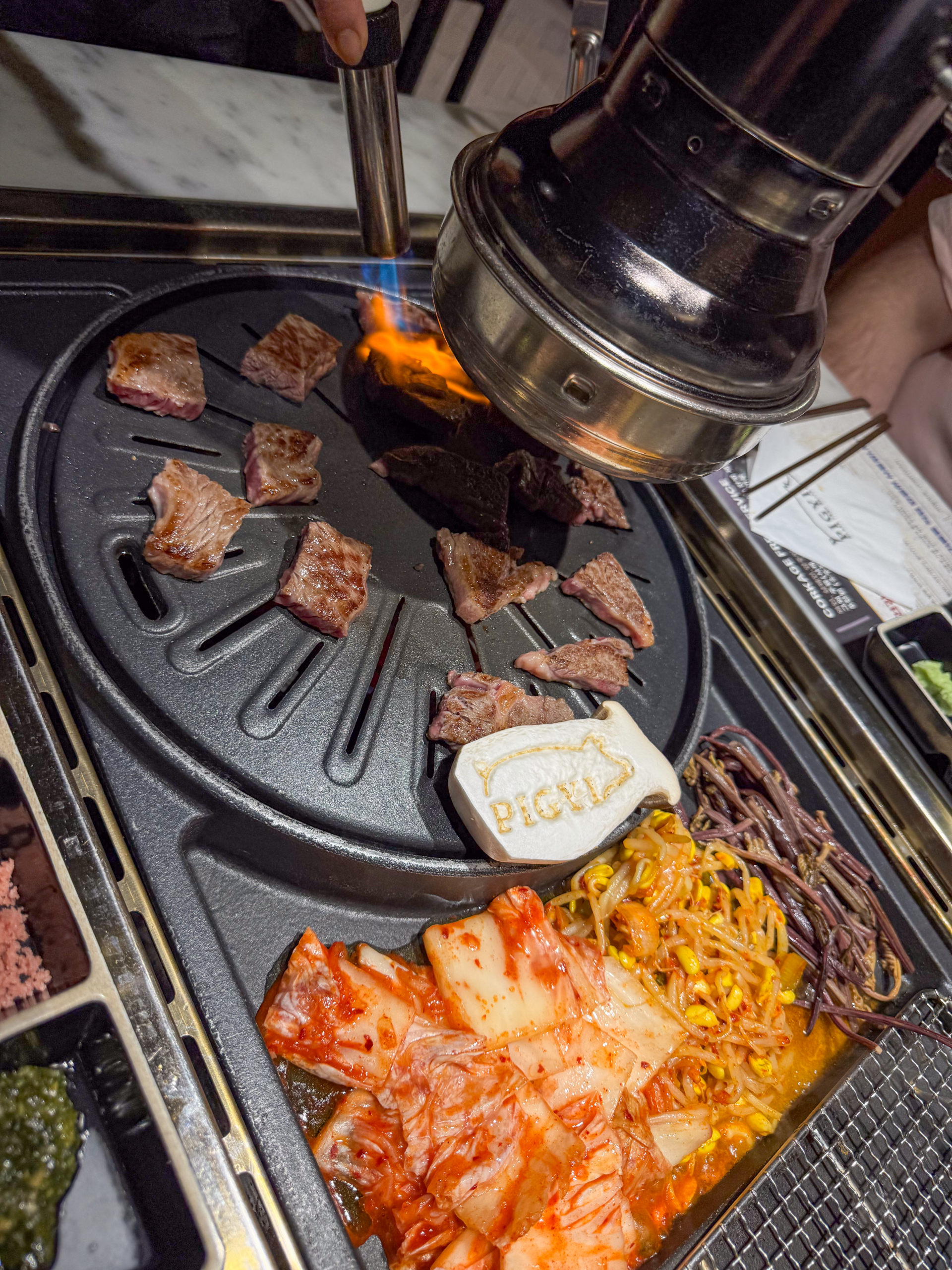
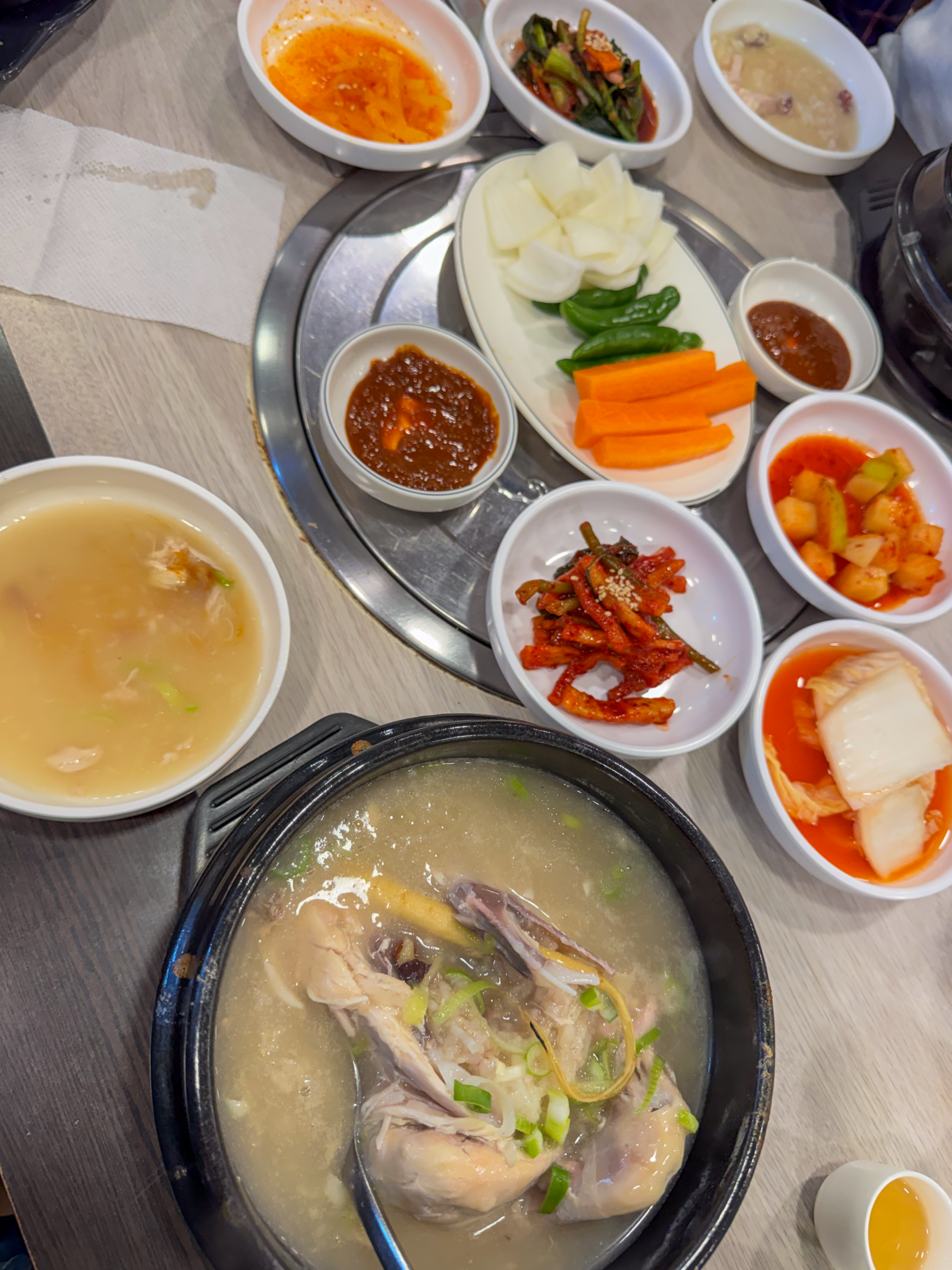
That evening we made our way through Yongsan and eventually ended up at a restaurant called Pigyi for Korean barbecue. I’ve had Korean BBQ plenty of times, pretty much every time I travel with colleagues. There’s no shortage of it in New York or New Jersey. However, sitting at that table in the place where it began, with the grill warming up and banchan crowding the table, felt different in a way that’s hard to pin down precisely. Maybe it’s the context. Maybe it’s that the food is just better when you’re actually there. Either way, by the end of that first night I had a sense that this trip was going to be harder to leave than I had planned for.
Work, History, and the Edge of the DMZ
The next morning started with work. My boss met us at the hotel and gave a short tour while driving to the office. I had the chance to meet with colleagues at our Seoul office and lead a meeting. It was great to finally tie faces to their names which only lived through emails to me. Working for a Korean company meant this trip came with a few unique opportunities that were greatly appreciated.
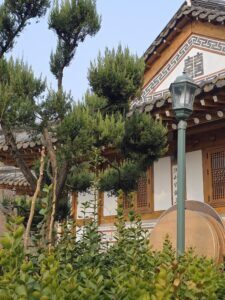
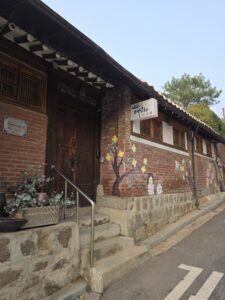
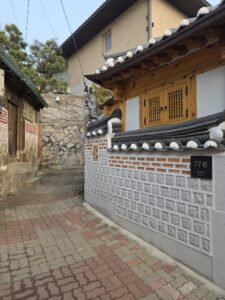
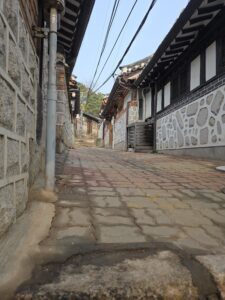
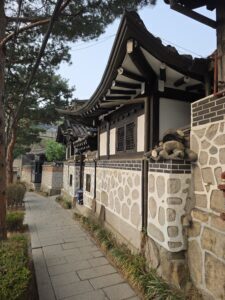
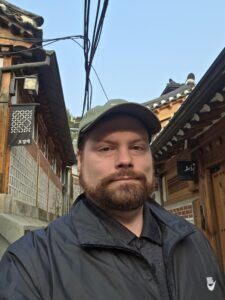
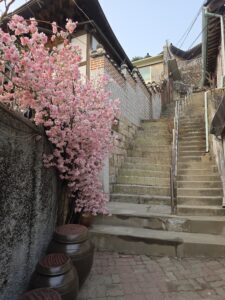
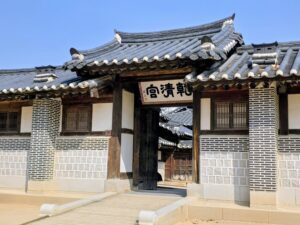
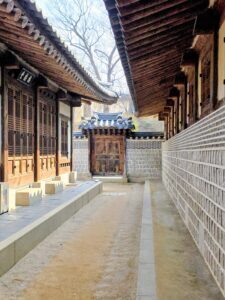
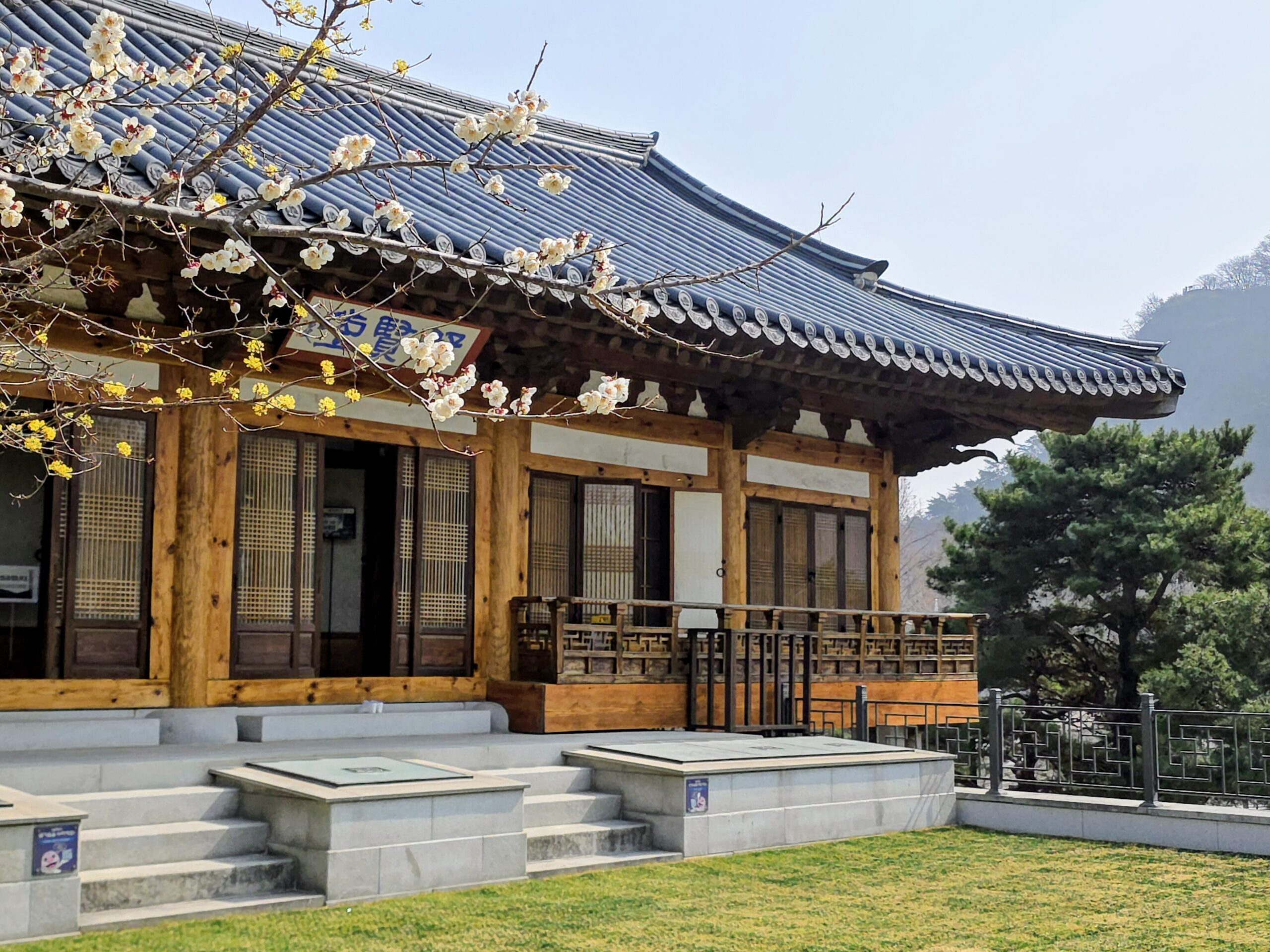
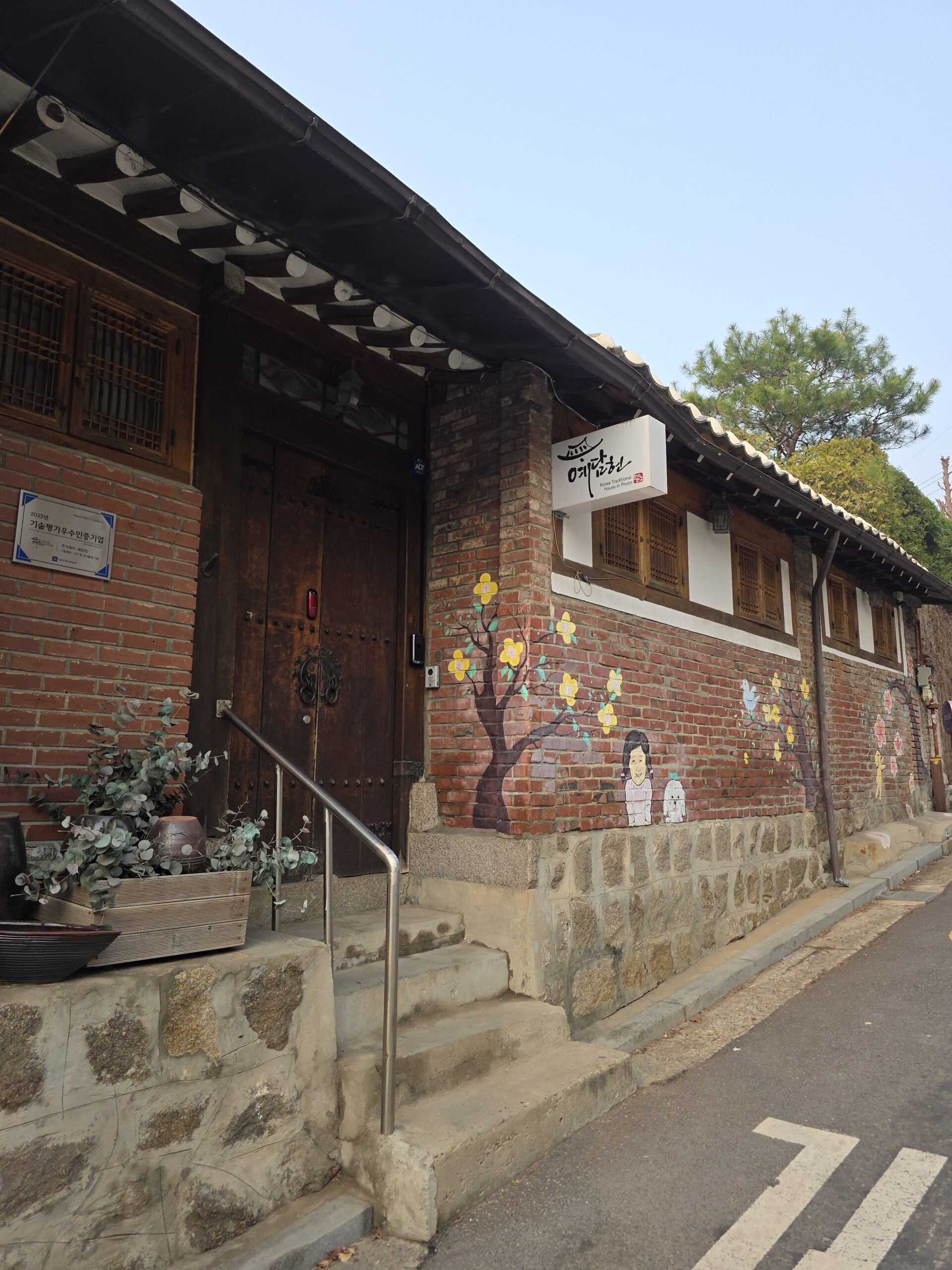
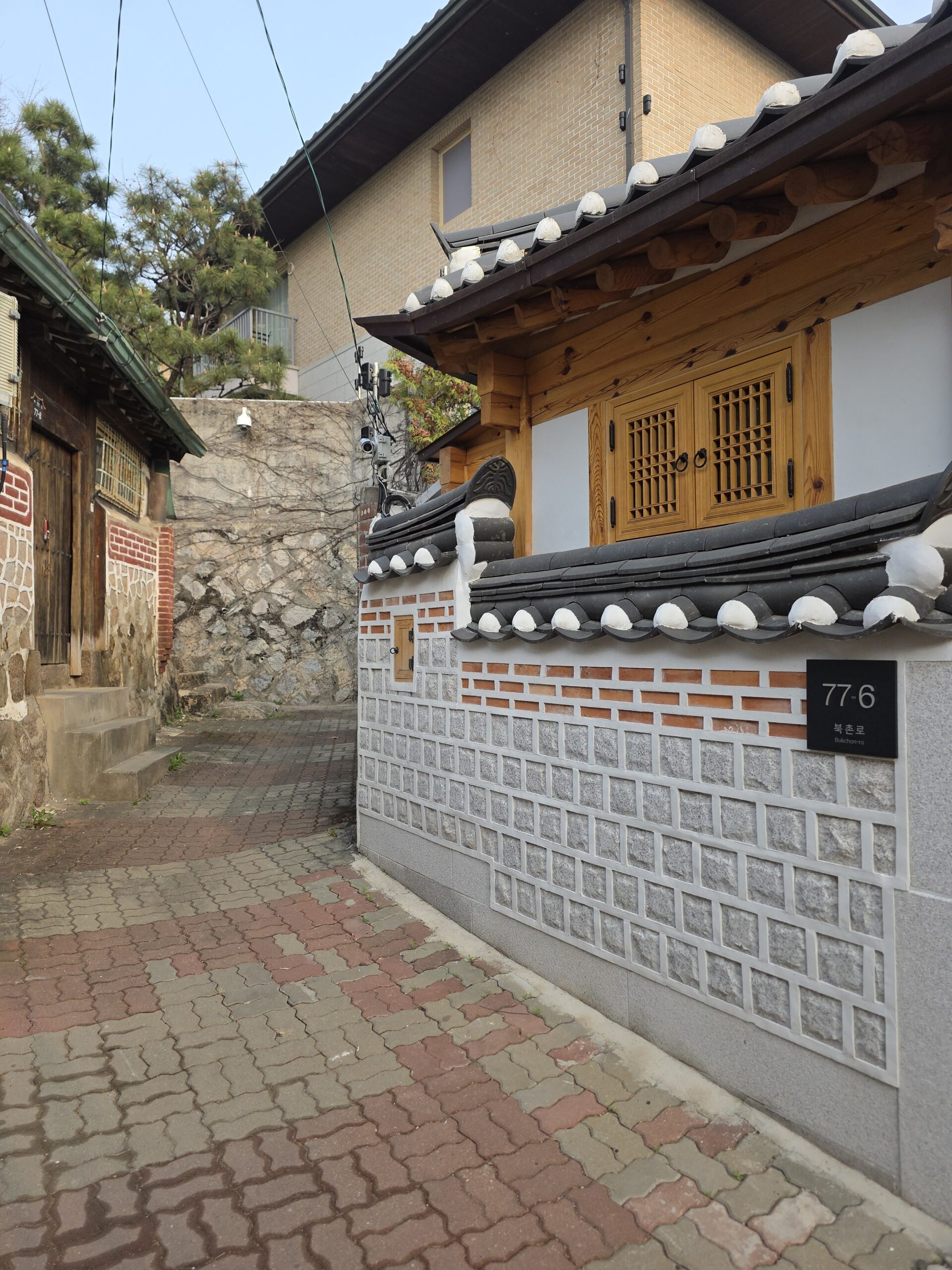
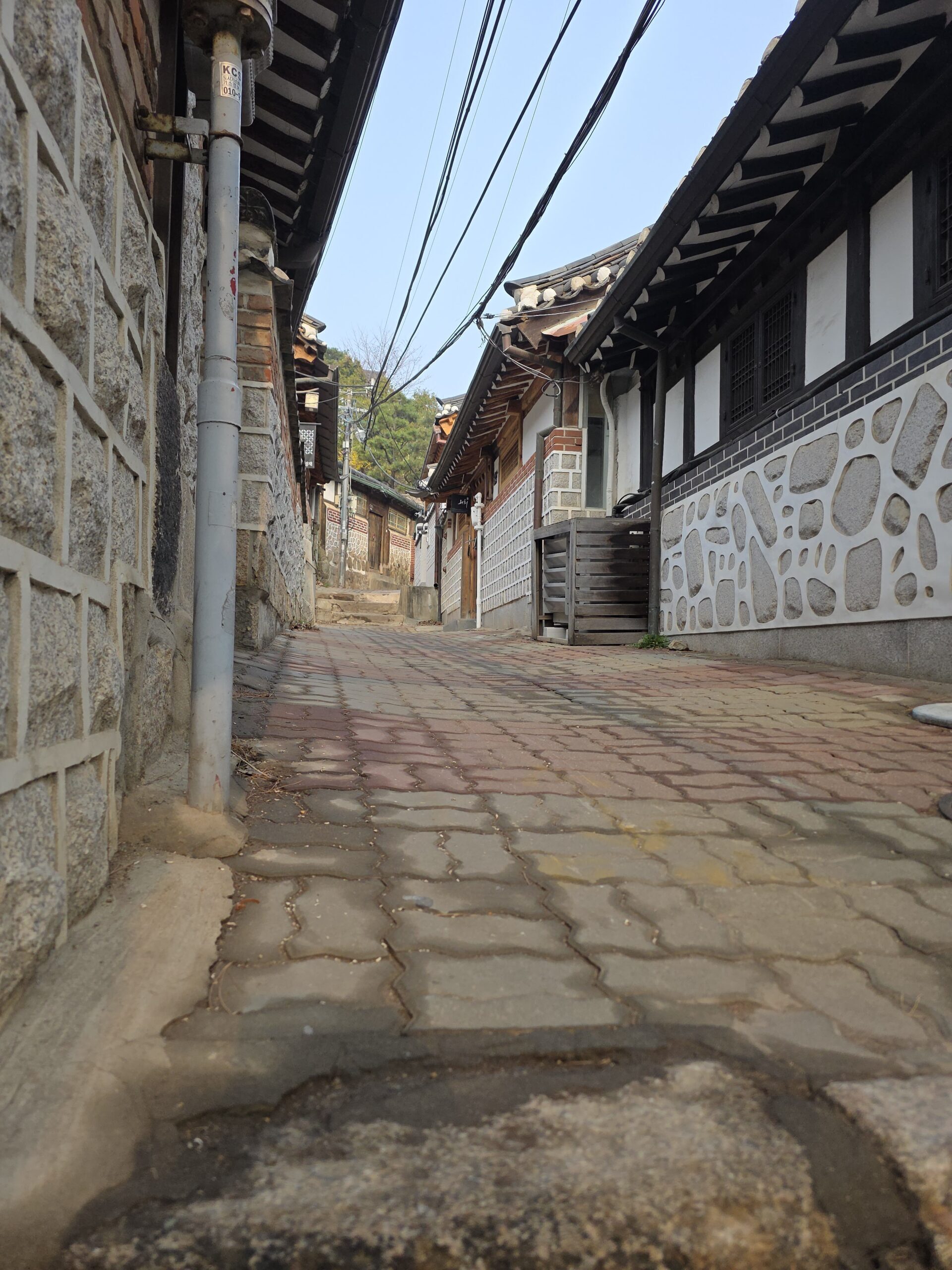
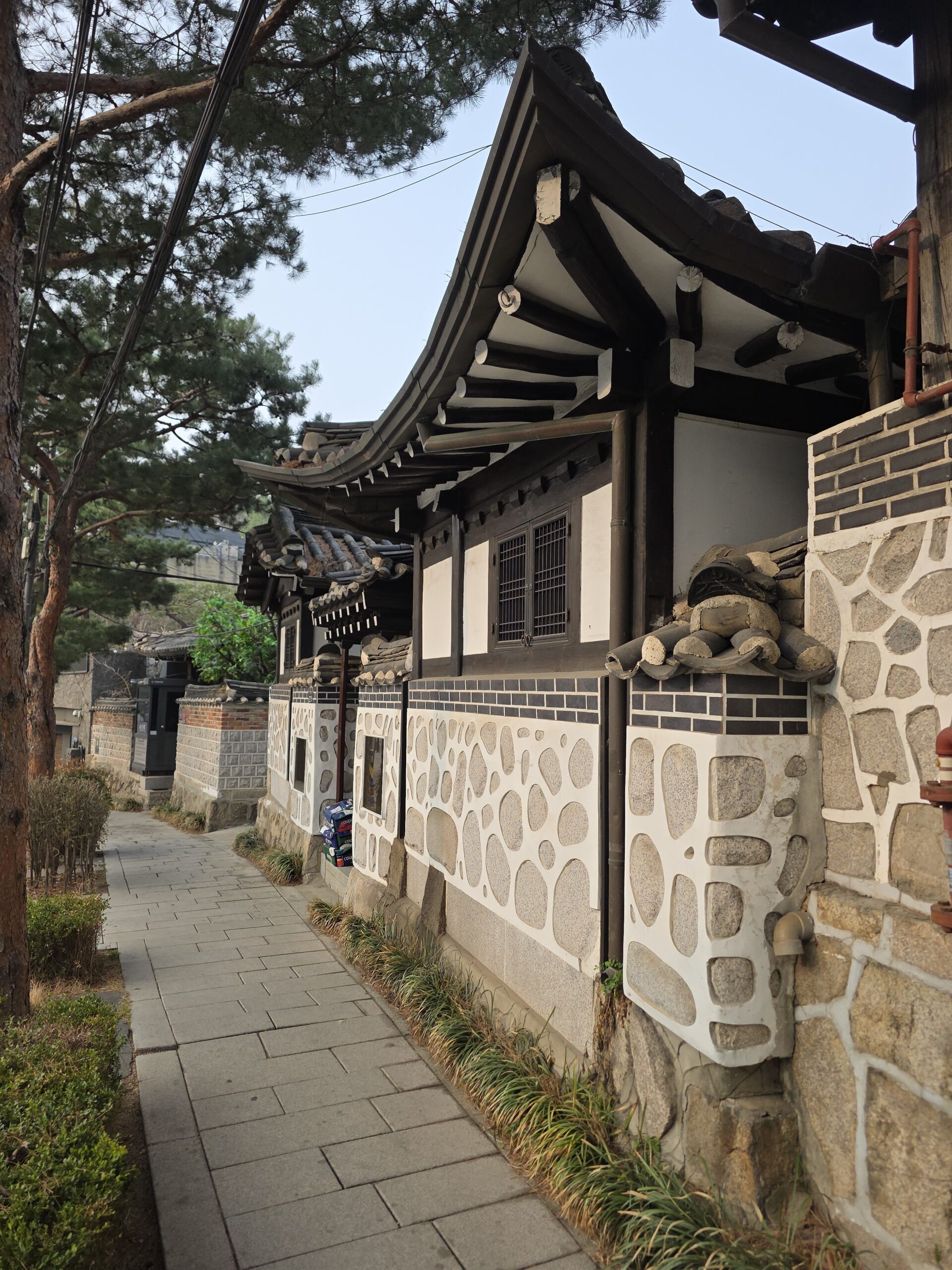
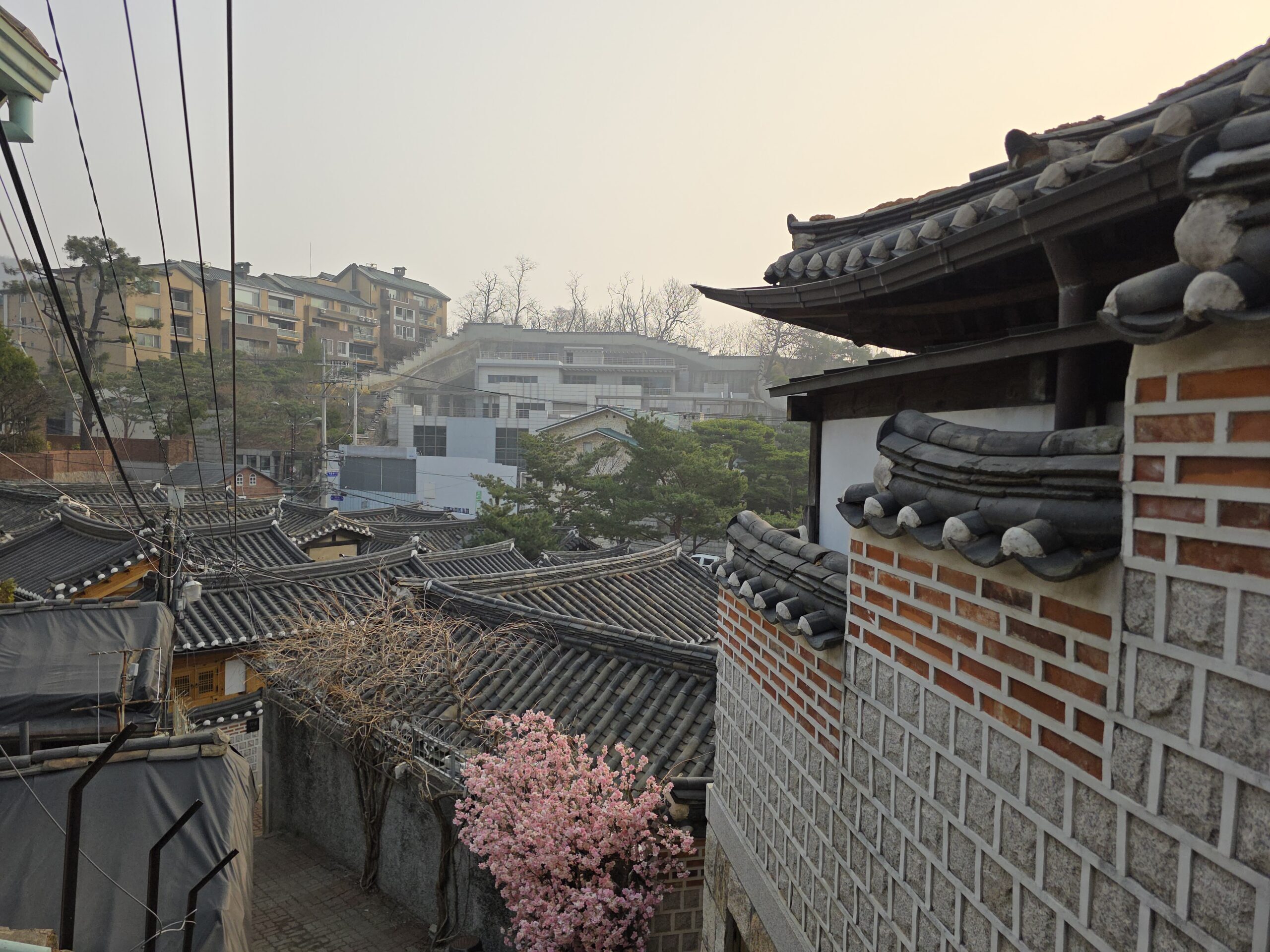
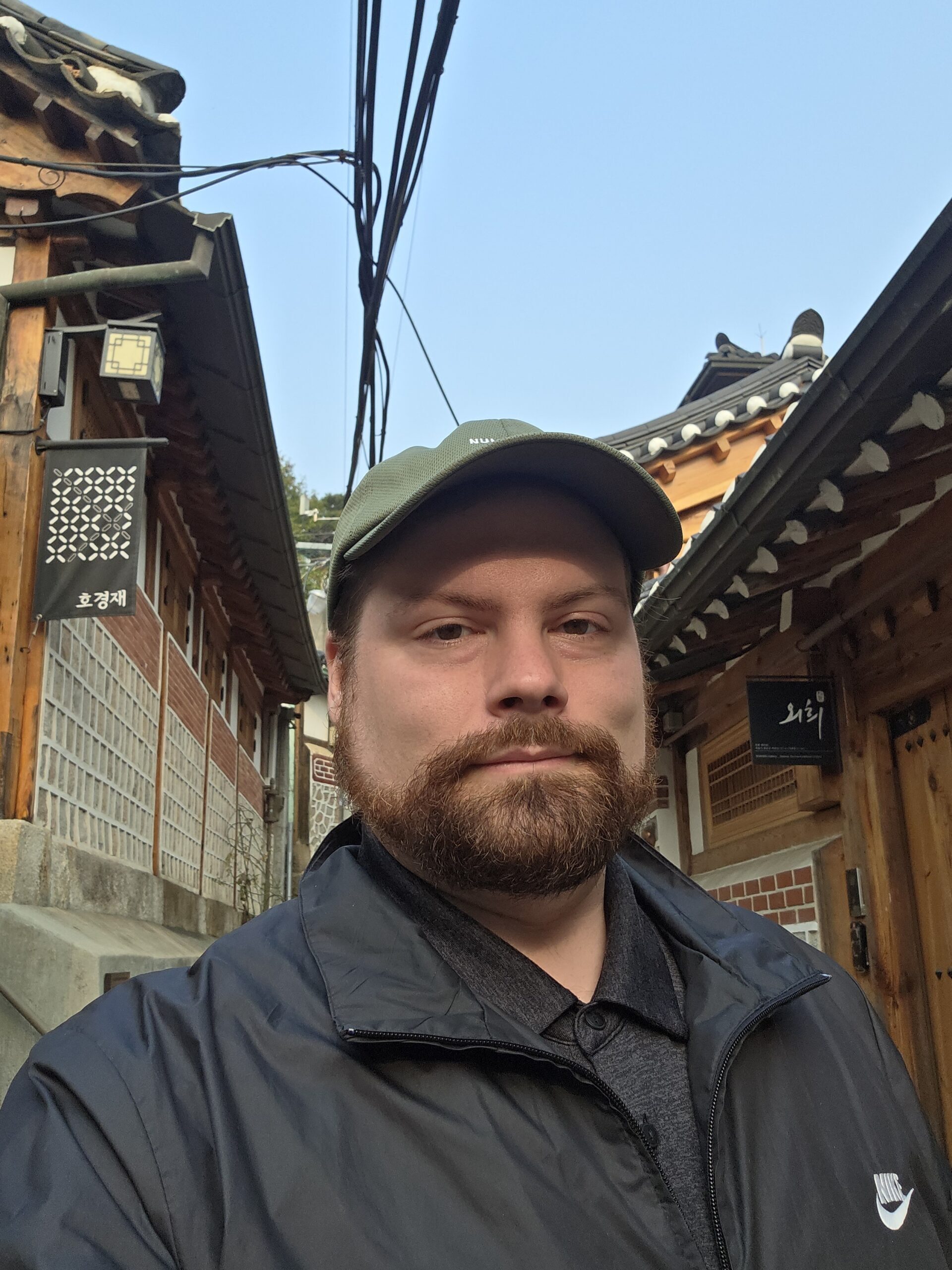
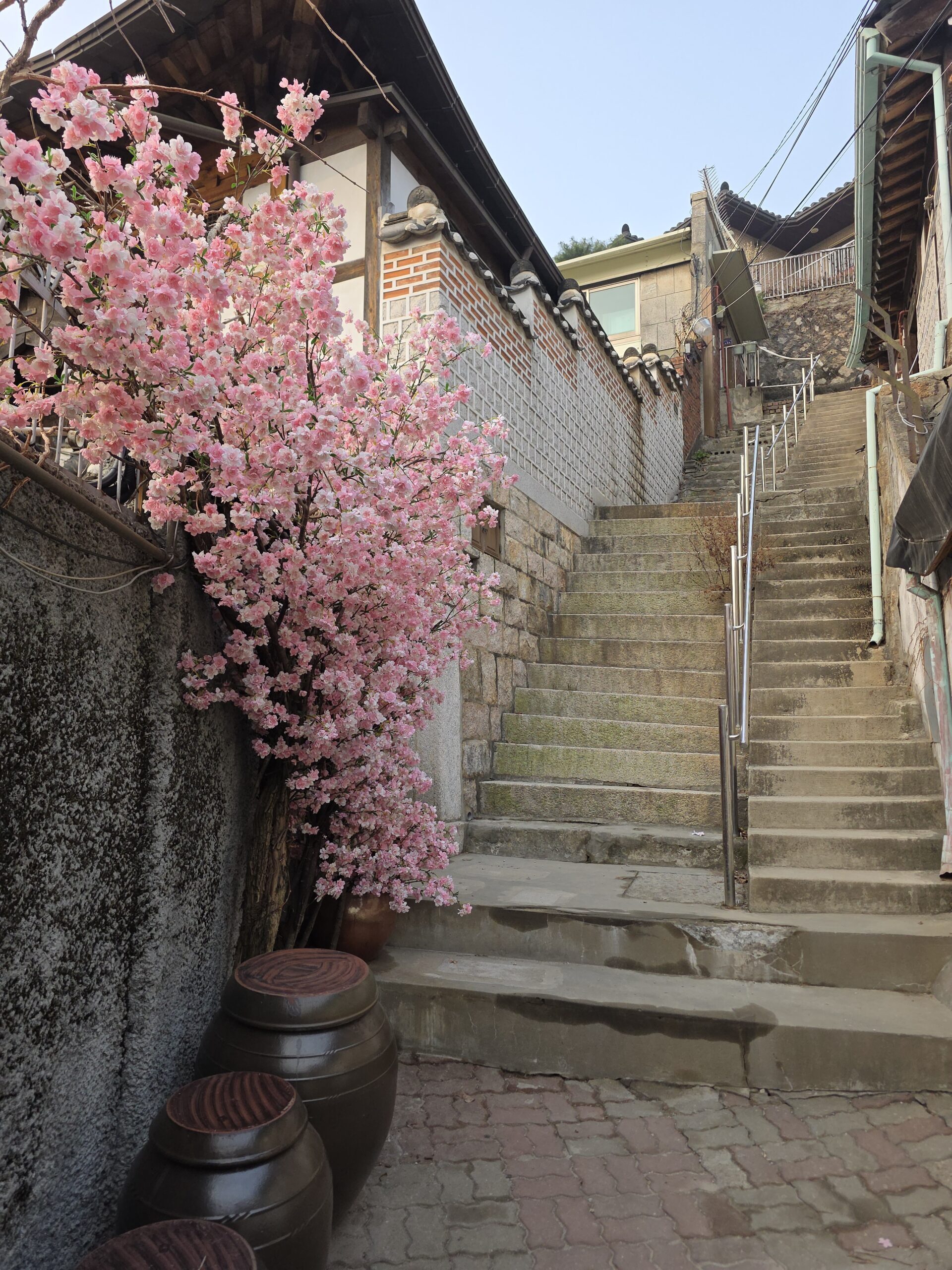
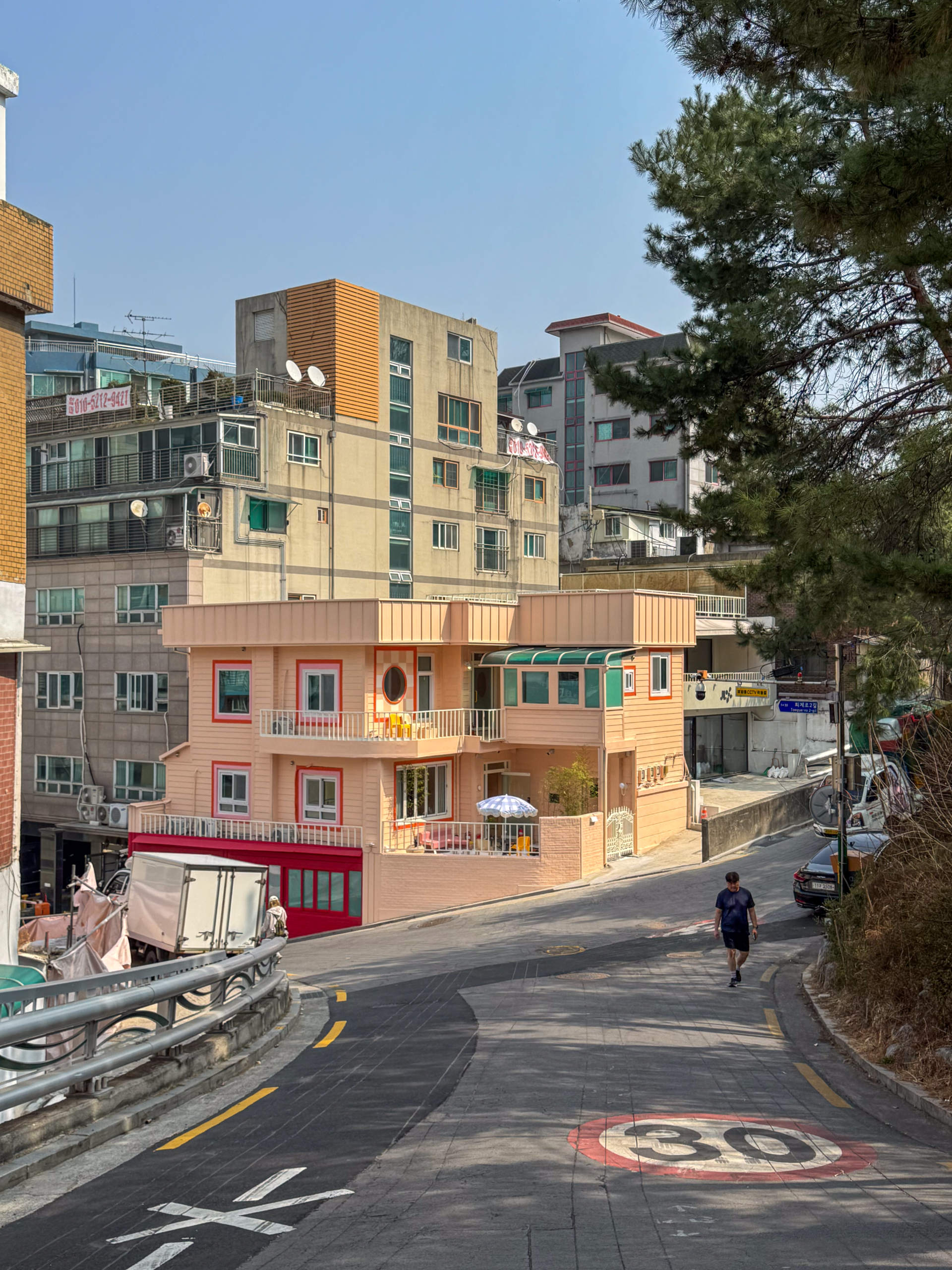
Before heading in, we briefly walked through Bukchon Hanok Village, where traditional wooden homes sit on winding hills between the city’s modern districts. But the actually livable part and not the heavily touristed part.
From there we headed to the office in Gangbuk District, and the rest of the day unfolded as a productive mix of work and team-building.
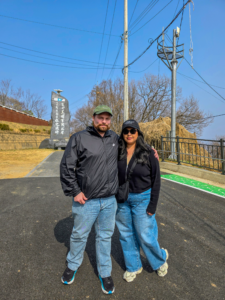
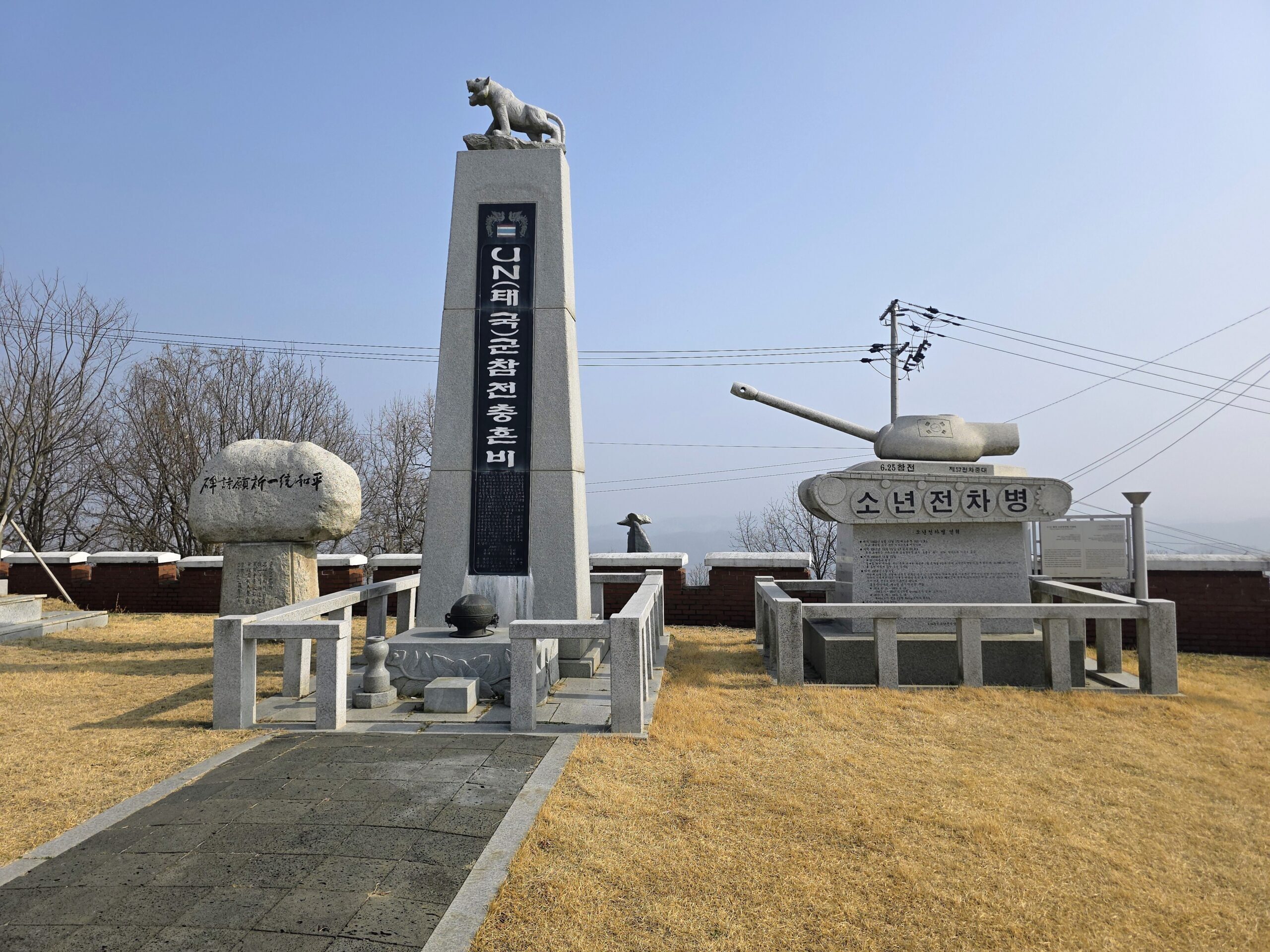
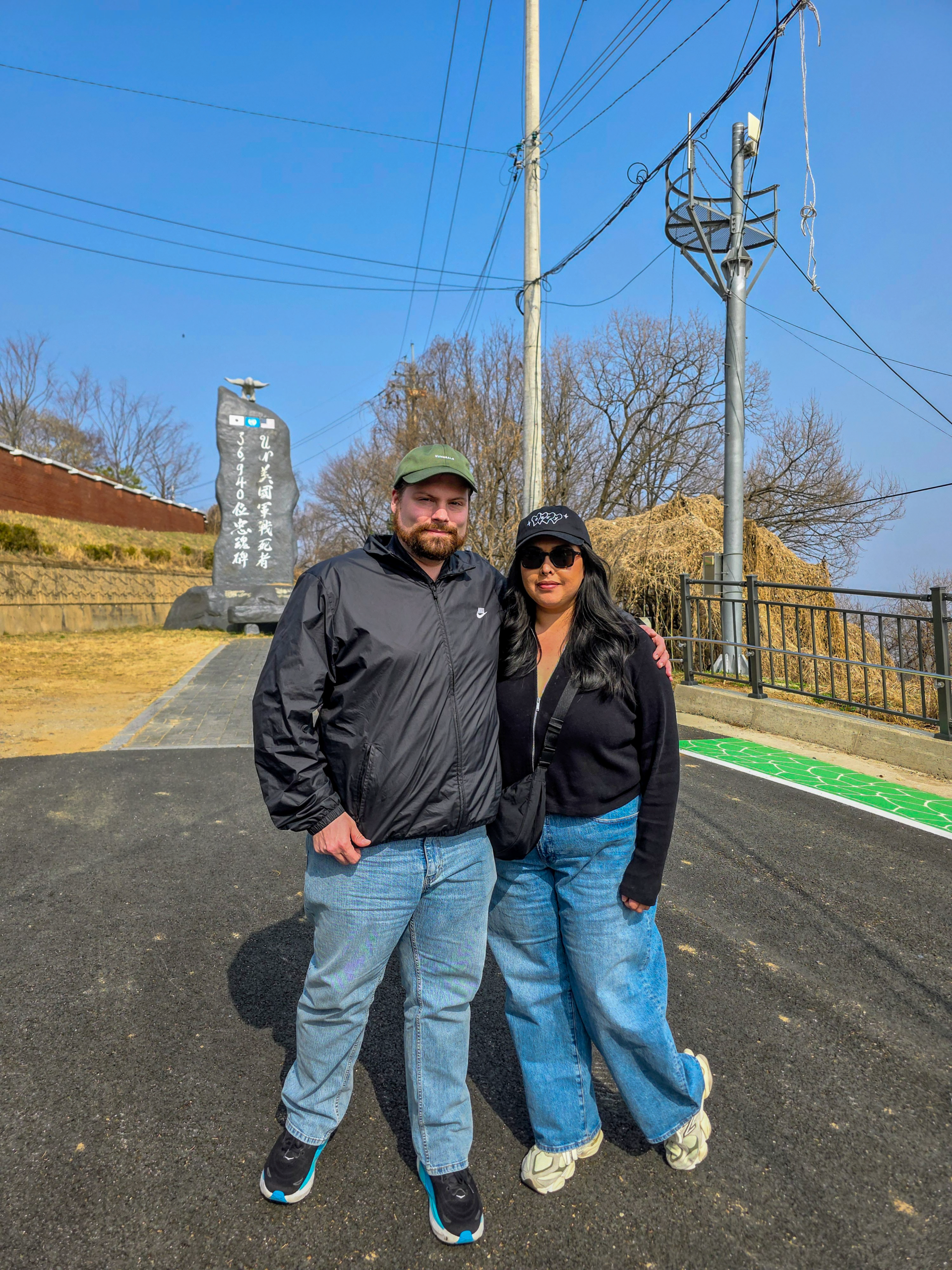
We were then taken north toward the Korean Demilitarized Zone. Most tourists visit the more well-known observation points, but we ended up at Typhoon Observatory, one of the closest publicly accessible viewpoints to North Korea. It is located 65 kilometers from Seoul and 140 kilometers from Pyongyang. From where we stood, the Military Demarcation Line was only about 800 meters away. A North Korean checkpoint sat roughly 1.6 kilometers in the distance.
The observatory sits on Suribong, the highest peak in the area, which is part of what gives it such an unobstructed view. On a clear day, you reportedly don’t even need binoculars to spot North Korean residents going about their lives across the border. The site originally served as a military position, and after North Korea began installing barbed wire near the ceasefire line in 1968, South Korea followed suit along this stretch a decade later.
Looking out, you could make out the Imjin River winding through the DMZ below, and beyond it, what our guide indicated was North Korea’s Ojang Farm. According to our guide, North Korean farmers hold working rights to that land, and in the spring months they can sometimes be spotted in the fields from the observatory.
Unfortunately, photos facing north weren’t allowed. I didn’t want to try an incognito one and embarrass my colleagues at an active military installation. However, just standing there and looking across the hills into Hermit Kingdom was surreal.
At one point the guide, who spoke entirely in Korean, paused and singled me out as the only Western visitor in the group. He asked me to pronounce a word that sounded something like noreum, using the Korean ㄹ sound that sits somewhere between an r, l, and d.
However, there was one thing he didn’t count on. Because I have studied the Japanese language for years, I already had solid knowledge of this sound. The Japanese “r” sound in letters like らりるれろ sounds very similar to the Korean ㄹ. I said the word correctly, as my colleagues let out giggles of surprise that I foiled the tour guide’s plan.
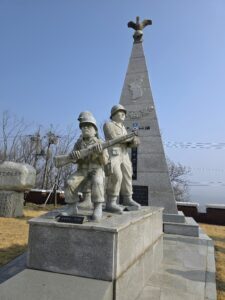
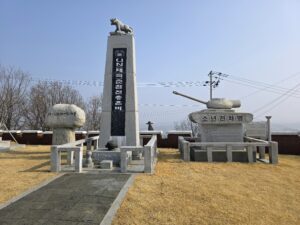
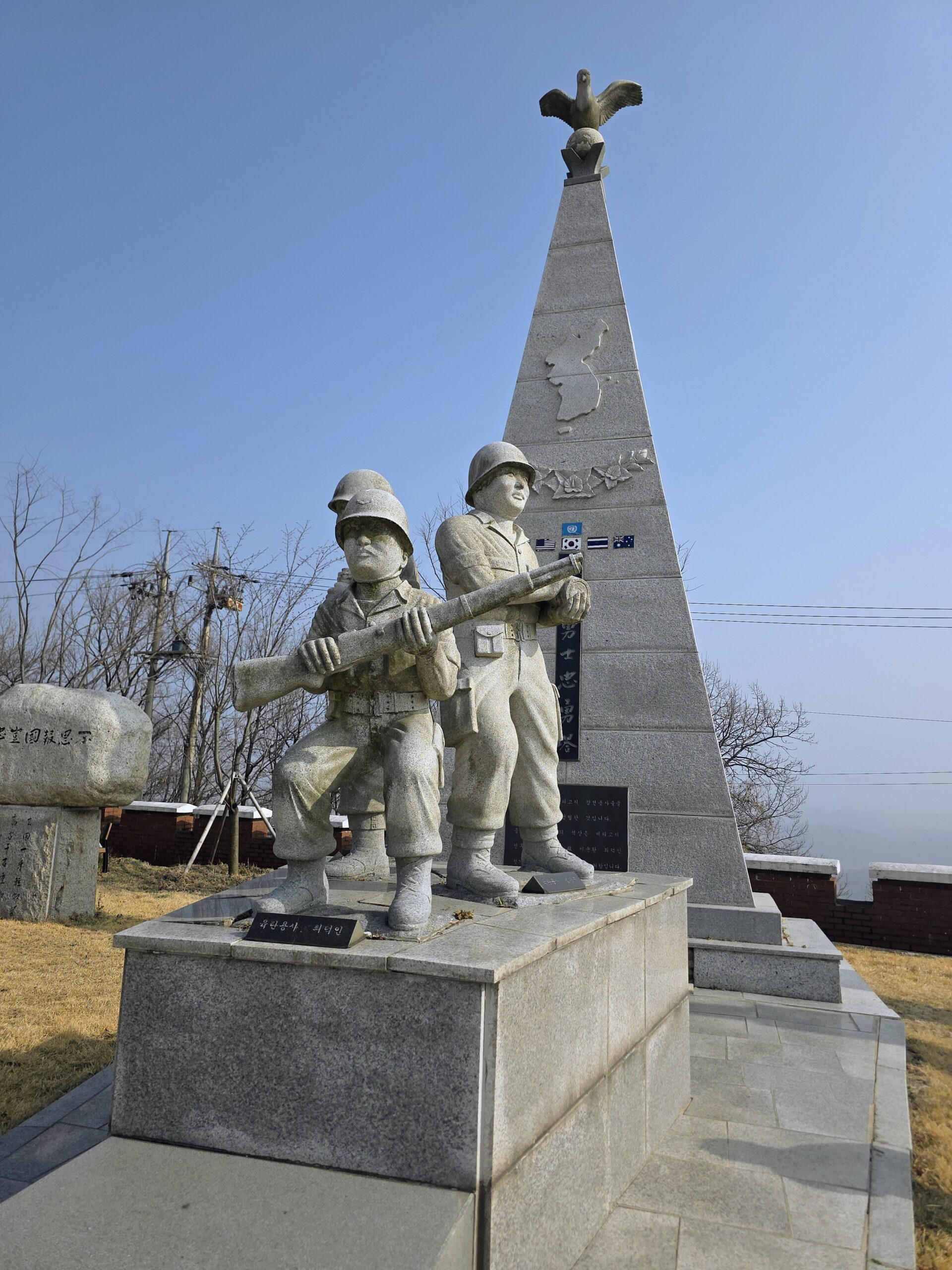
His point was that American troops stationed here during the Korean War struggled with this word, which is why the hill visible outside — 놀음고지, Noreum-goji — eventually became known simply as “Nori” on American maps.
But the hill itself carries a brutal history.
The Battle of the Noris in December 1952 was fought on two adjacent ridges called Big Nori and Little Nori. Over just four days of fighting on ground barely larger than a few football fields, UN artillery fired over 120,000 rounds. Mortars added another 31,000, and tanks fired thousands more shells. The bombardment was so intense that the hilltop was physically lowered by several meters (most sources citing around five). The soil that eroded down the slope gradually filled what had once been a watering hole for cattle, eventually forming the small half-moon shaped pond that sits calmly at the base of the hill today. Looking over what now seems like a quiet hillside, it was hard to imagine the violence that once literally reshaped the land itself.
That evening the team drove north to a campsite in the mountains near Pocheon-si. On the ride there, conversation turned to reunification and how South Koreans perceive the people of the North. I learned about the hundreds of thousands of families separated by the Korean War, many of whom have never had the opportunity to reconnect. The numbers are declining rapidly as the surviving generation ages. As of the end of 2025, 101,148 of the 134,516 people registered with the South Korean government as separated family members had died, leaving just 34,368 survivors.
With family reunions suspended since 2018, roughly 200 people die each month while waiting for the chance to reconnect with relatives in the North. It’s difficult to sit with that. A connection severed by circumstance, with time steadily running out before those connections could ever hope to be restored.
I also learned something about the personal generosity that was extended toward families in the North. Its informal and out of public view. It made me think about the warmth I had been shown, not just through this trip, but my time with the company too, and whether some of that same impulse was at work.
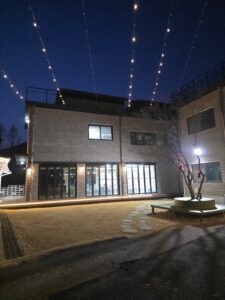
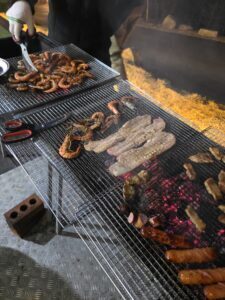
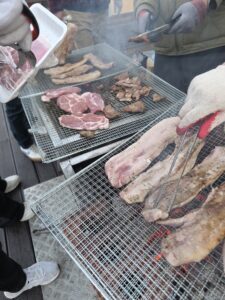
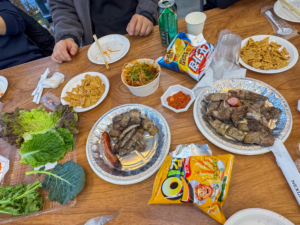
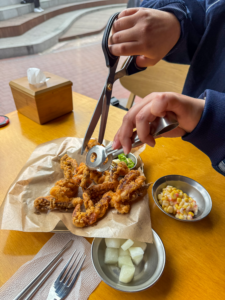
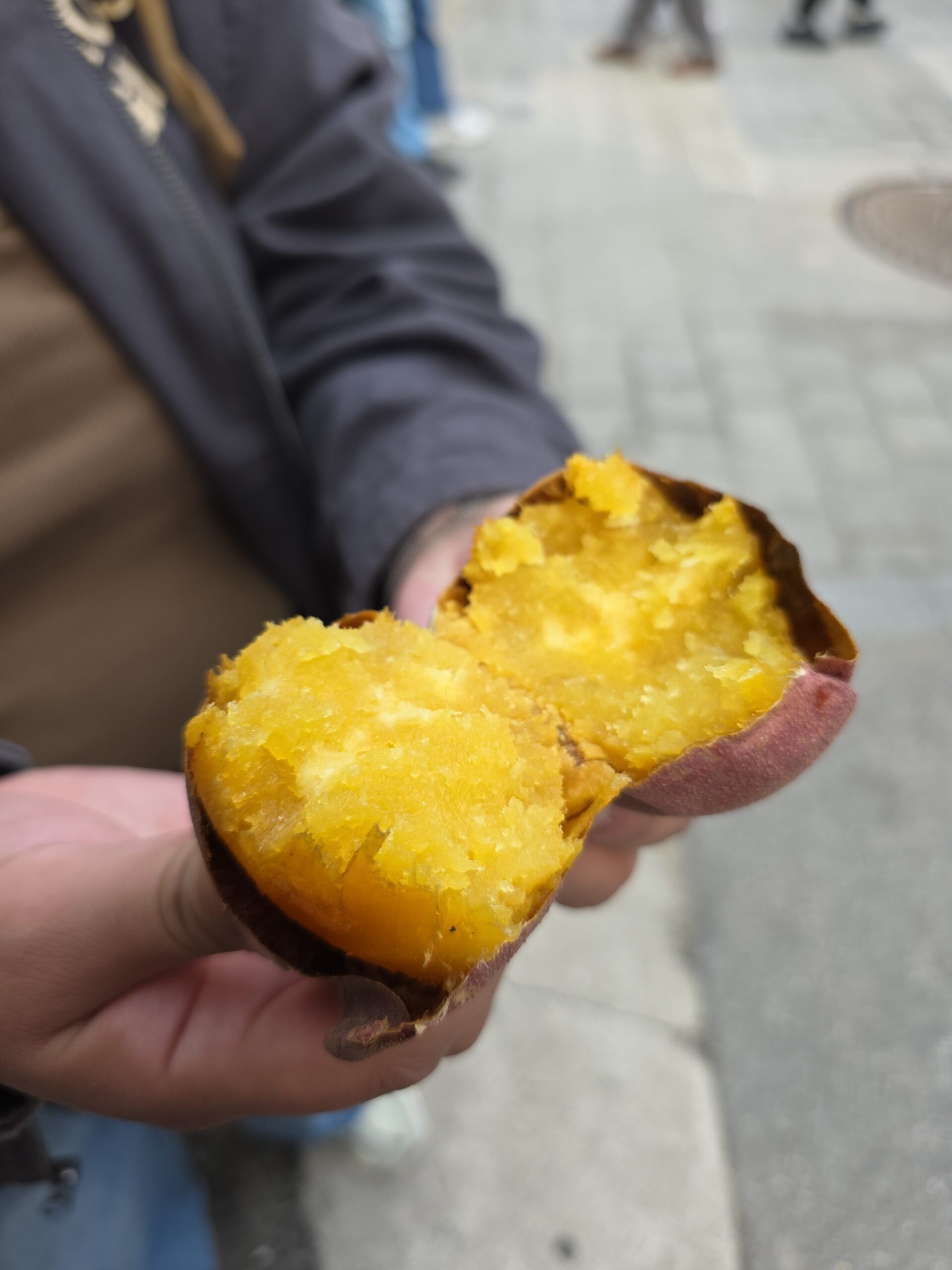
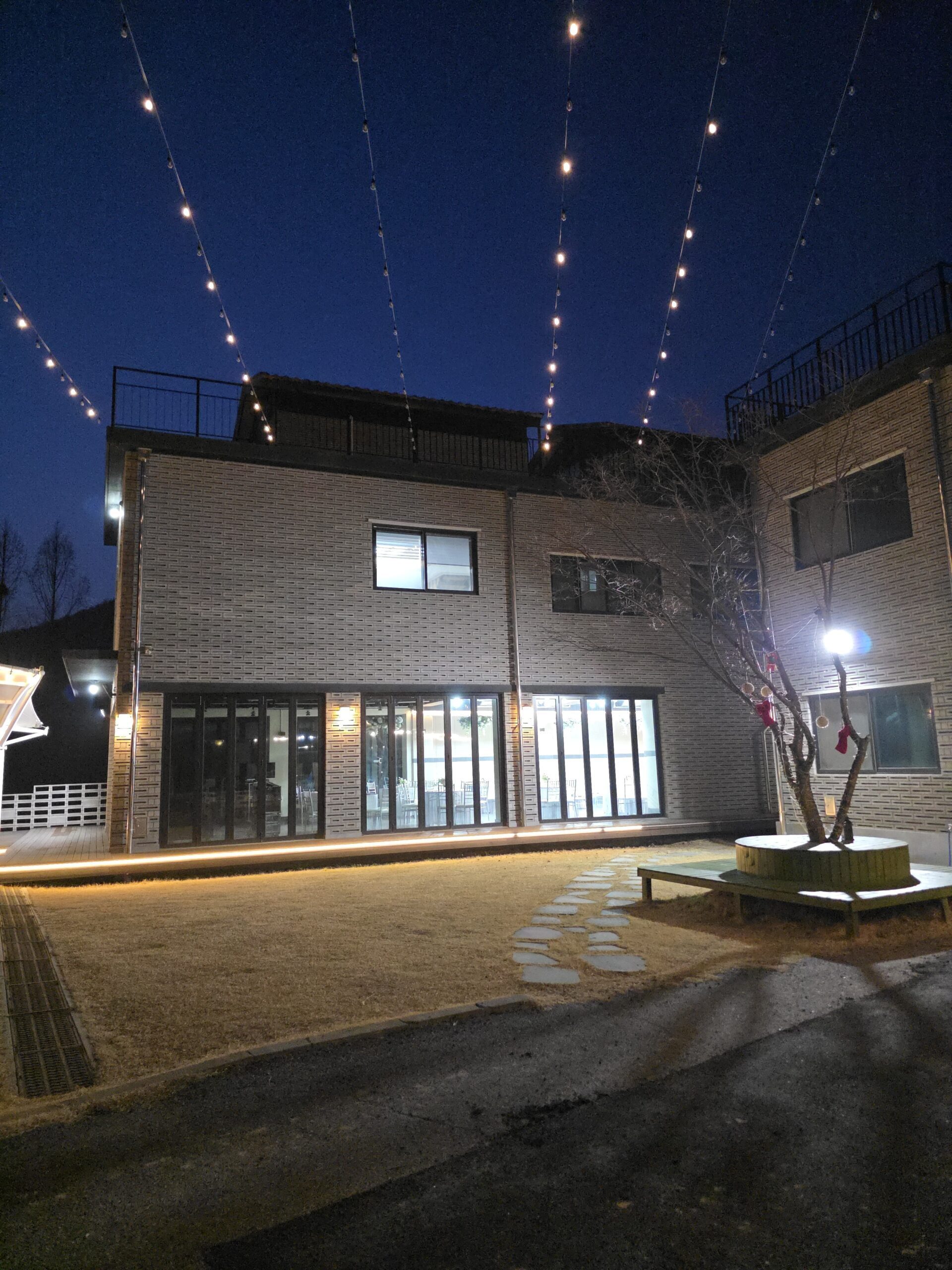
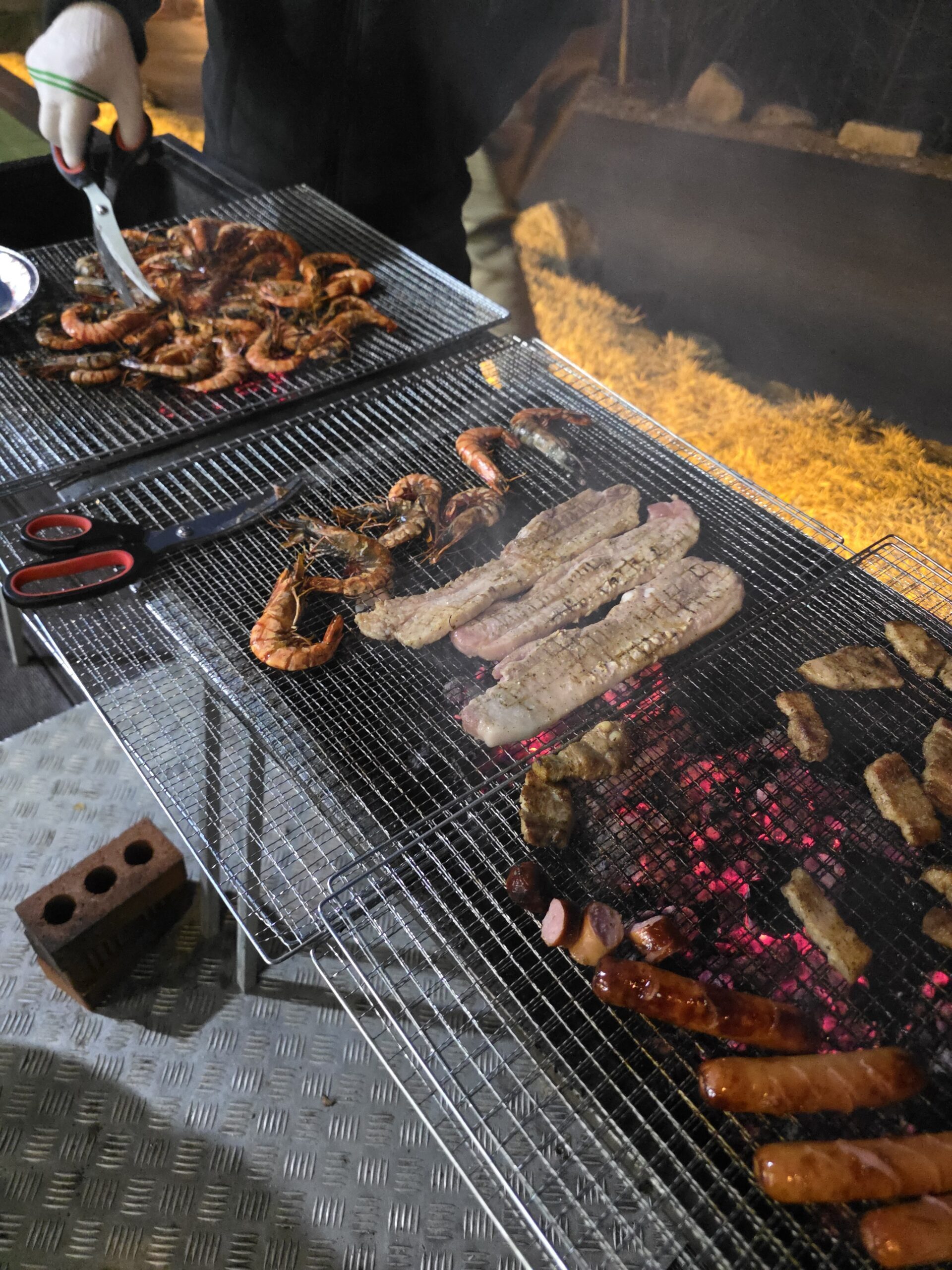
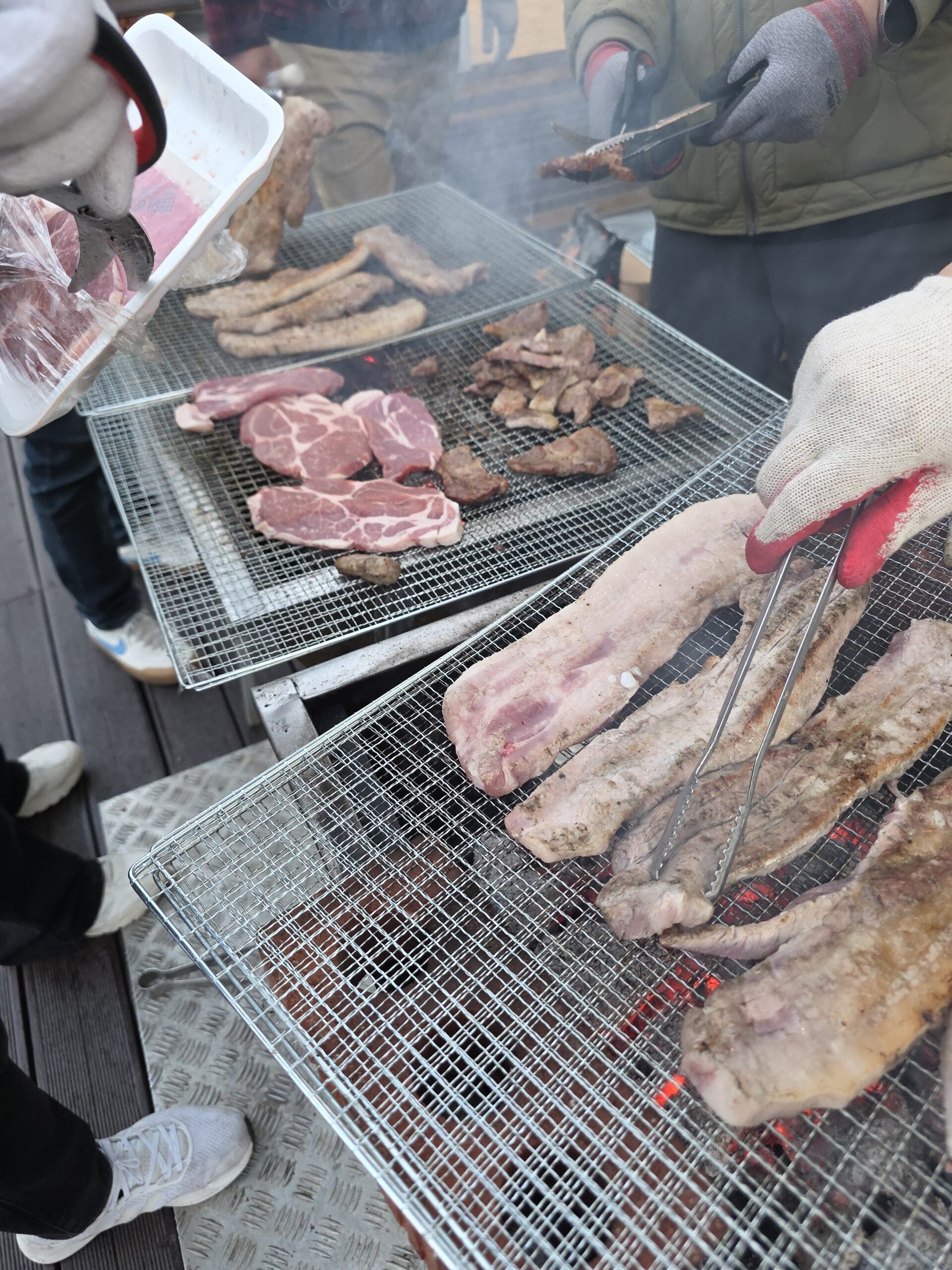
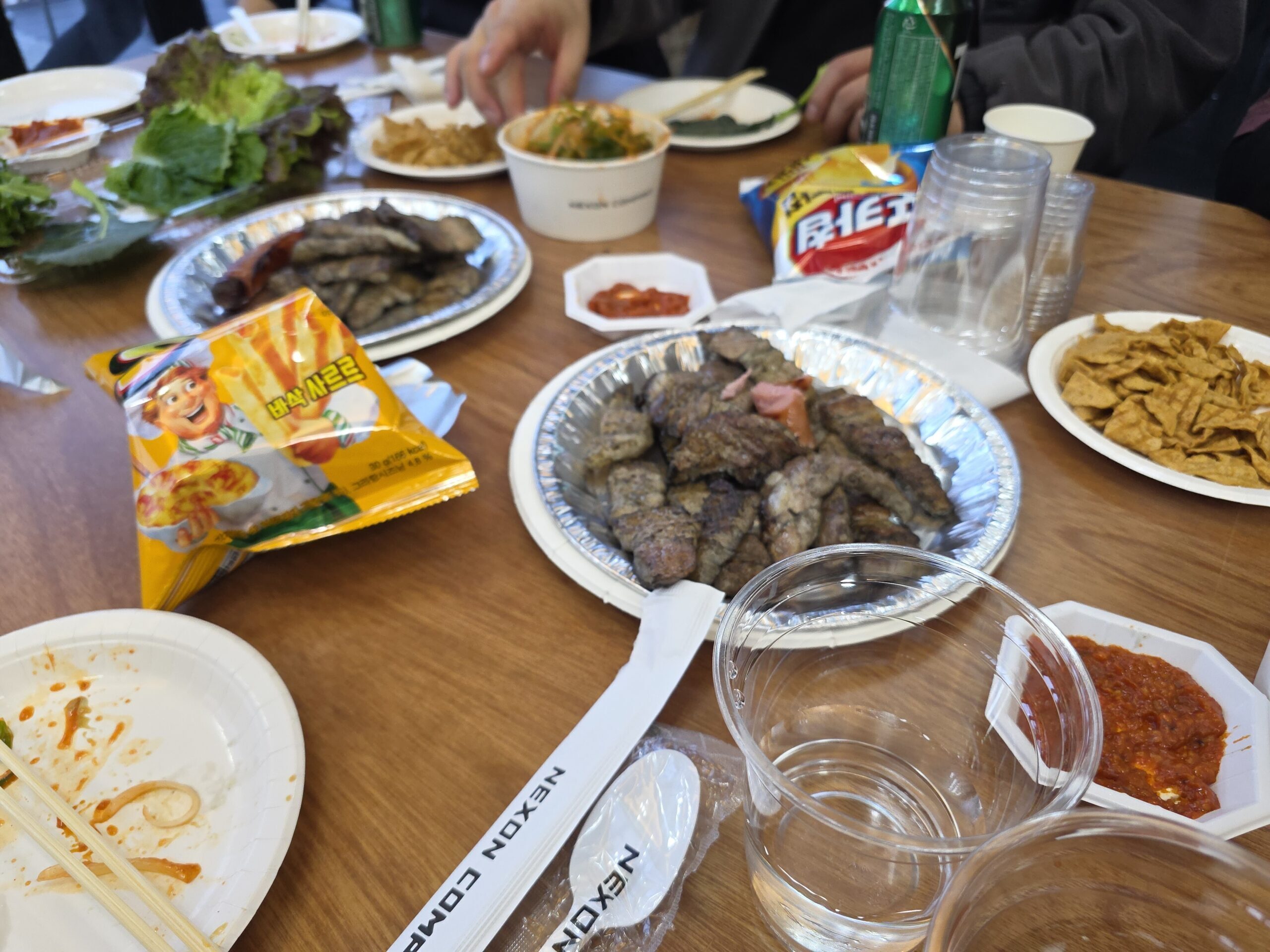
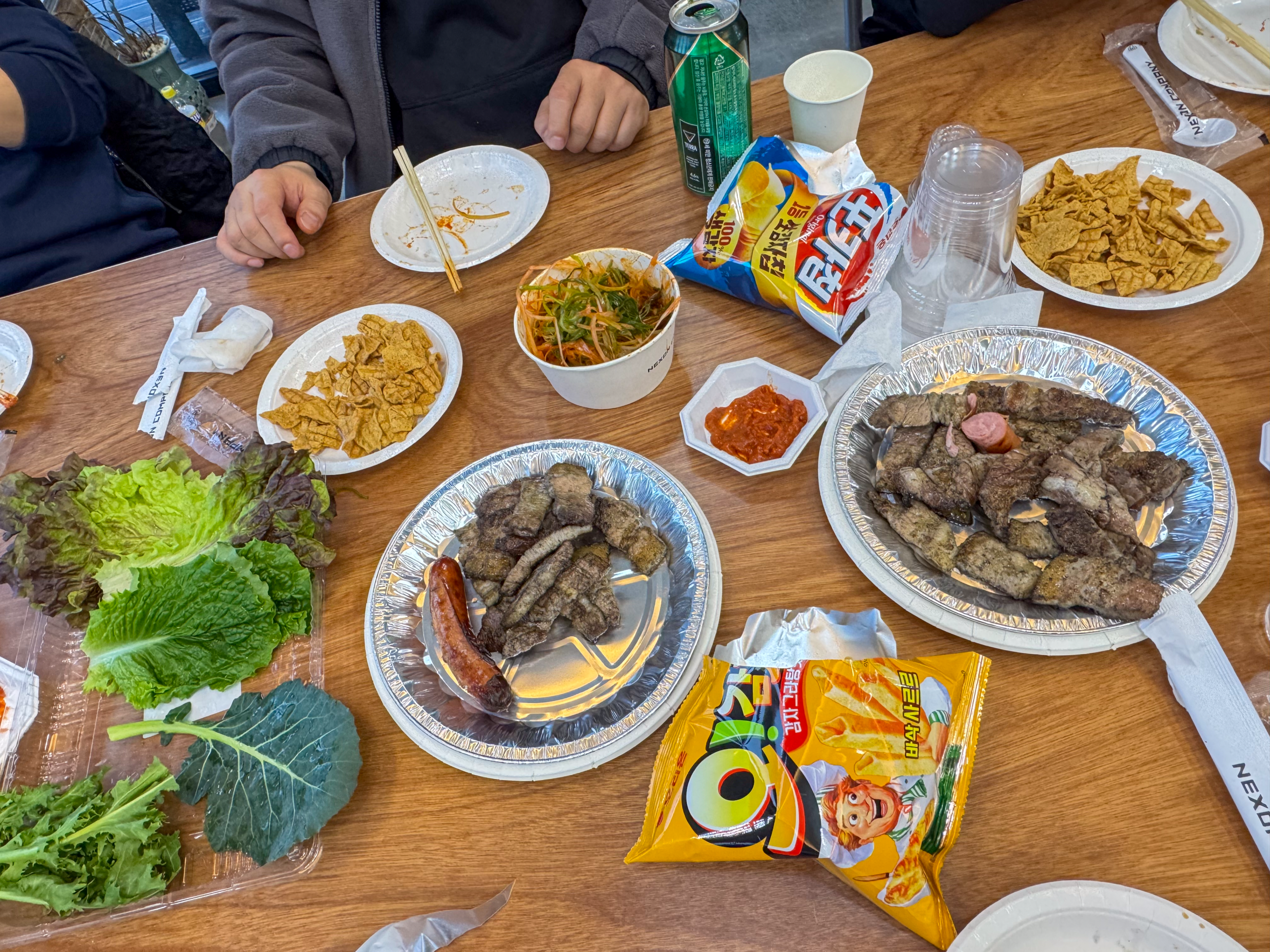
When we arrived at the campsite, it was immediately clear this was no ordinary camp. Modern facilities, lakeside and mountain views, and a full karaoke setup pegged it closer to a glamping resort. Someone fired up a charcoal grill, and what followed was a non-stop parade of kalbi, pork belly, seafood, and snacks. We ate and talked for hours with smoke drifting through the mountain air. It was a simple evening, but a memorable one that I will hold onto forever.
Palaces, Temples, and the Heart of Seoul
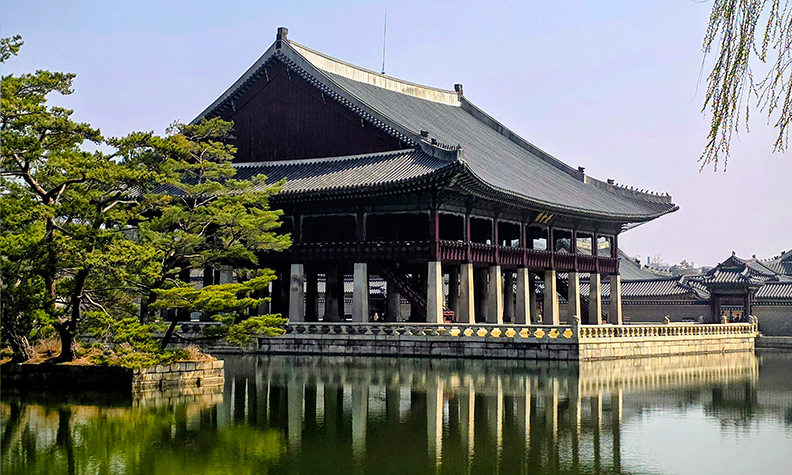
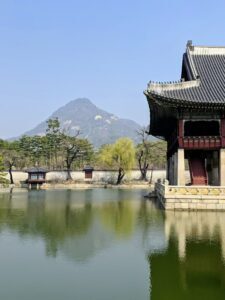
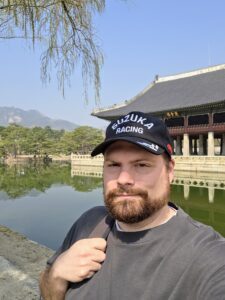
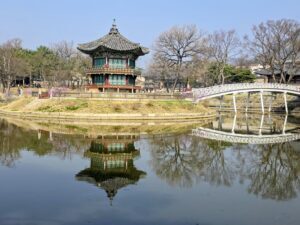
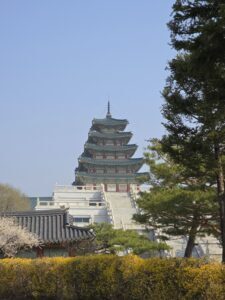
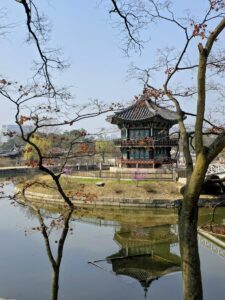
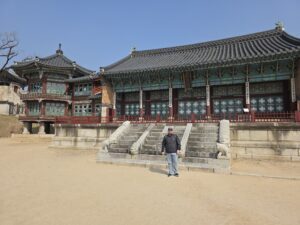
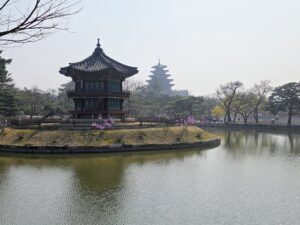
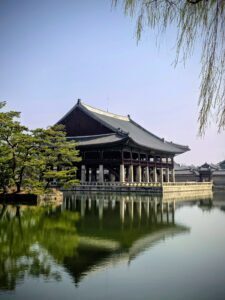
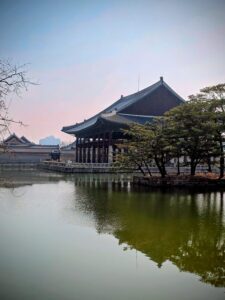
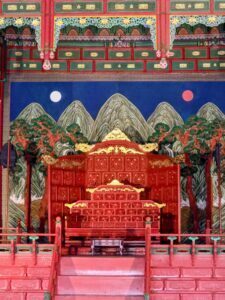
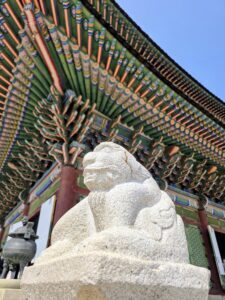
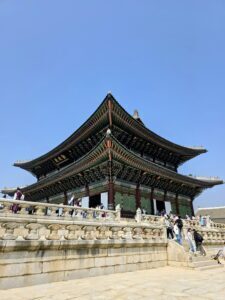
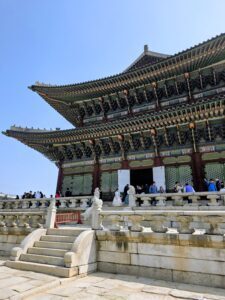
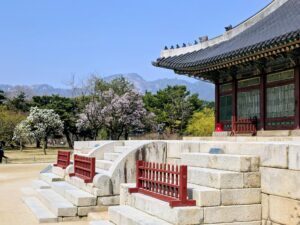
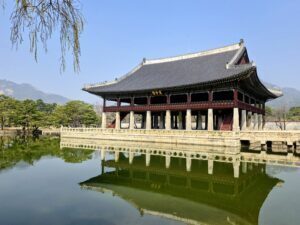
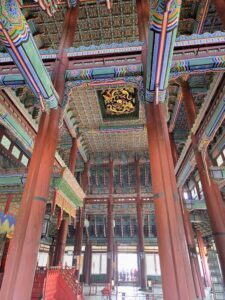
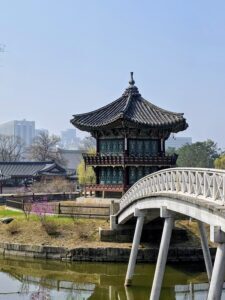
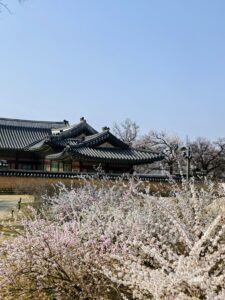
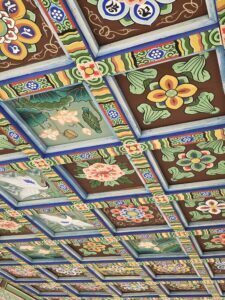
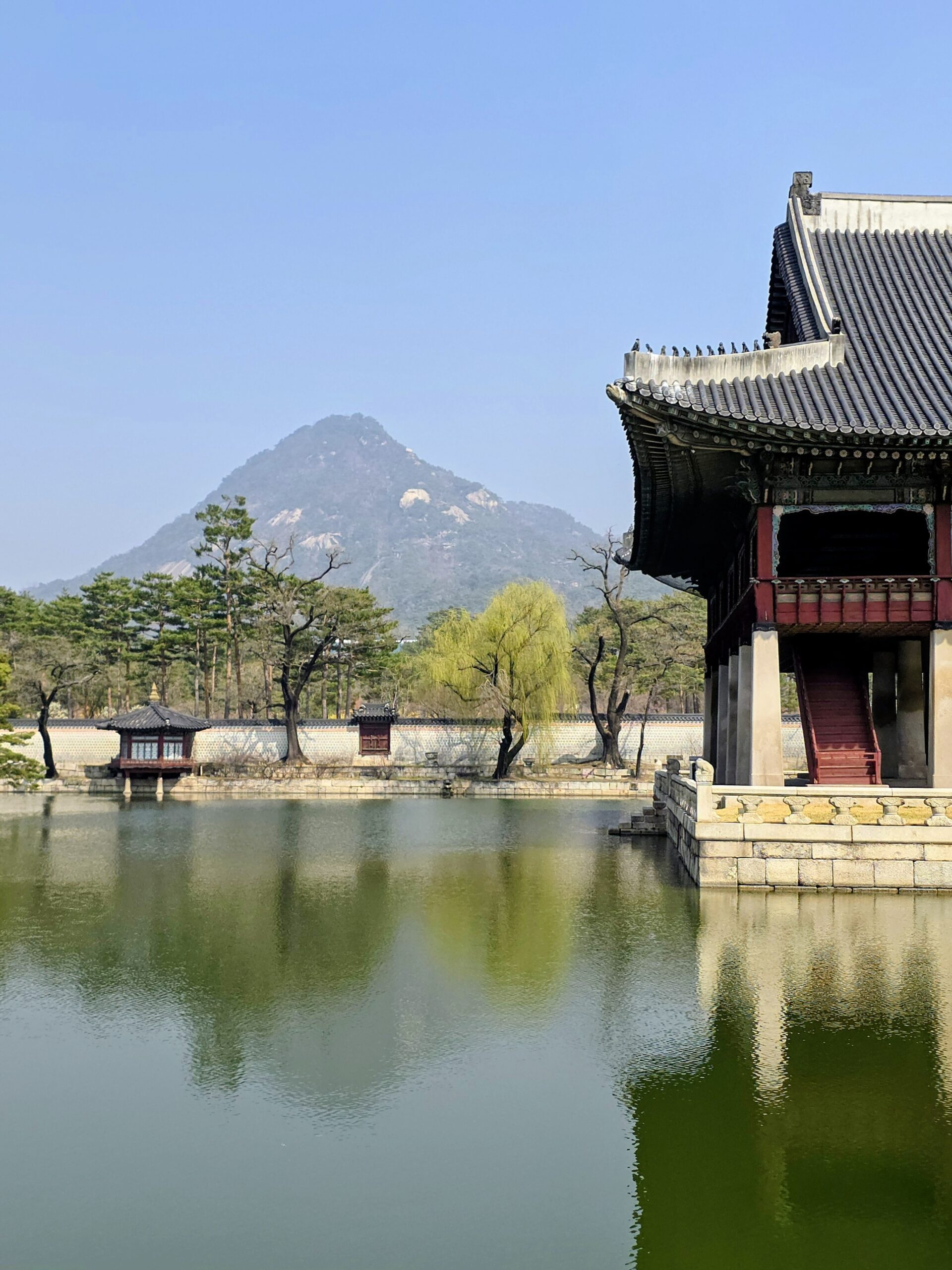
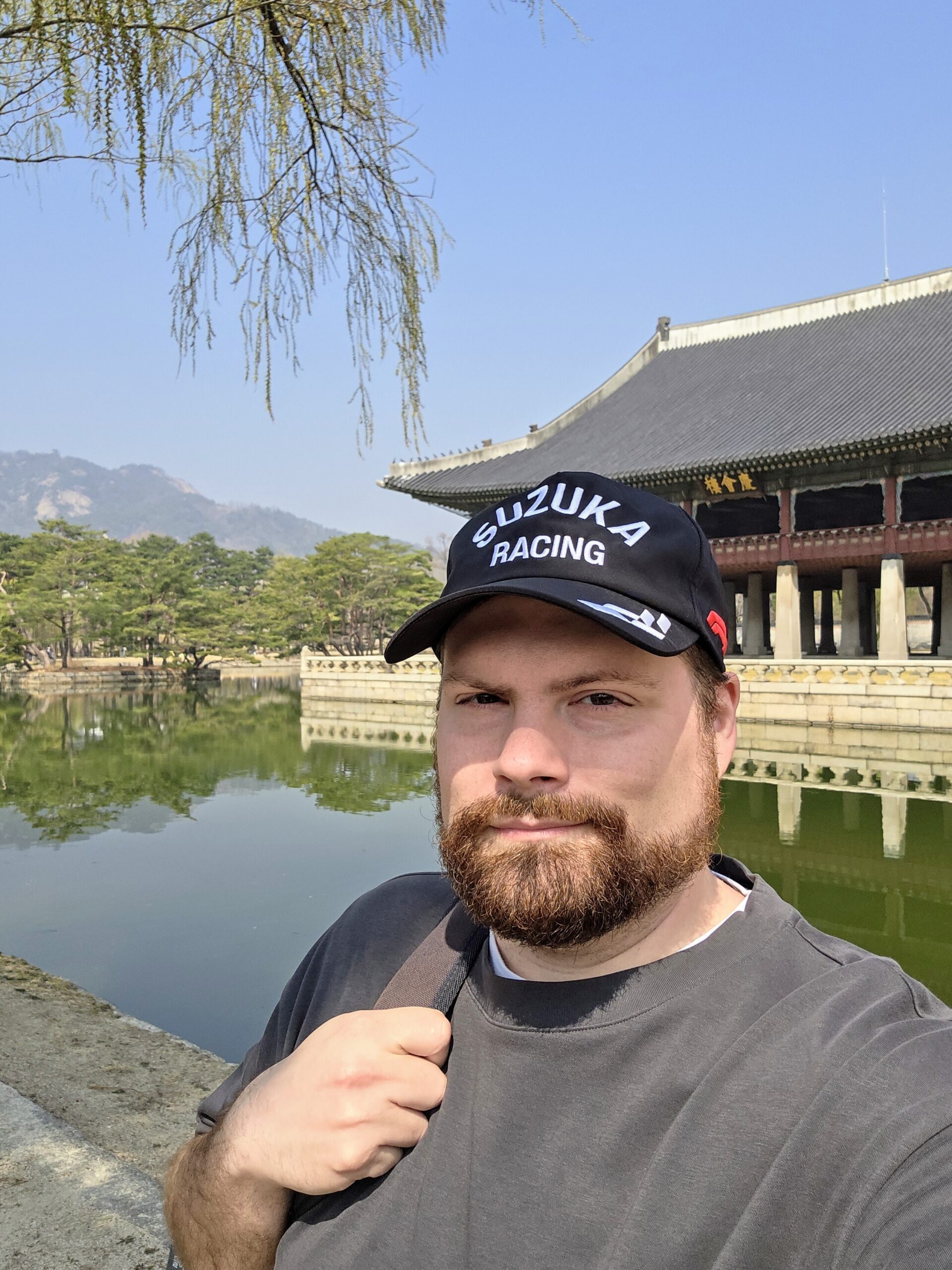
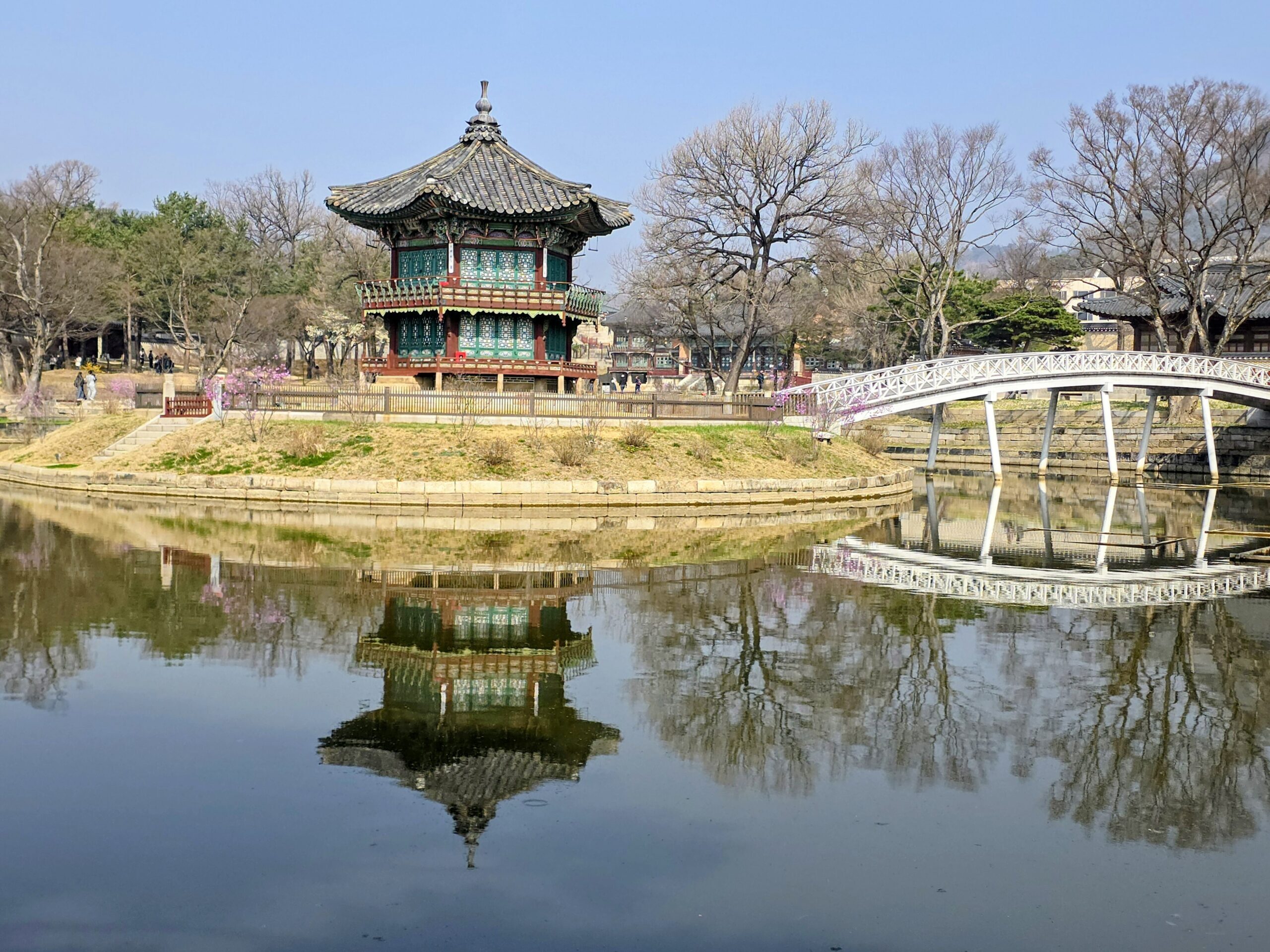
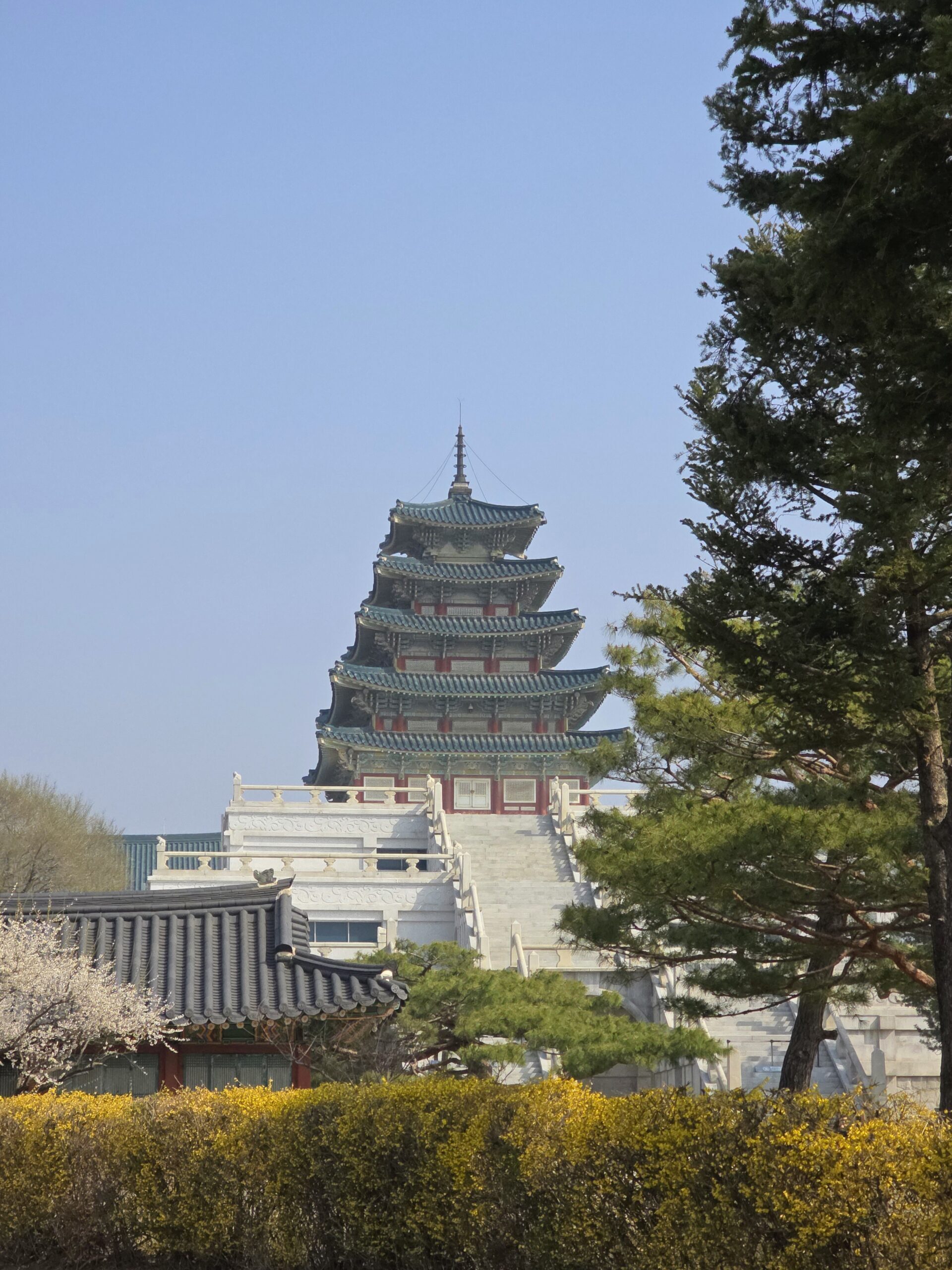
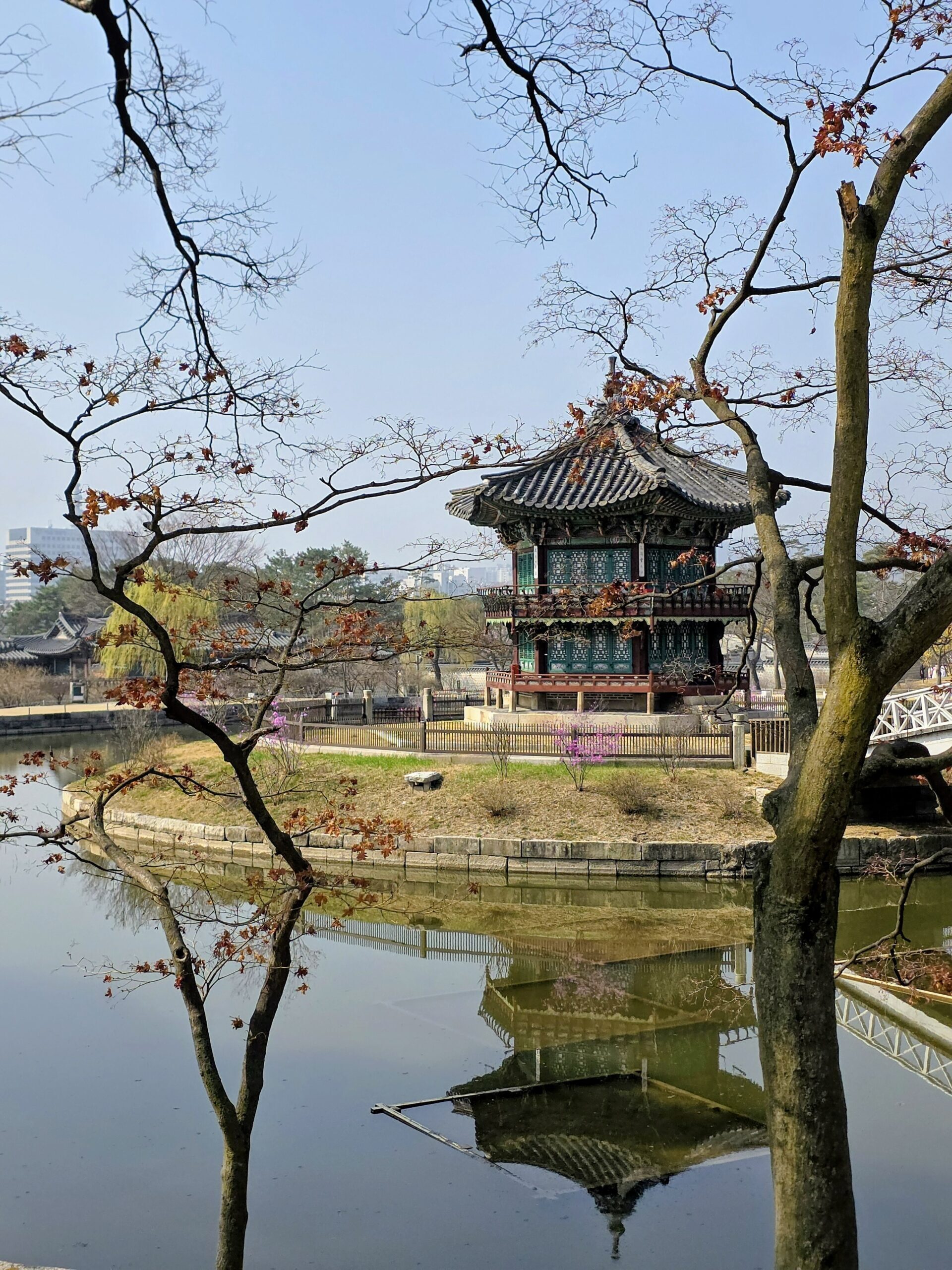
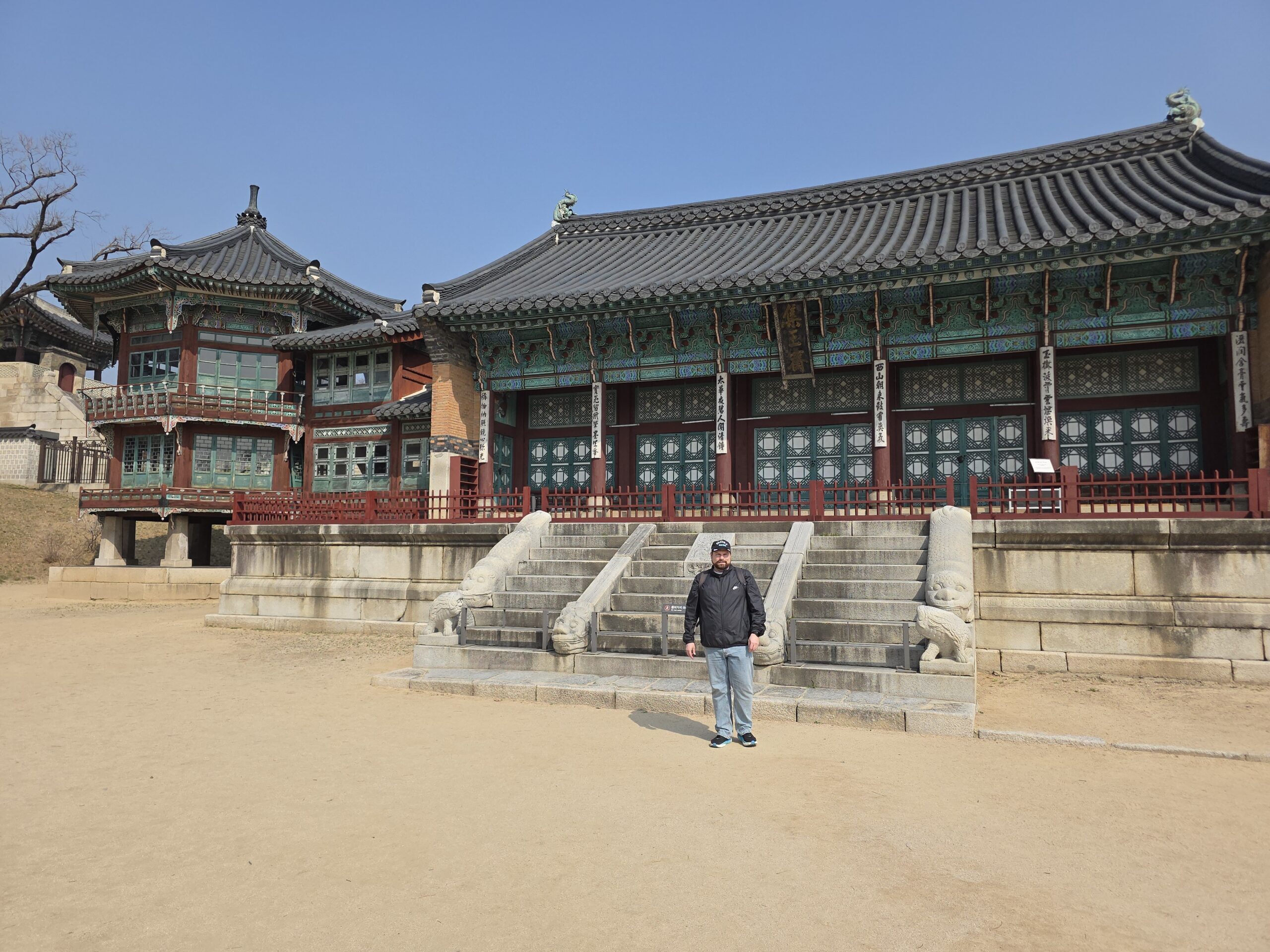
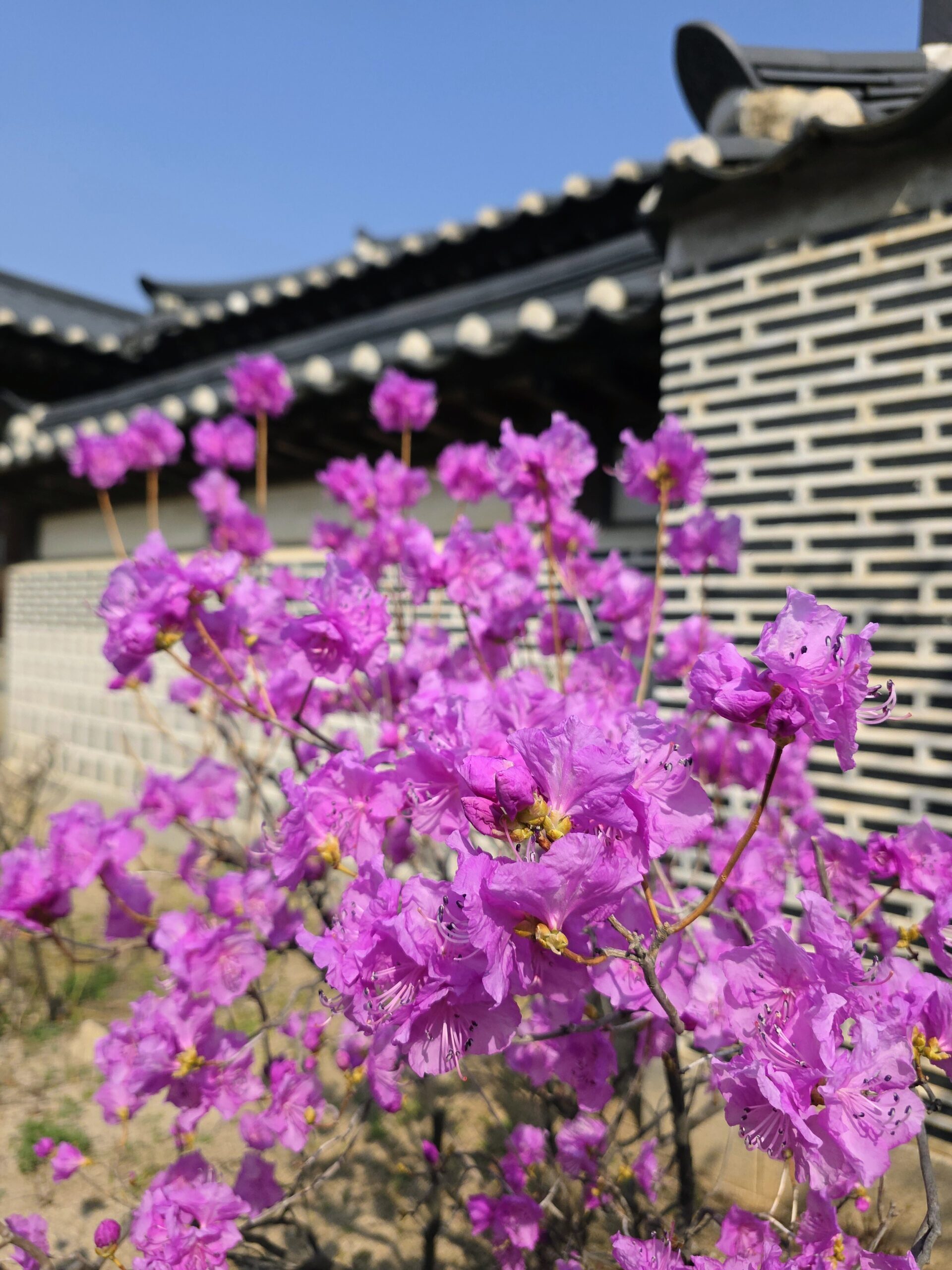
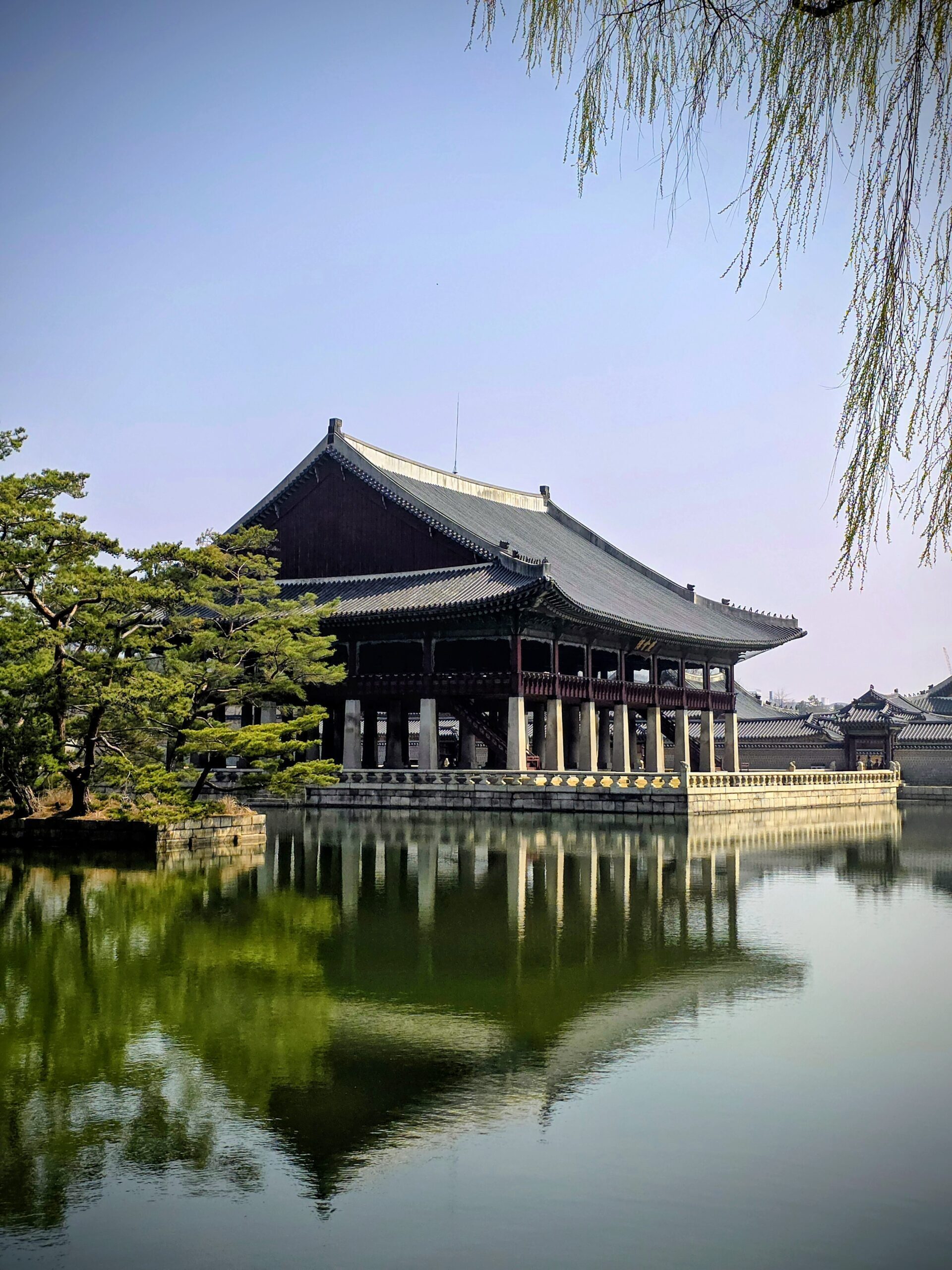
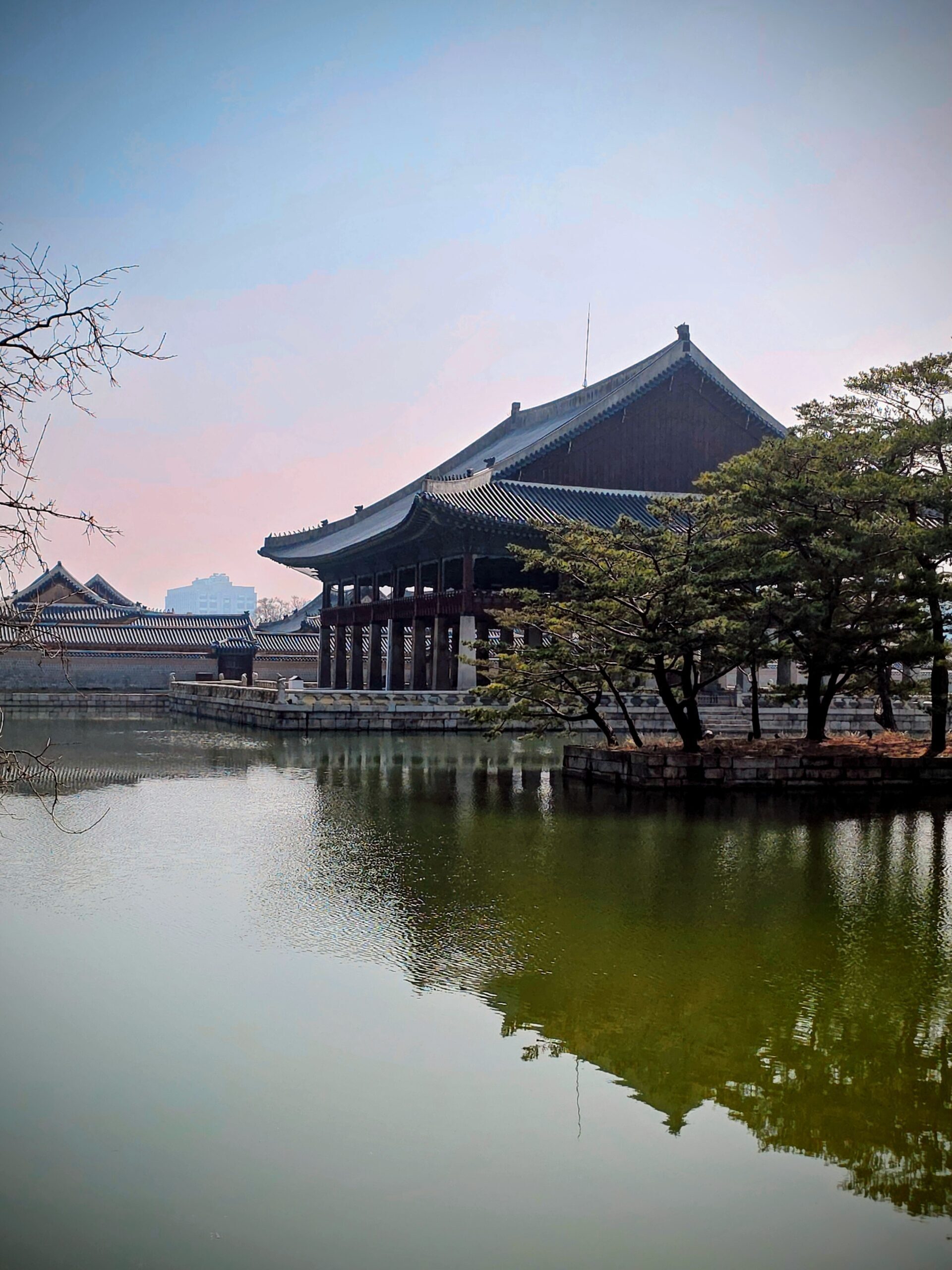
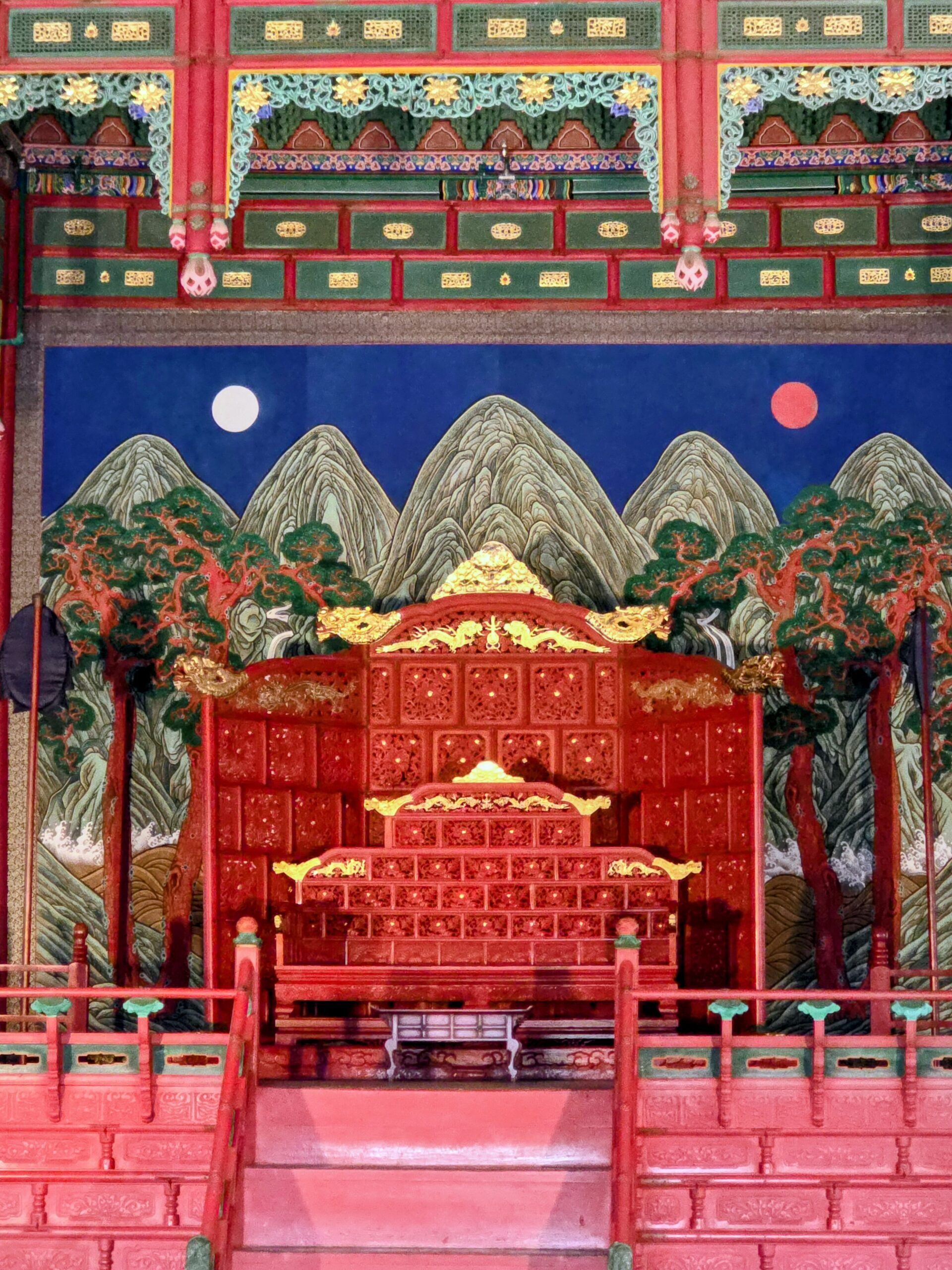
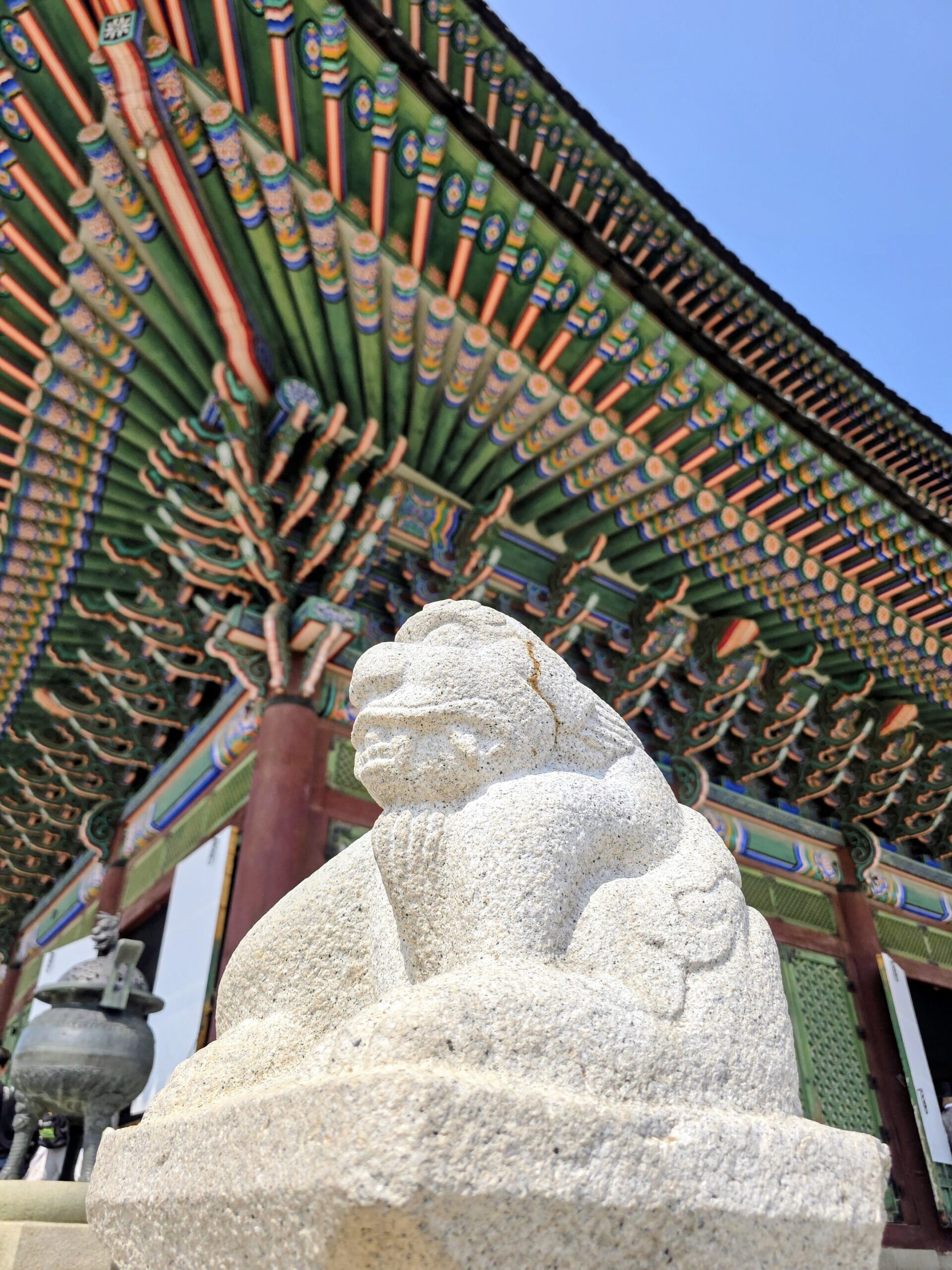
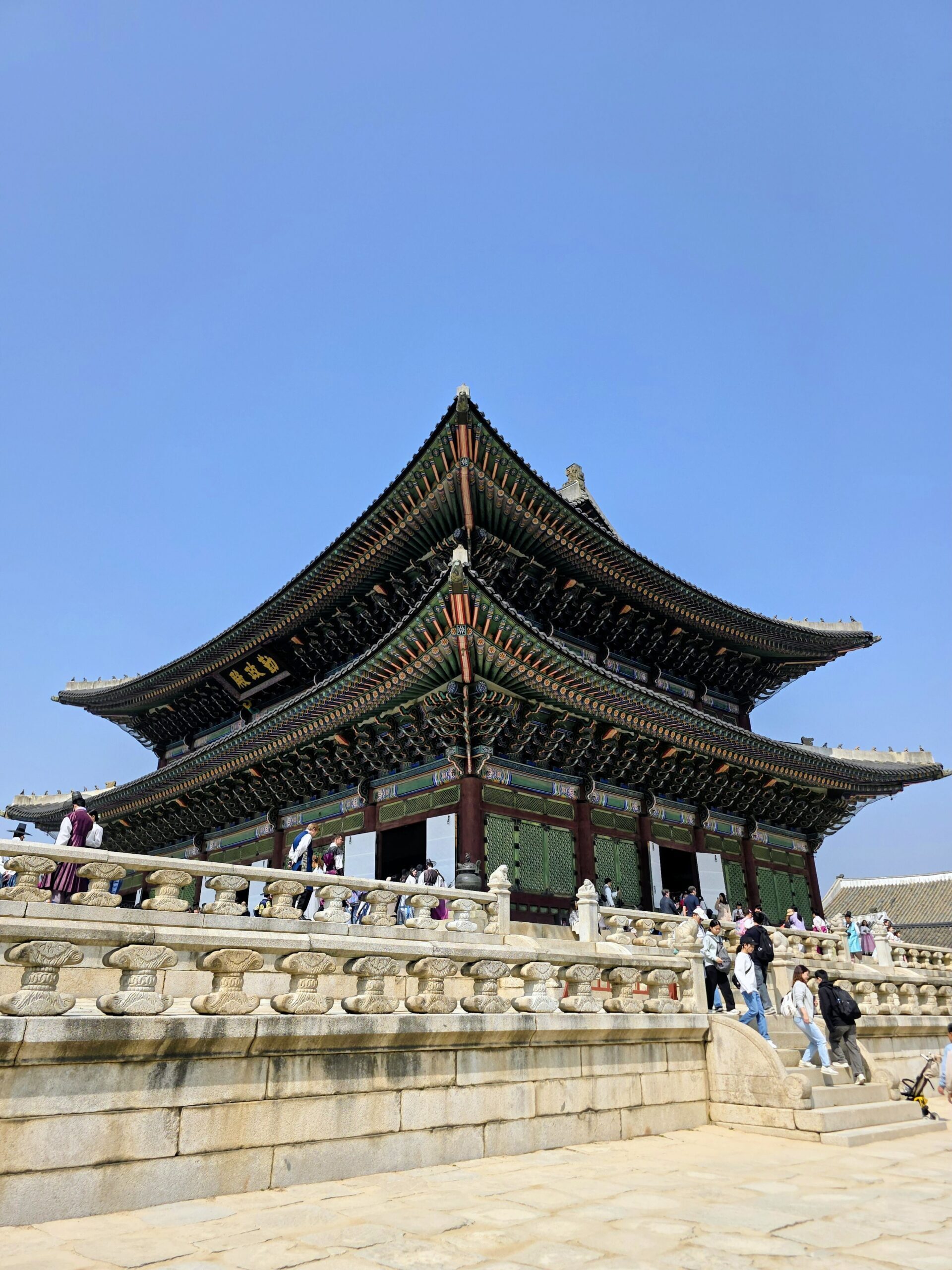
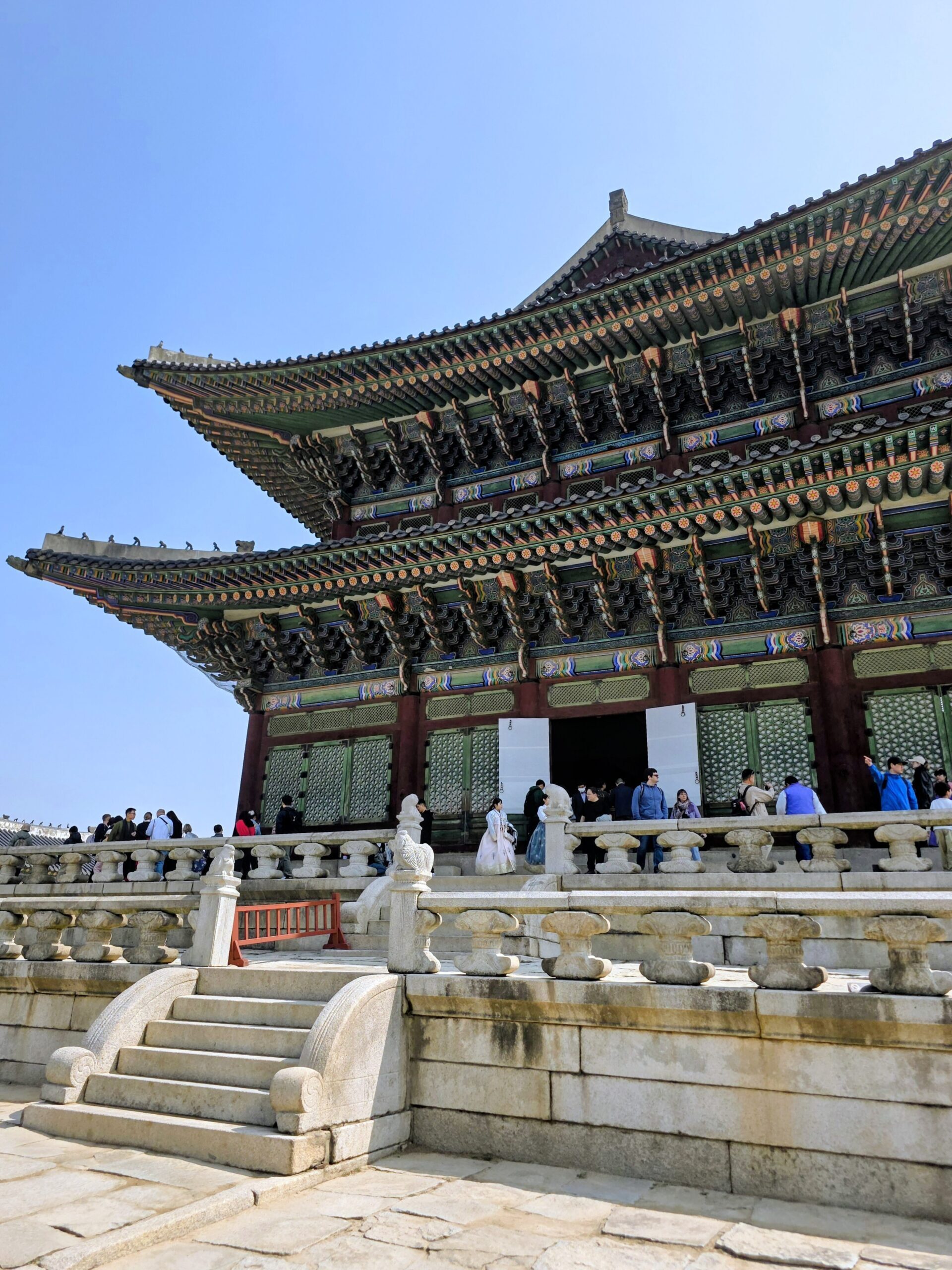
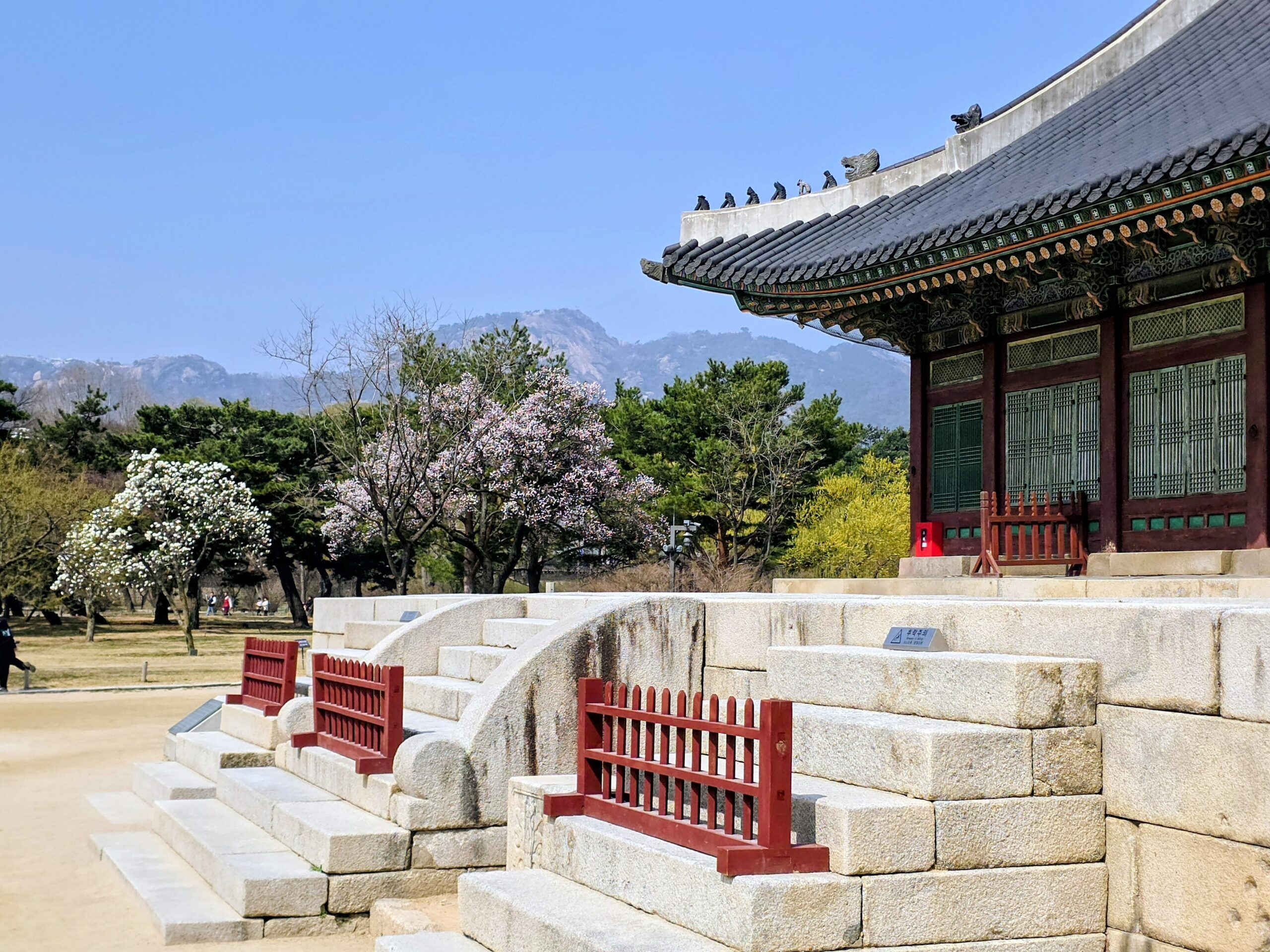
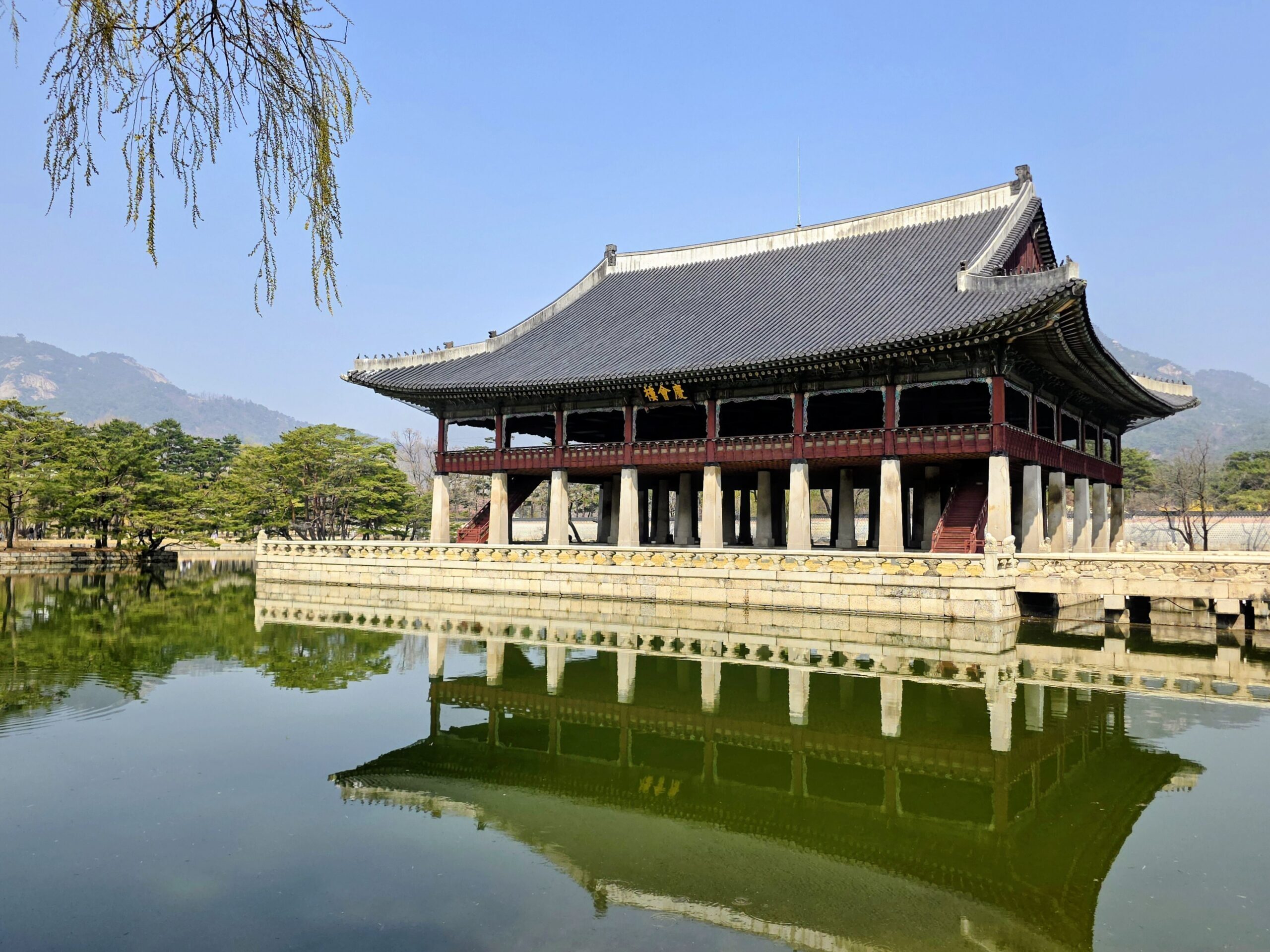
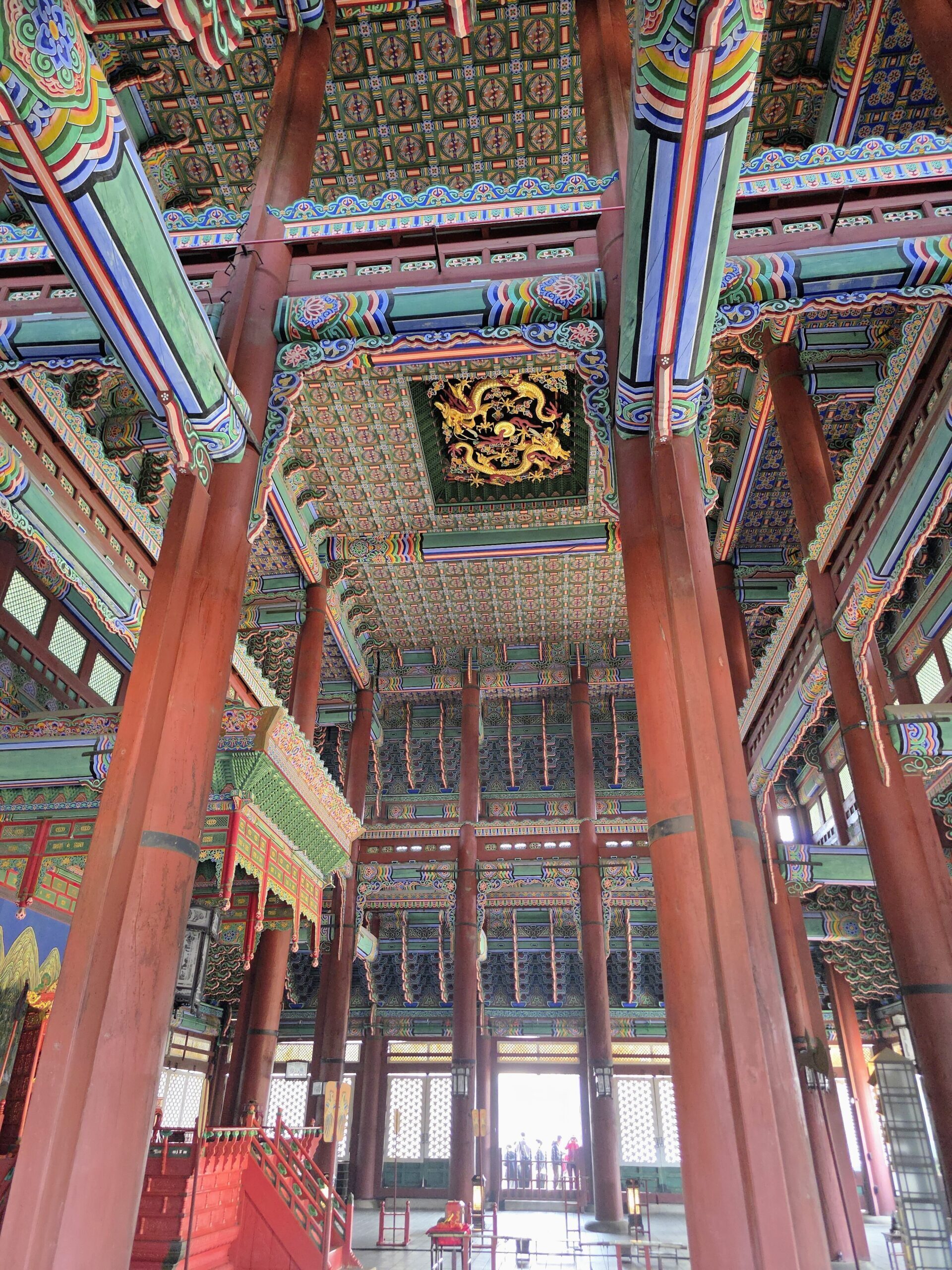
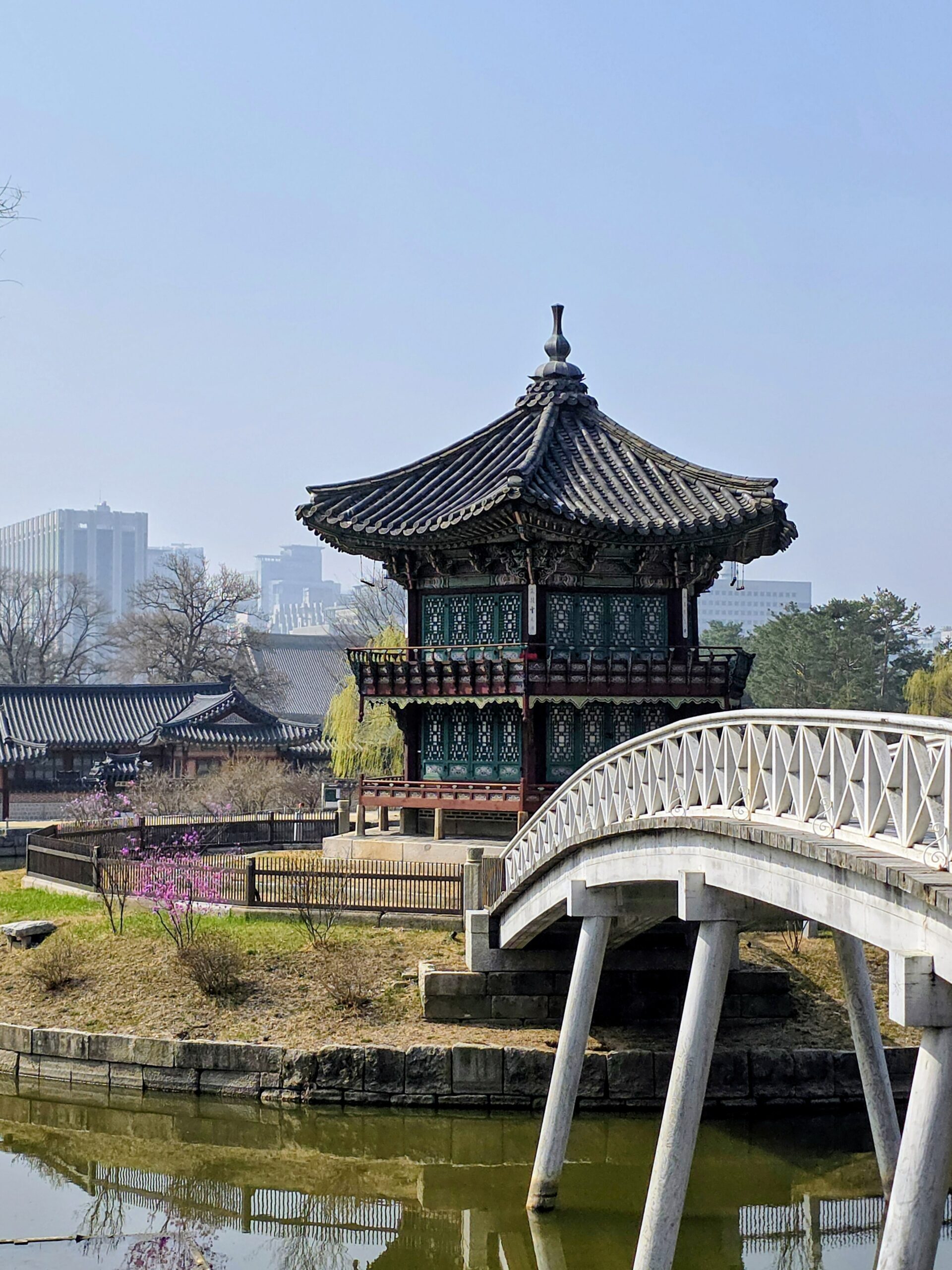
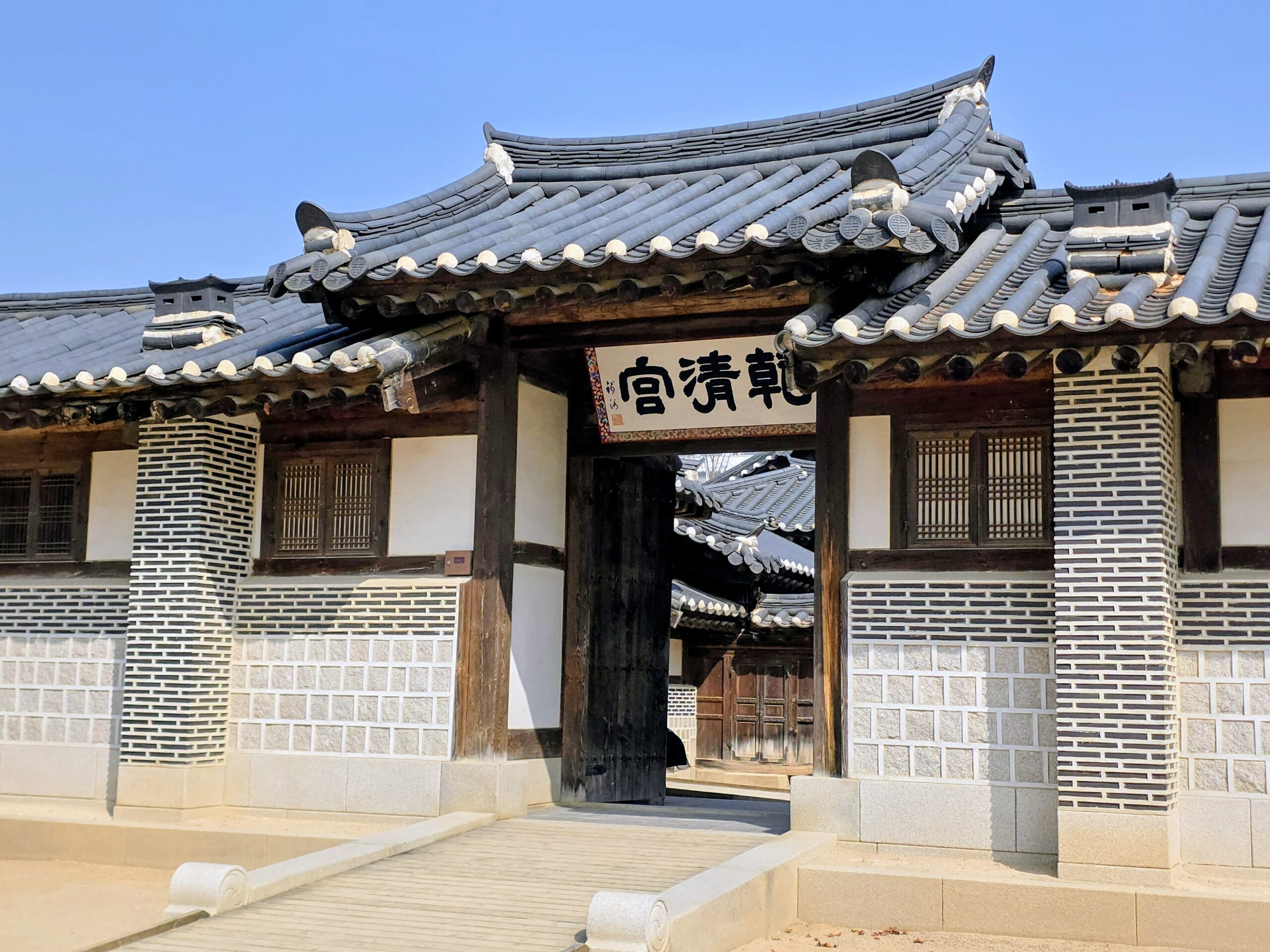
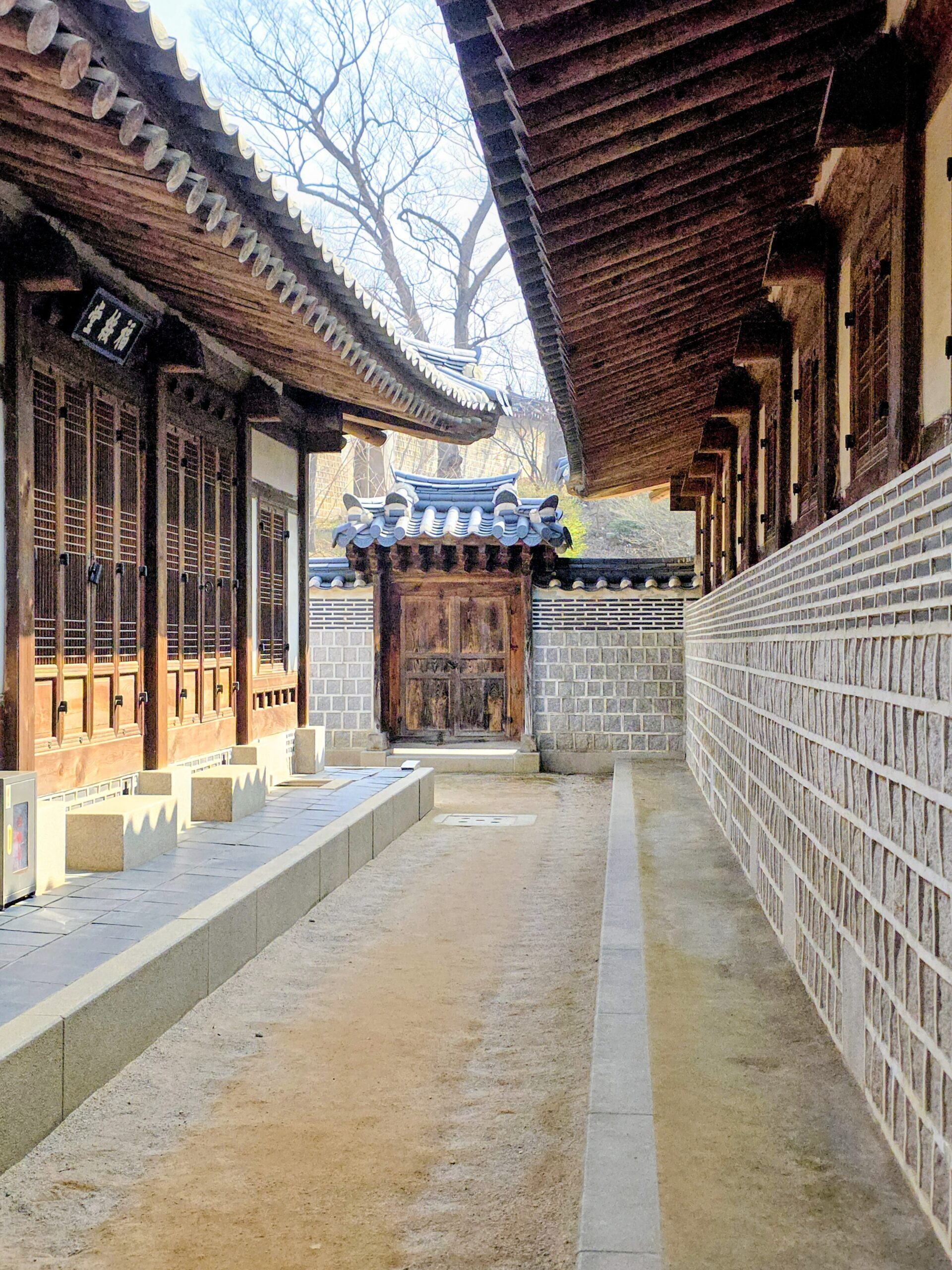
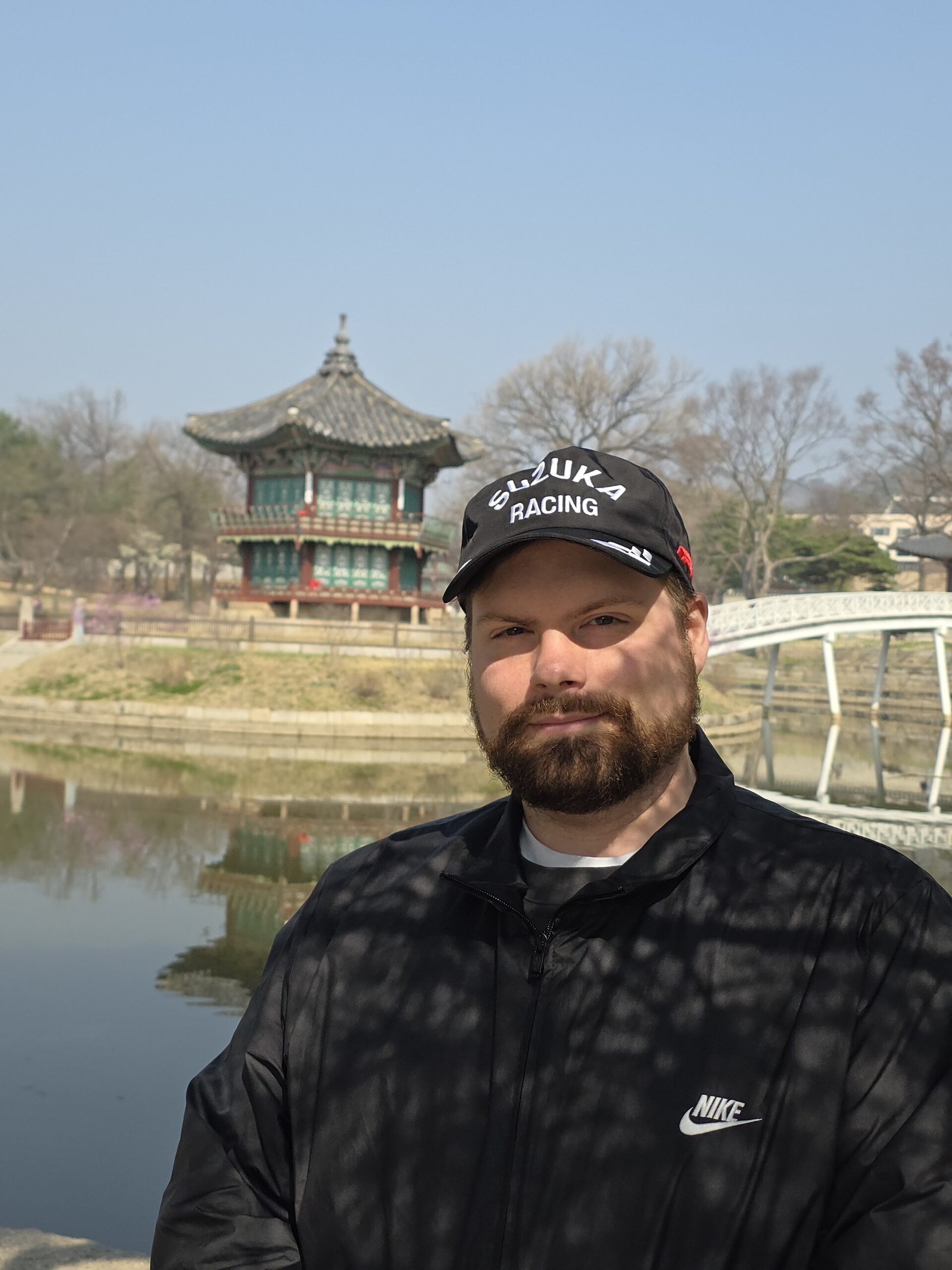
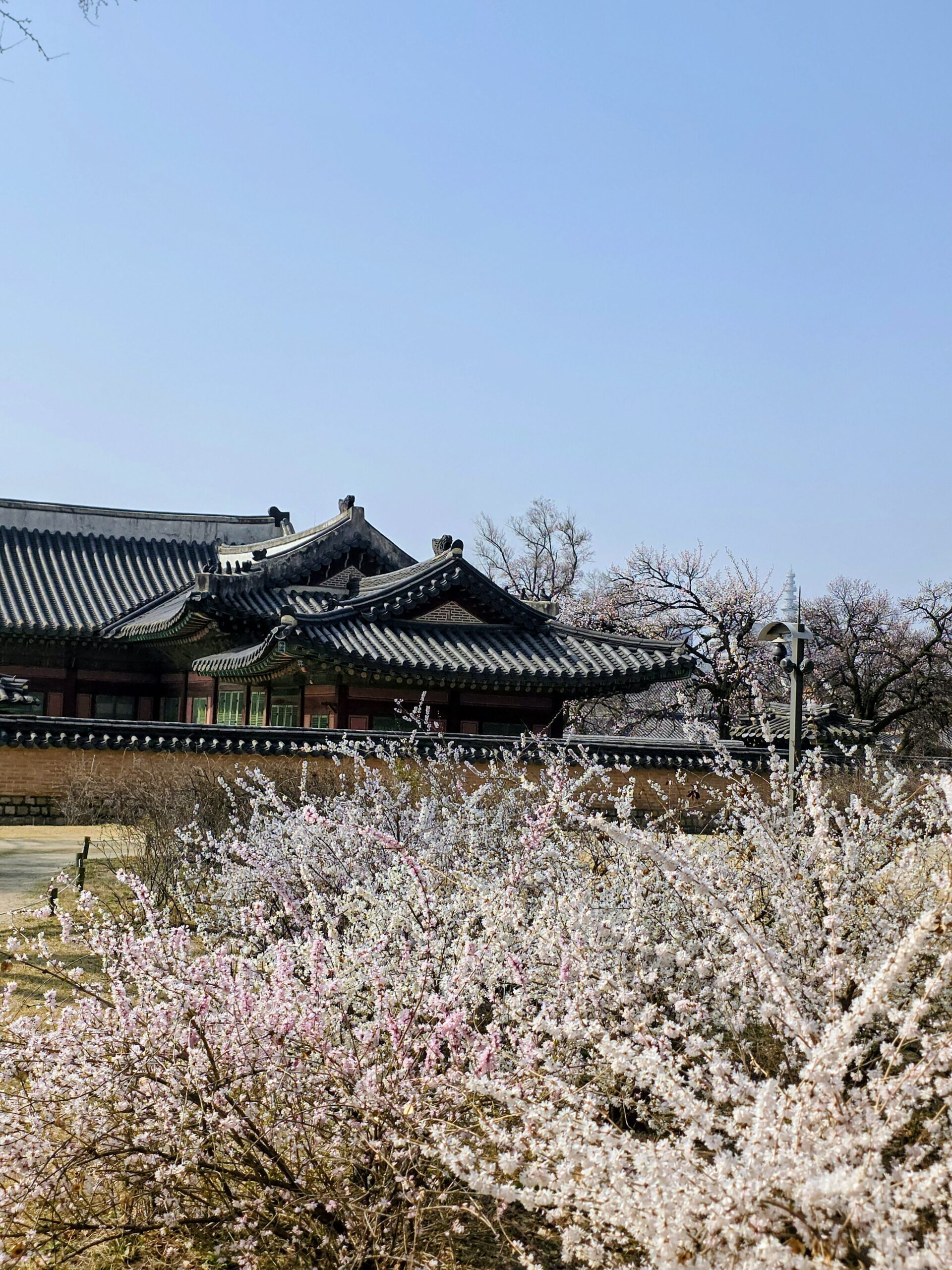
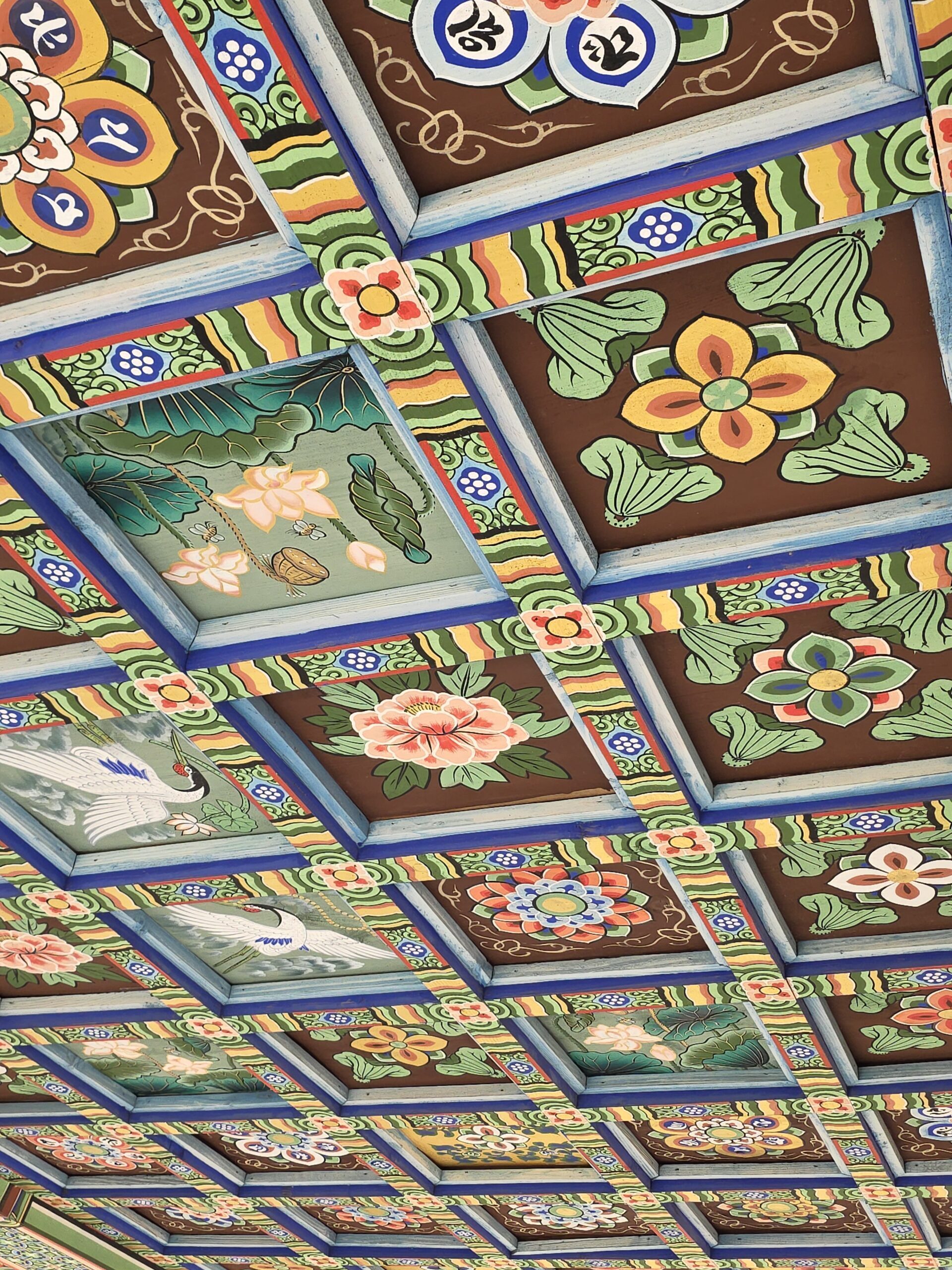
The next day we spent almost entirely at Gyeongbokgung Palace, the largest and most historically significant of Seoul’s royal palaces. Built in 1395 during the early Joseon Dynasty, it served as the main royal residence for Korean kings. The complex is enormous, with wide courtyards opening into grand wooden halls framed by mountain ridges on the horizon. What stood out most was the architecture, vivid and controlled, with greens, reds, blues, and golds layered into intricate painted patterns known as dancheong. The tiled roofs sweep upward at the edges in a way that feels both elegant and restrained.
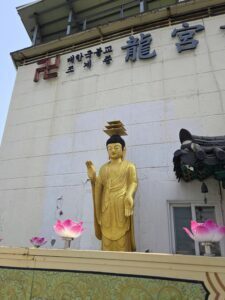
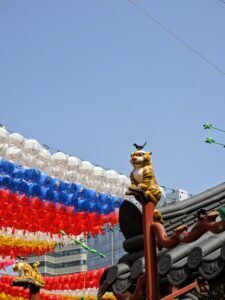
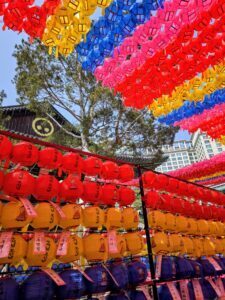
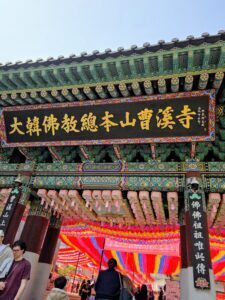
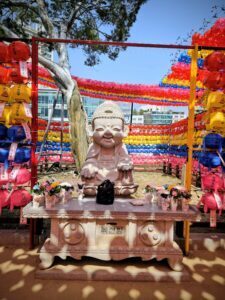
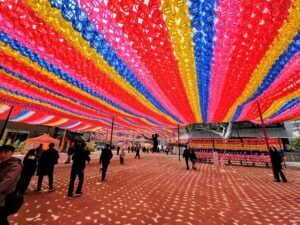
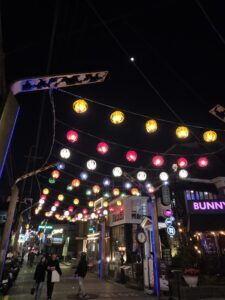
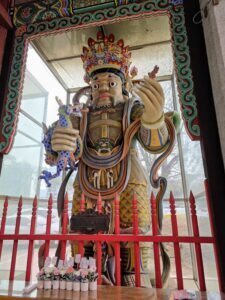
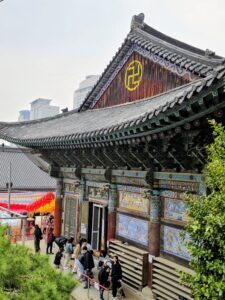
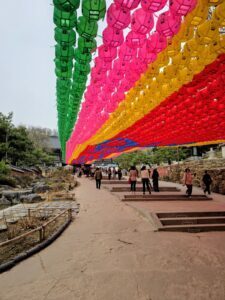
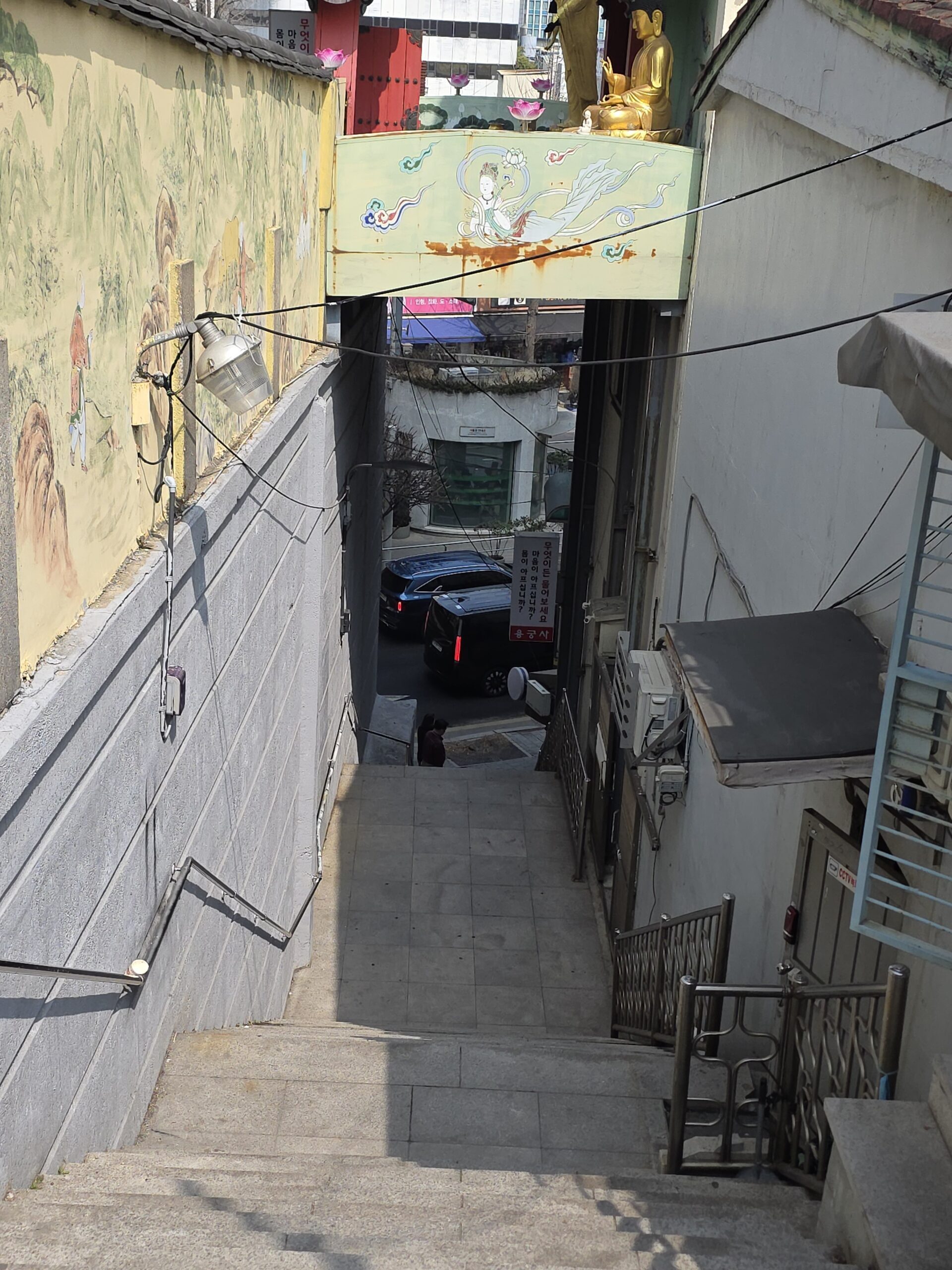
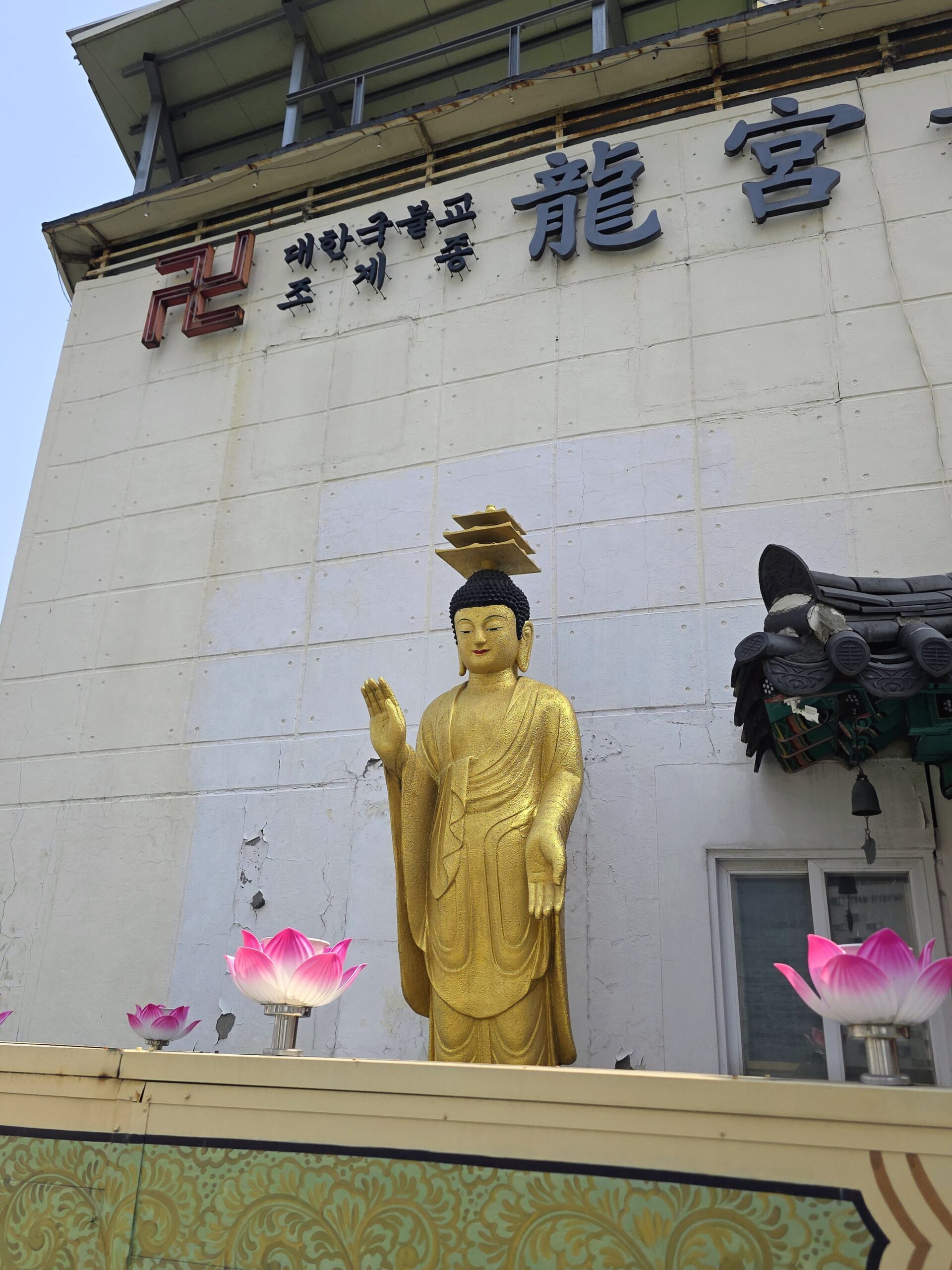
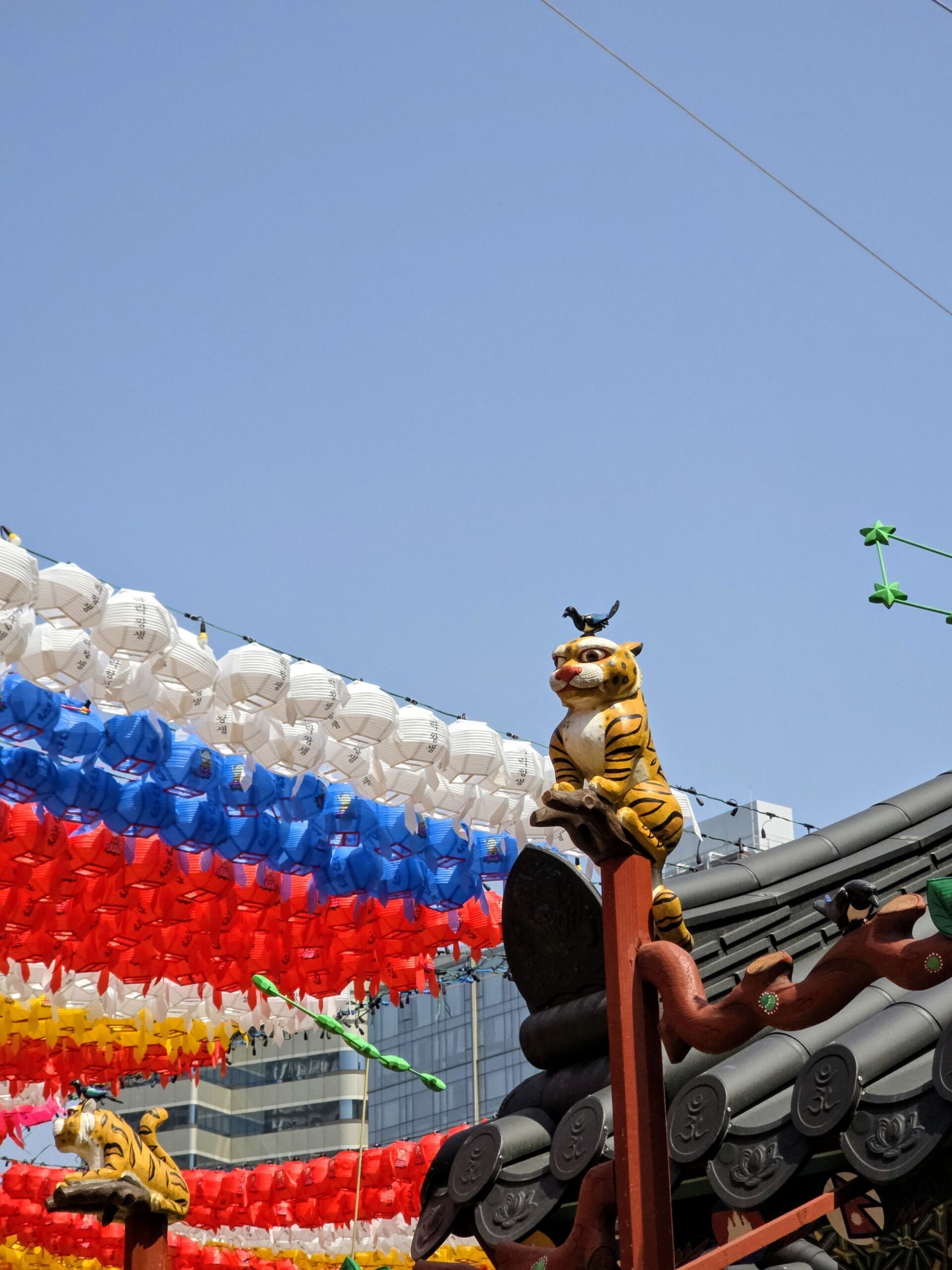
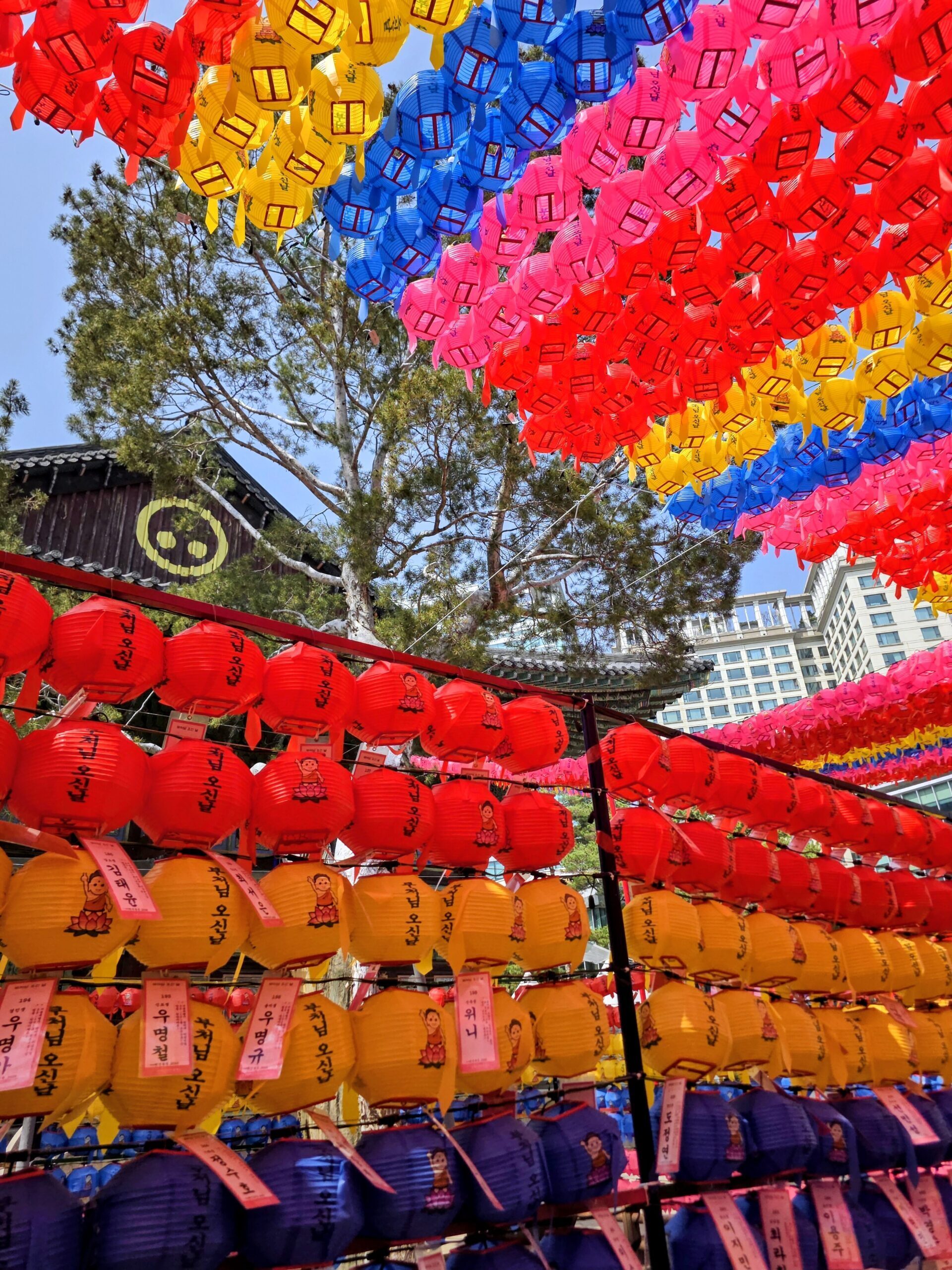
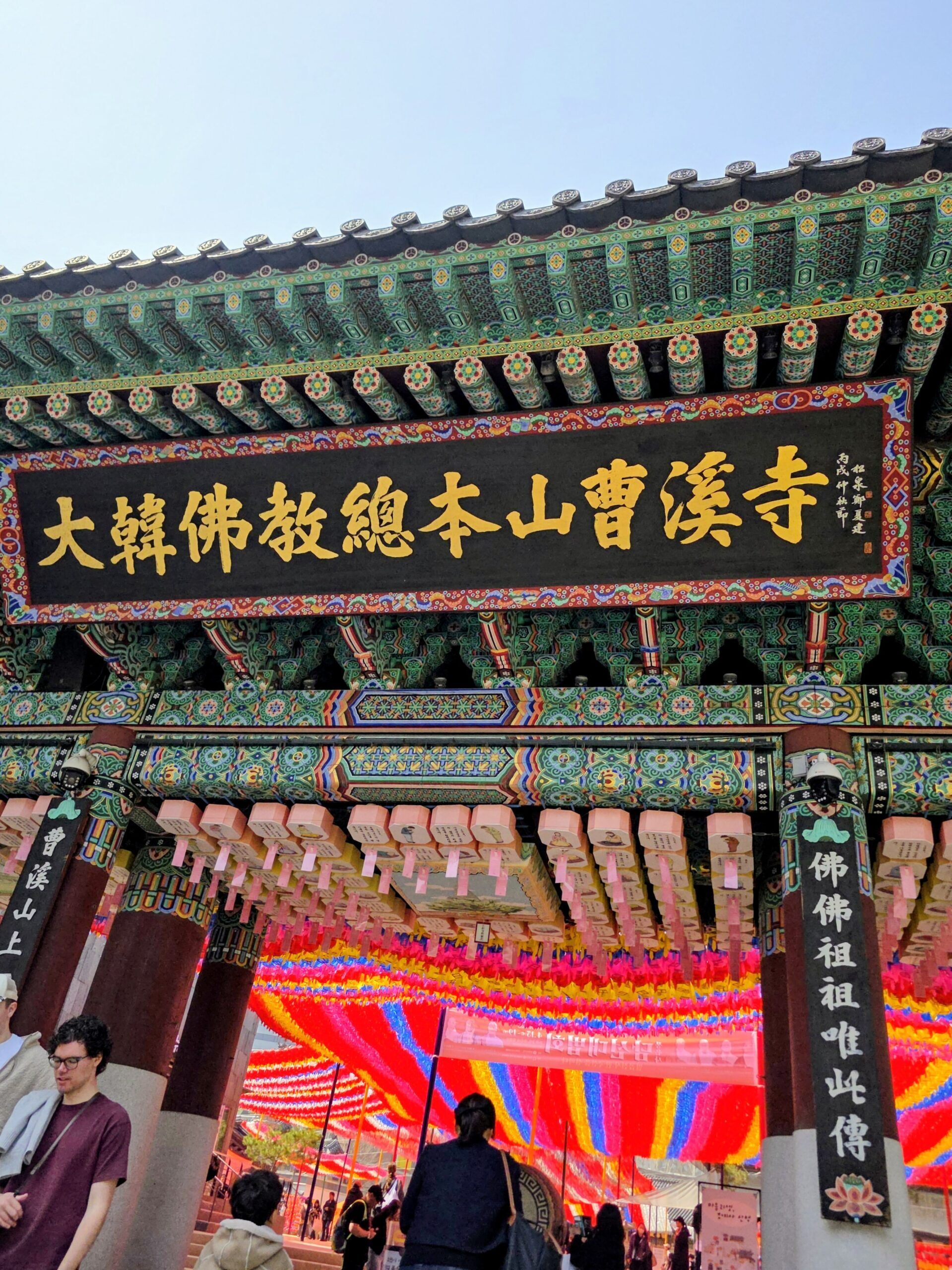
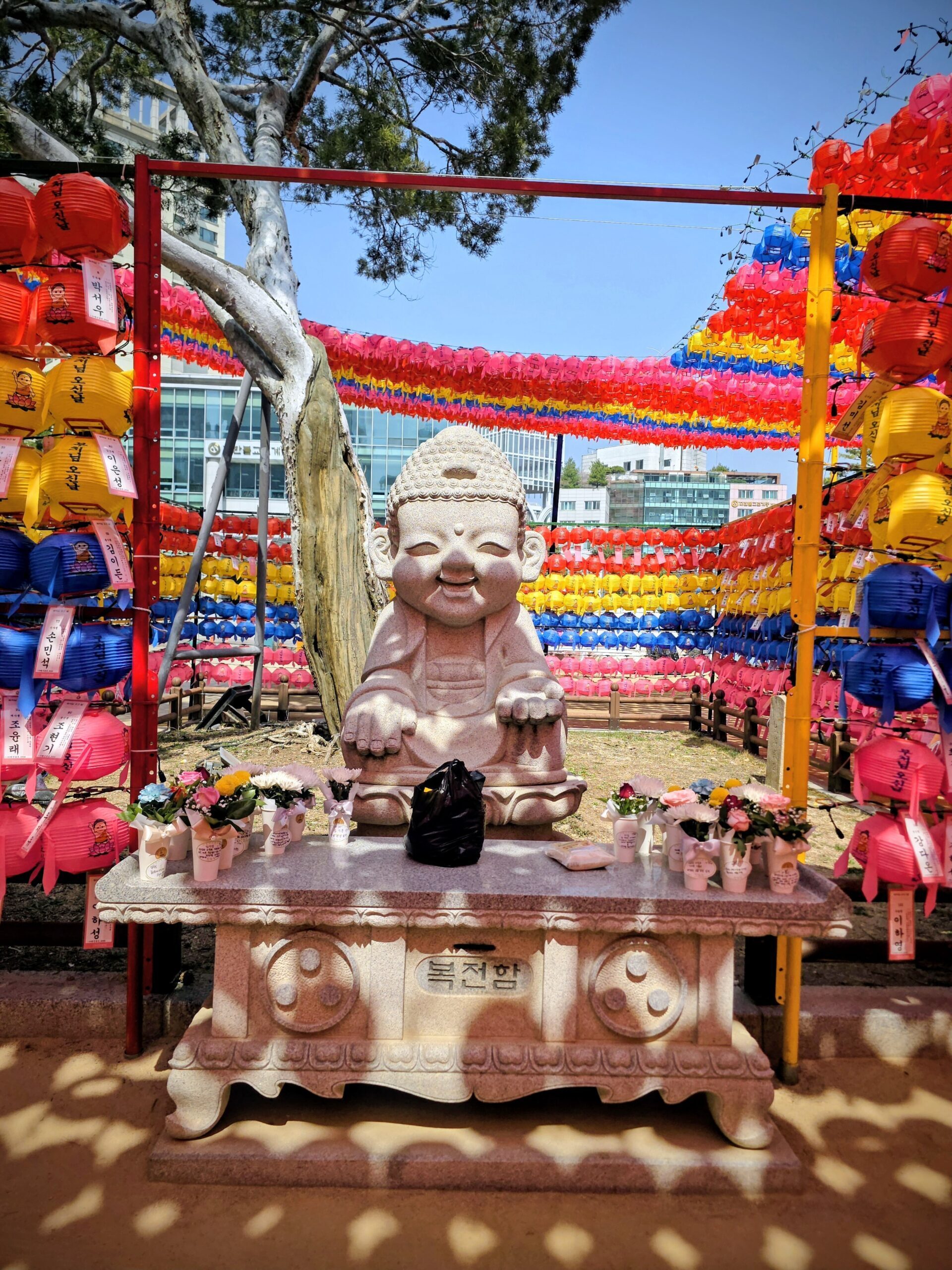
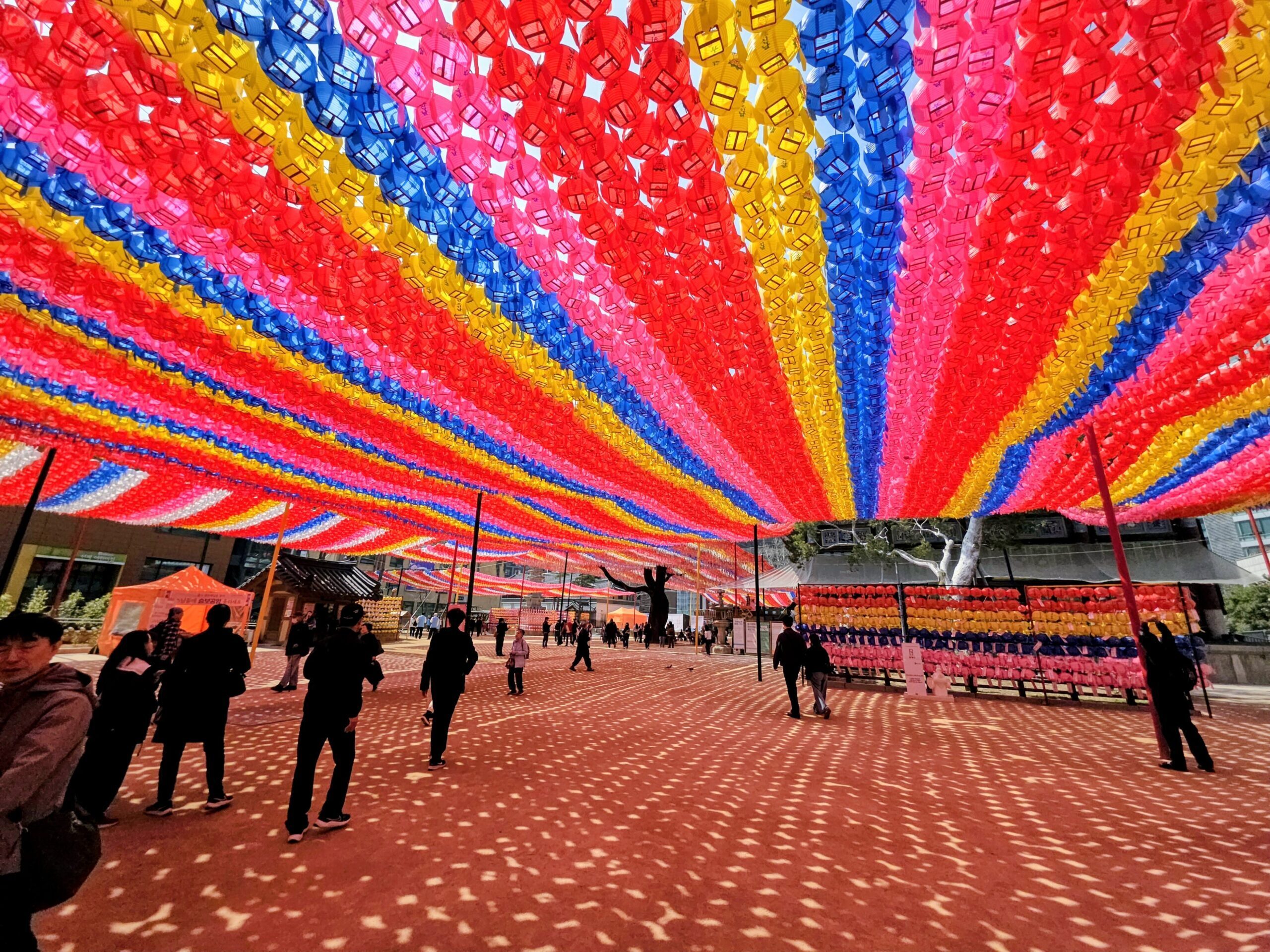
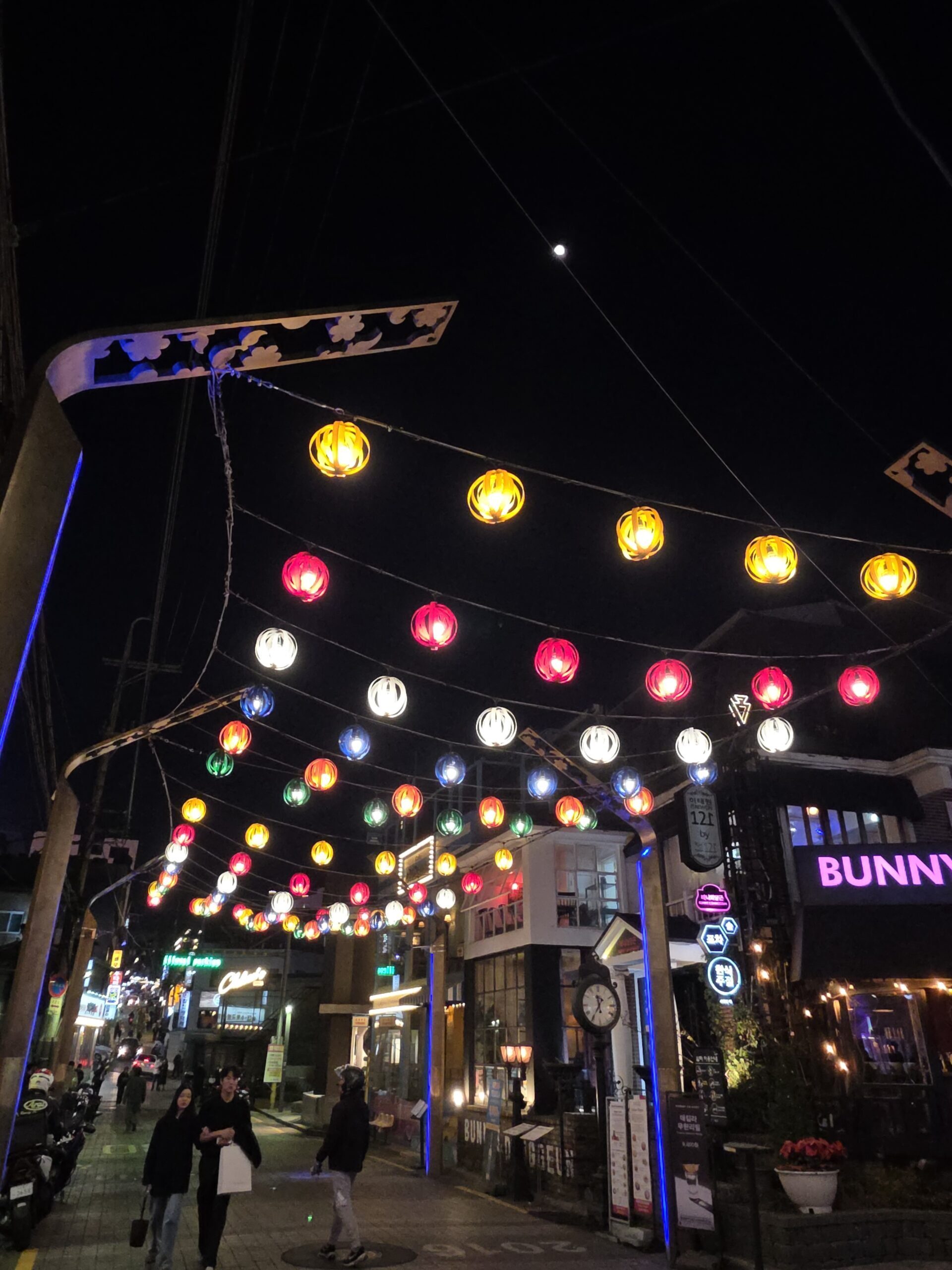
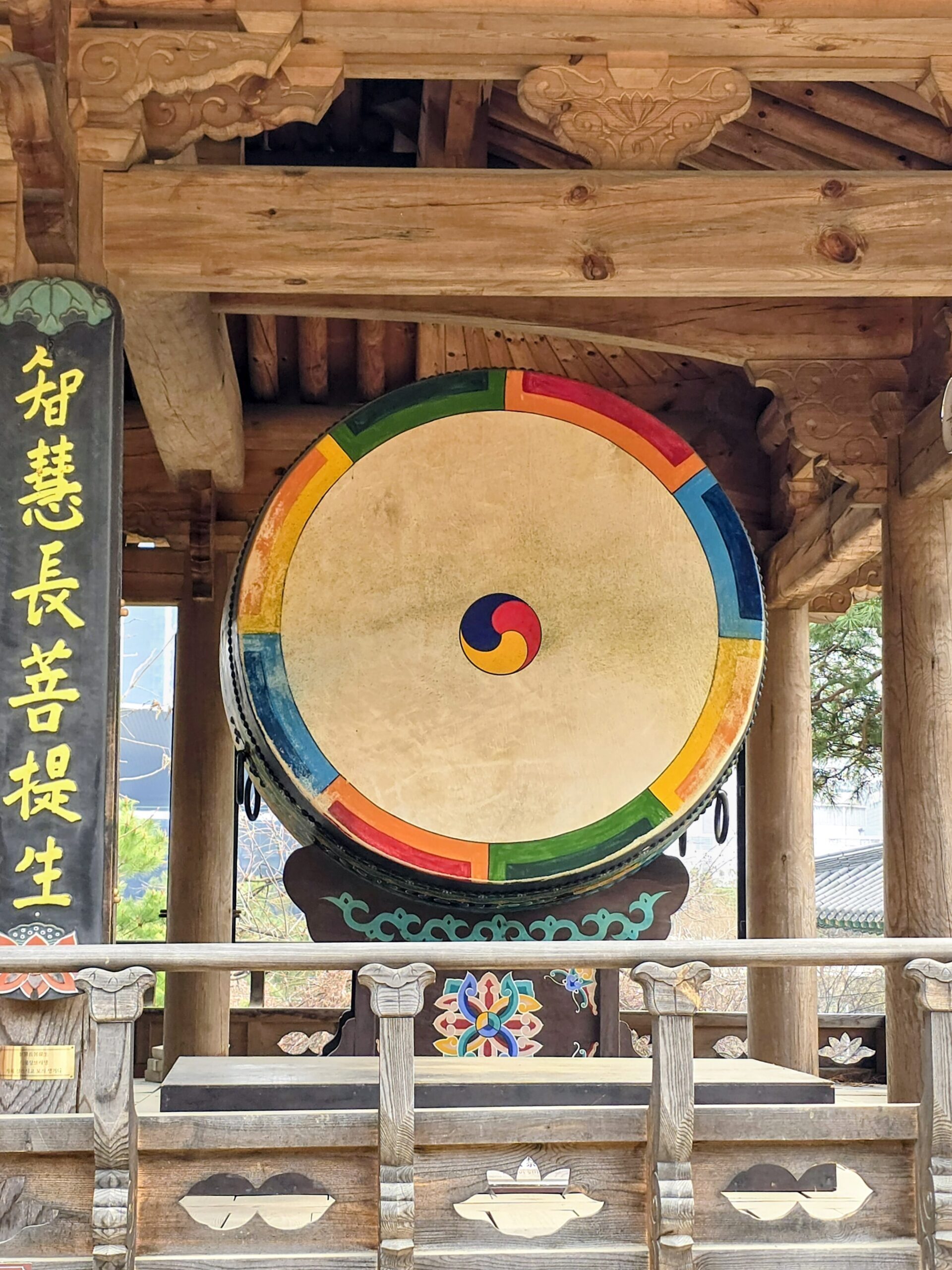
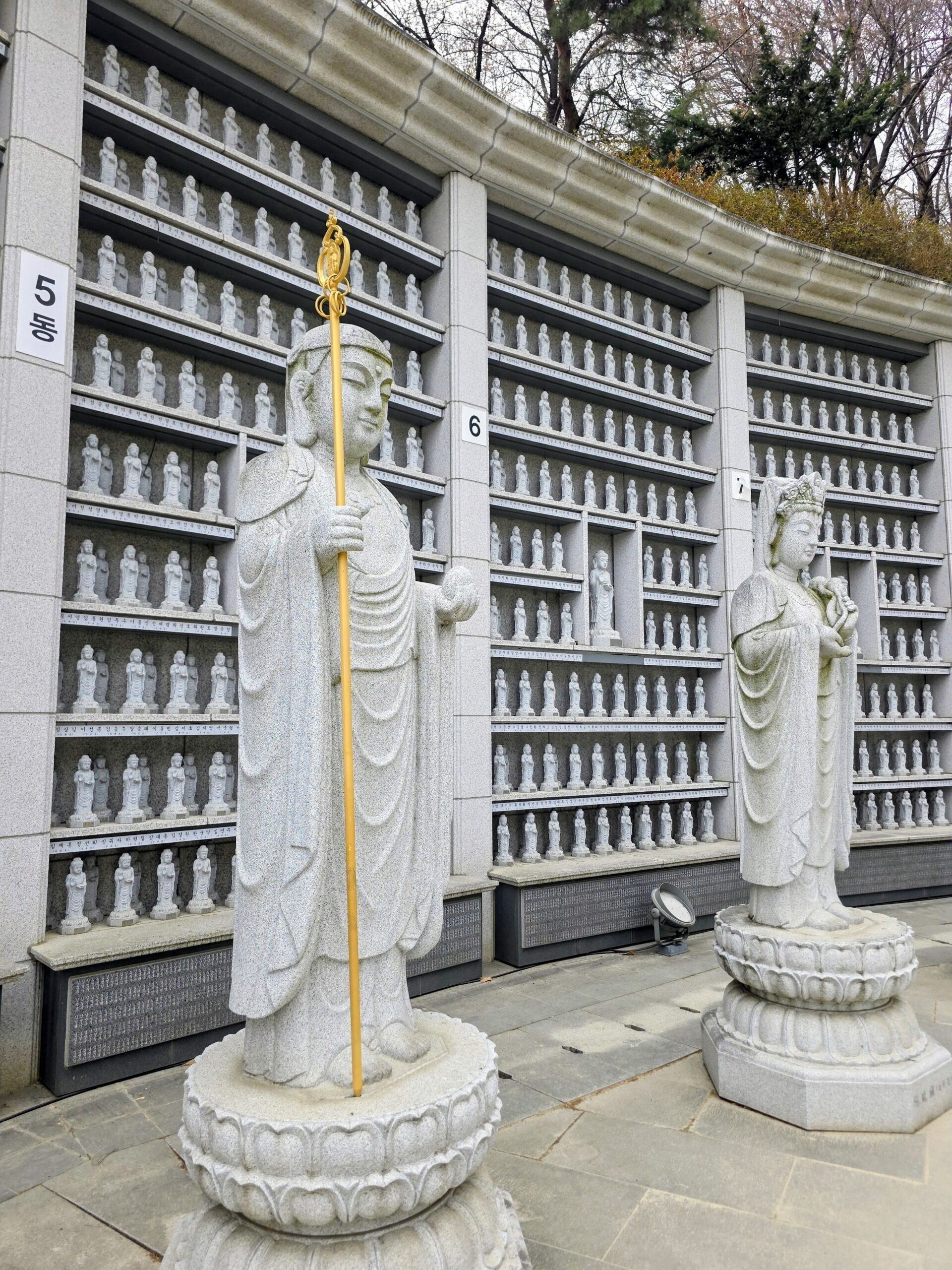
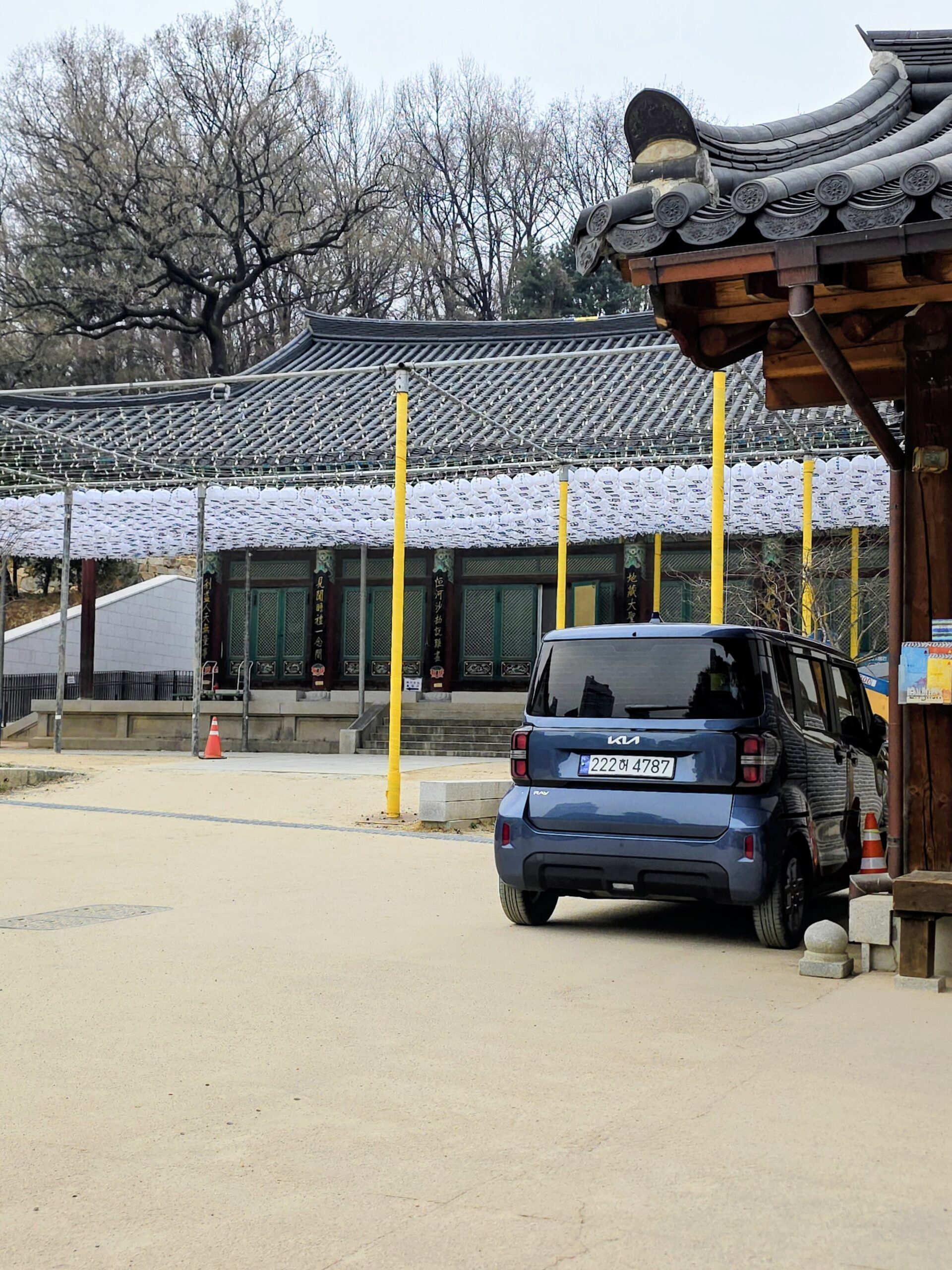
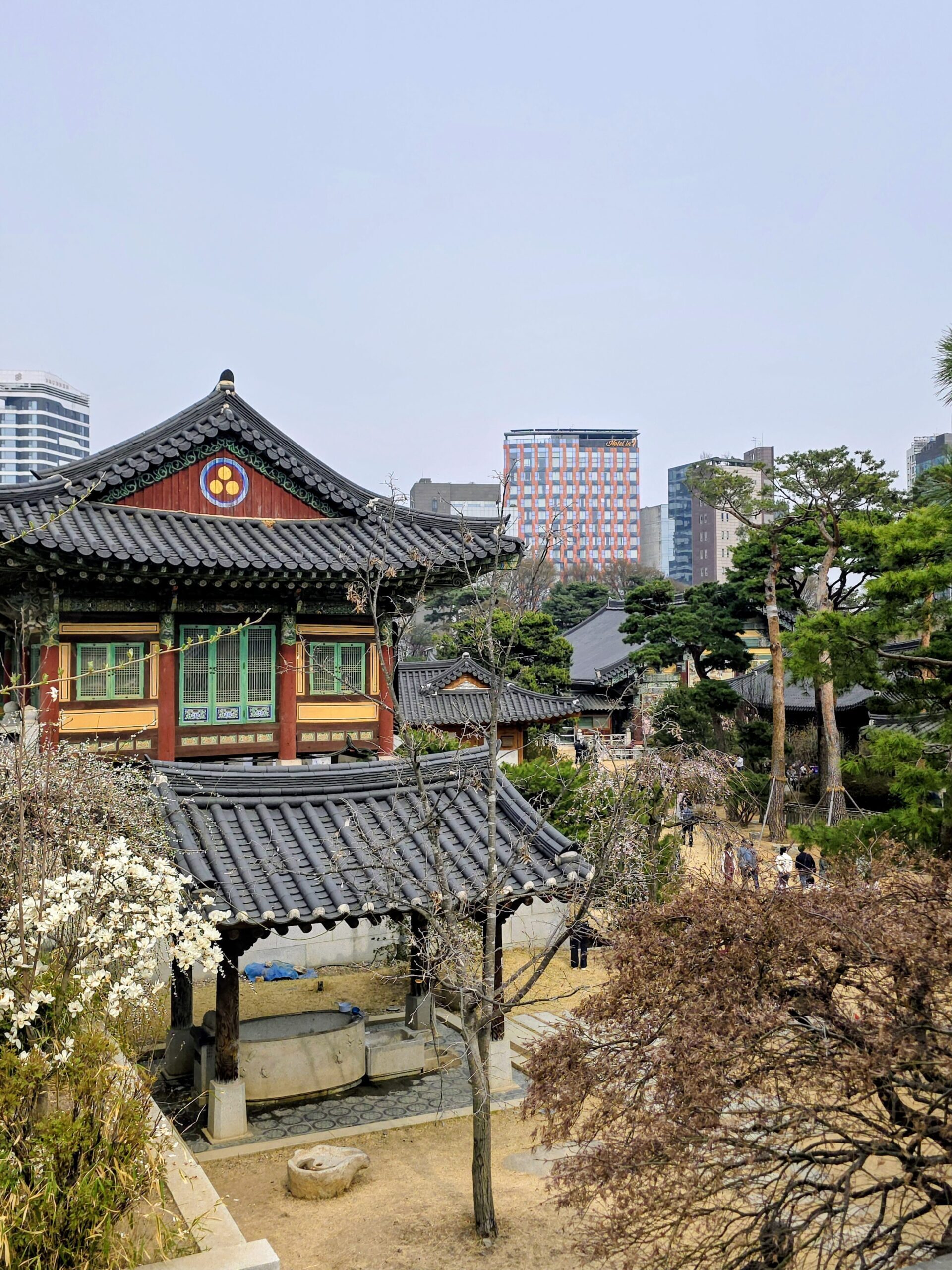
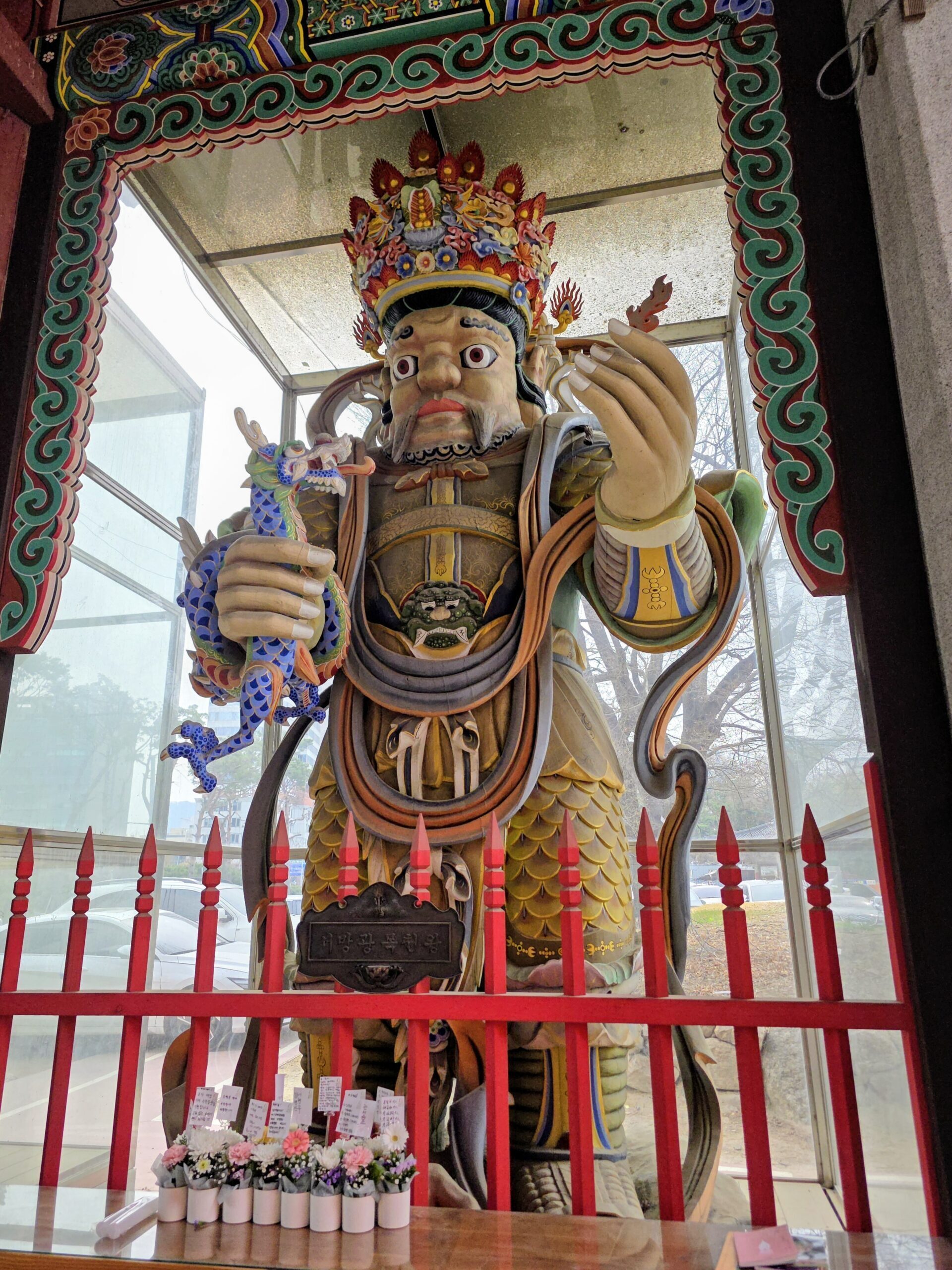
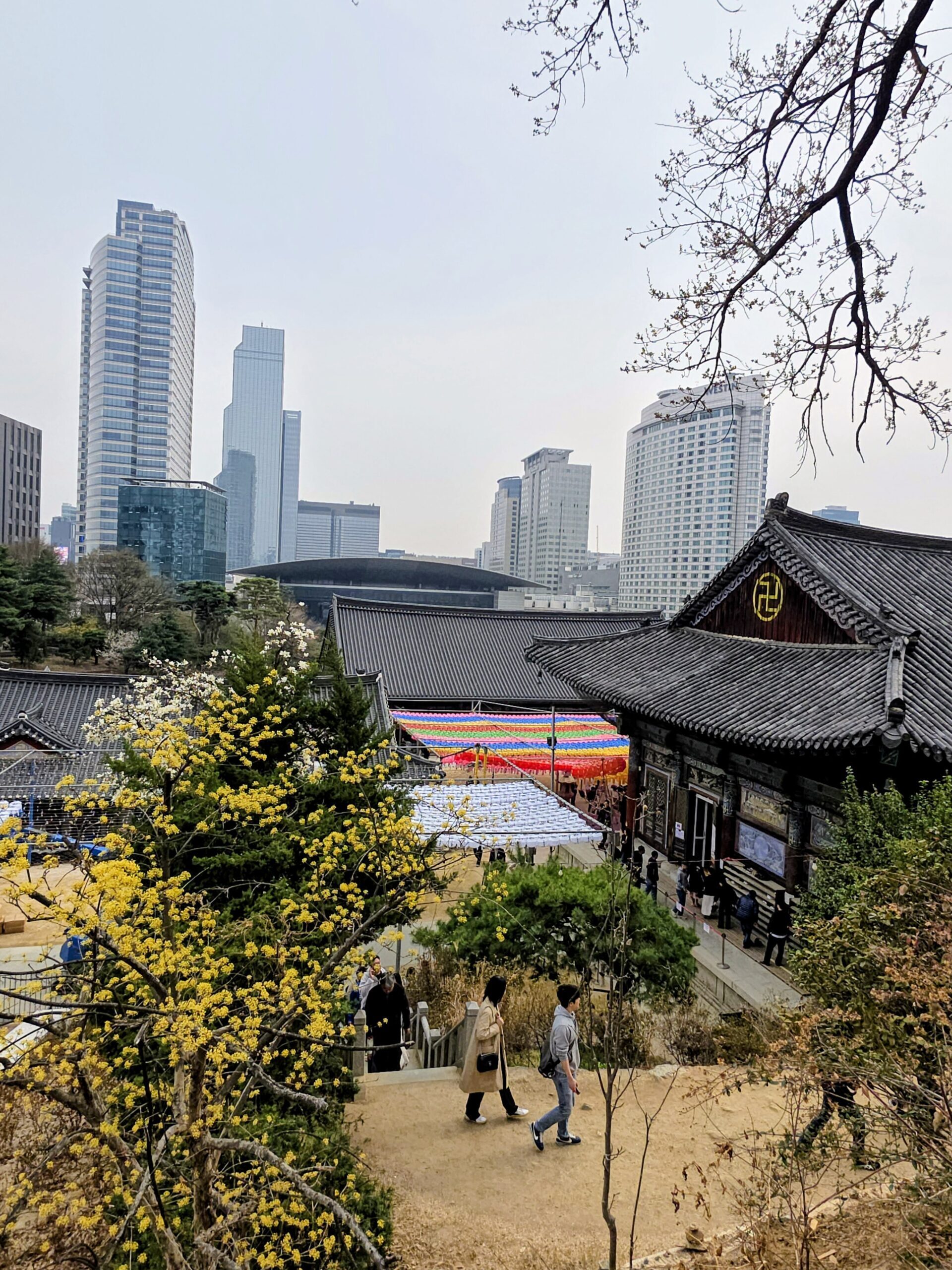
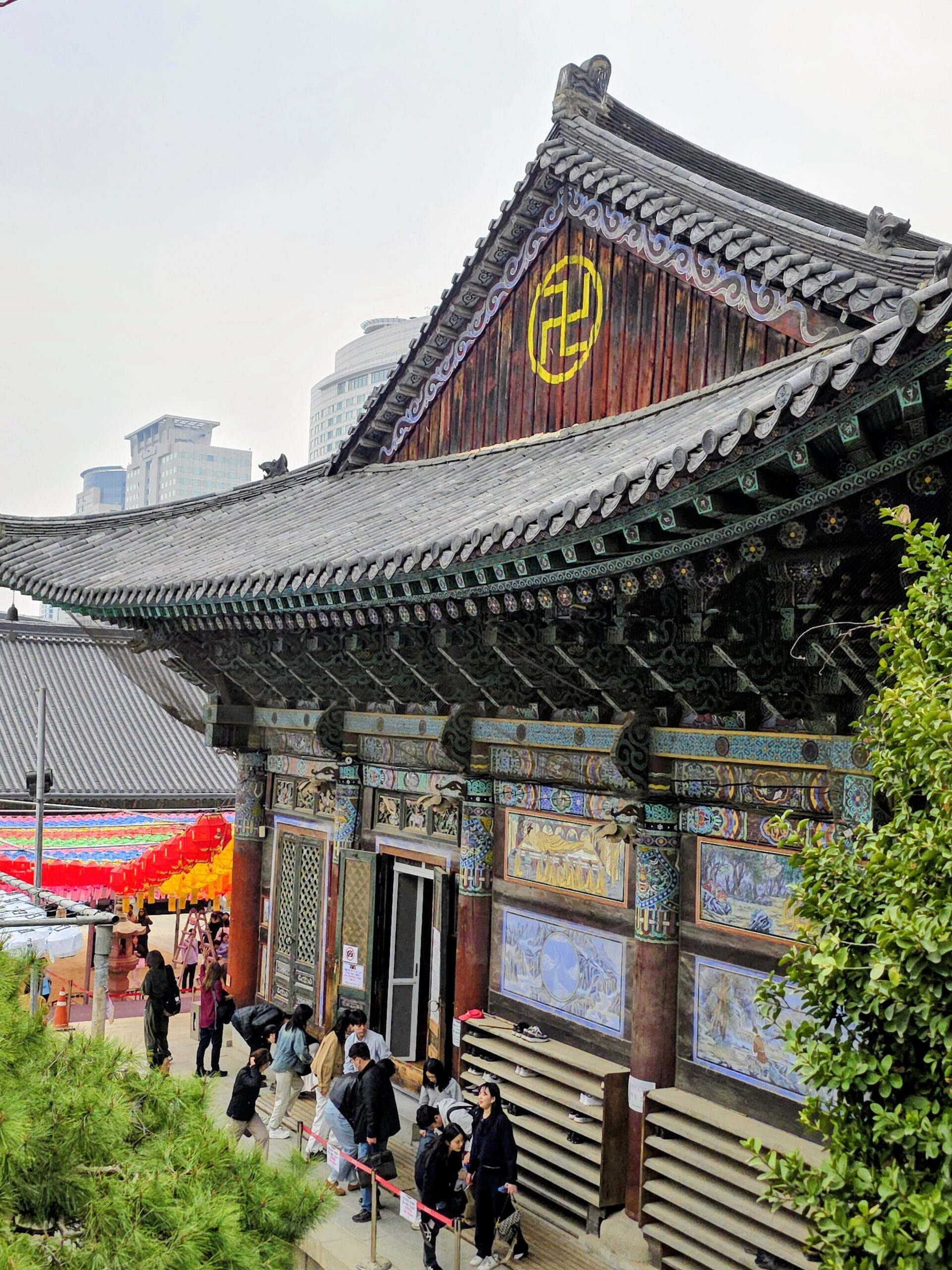
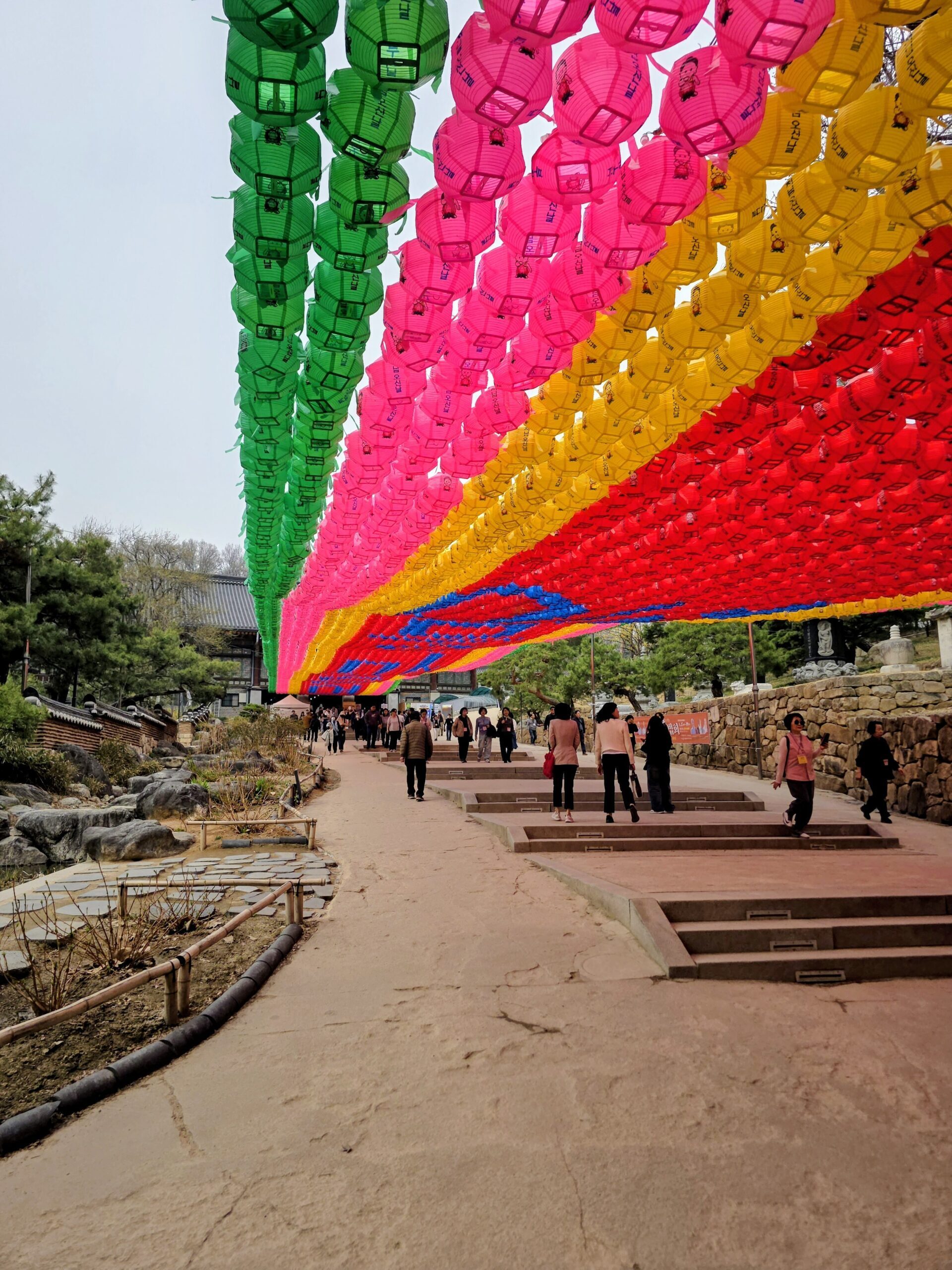
Around the corner we visited Jogyesa Temple, my first Korean Buddhist temple. Having spent time at temples in Japan, there was a familiar structure to it, but the visual experience was noticeably different — far more colorful, with rows of bright lanterns strung across the courtyard in red, blue, and yellow.
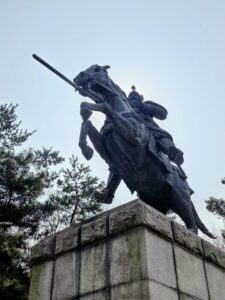
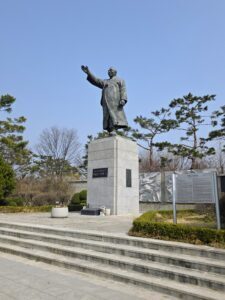
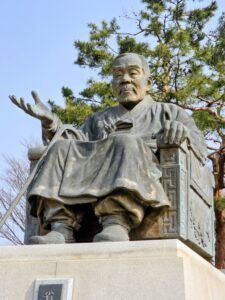
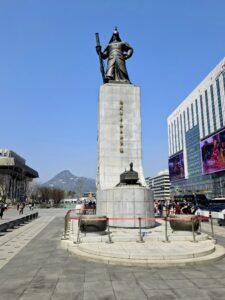
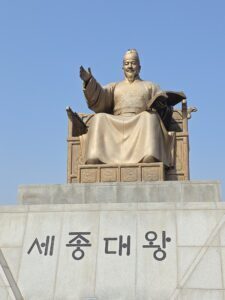
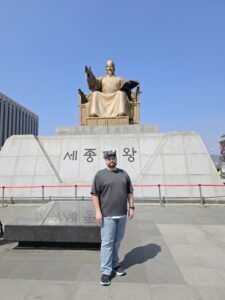
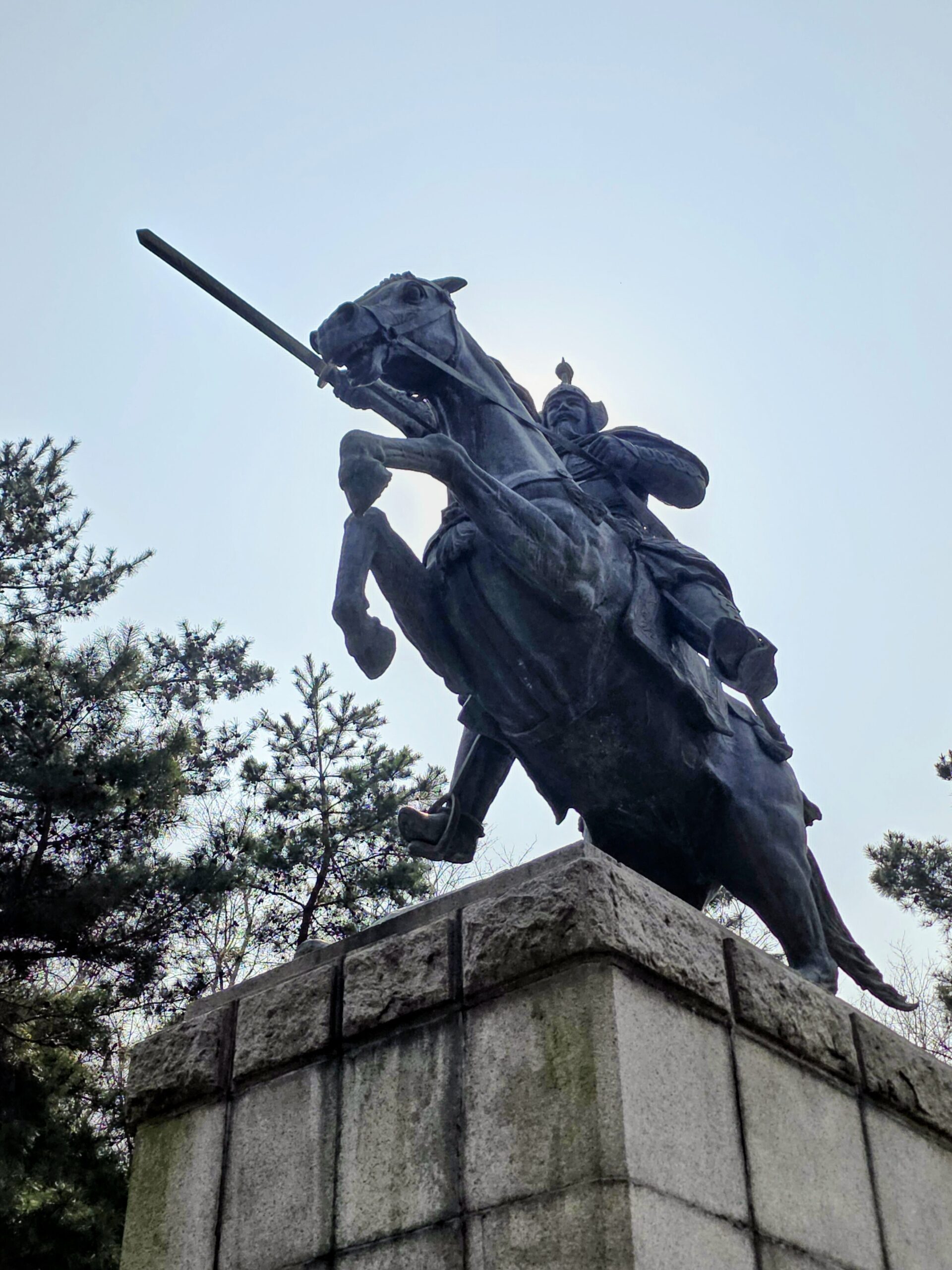
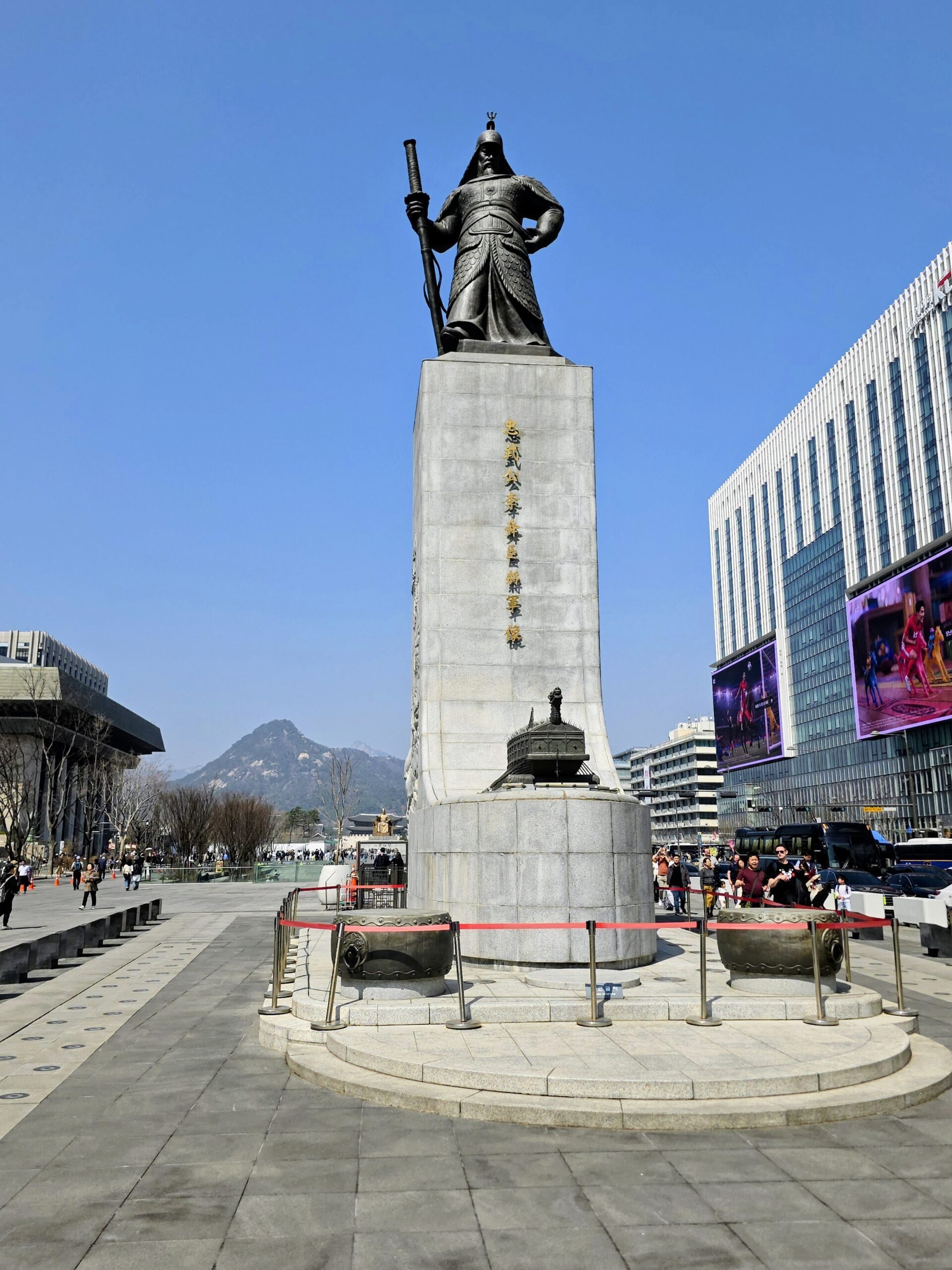
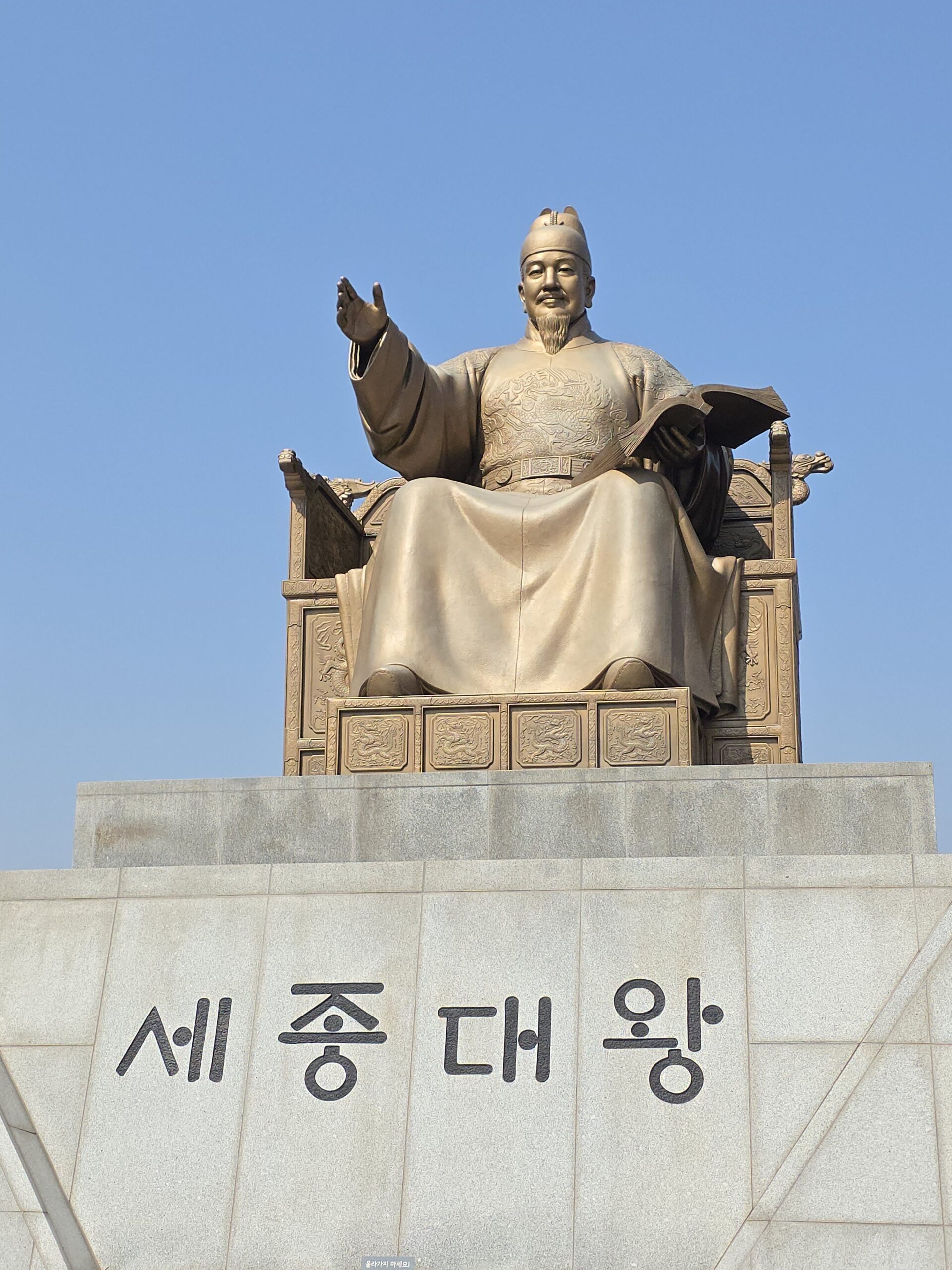
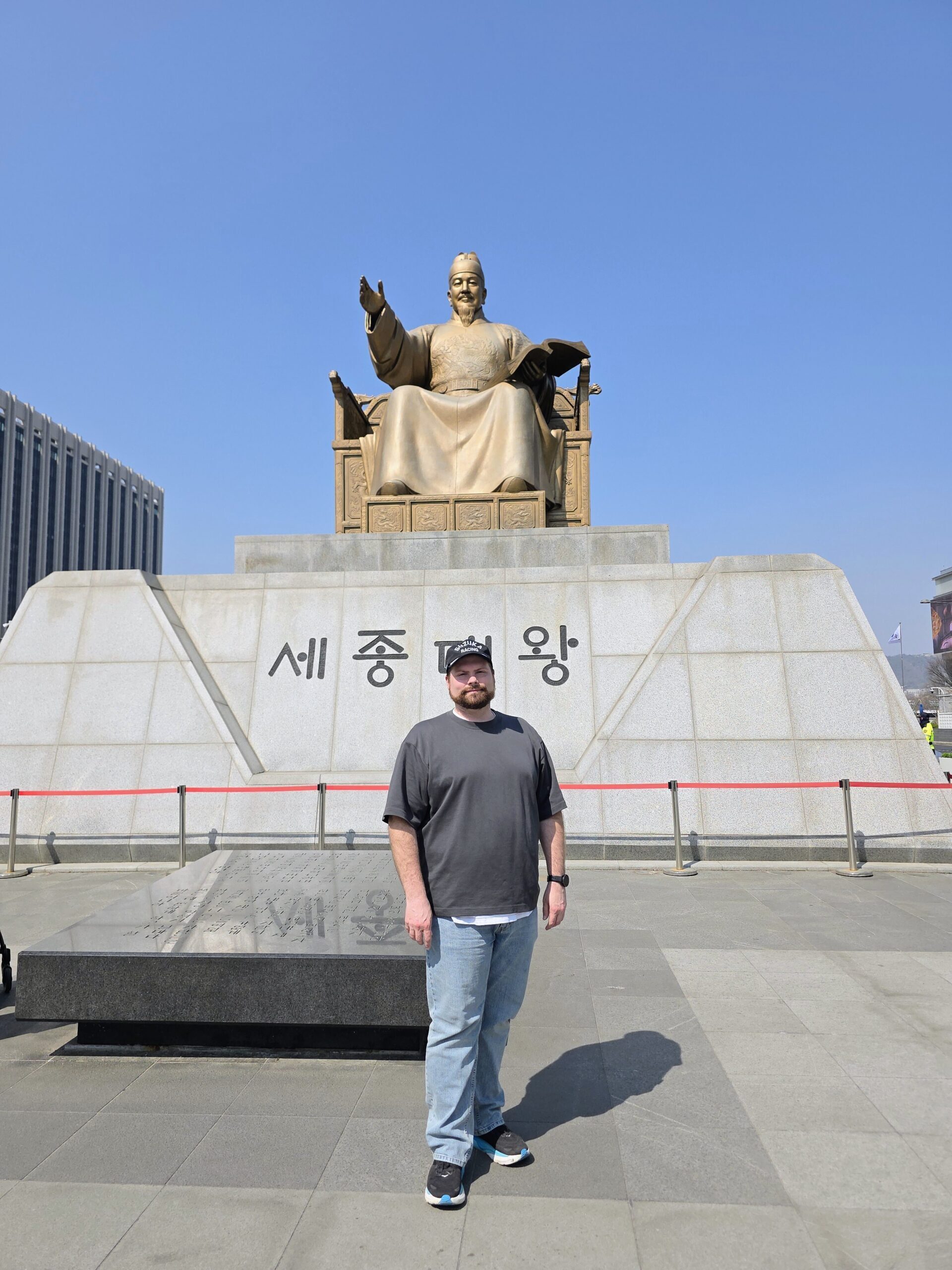
We also passed through Gwanghwamun Square, where statues of Admiral Yi Sun-sin and King Sejong the Great stand at the center of the city. Beneath the square is a large underground exhibition dedicated to King Sejong, the monarch responsible for developing Hangul, the Korean writing system. Korea doesn’t shy away from celebrating that history, and the exhibition reflects that directly.
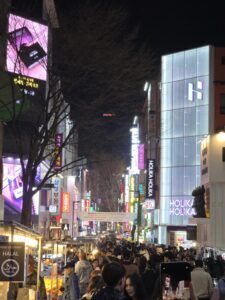
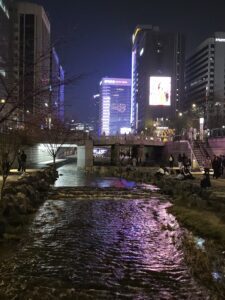
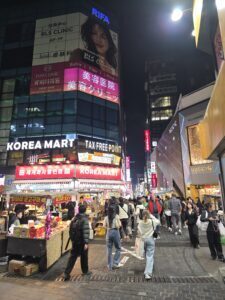
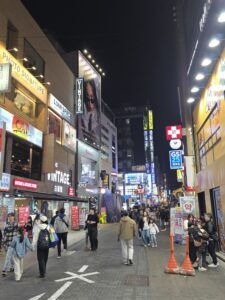
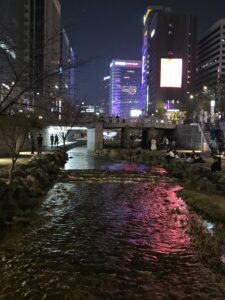
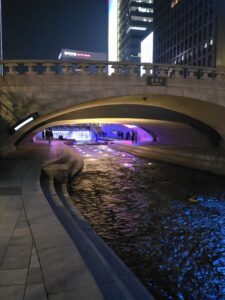
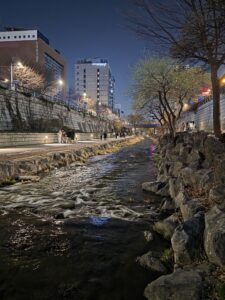
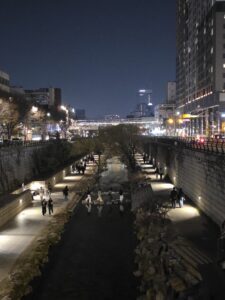
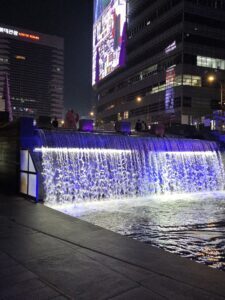
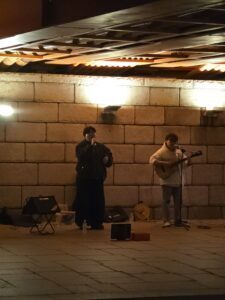
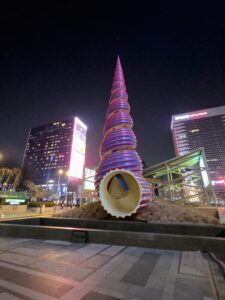
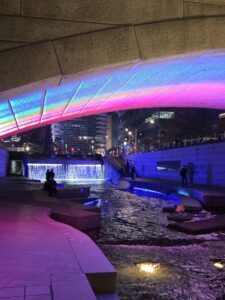
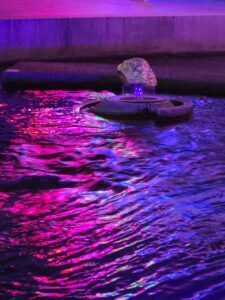
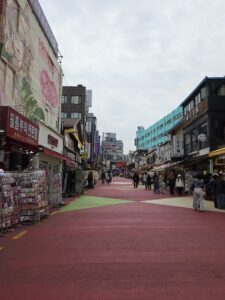
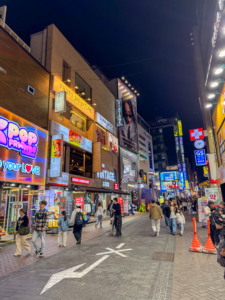
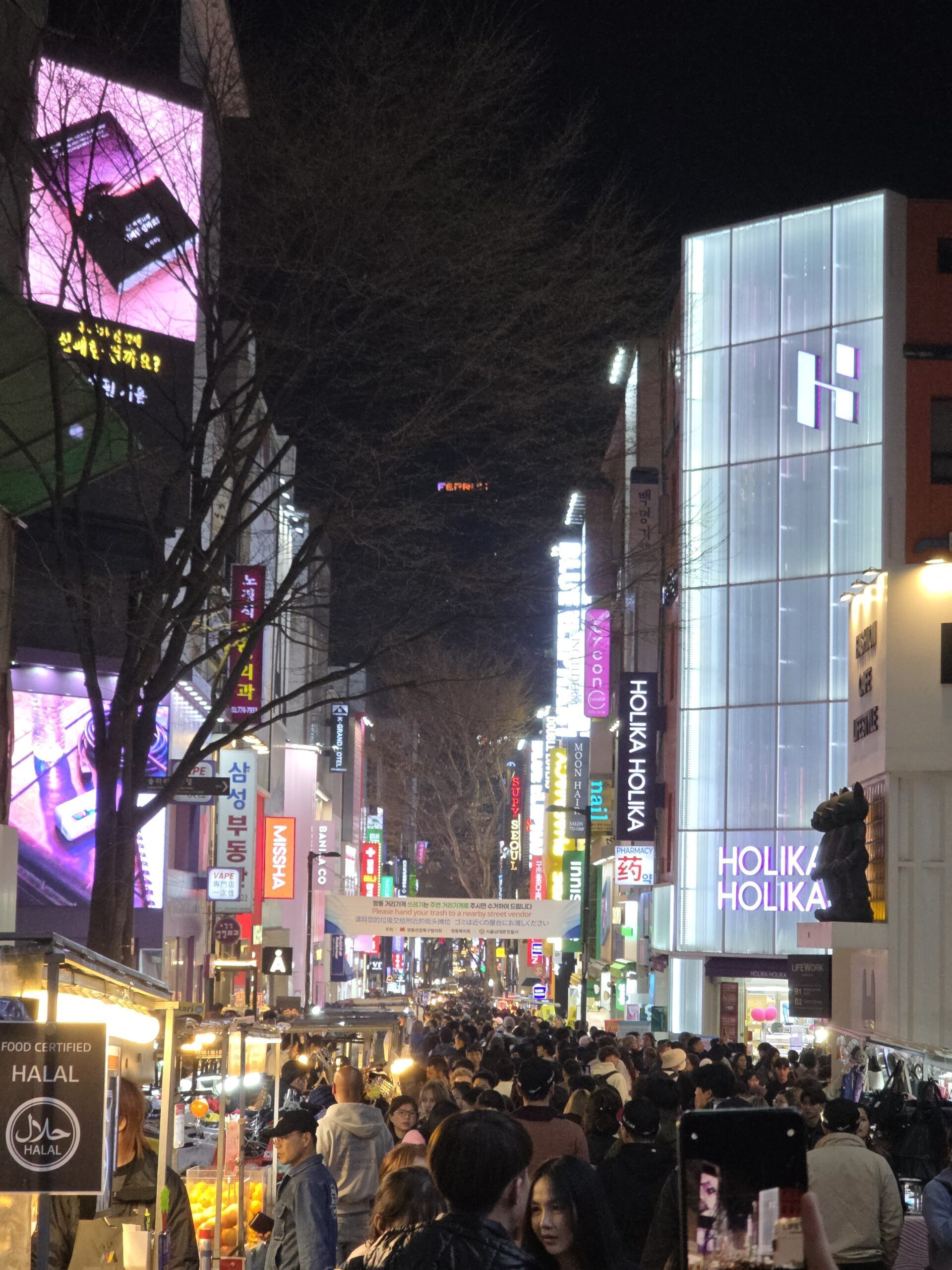
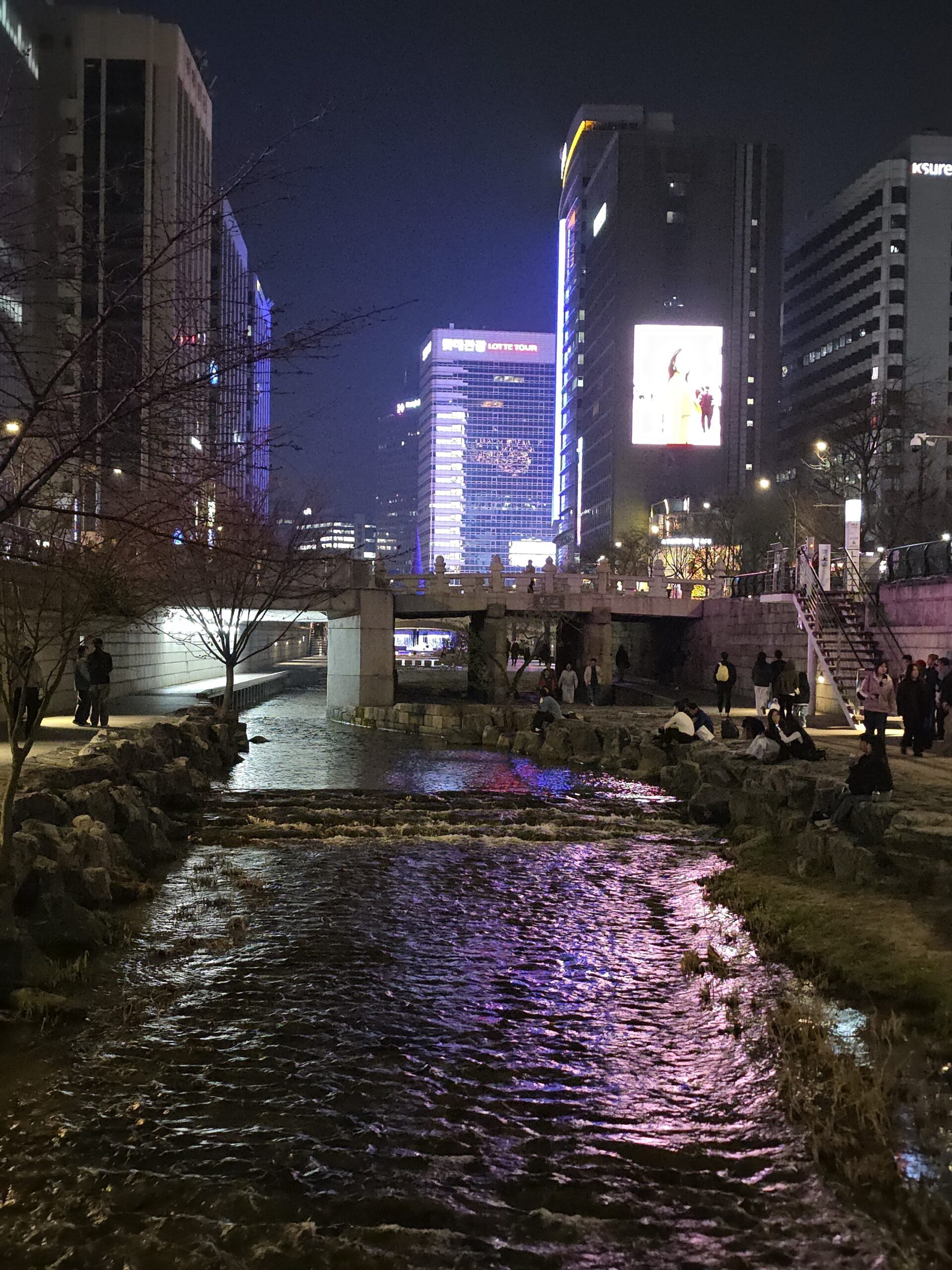
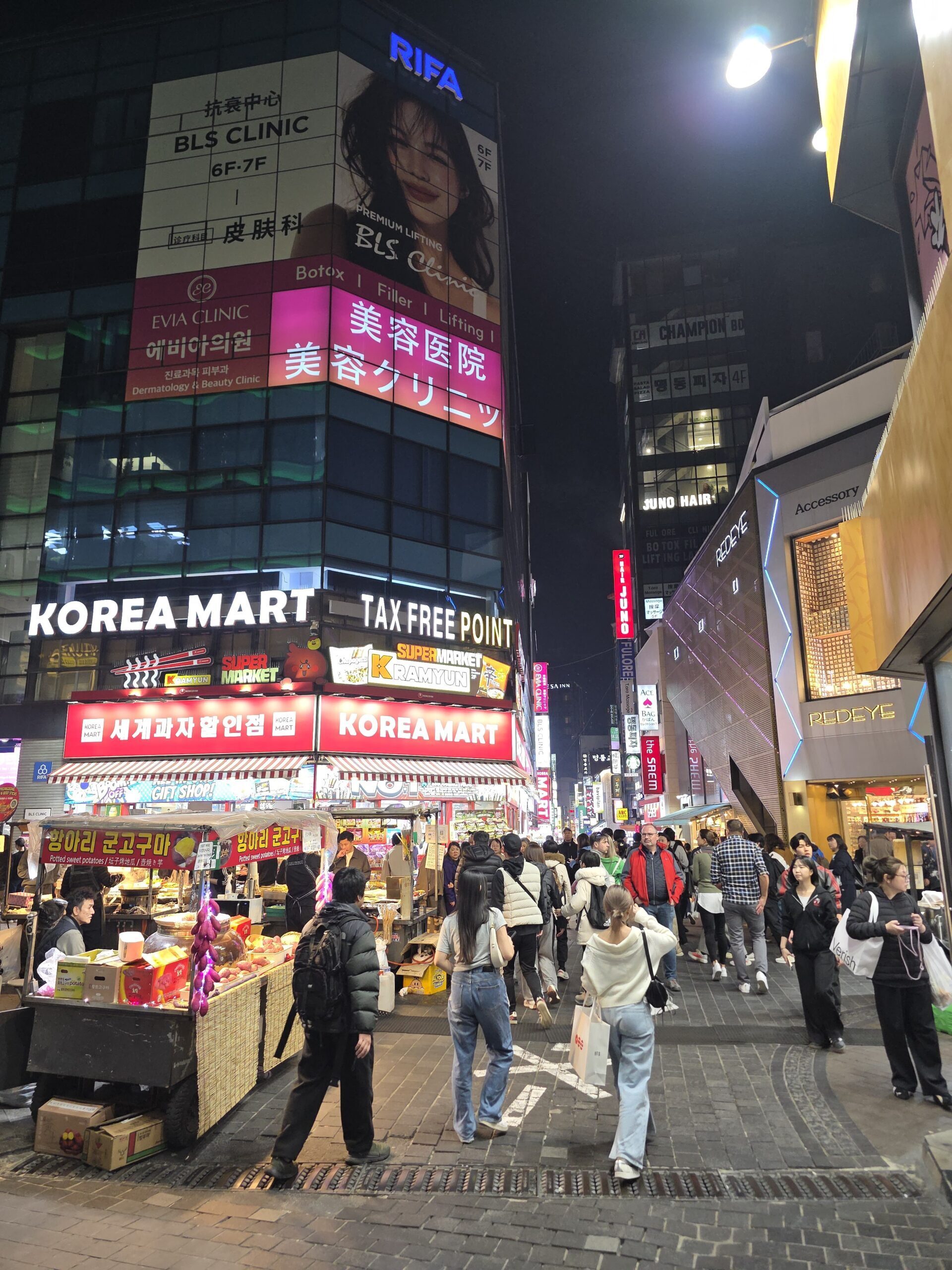
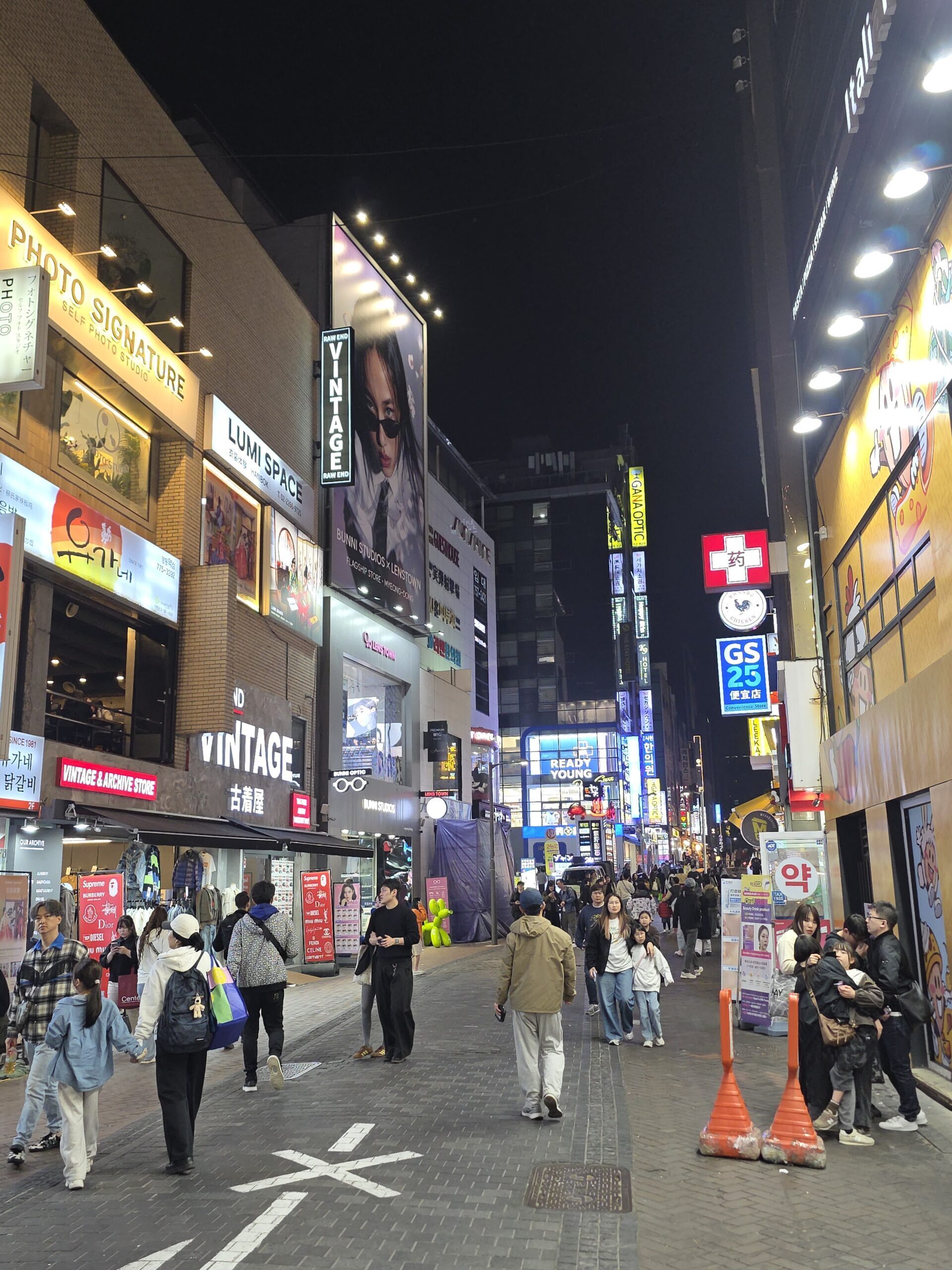
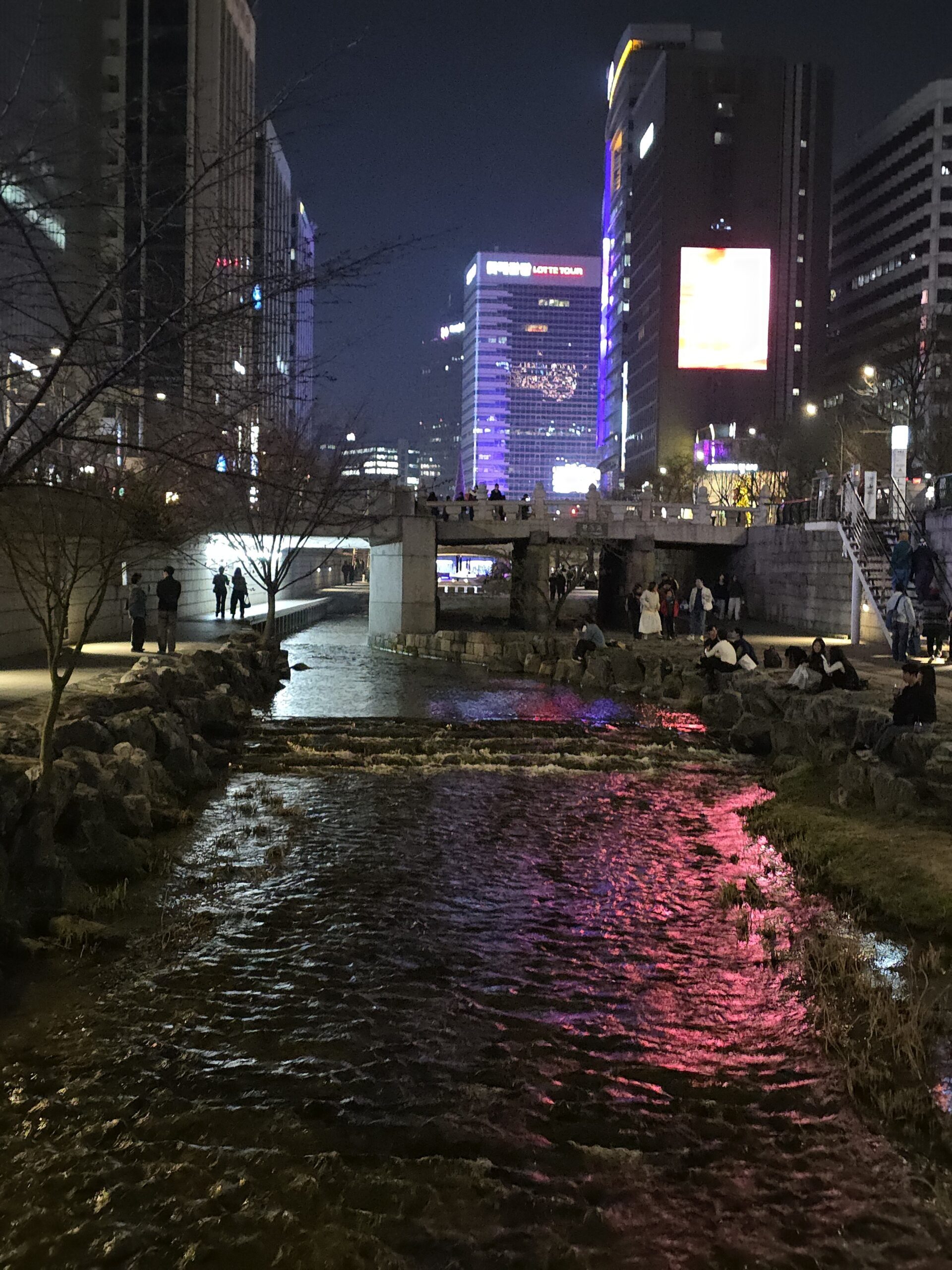
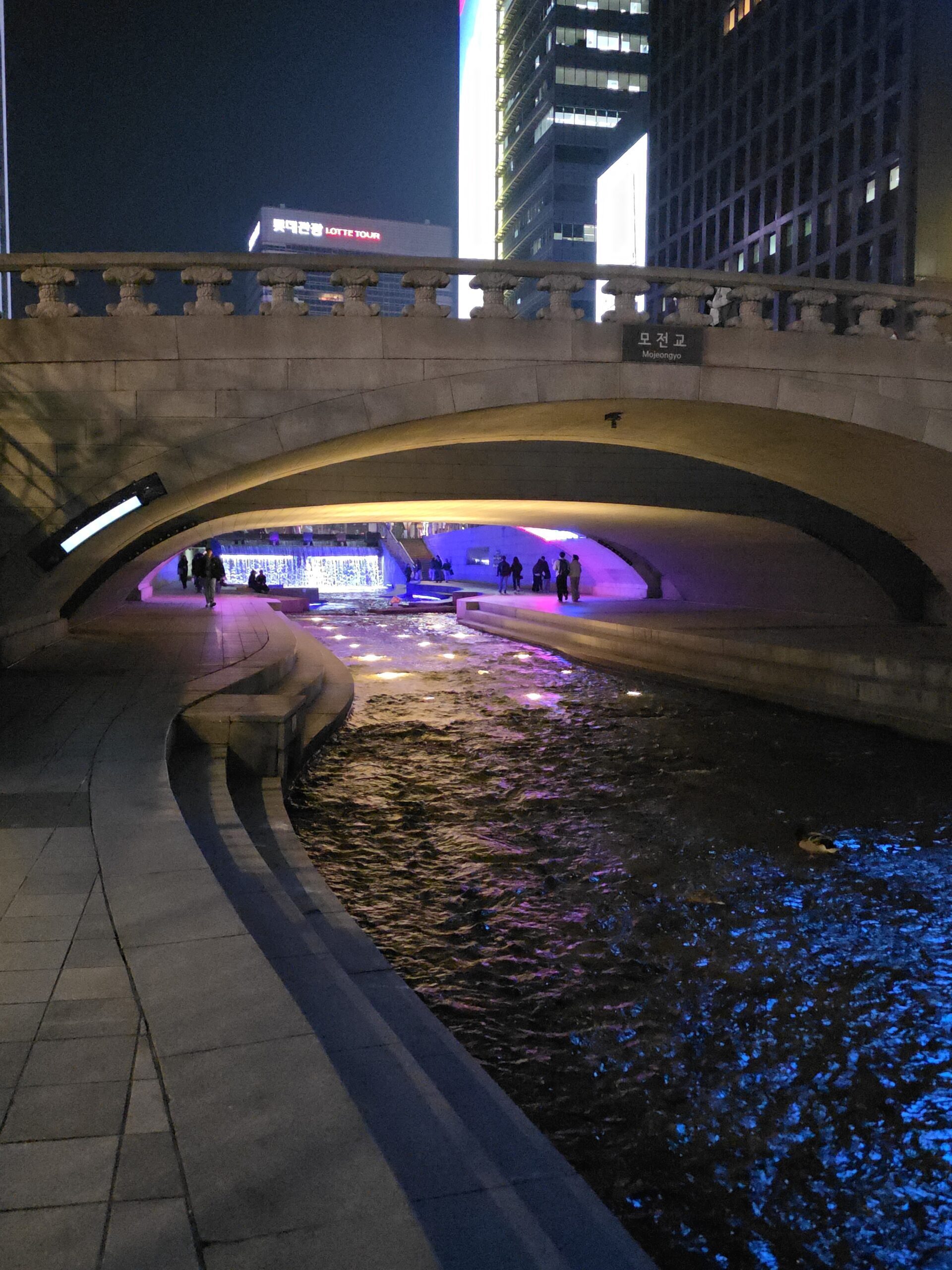
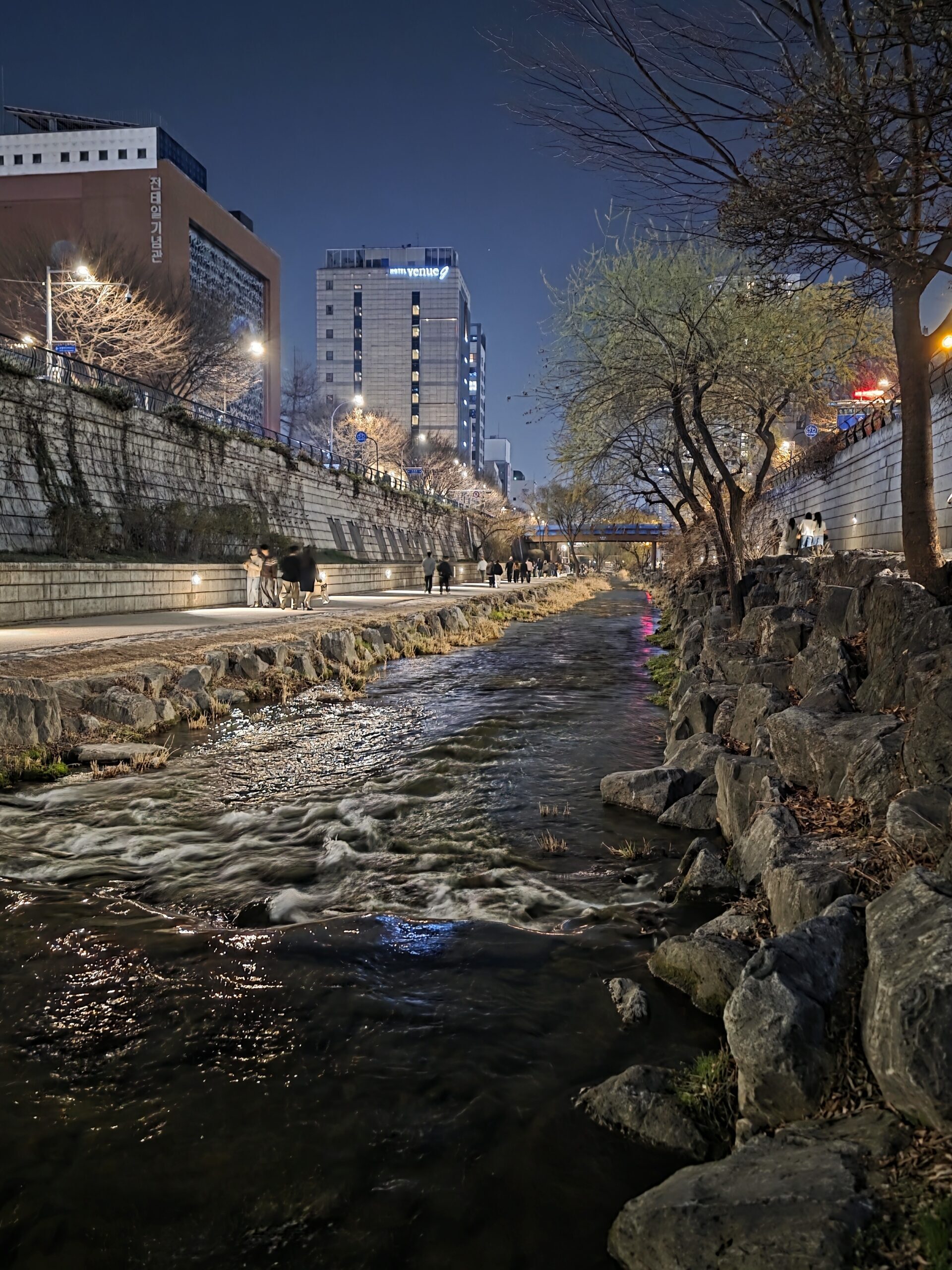
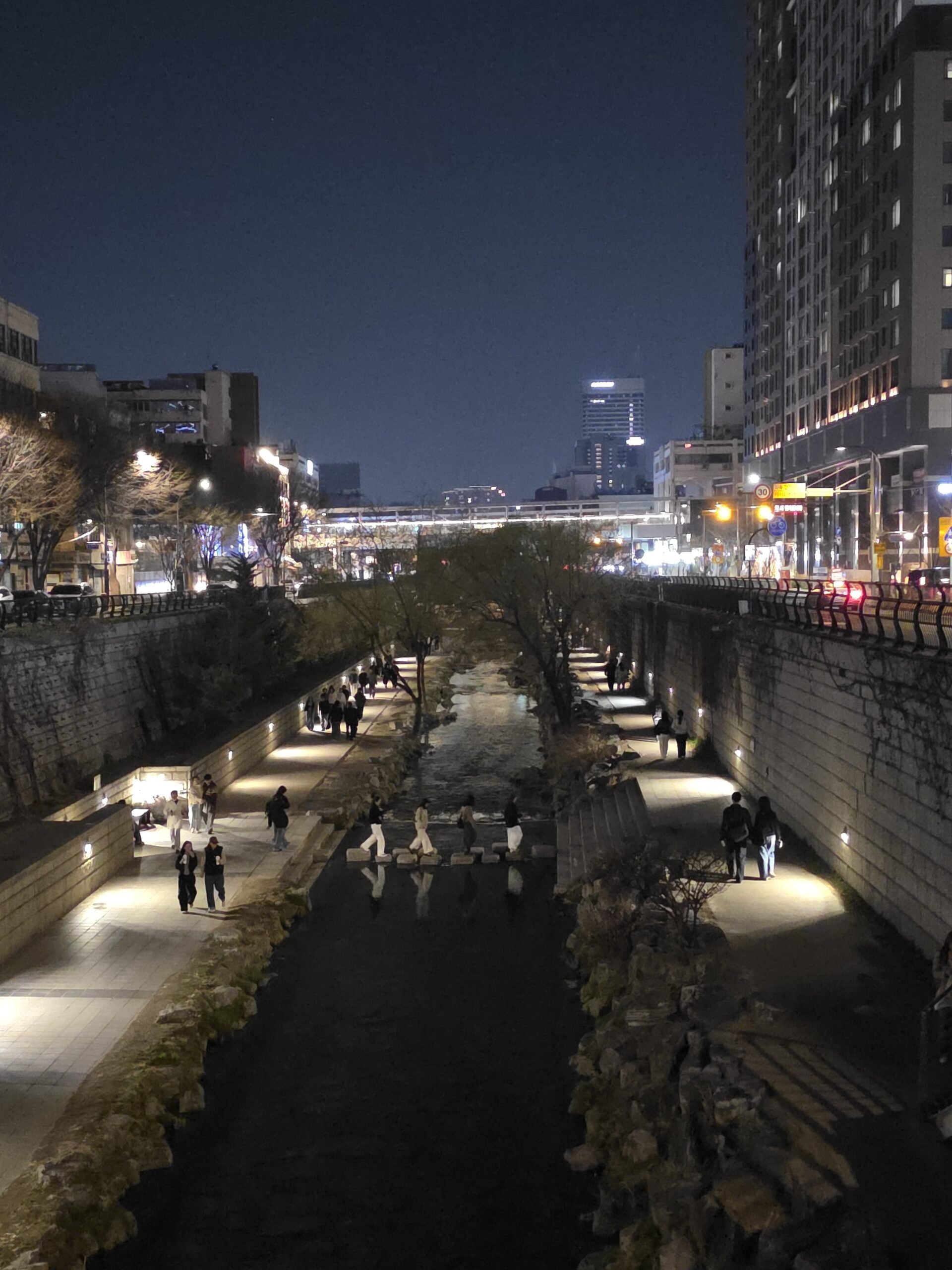
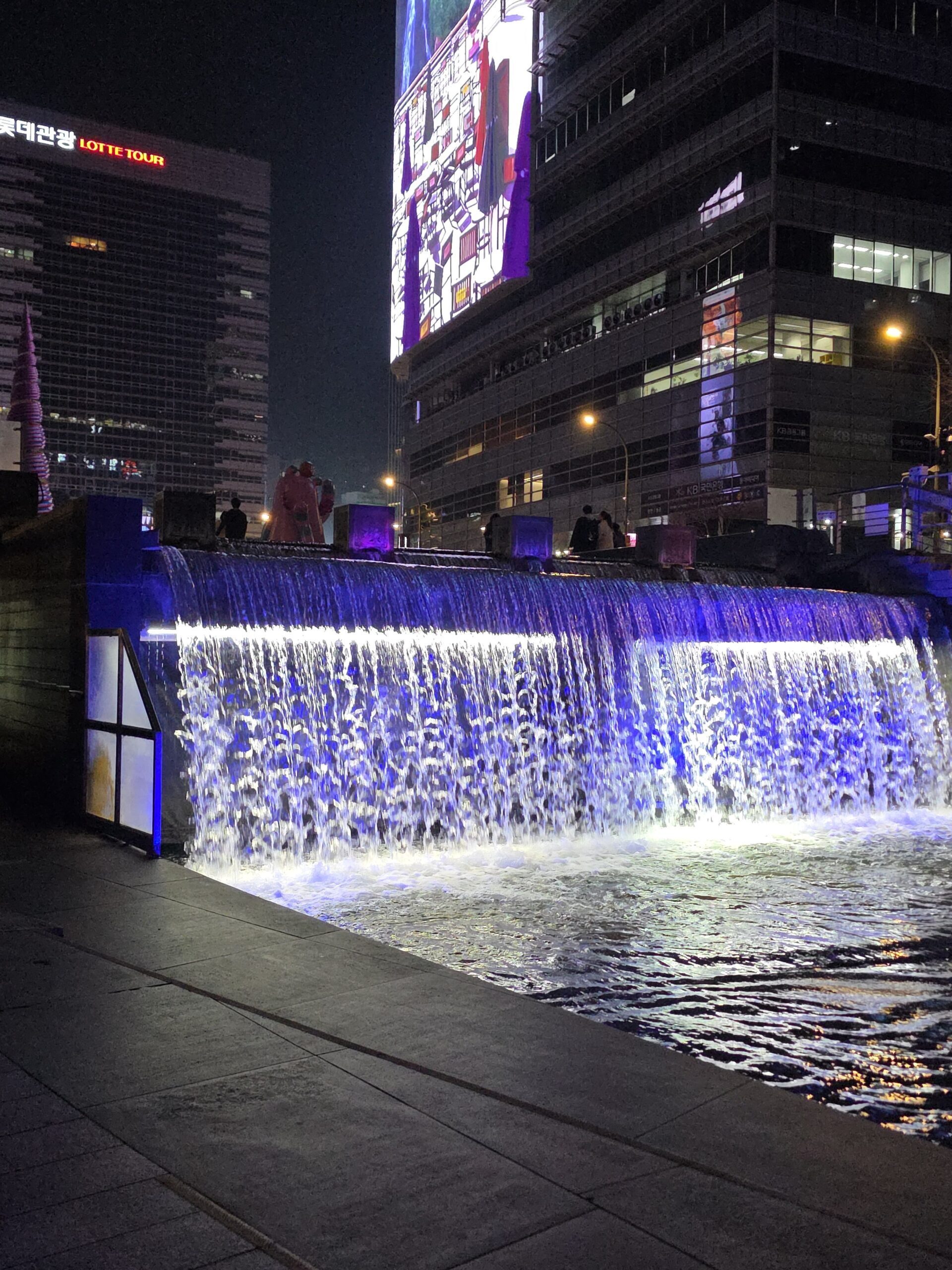
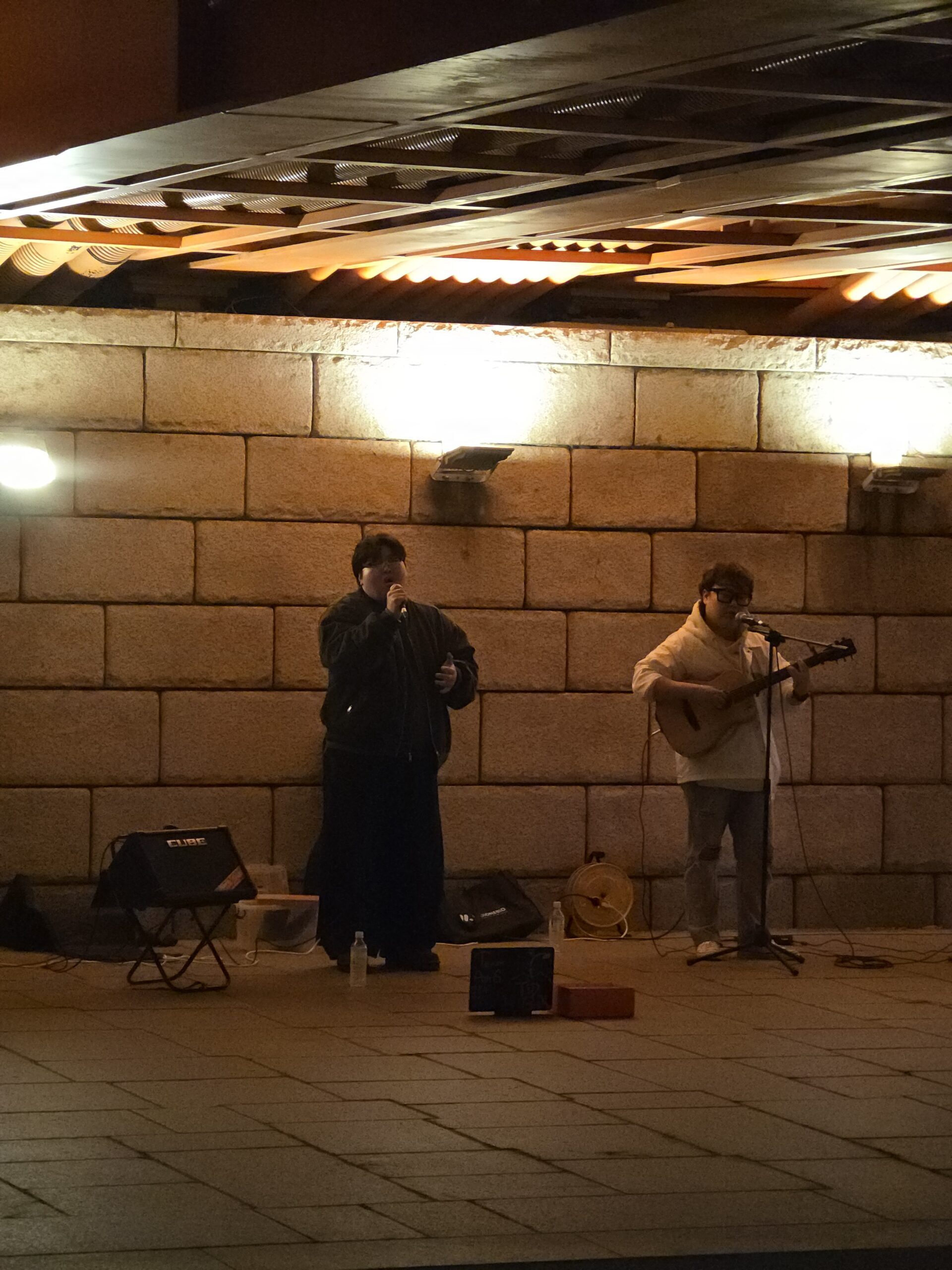
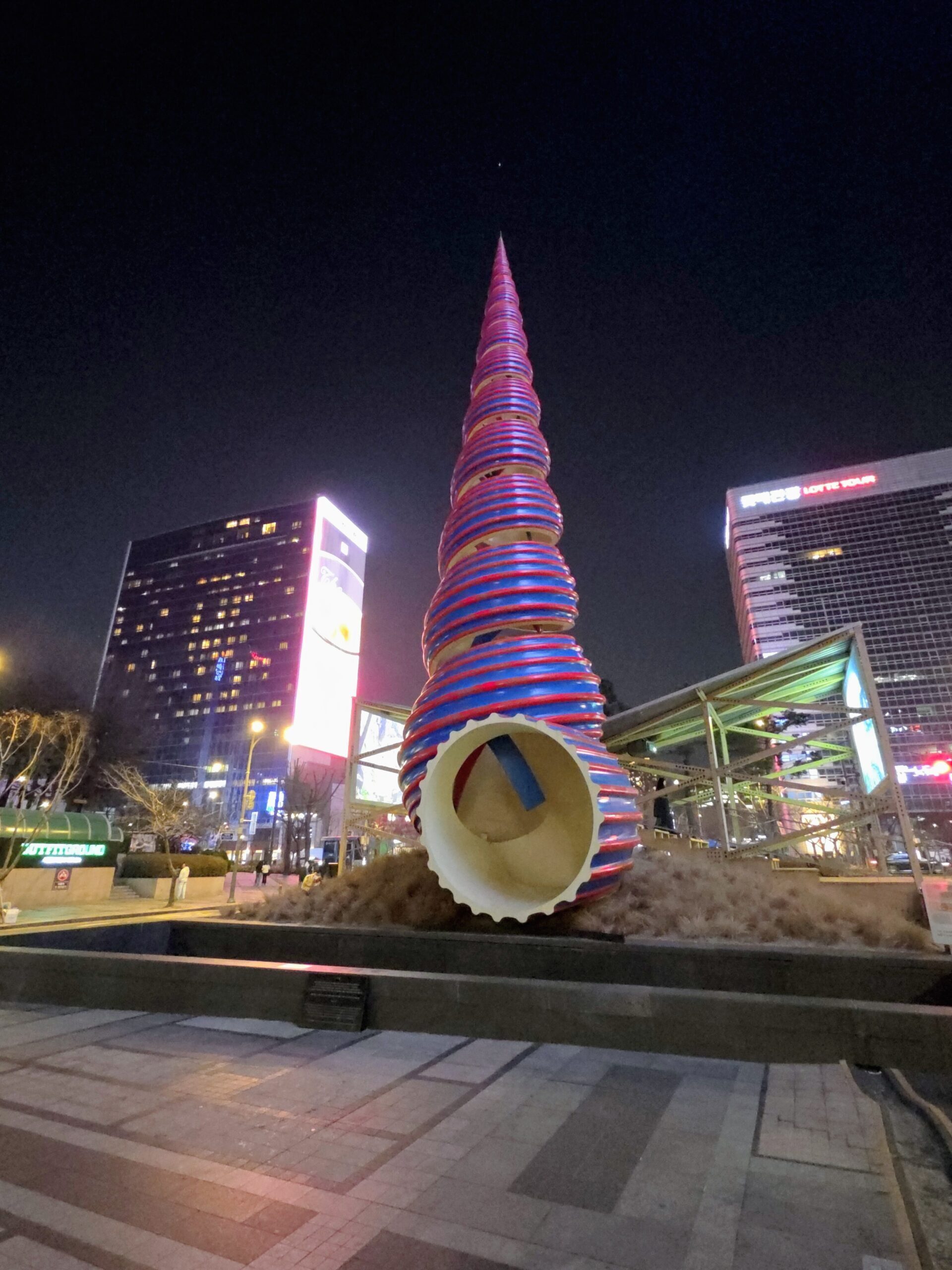
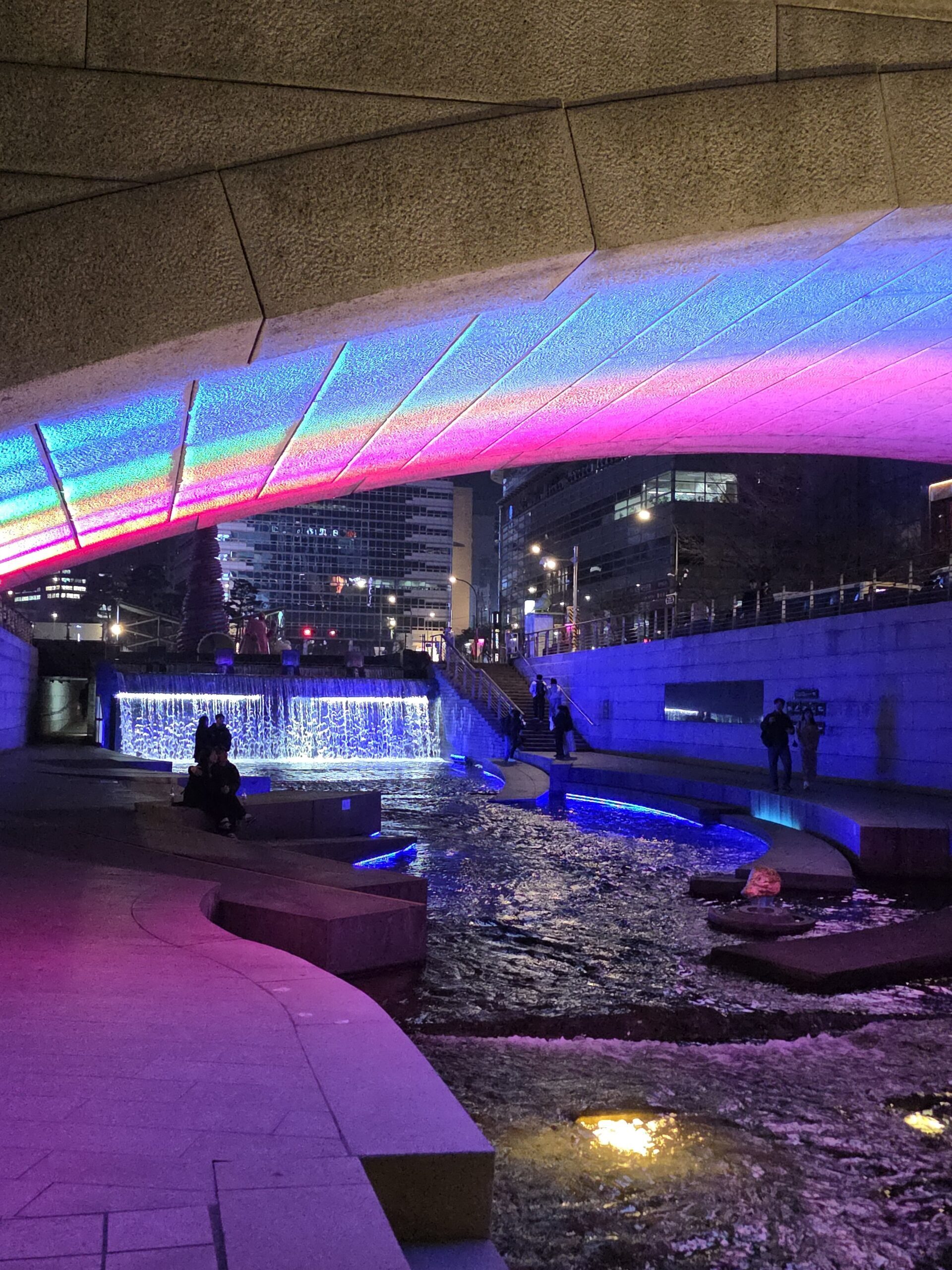
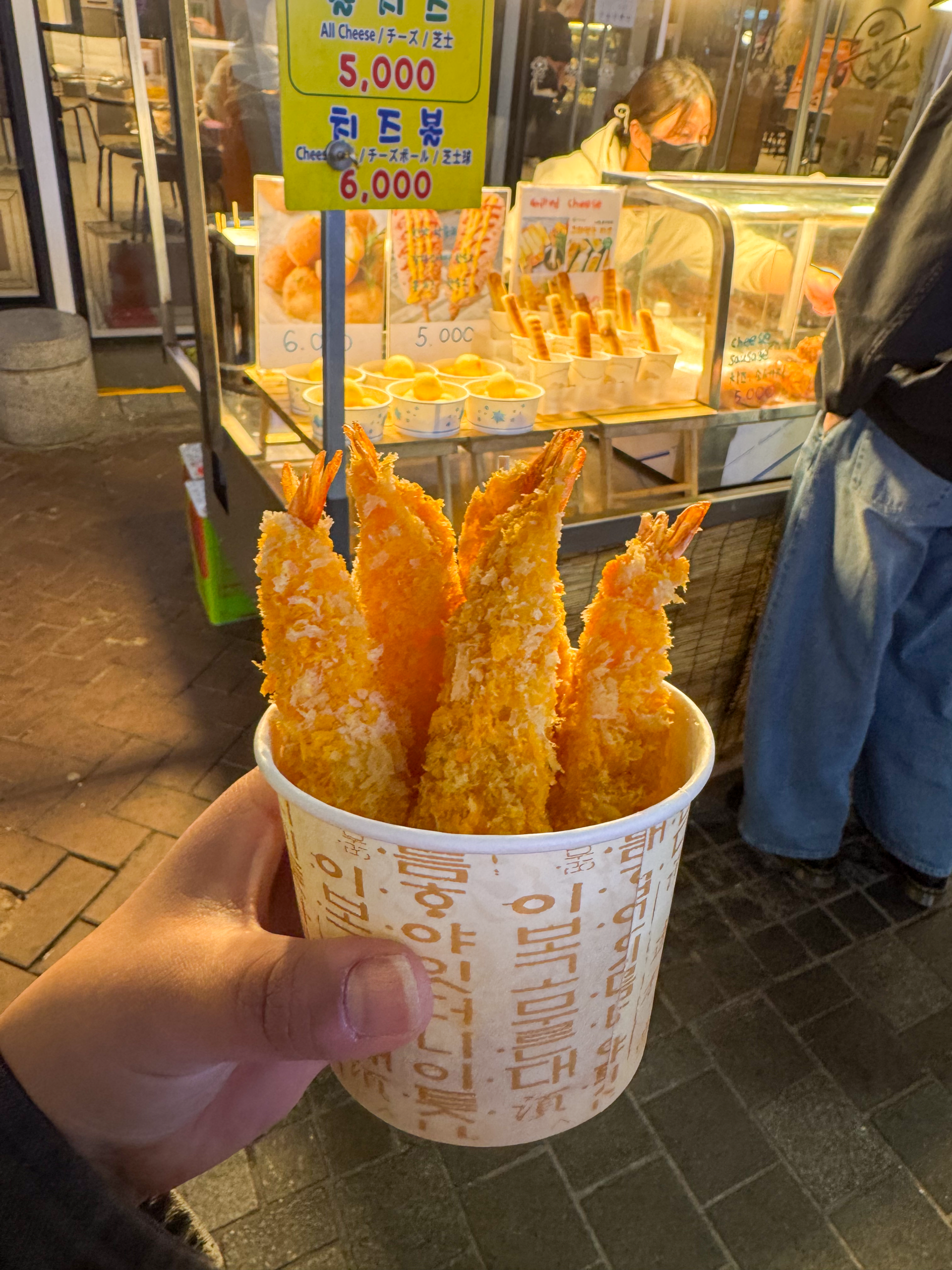
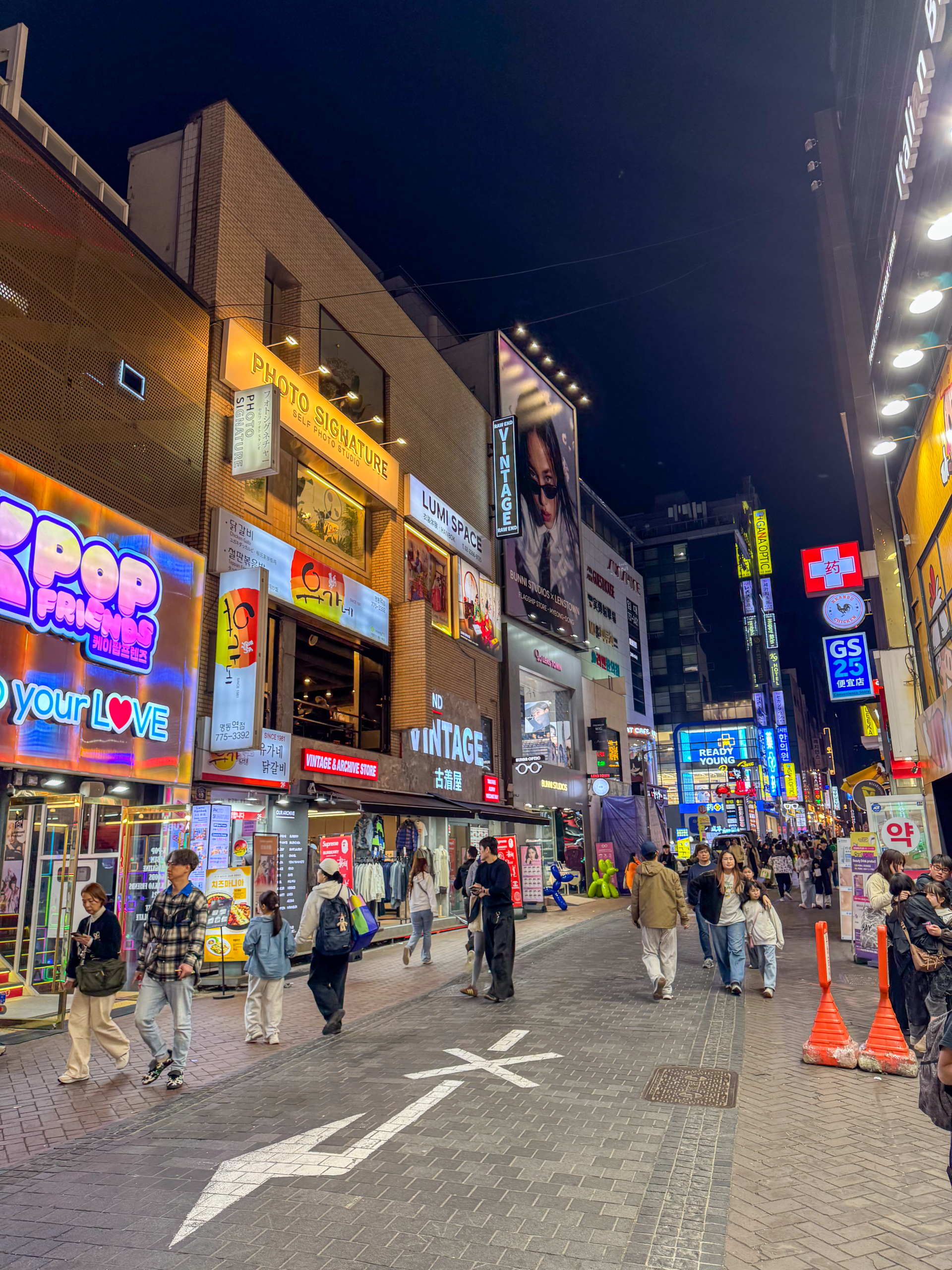
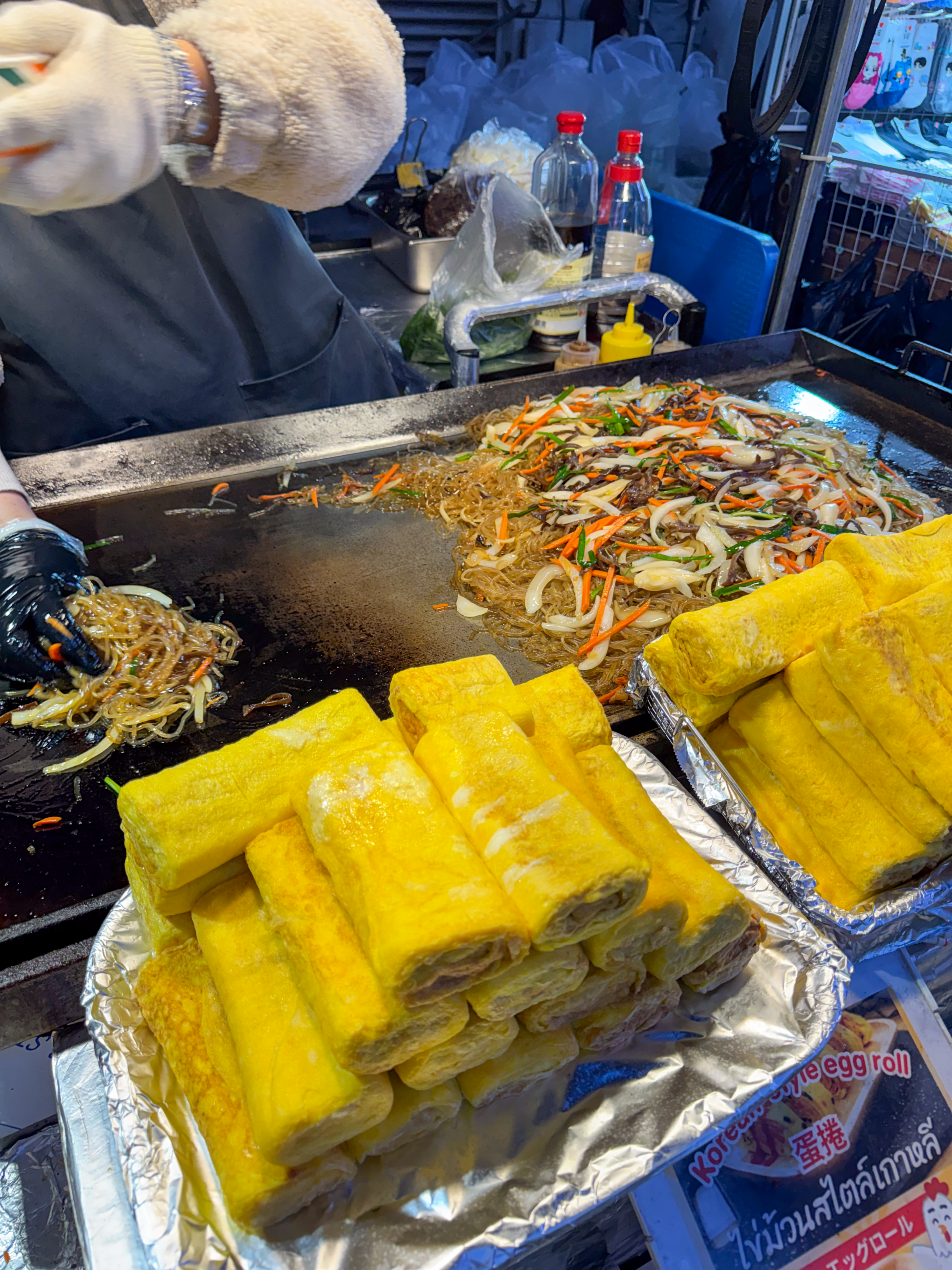
That night we made our way to Myeongdong, moving through the usual density of crowds and street food vendors before following the path along the restored Cheonggyecheon Stream. A street performer was singing classic Korean songs near the water with a small crowd gathered around him. It was a quieter end to a full day.
Obligatory Reference to “Gangnam Stlye”
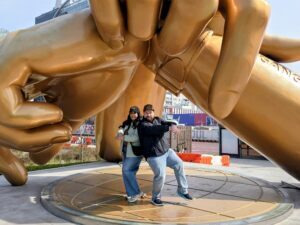
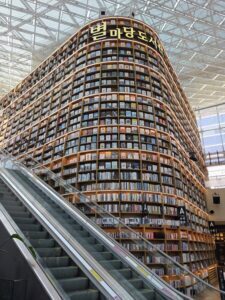
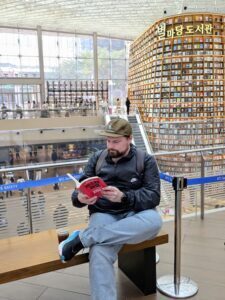
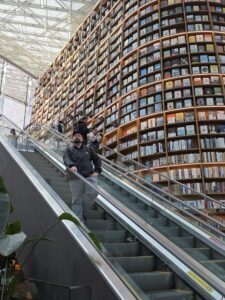
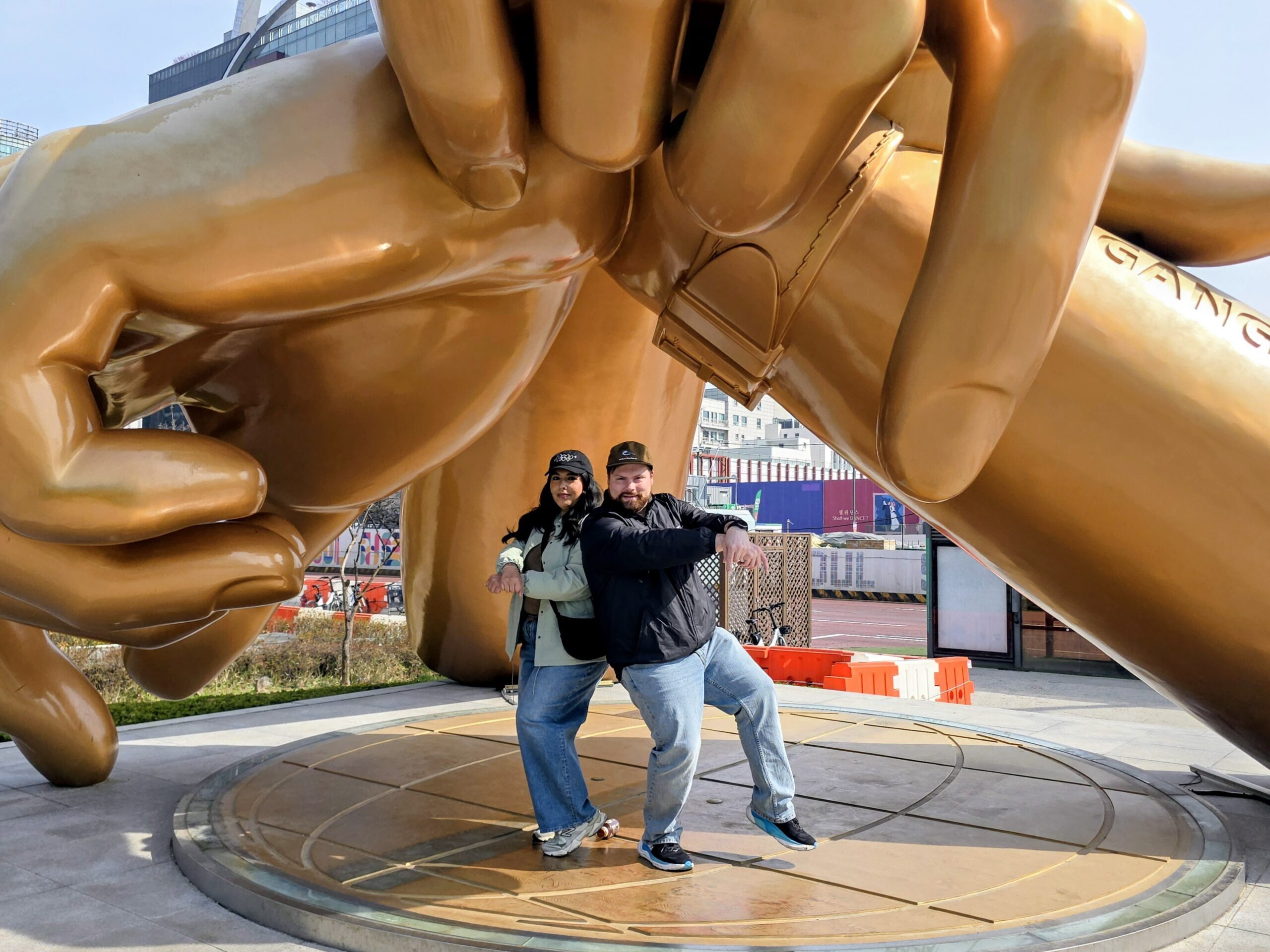
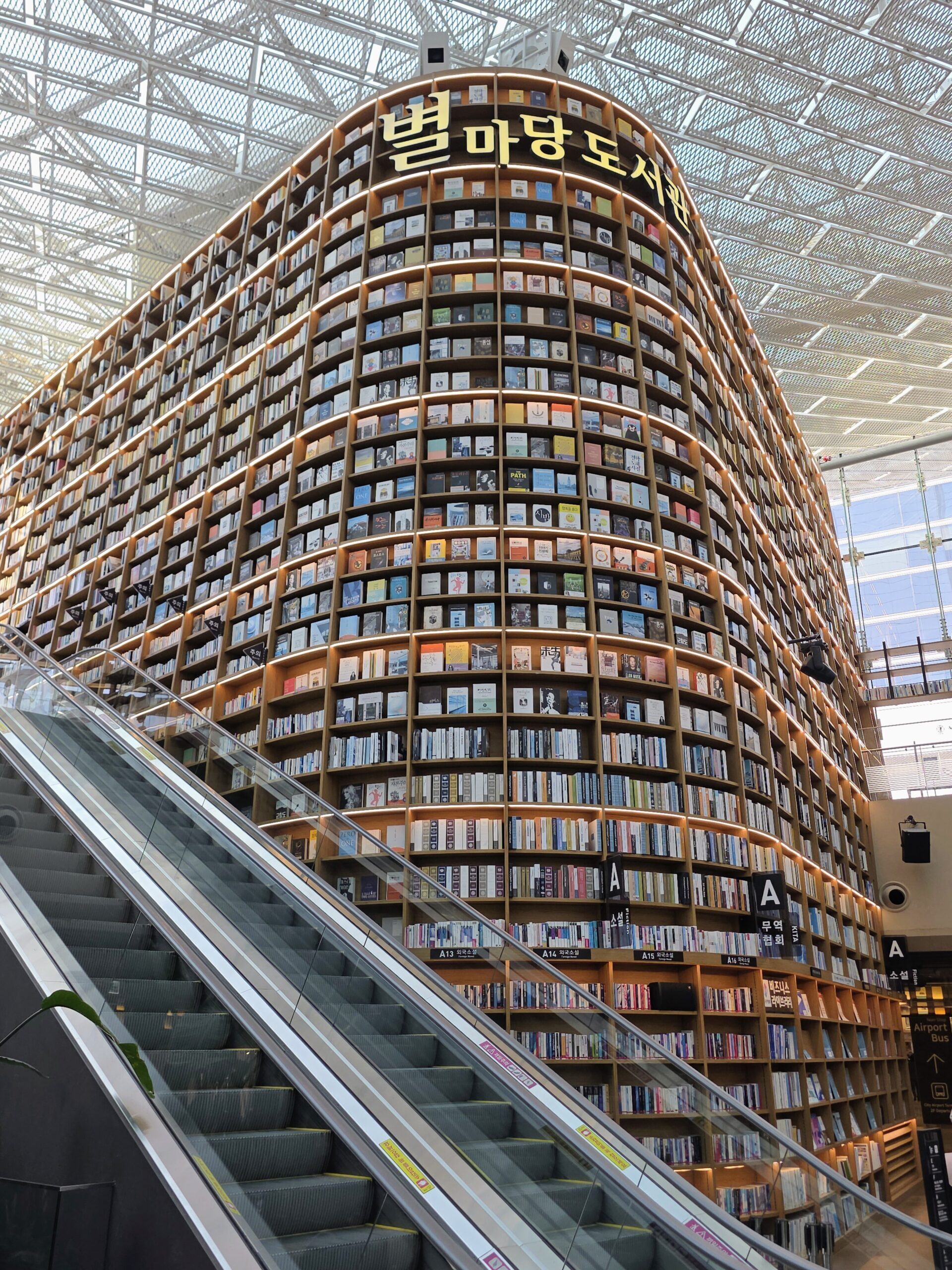
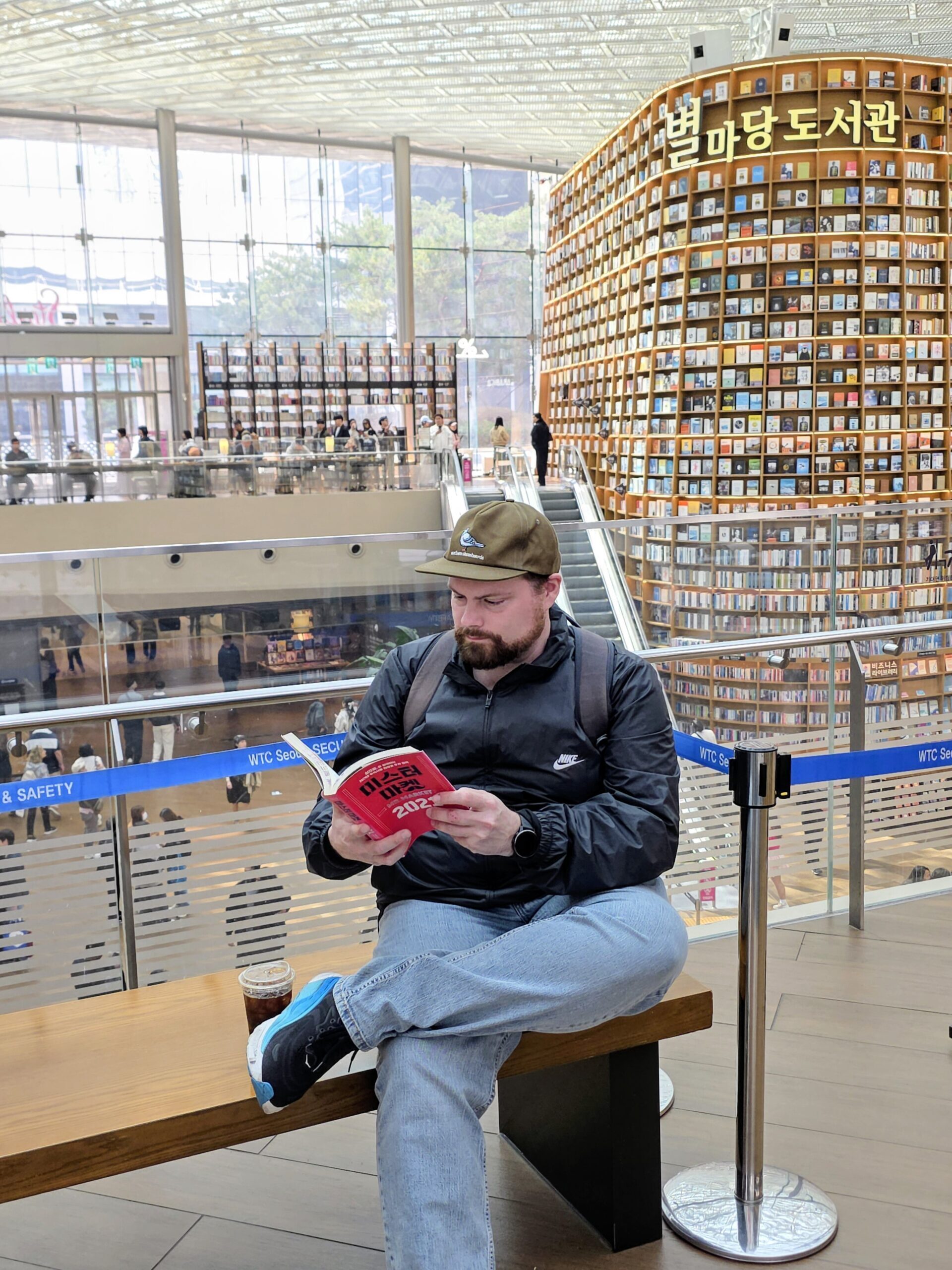
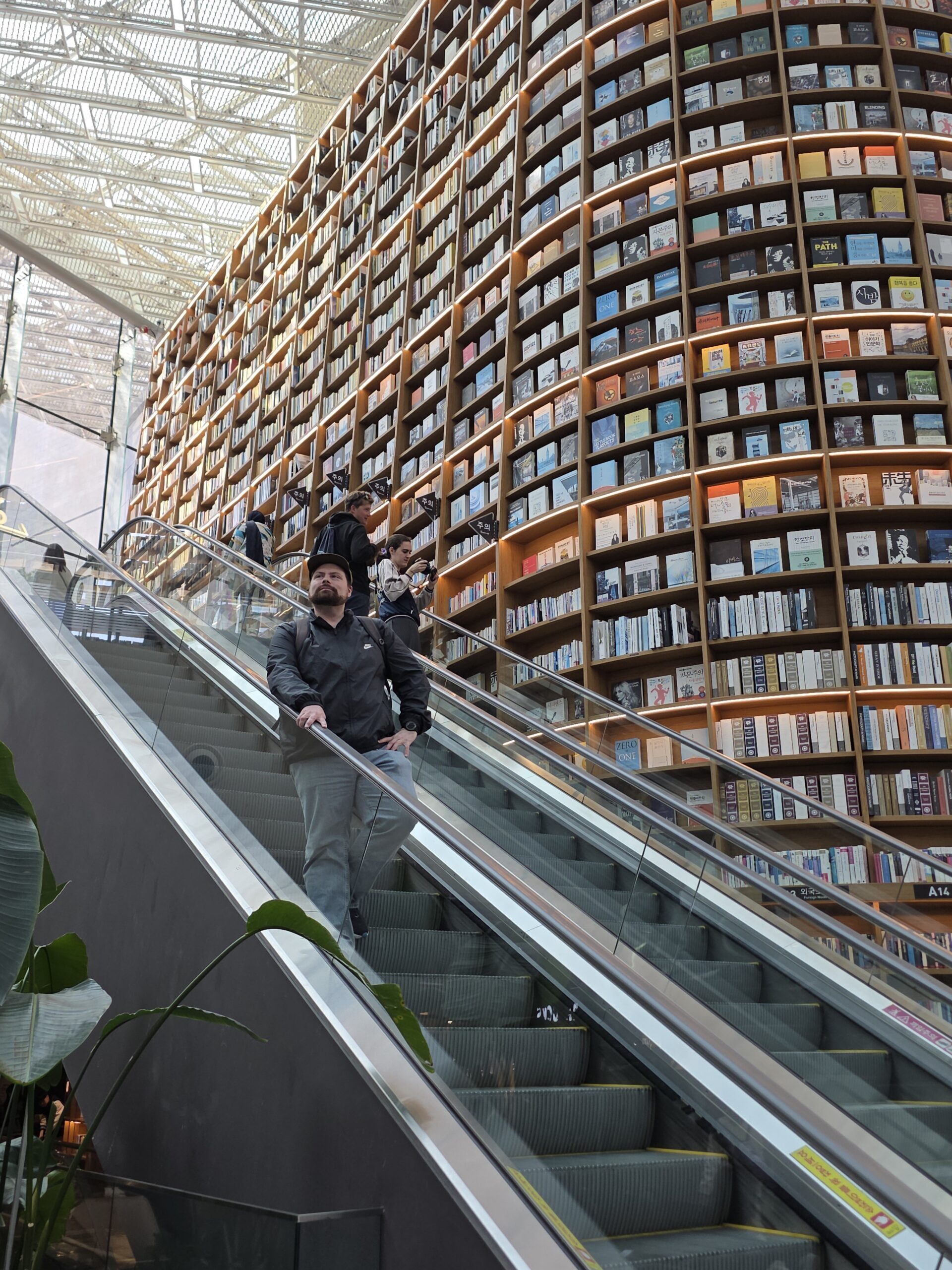
Another day took us south of the Han River to Gangnam District. Yes, that Gangnam. I’ll get it out of the way early, yes, we visited THE statue. The reality of Gangnam is pretty much what you’d expect from one of the most expensive zip codes in Asia. Polished, dense, and built for people with money to burn. We headed to the COEX Mall, which is essentially a small city underground. Inside sits Starfield Library — a soaring public reading space with bookshelves climbing two full stories. It’s legitimately impressive, and it makes you wonder why more public spaces aren’t designed with this much intention and aesthetics. People were actually using it too, not just photographing it, which felt like a good sign.
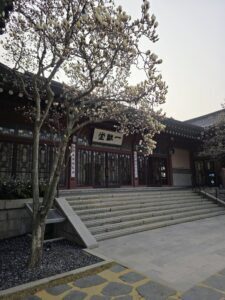
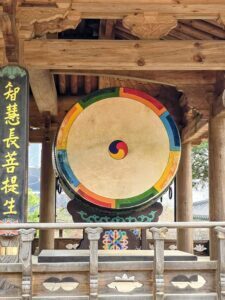
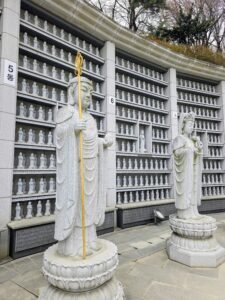
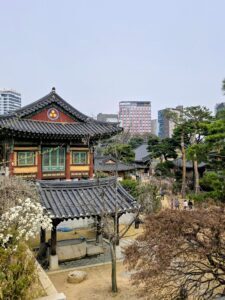
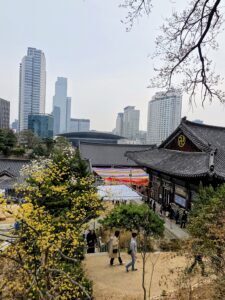
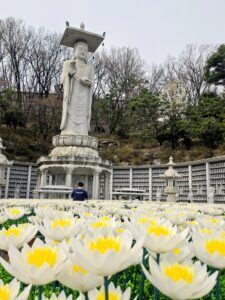
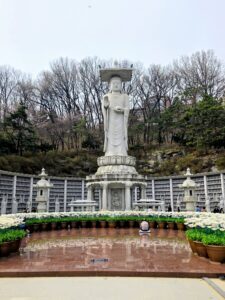
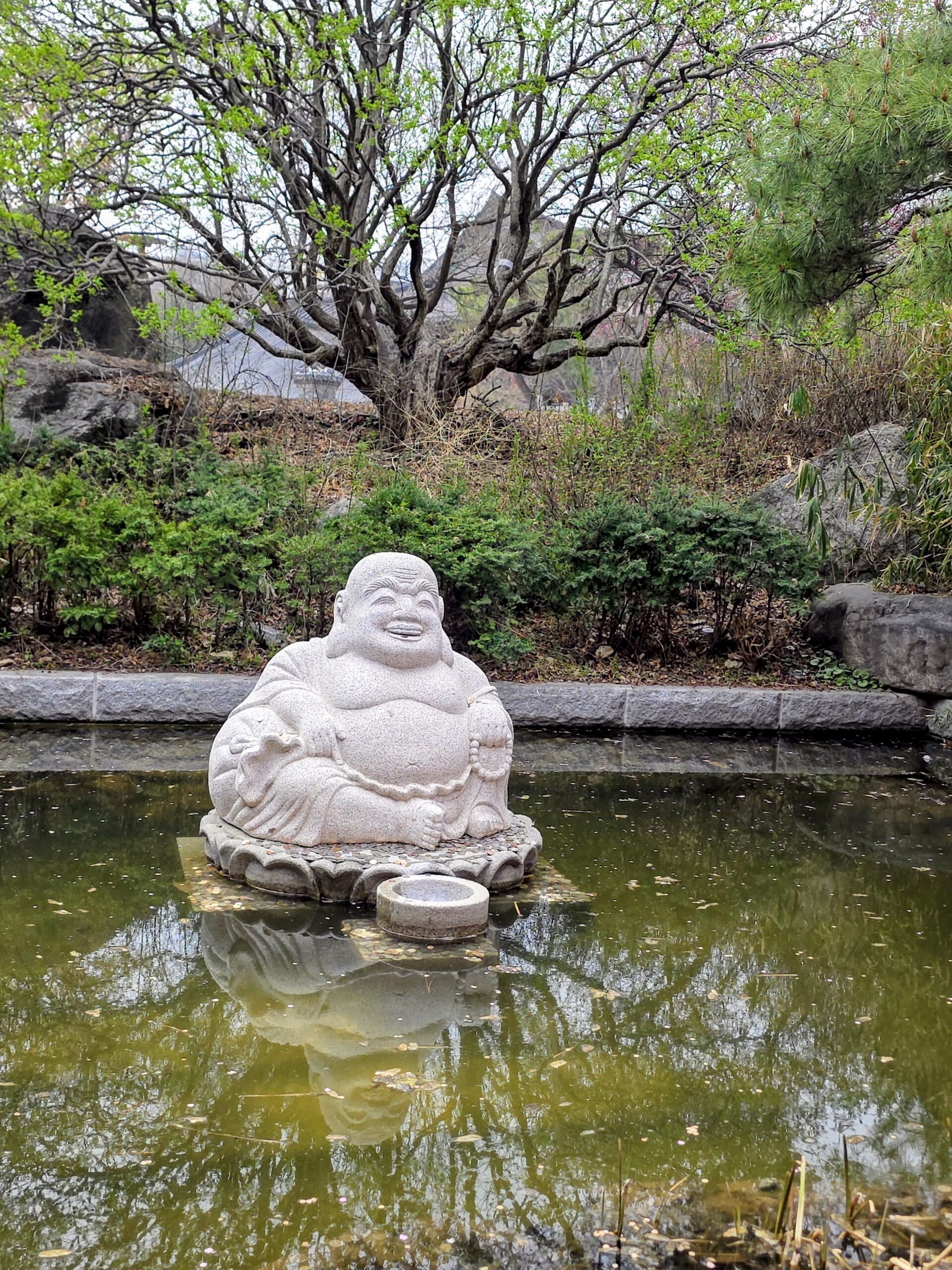
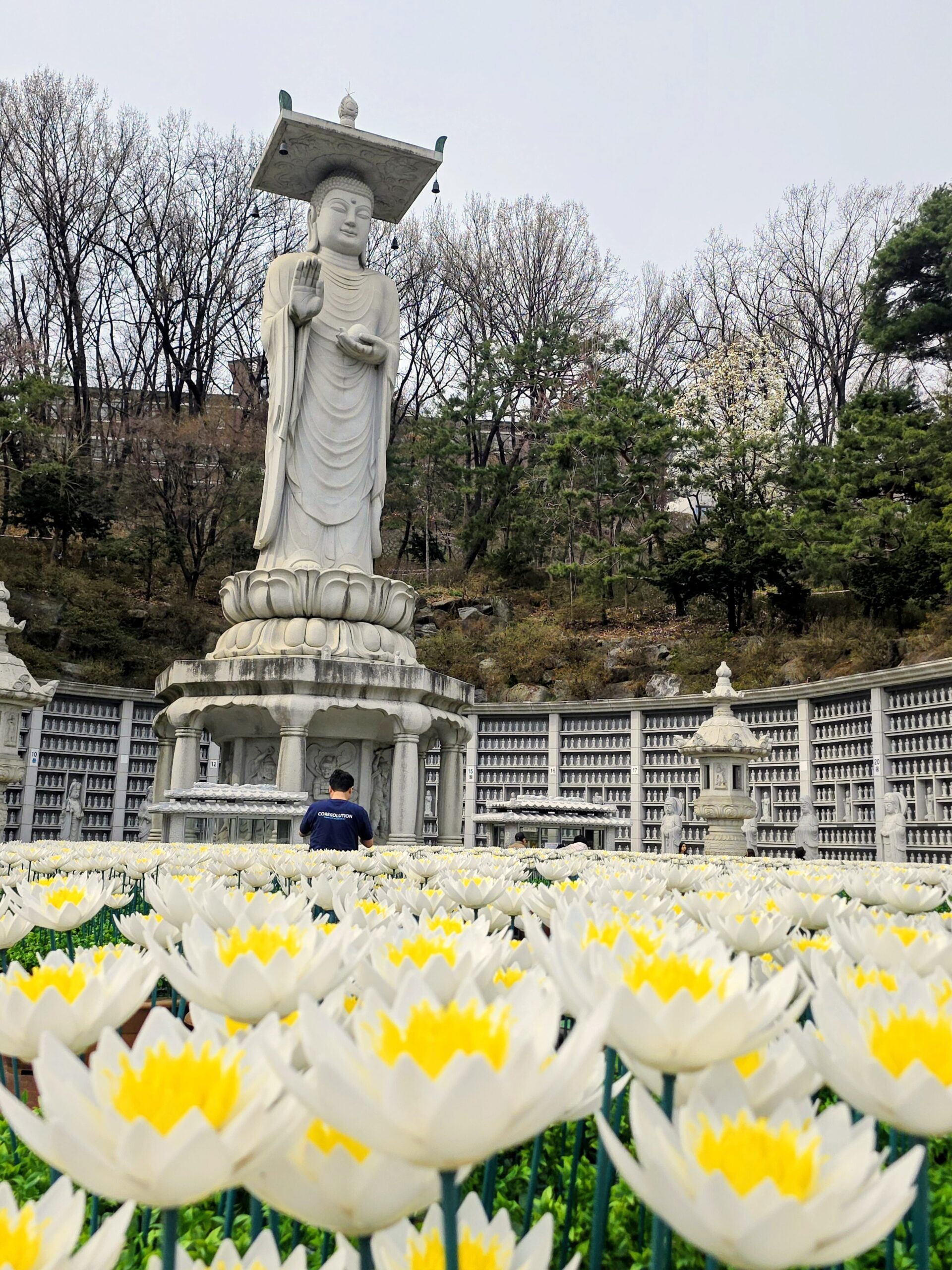
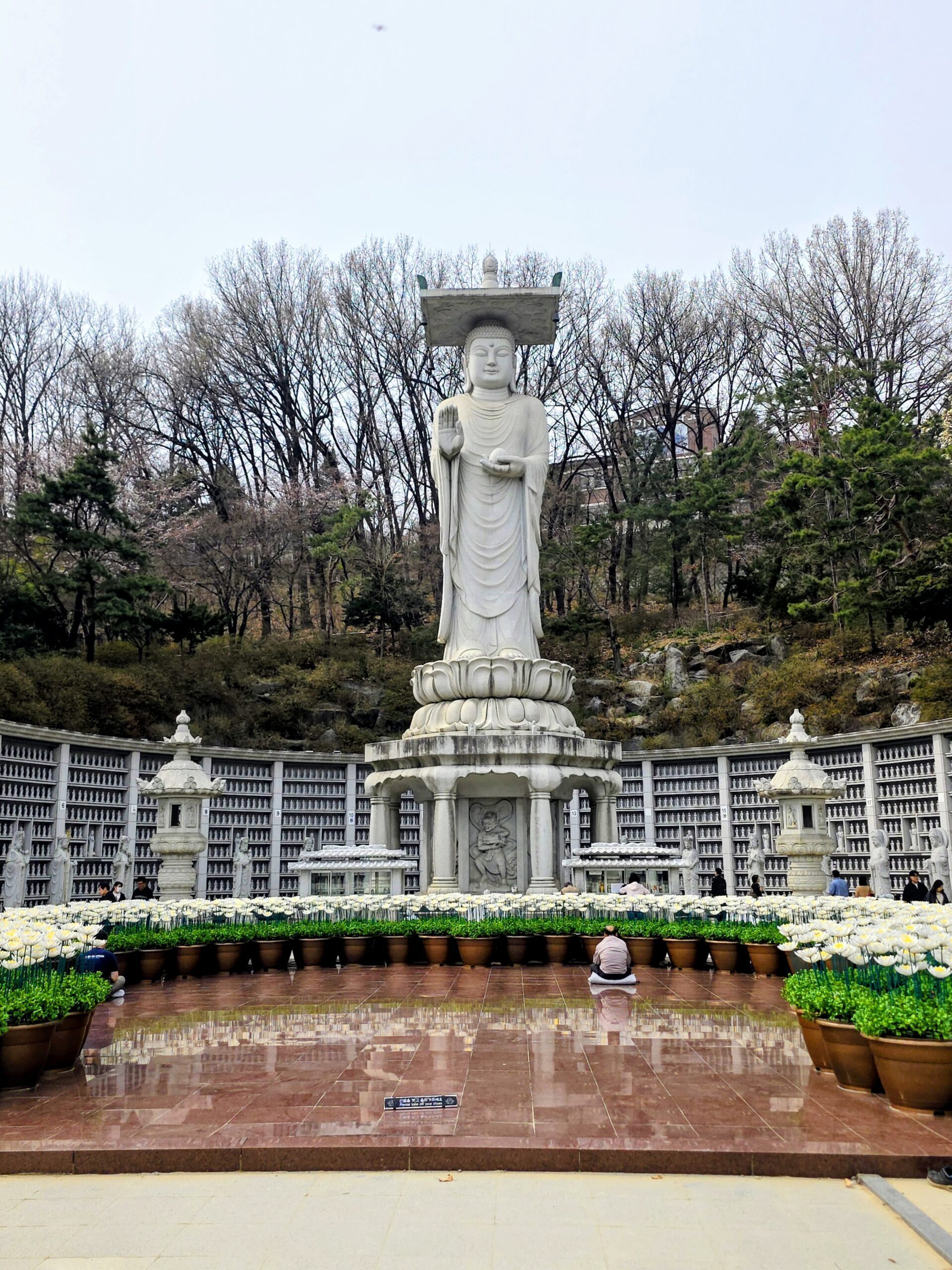
A short walk from the mall sits Bongeunsa Temple, a Buddhist complex that predates most of the skyline around it by about a thousand years. Standing inside the temple grounds with glass towers visible over the walls in every direction is a genuinely strange experience, bringing about that spatial disorientation that Seoul seems to specialize in.
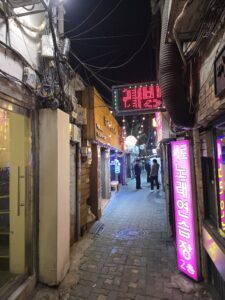
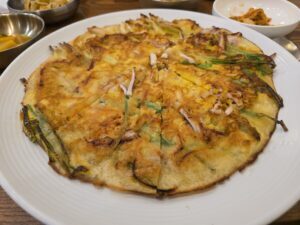
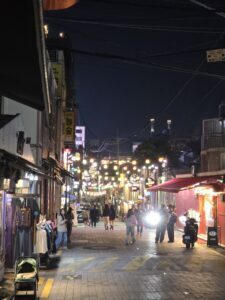
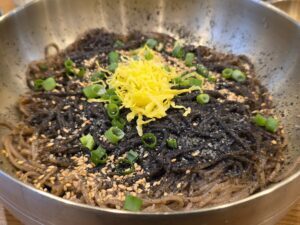
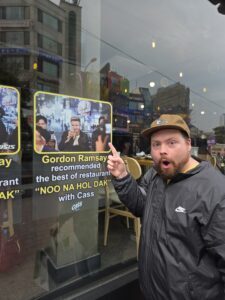
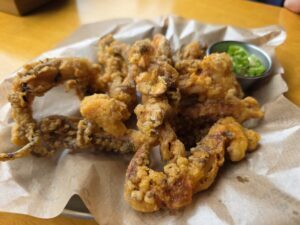
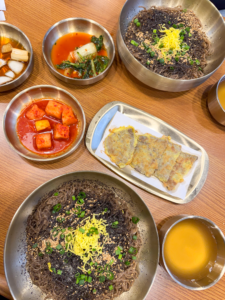
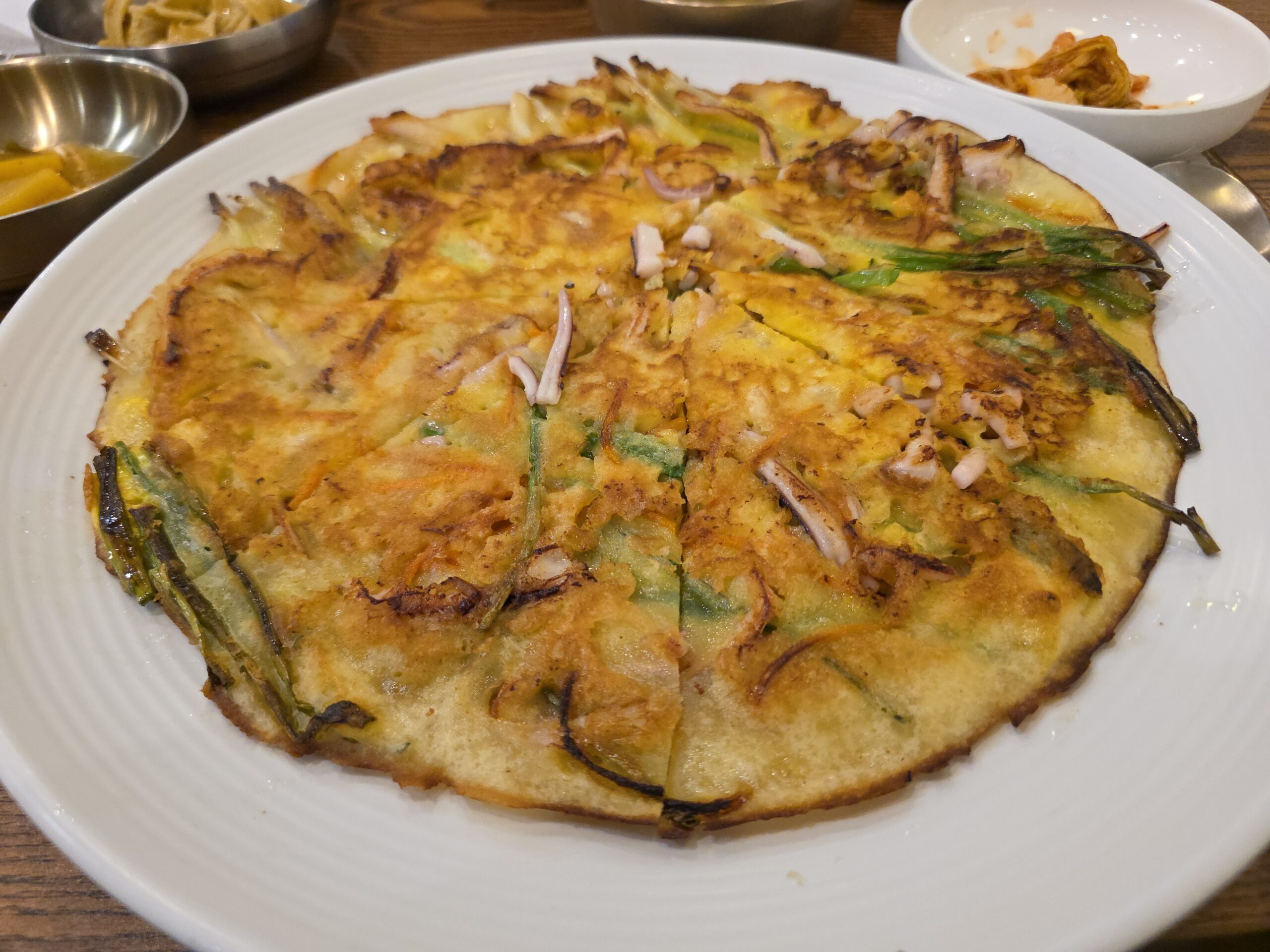
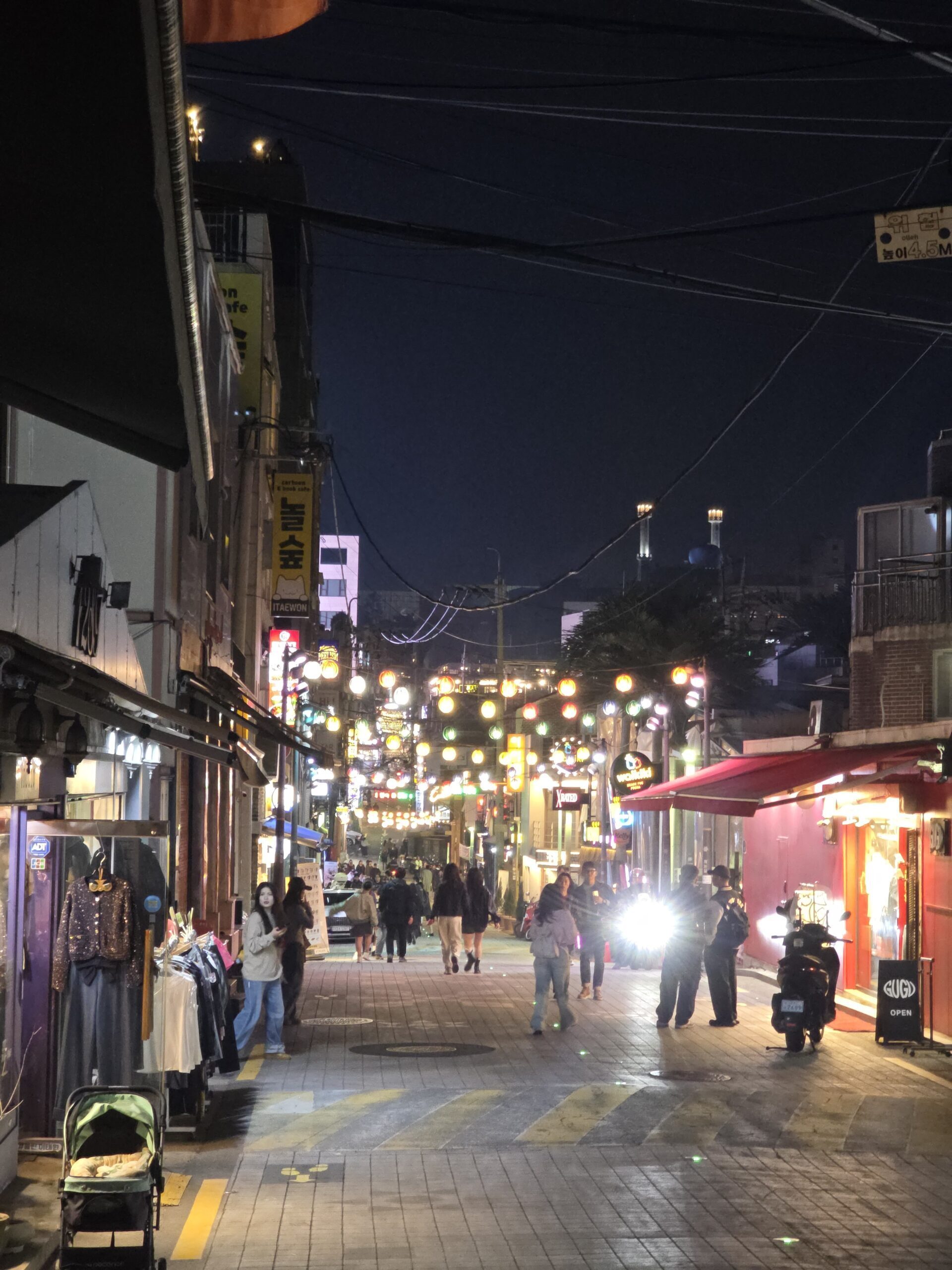
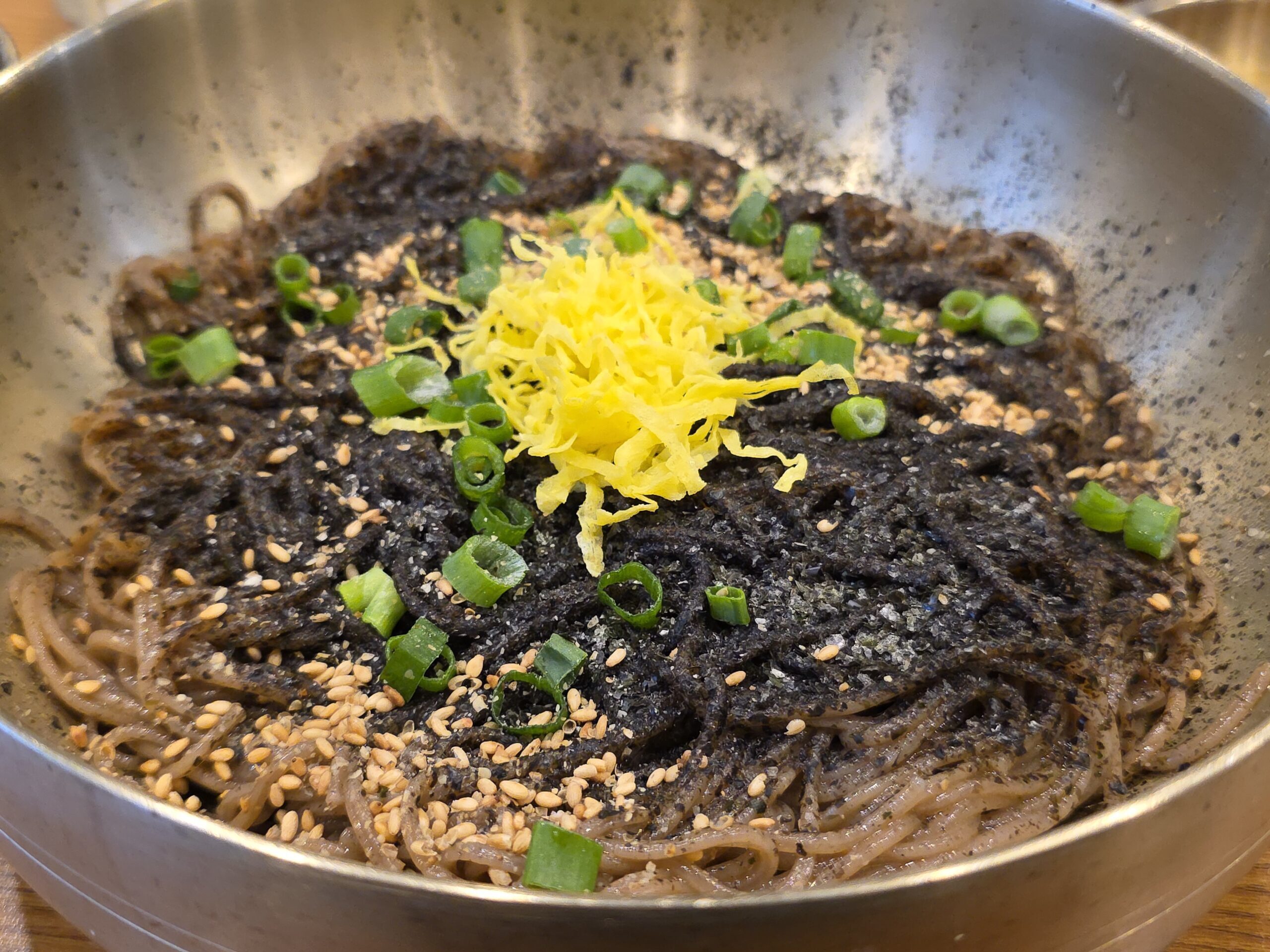
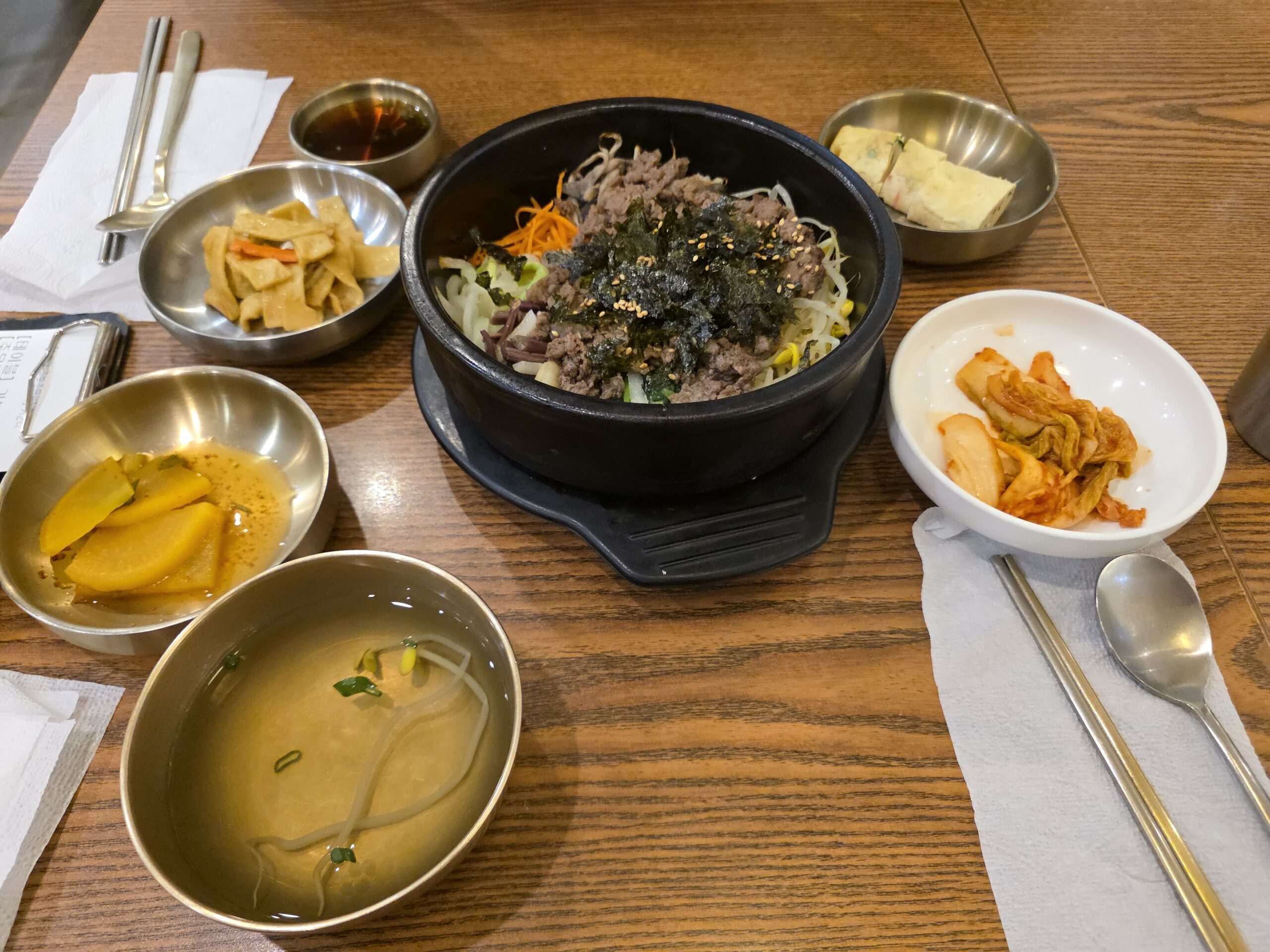
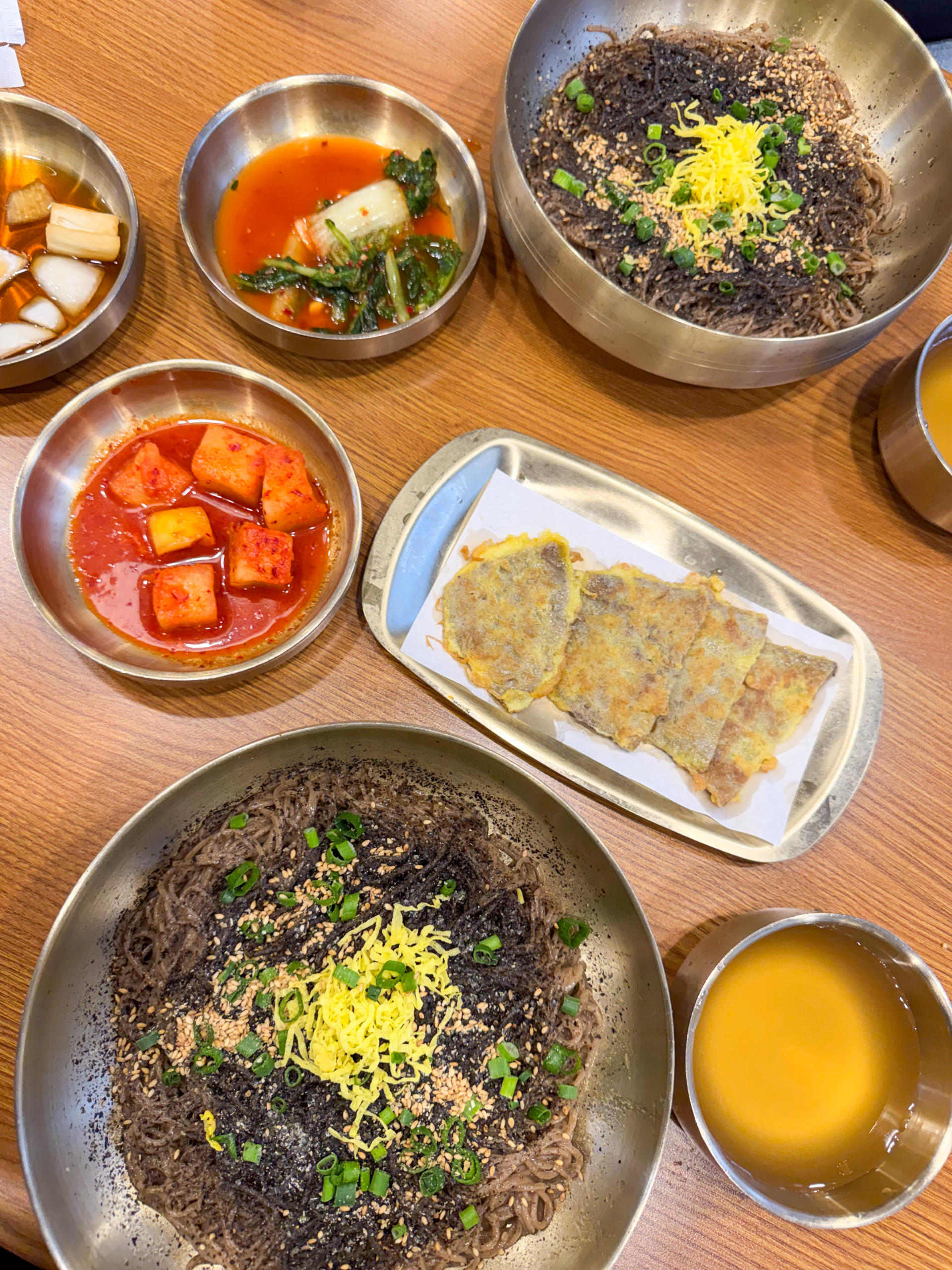
That night we ended up in Itaewon, which has a noticeably different energy from the rest of the city. It’s a little louder, and easy to get lost in. I ordered makguksu, cold buckwheat noodles dressed with perilla oil. Nutty and slightly herbal, and not something I had any frame of reference for going in, since it was the first time I tried this dish. I’d order it again without hesitation.
Cafés, Creative Districts, and the Last Days
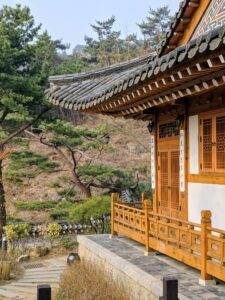
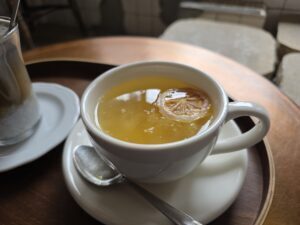
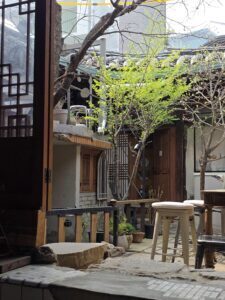
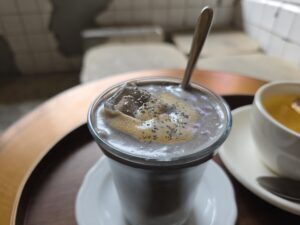
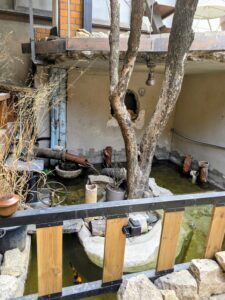
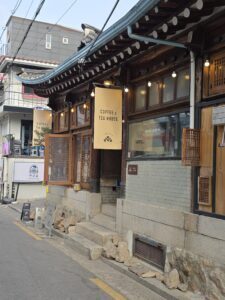
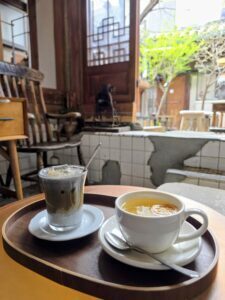
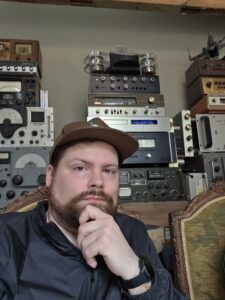
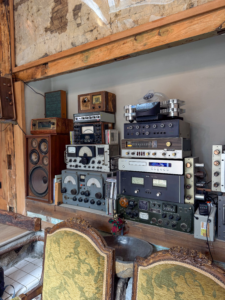
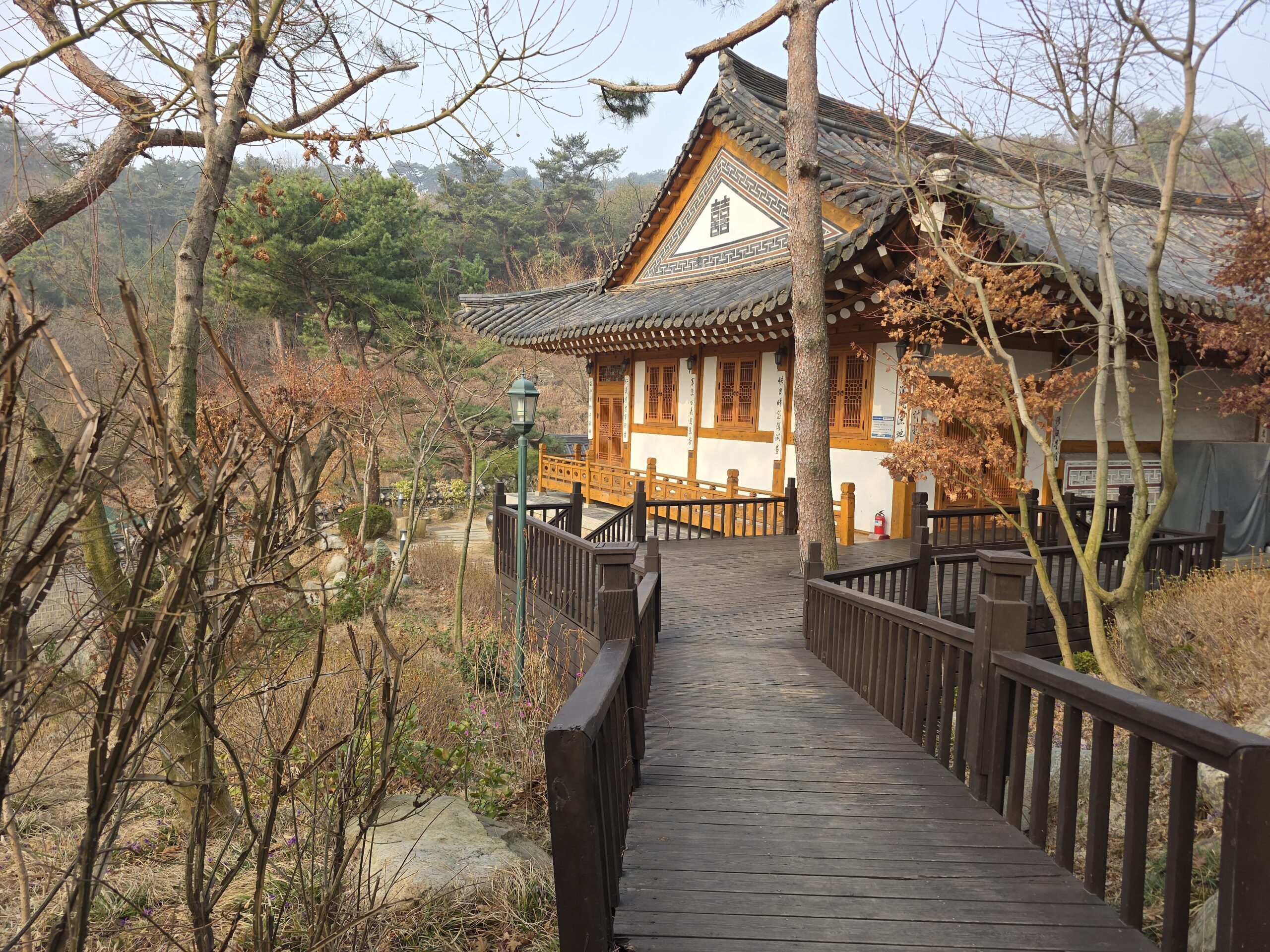
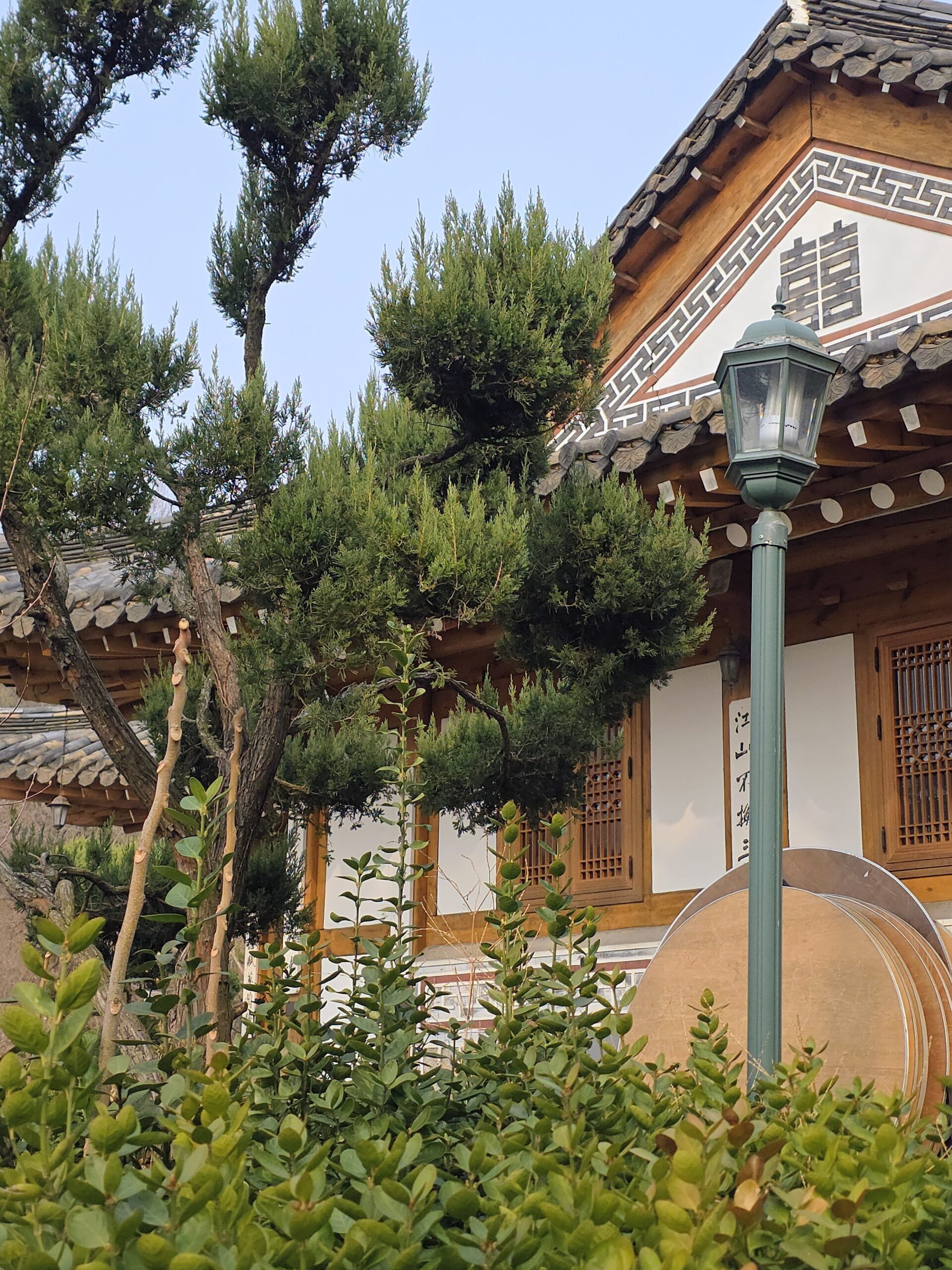
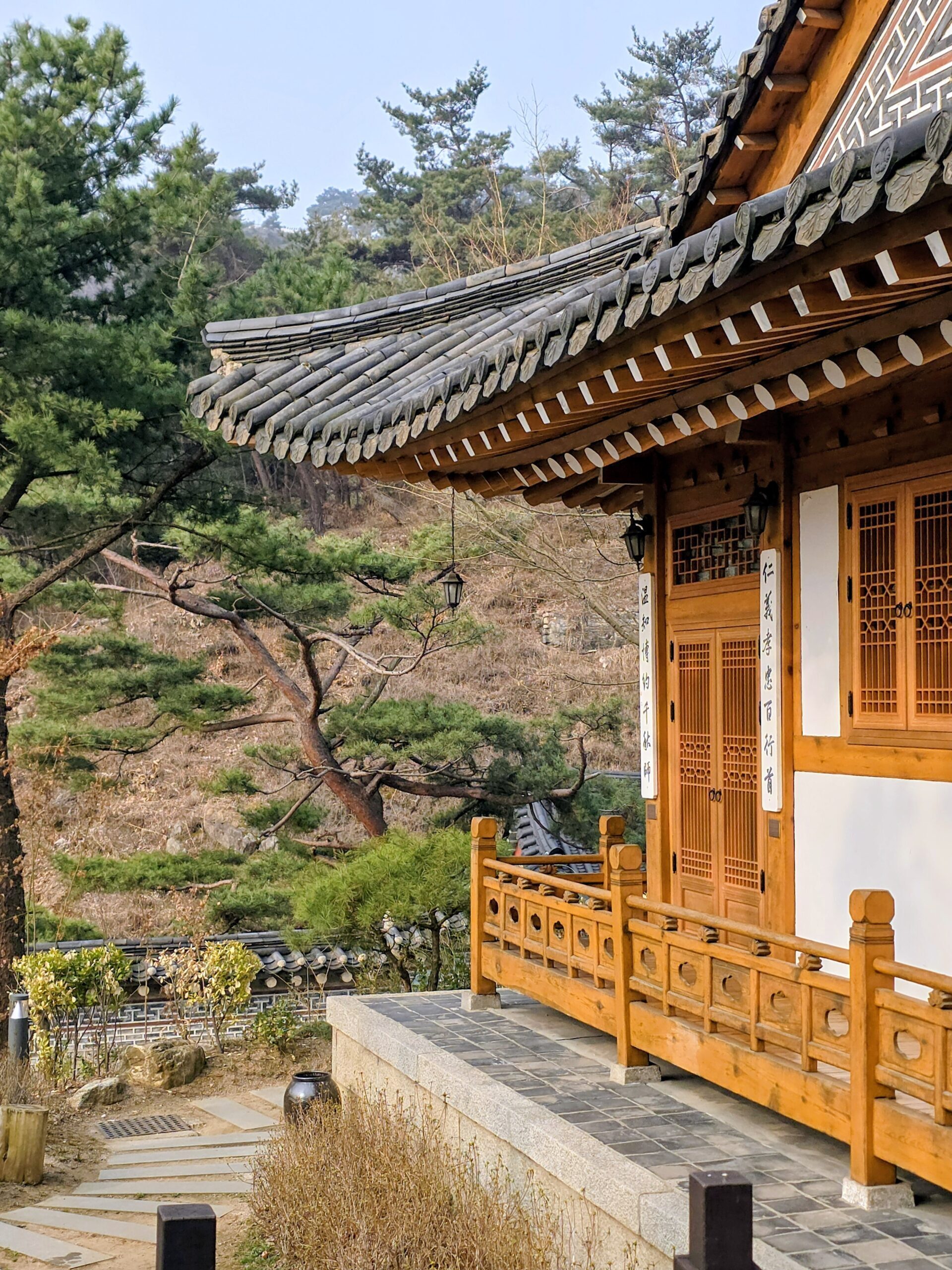
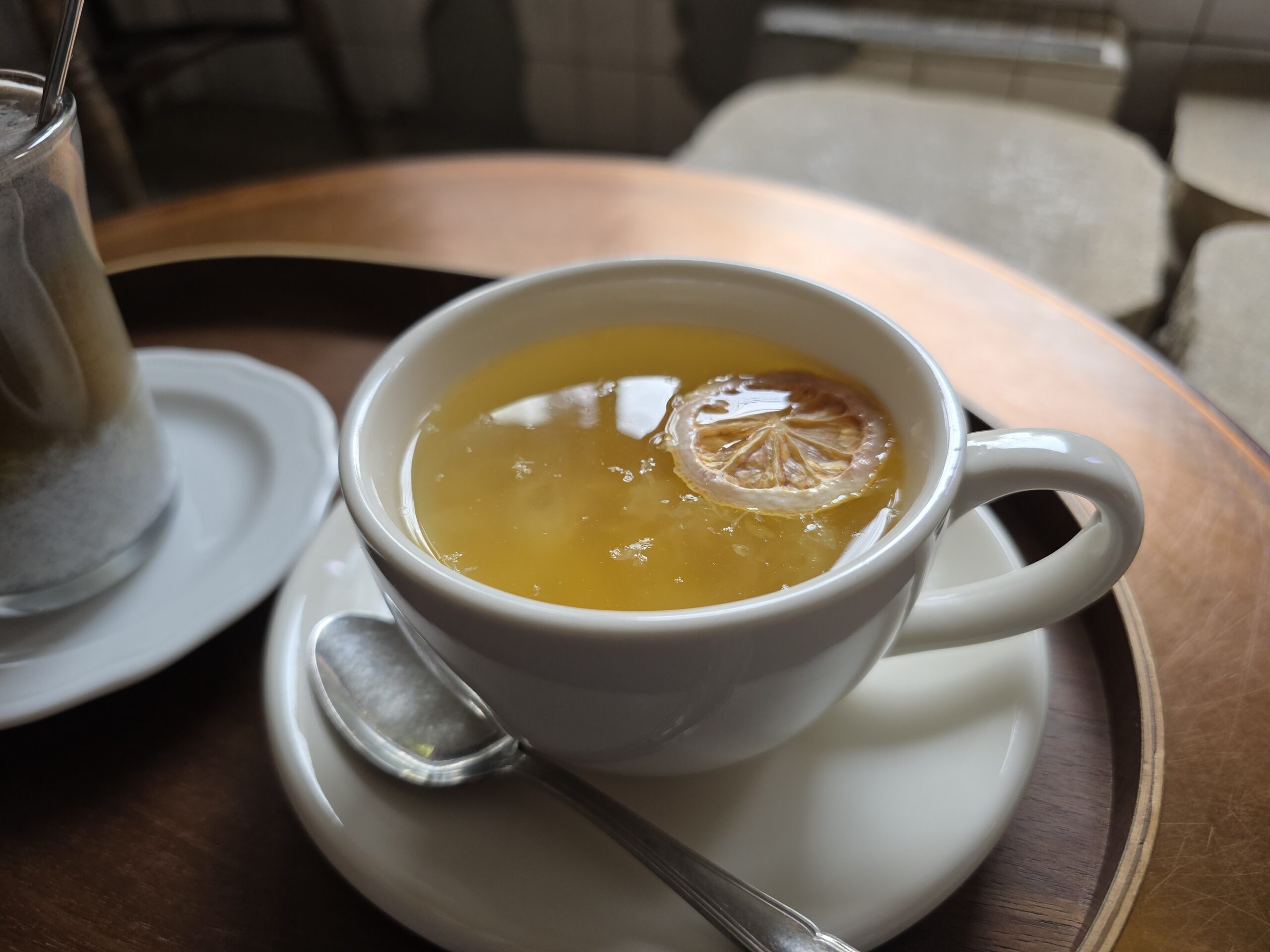
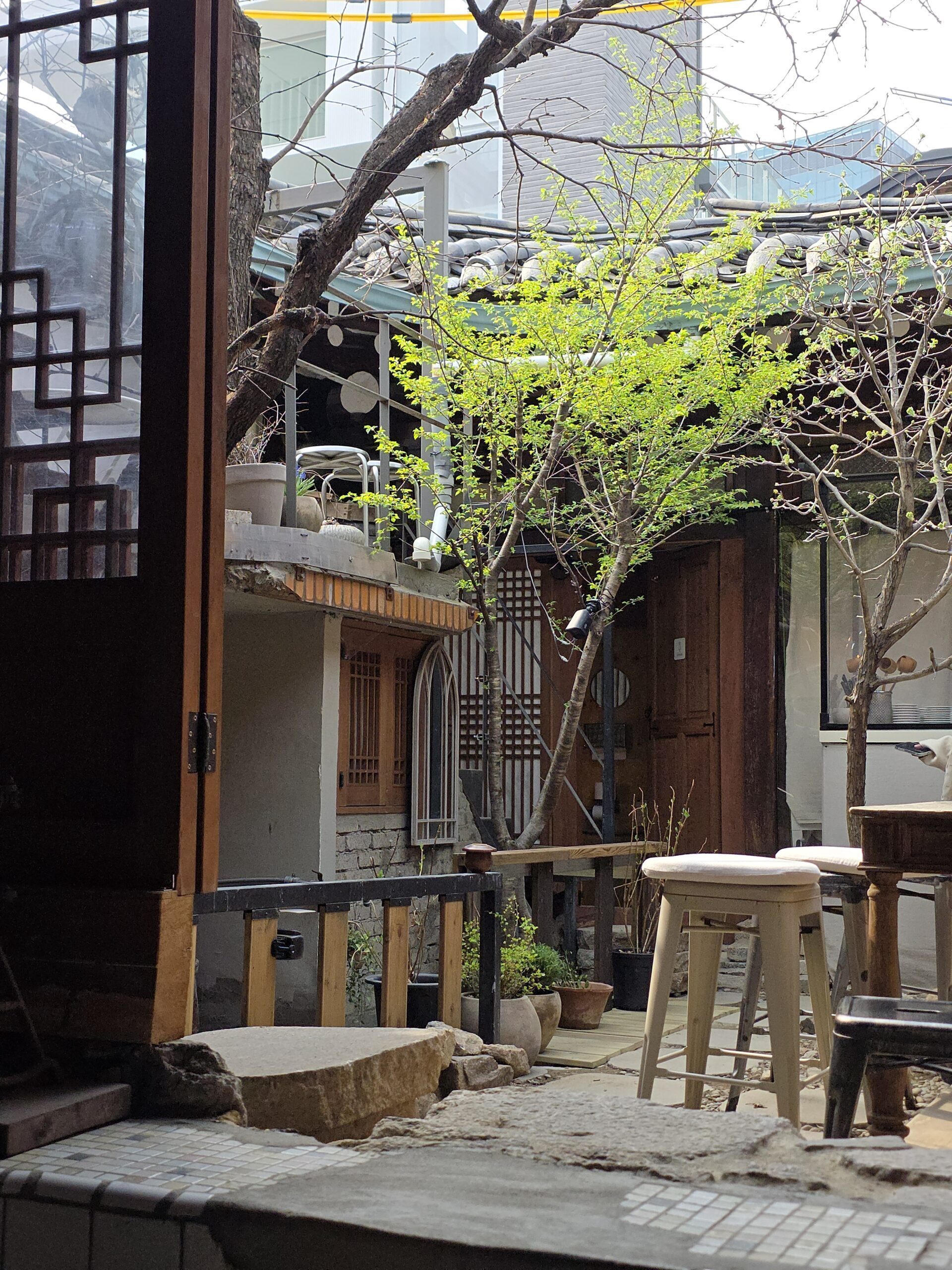
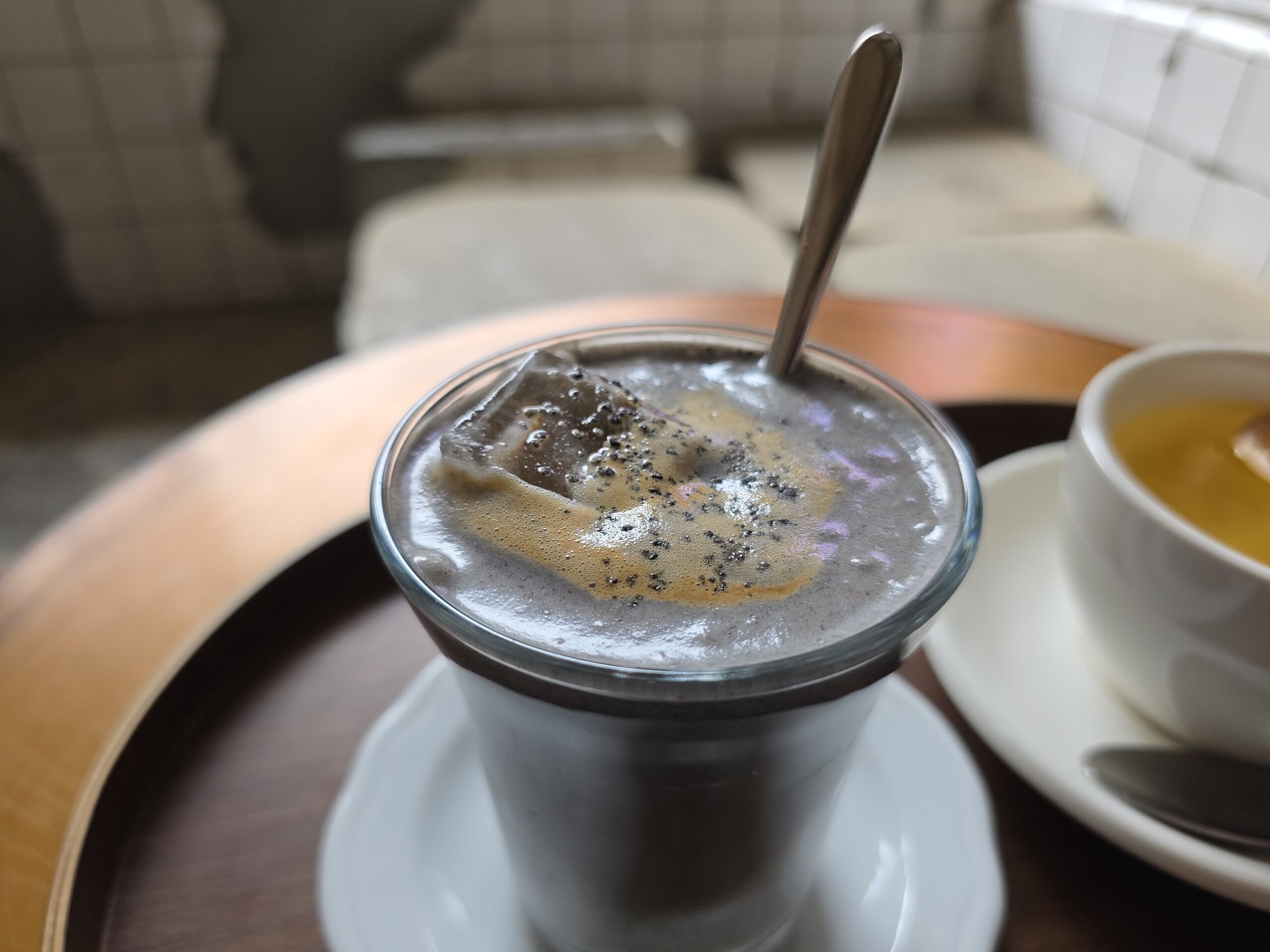
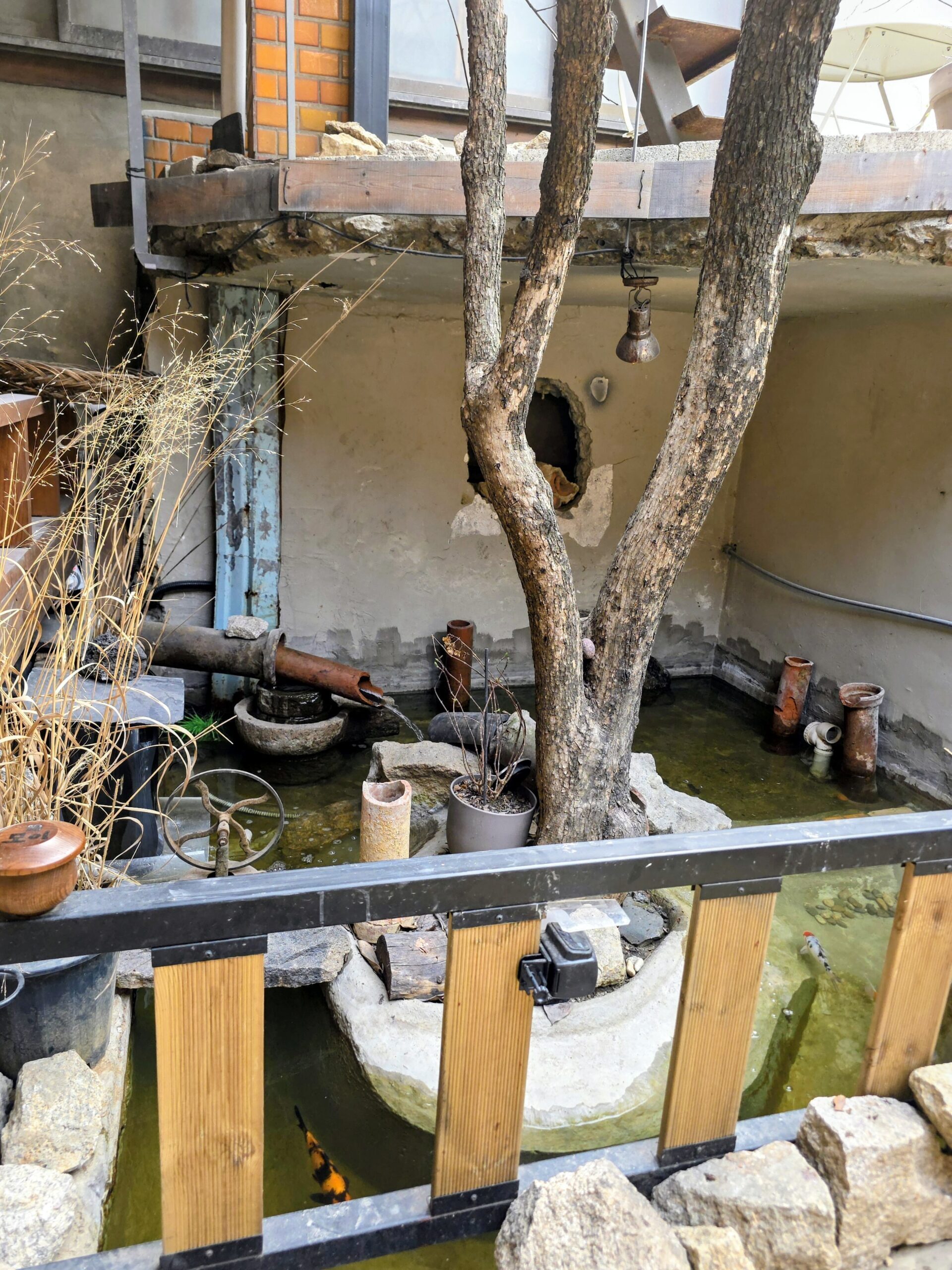
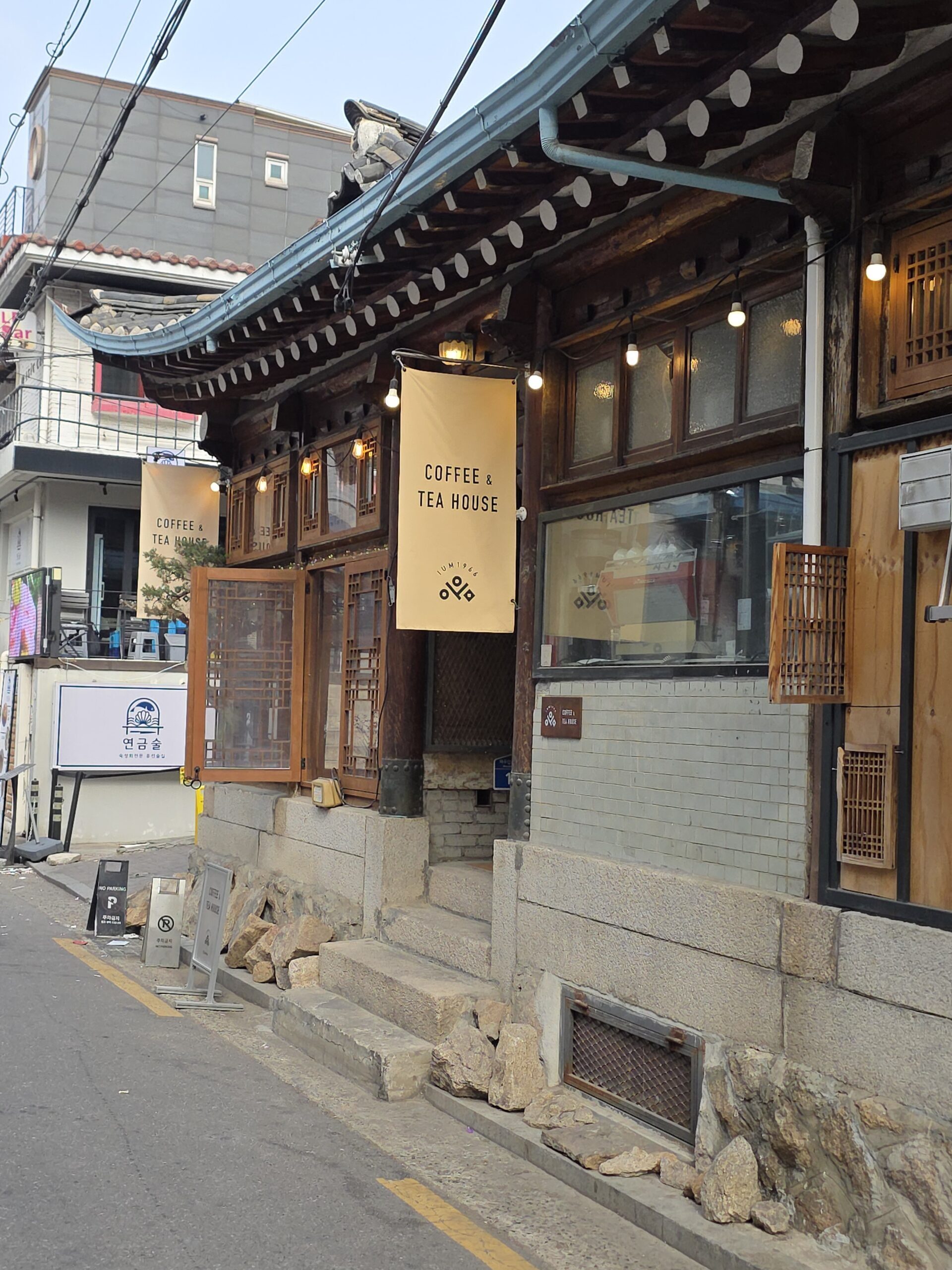
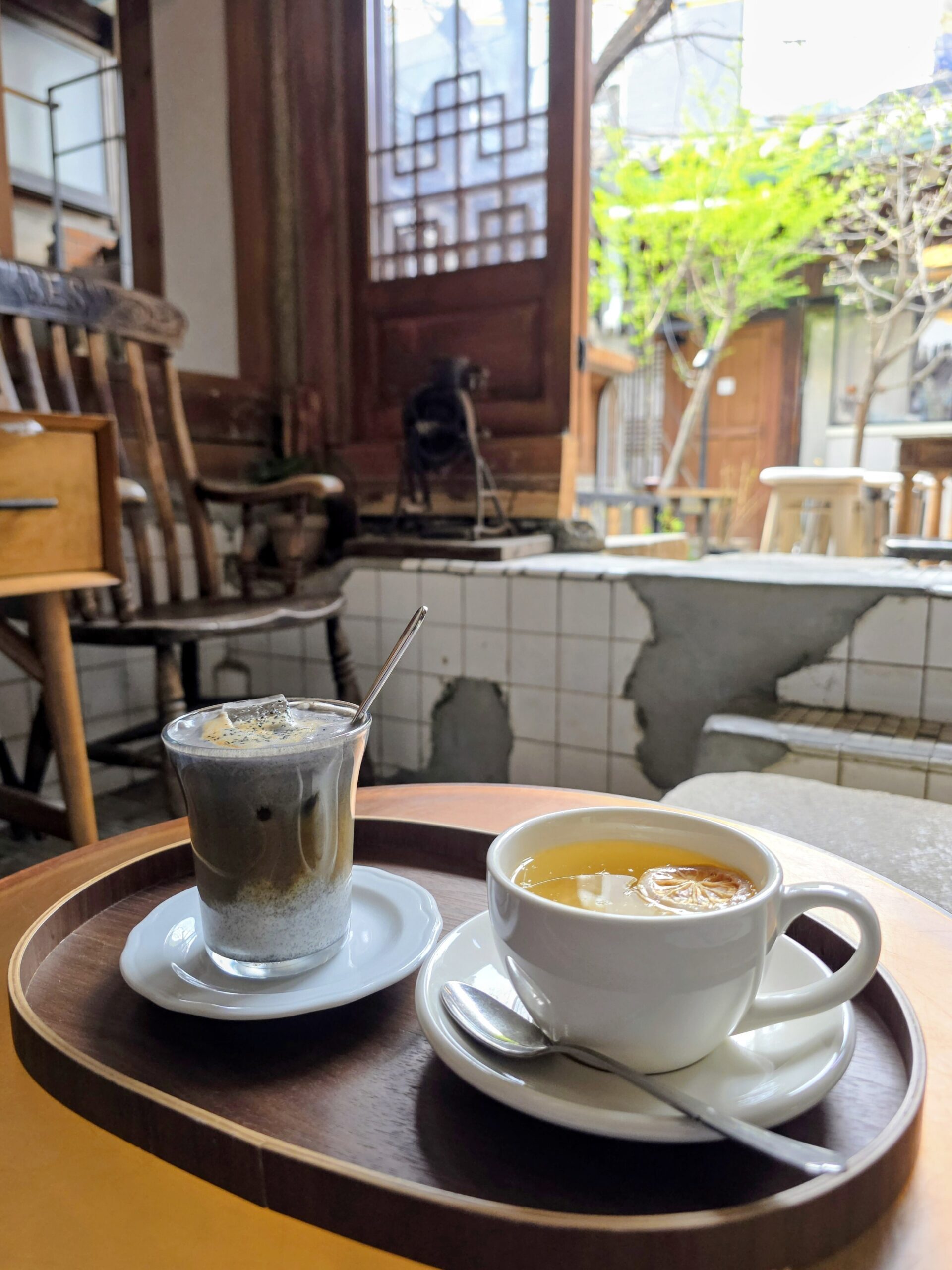
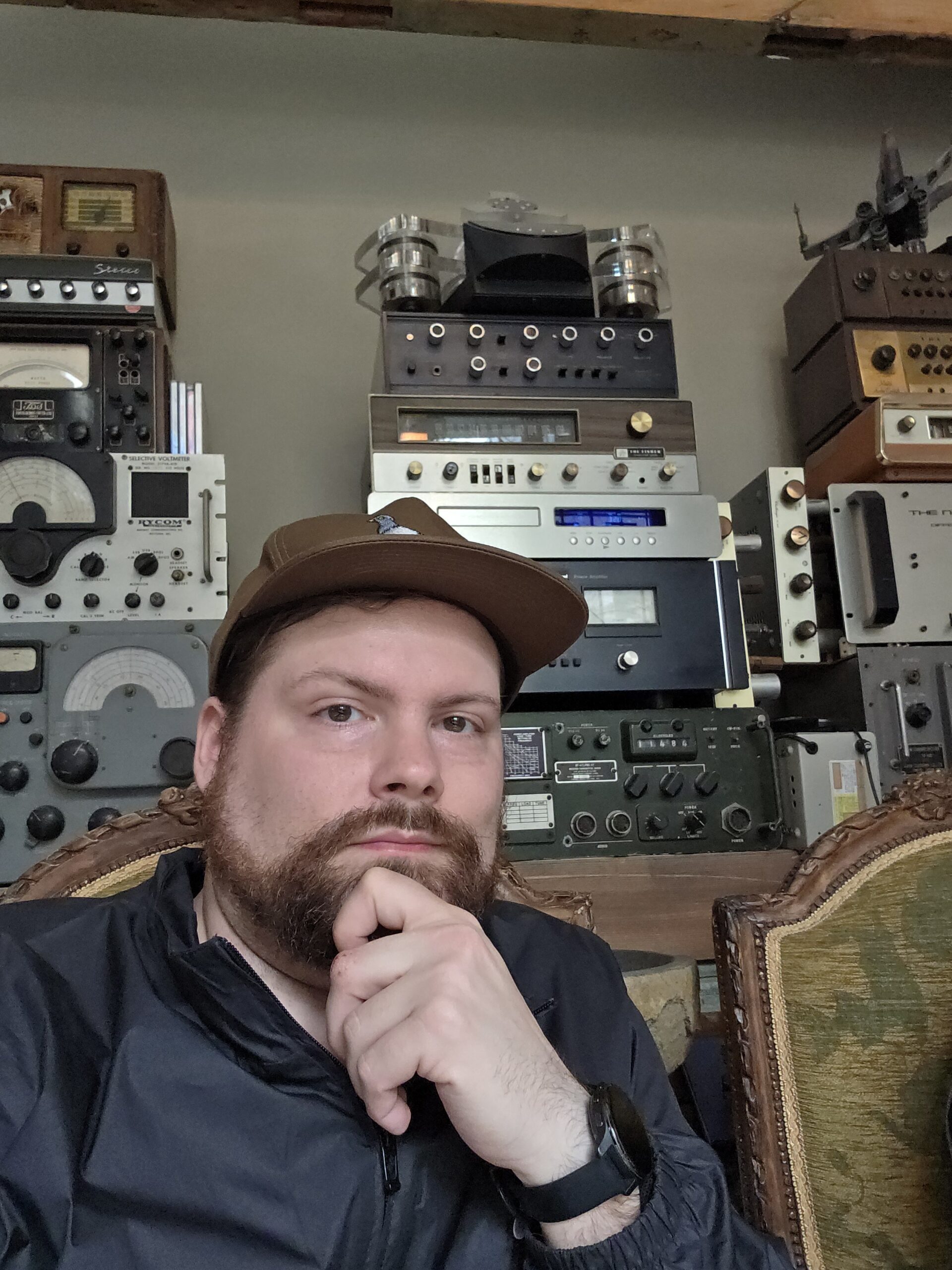
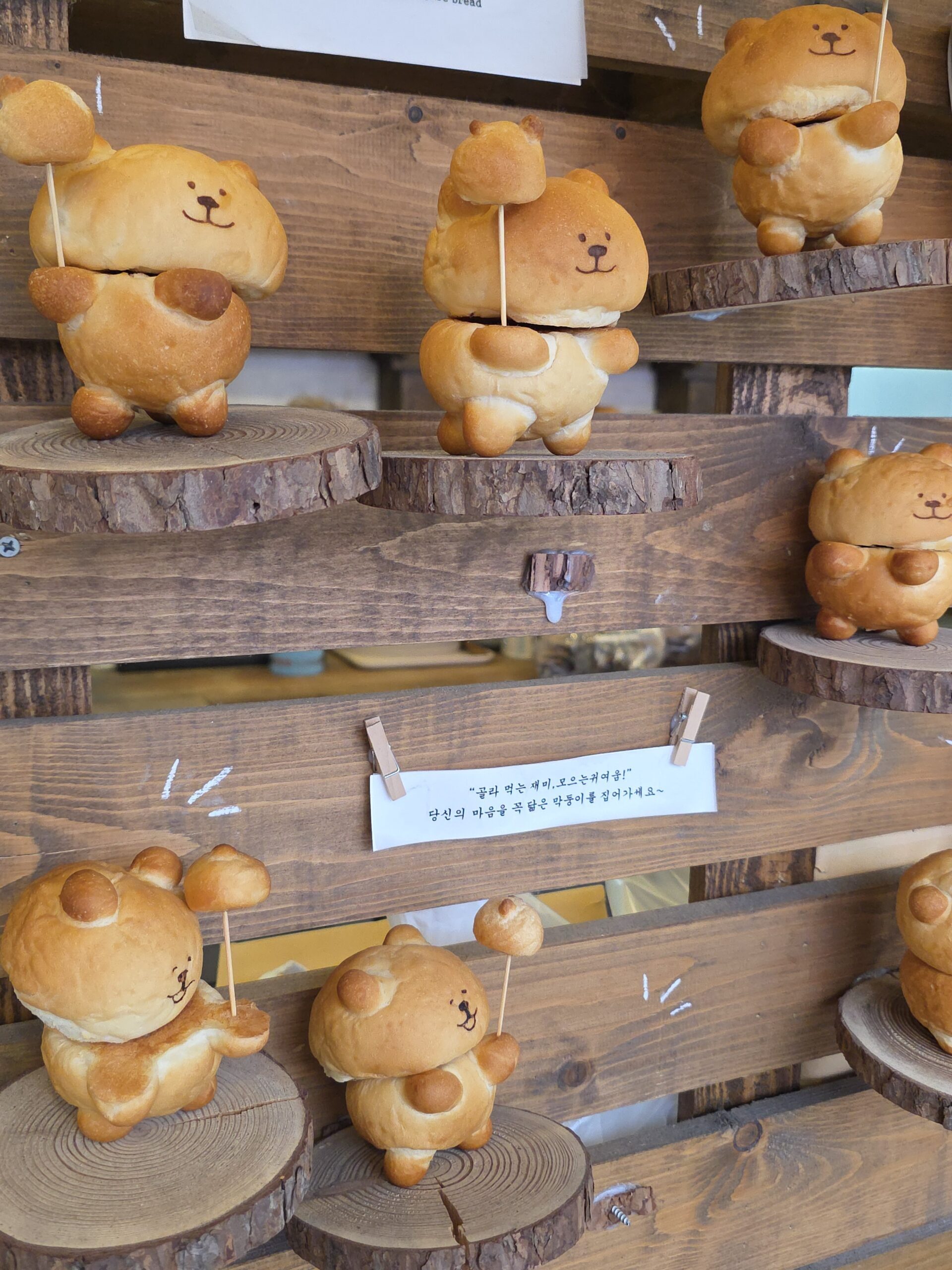
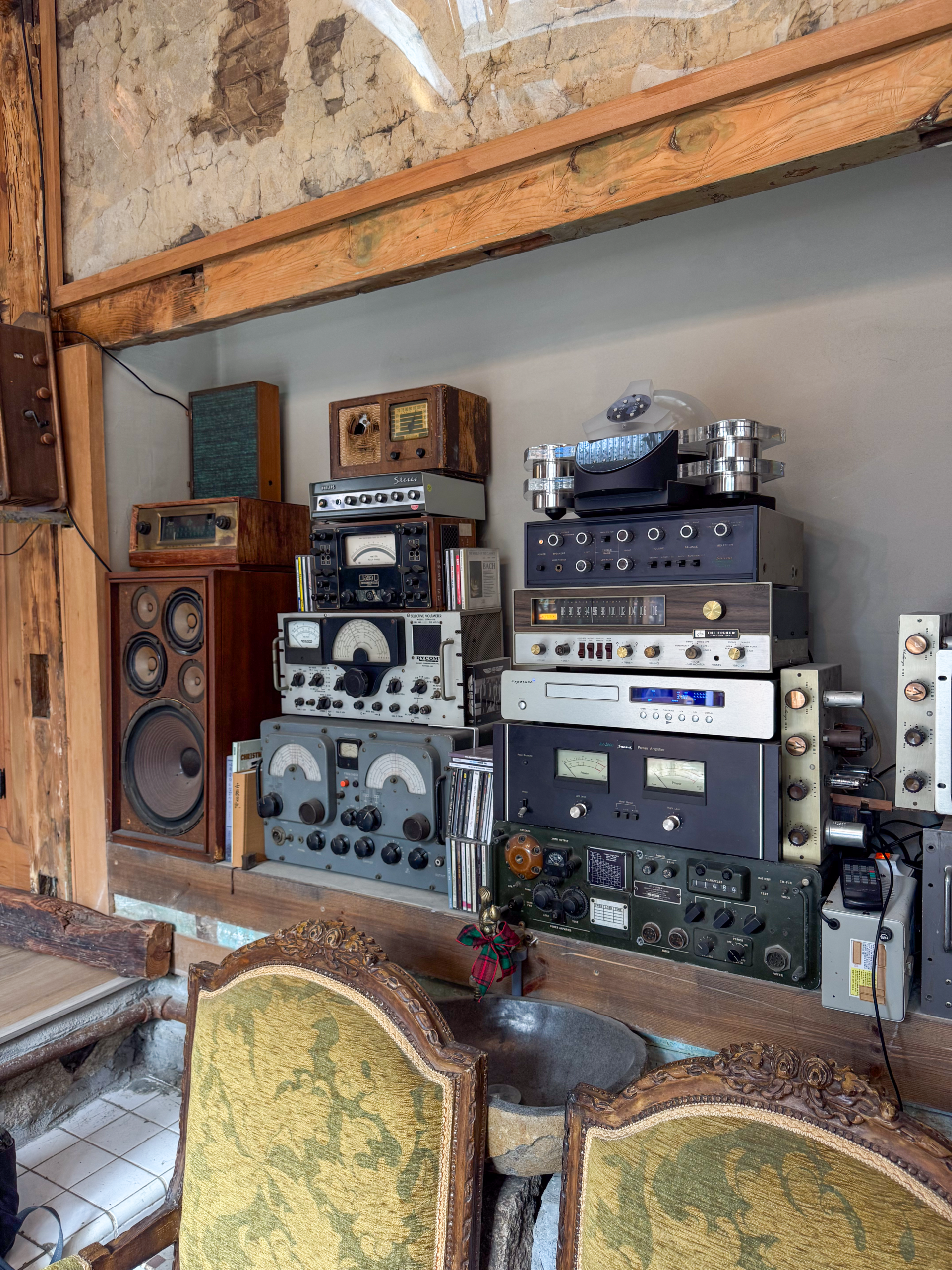
One of the better mornings of the trip was spent in Hongdae, where we stumbled onto Café 이음 (Ium) 1966, tucked inside a repurposed traditional Korean house. The name 이음 means “connection,” and the space earns it. Shelves of old audio equipment, mismatched and worn furniture, and a comforting atmosphere that developed over decades. I ordered yuzu tea and sat back to relax. It’s definitely worth a visit for tea drinkers or anyone looking to a café with chill vibes.
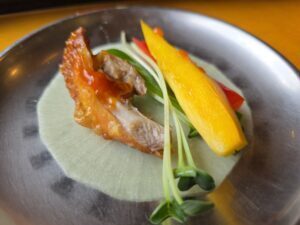
Dinner that evening was at Walkerhill Seoul with my boss to dine at an extensive international buffet that moved through French, Italian, Japanese, Korean, Chinese, all cooked to perfection. Everything was fresh and carefully prepared, which you’d expect at that price point.
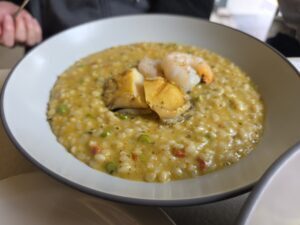
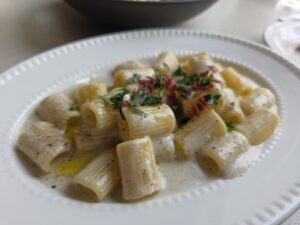
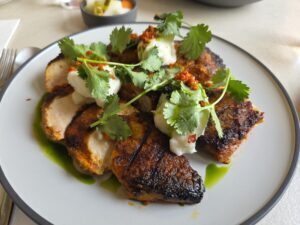
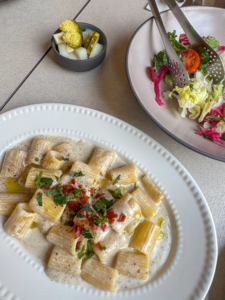
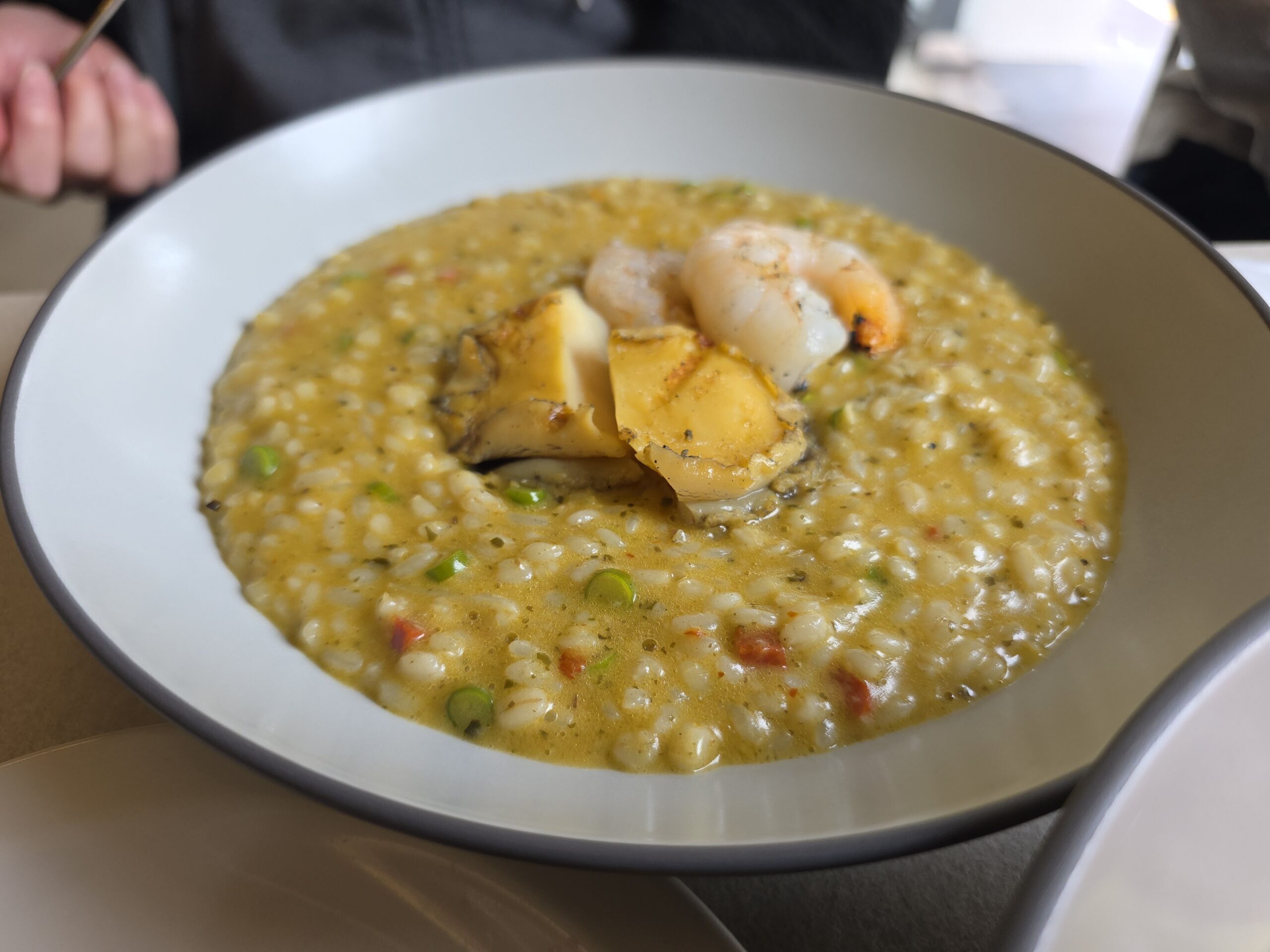
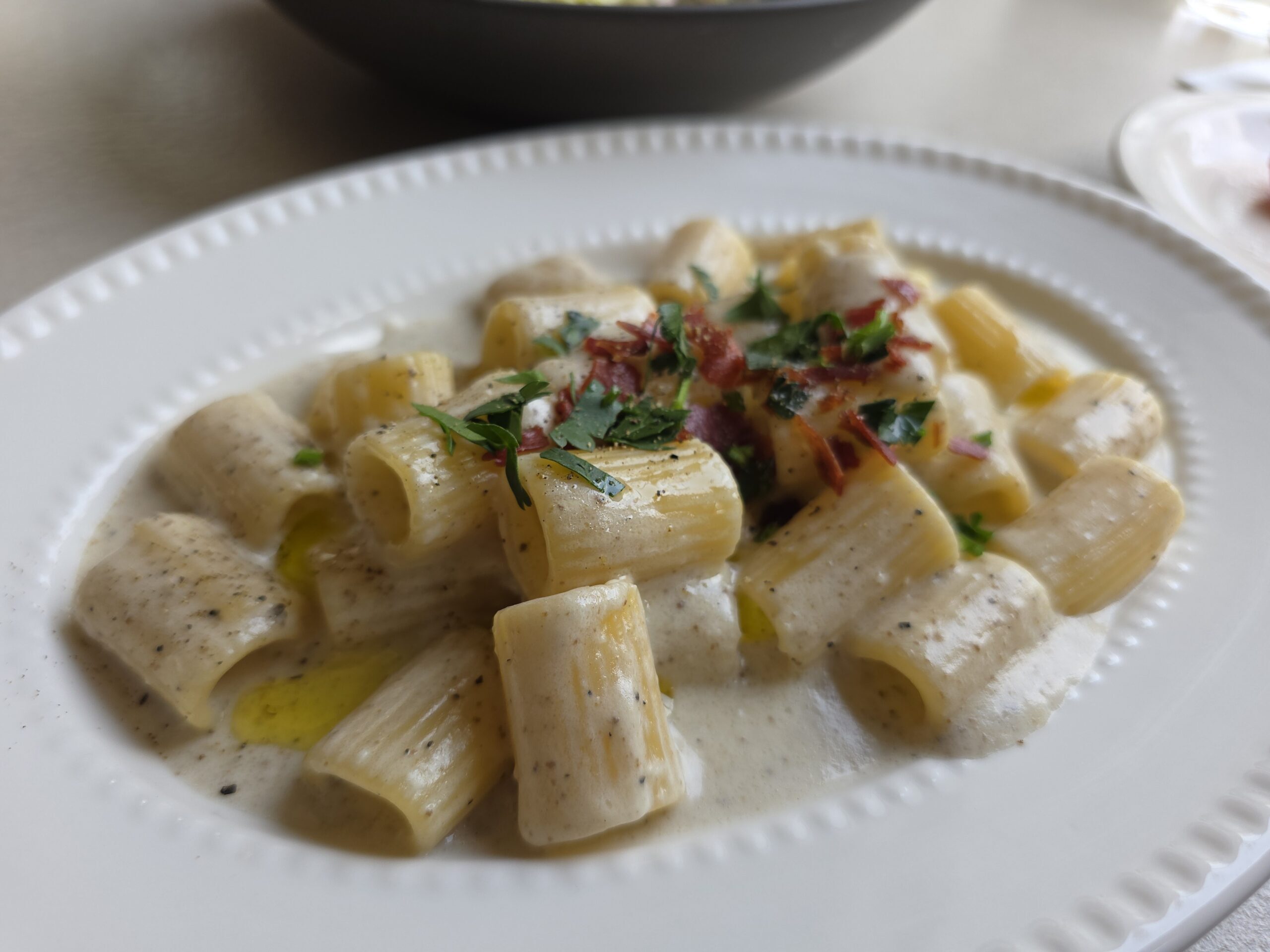
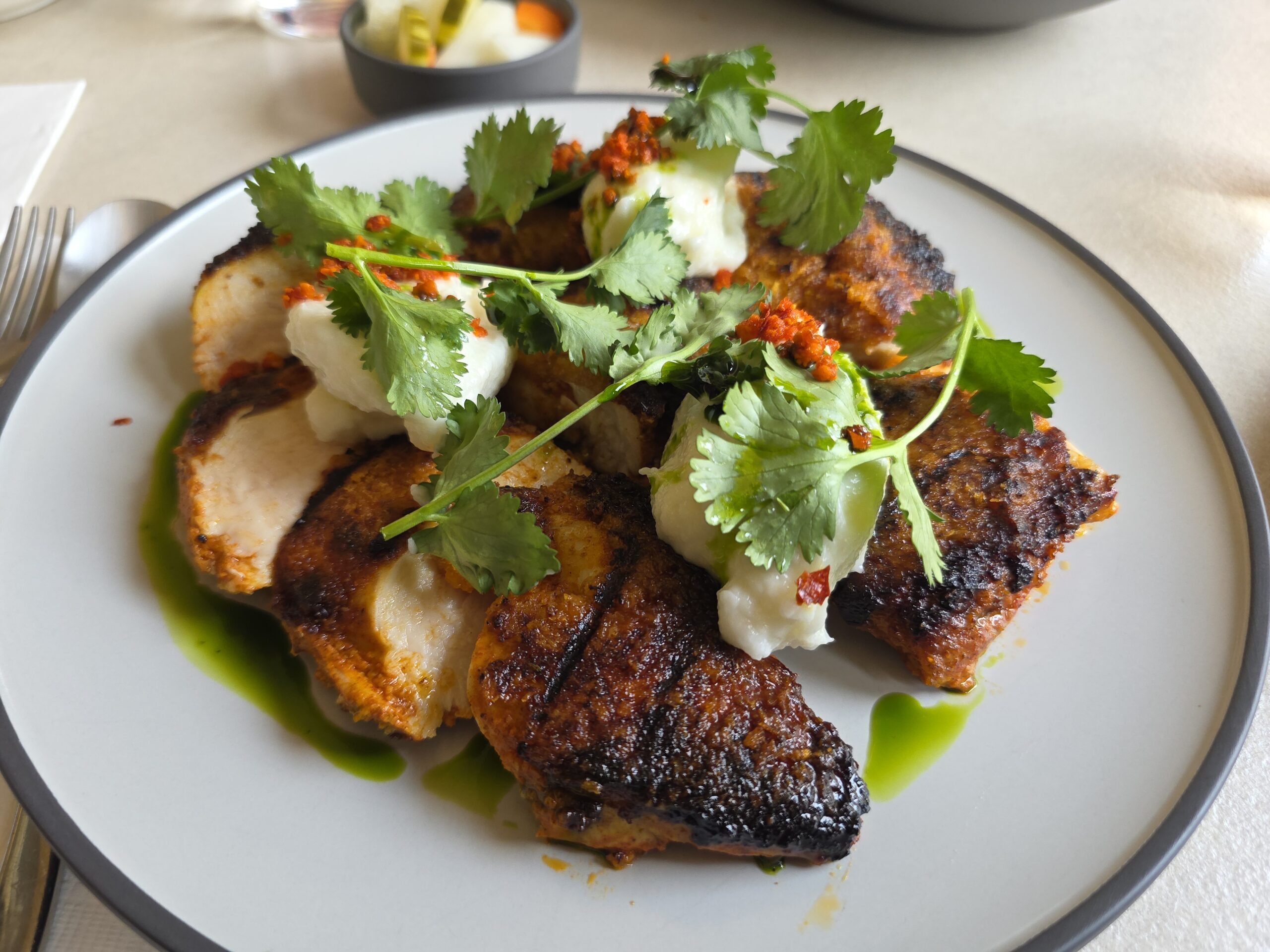
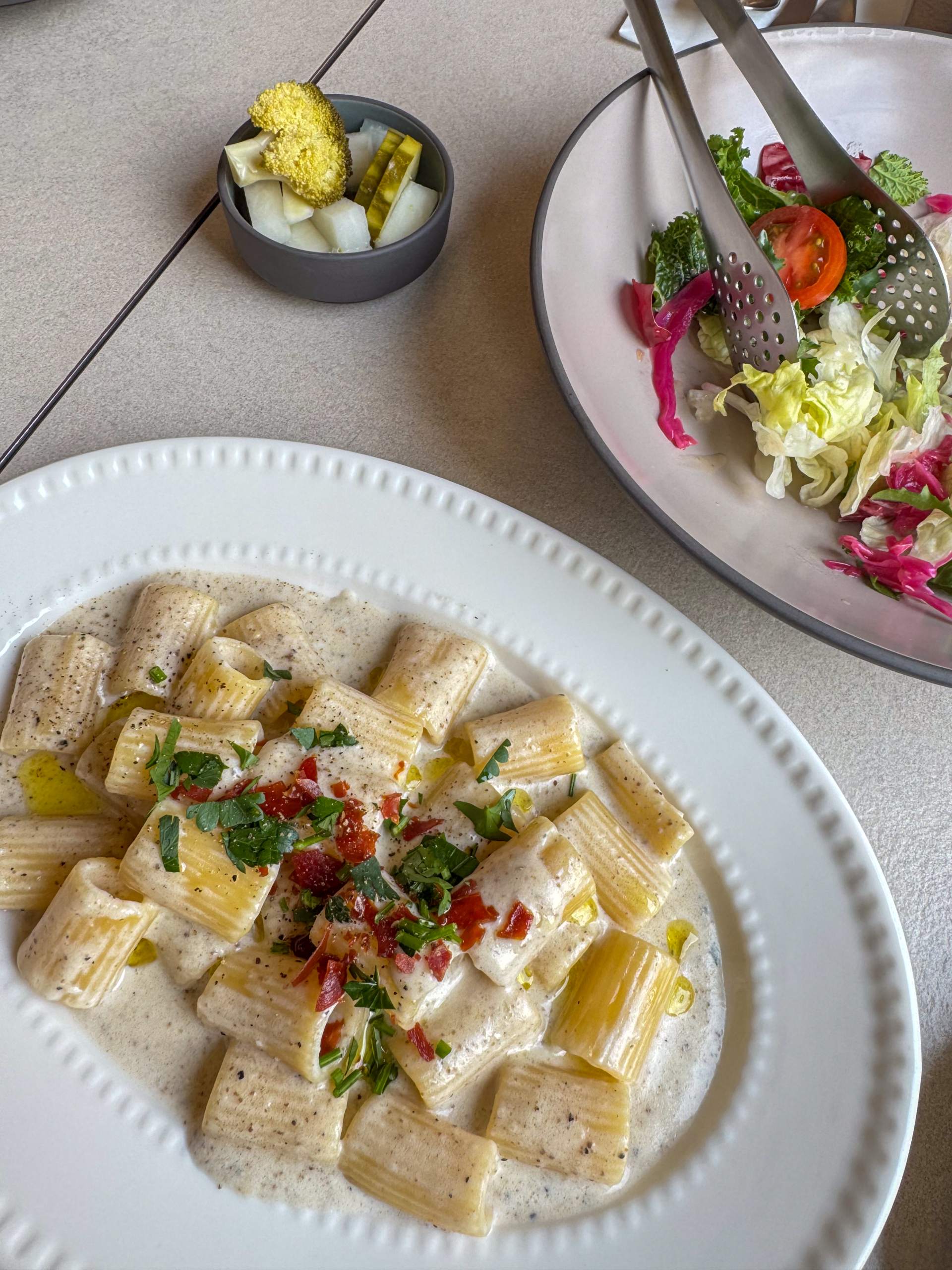
On the final day I met our desinger in person for the first time, someone who I collaborate with regularly but had only ever known through a screen. Getting to see his studio and put faces to the team that supports my day-to-day work made for one of the more significant moments of the trip. He insisted on treating me to lunch at Episeu, an Italian-Mediterranean restaurant nearby, which was a gesture I didn’t take lightly. Over the course of the meal I got to know him and his team in a way that a years of emails and shared files simply doesn’t allow for. The food was outstanding, but honestly that part was secondary.
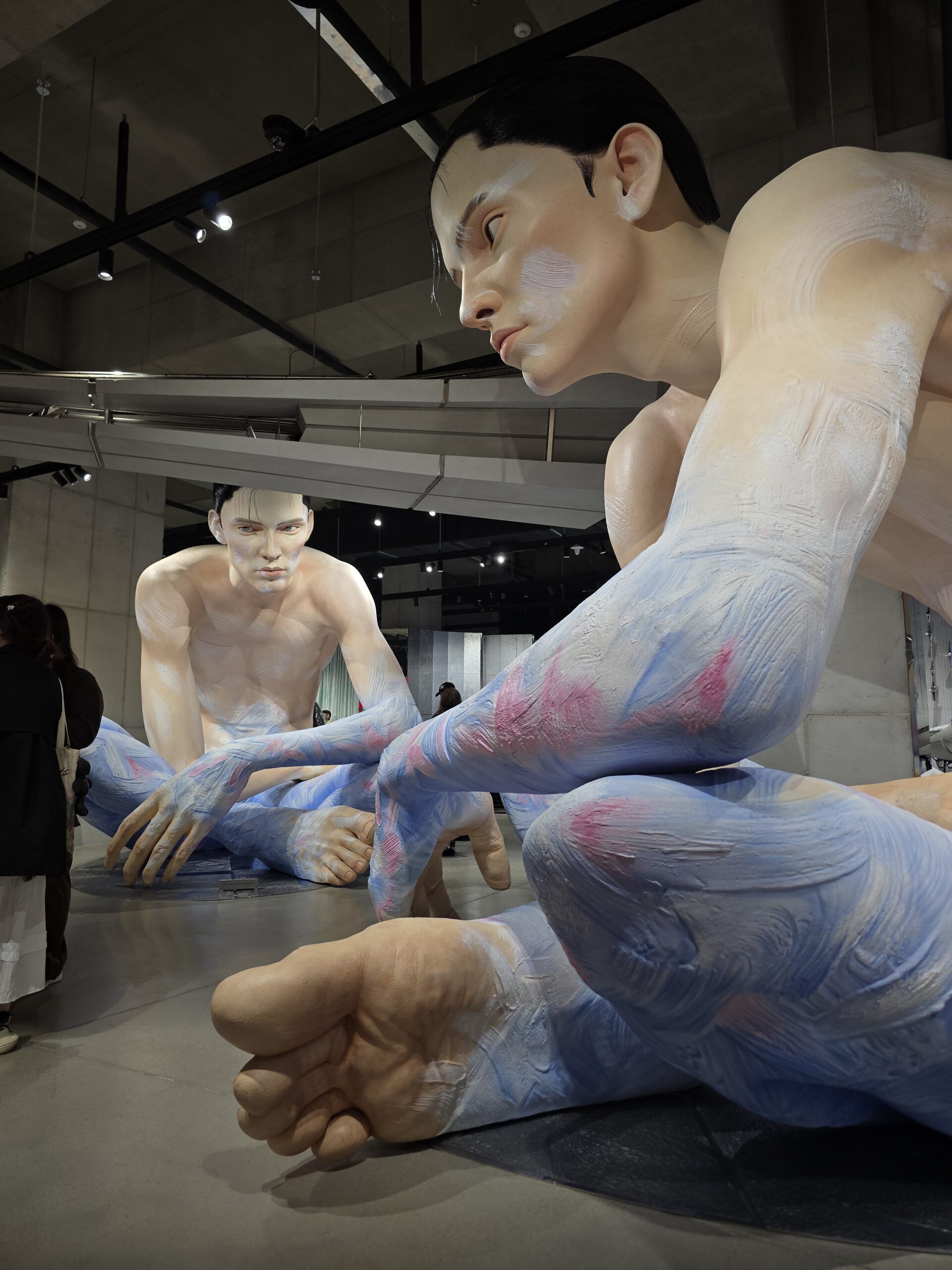
We finished the evening in Seongsu-dong, a neighborhood built around galleries, independent cafés, and converted industrial spaces. It was a fitting way to close out our time in Seoul — unhurried, unexpected, and worth the time.
Looking Back
When I first arrived, I thought I had a sense of what Korea might be like.
I didn’t.
Seoul consistently surprised me…sometimes familiar, sometimes completely different from what I expected.
And while the city itself left a strong impression, it was really the people who shaped the experience. Opportunities appeared that I never would have had on a typical trip, and moments unfolded that felt far more personal than planned. That’s something I’ll always be grateful for.