Finding Home in Switzerland
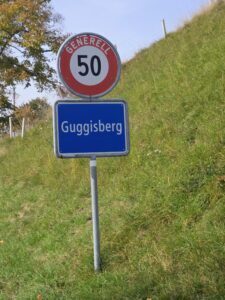
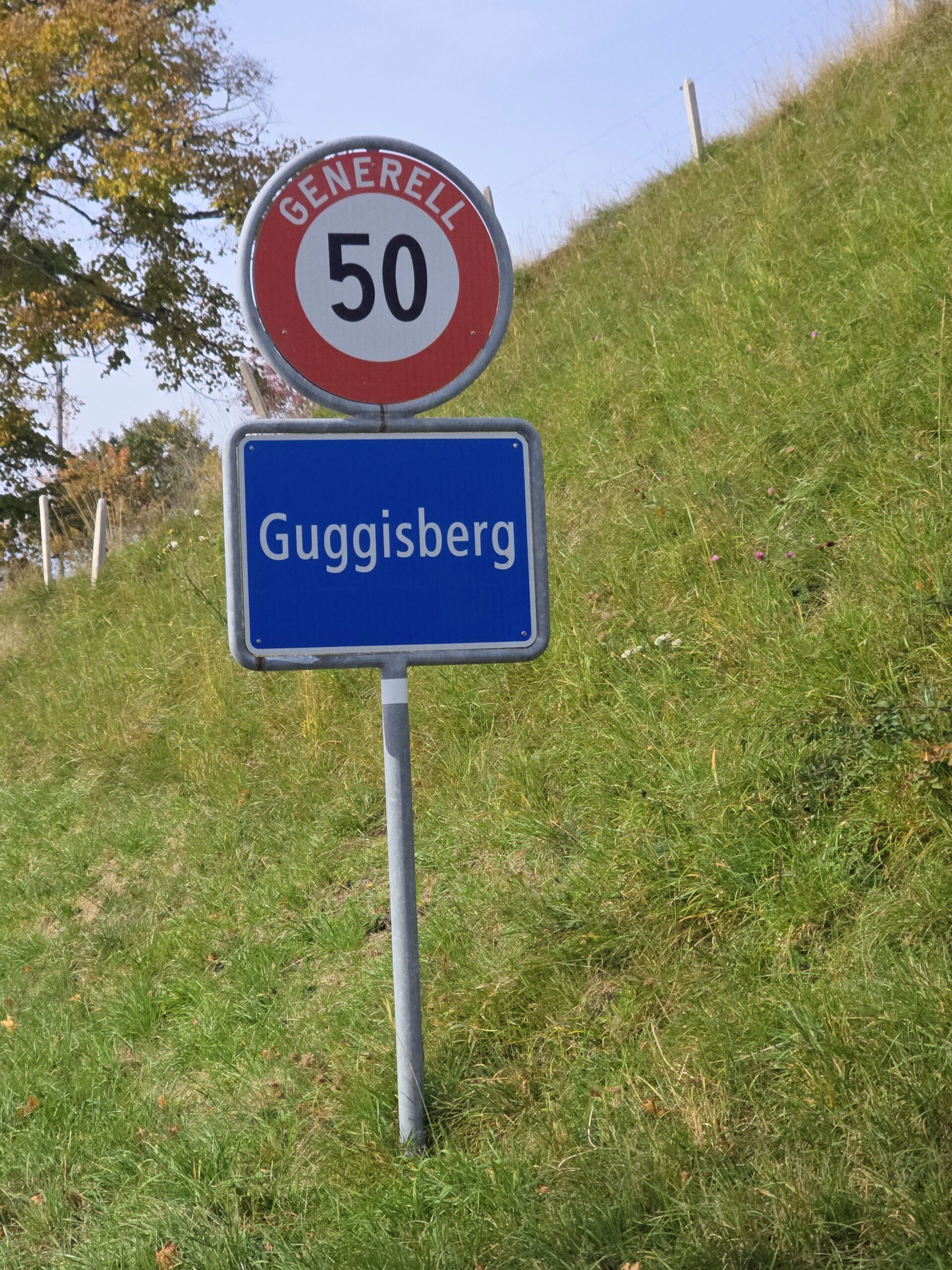
A few years ago, I did a deep dive into my genealogy. All signs pointed to a small town in the Swiss Prealps named Guggisberg. I told myself that if I ever found myself nearby, I owed it to my ancestors to go.
October 19, 2025
🇨🇭: Guggisberg and Rüschegg in Canton Bern
Ever since I was a kid, I’ve been fascinated with ancestry. Growing up, we were always told we were Swiss, German, Hungarian, and Italian. When DNA tests like 23andMe came out, those stories mostly held true: Italian made up more than 60%, followed by a mix of Swiss, German, and French. Hungarian didn’t appear by name, but a small percentage of Eastern European ancestry did, which we know came from my dad’s mother’s side. But I digress.
I’ve never met another person with my last name. It’s always felt unique, and also a little mysterious. I wanted to know where it came from. A few years back, I really dove into genealogy. No stone was left unturned and I was incredibly successful in my quest. My mom’s side was well documented — Italian, from Nocera Umbra in Perugia and Montedoro, Sicily. But my dad’s side was a different story. My grandfather tried to trace it years ago but never got further than his grandfather. I decided to pick up where he left off and after weeks of digging through old hand-written church records, I managed to trace our line all the way back to the late 1600s. Every clue pointed to one place: Guggisberg, Switzerland.
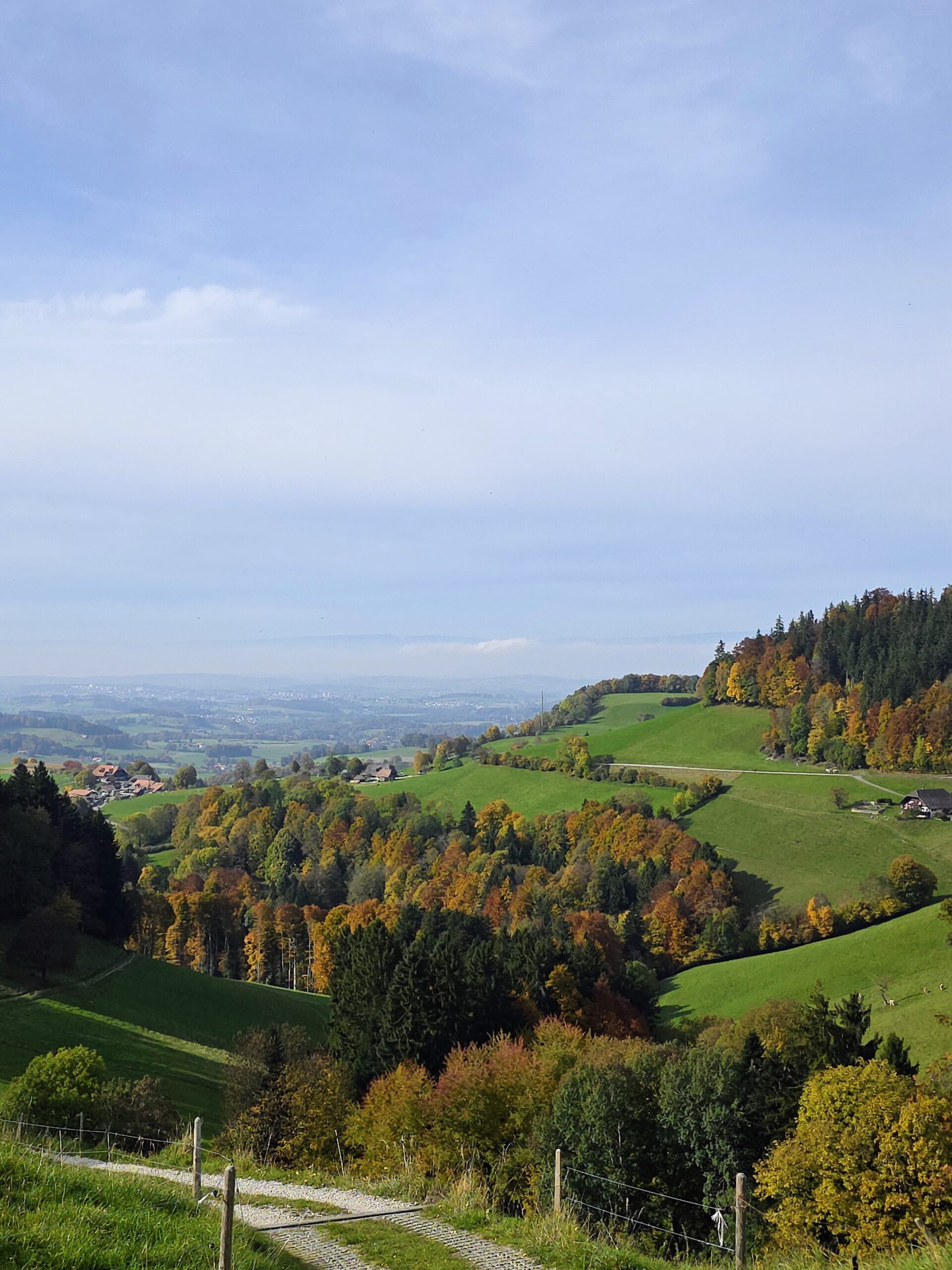
Switzerland feels like nature’s own masterpiece with green hills that soothe, snow-dusted peaks that inspire, and quaint villages that feel untouched by time. Every turn feels like a frame from The Sound of Music.
So, when a business trip came up that would take us driving through Switzerland, my boss asked if there was anywhere I wanted to stop. I mentioned Guggisberg — half joking, half serious — but I quickly added that it was out of the way. We checked the map, and to my surprise, it would only add about two hours to the route. We were already driving from Milan, Italy, to Amsterdam, Netherlands, over two days. “Let’s do it,” he said. And that’s how I ended up heading toward the town where my name began.
It was my second time in Switzerland, though my first visit had been closer to Zurich. Still, every time I’m there, I feel this strange connection deep down, like I’ve been there before.
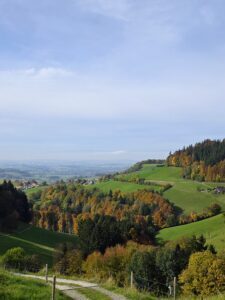
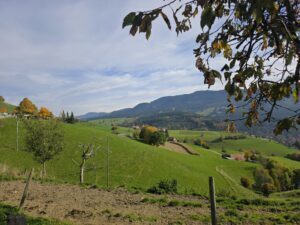
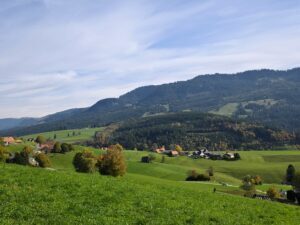
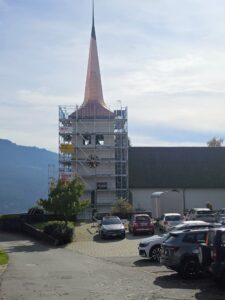
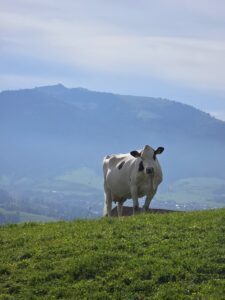
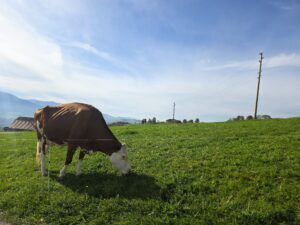
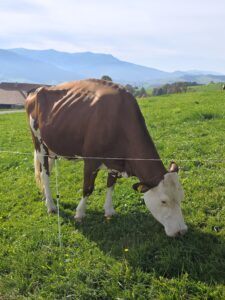
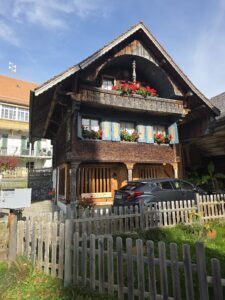
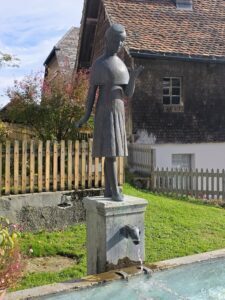
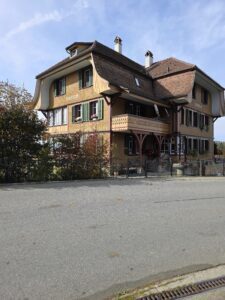
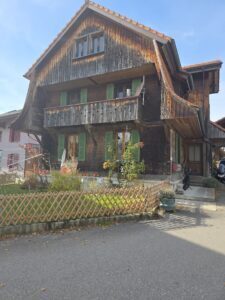
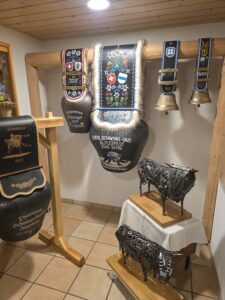
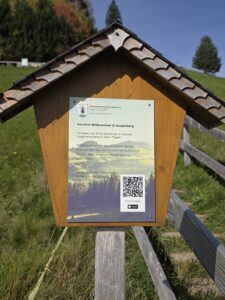
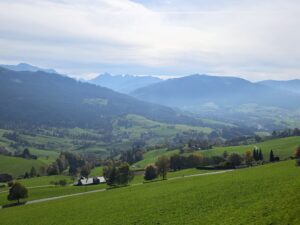
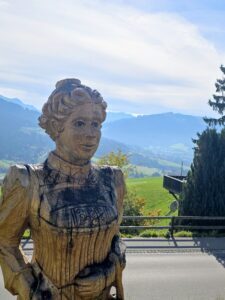
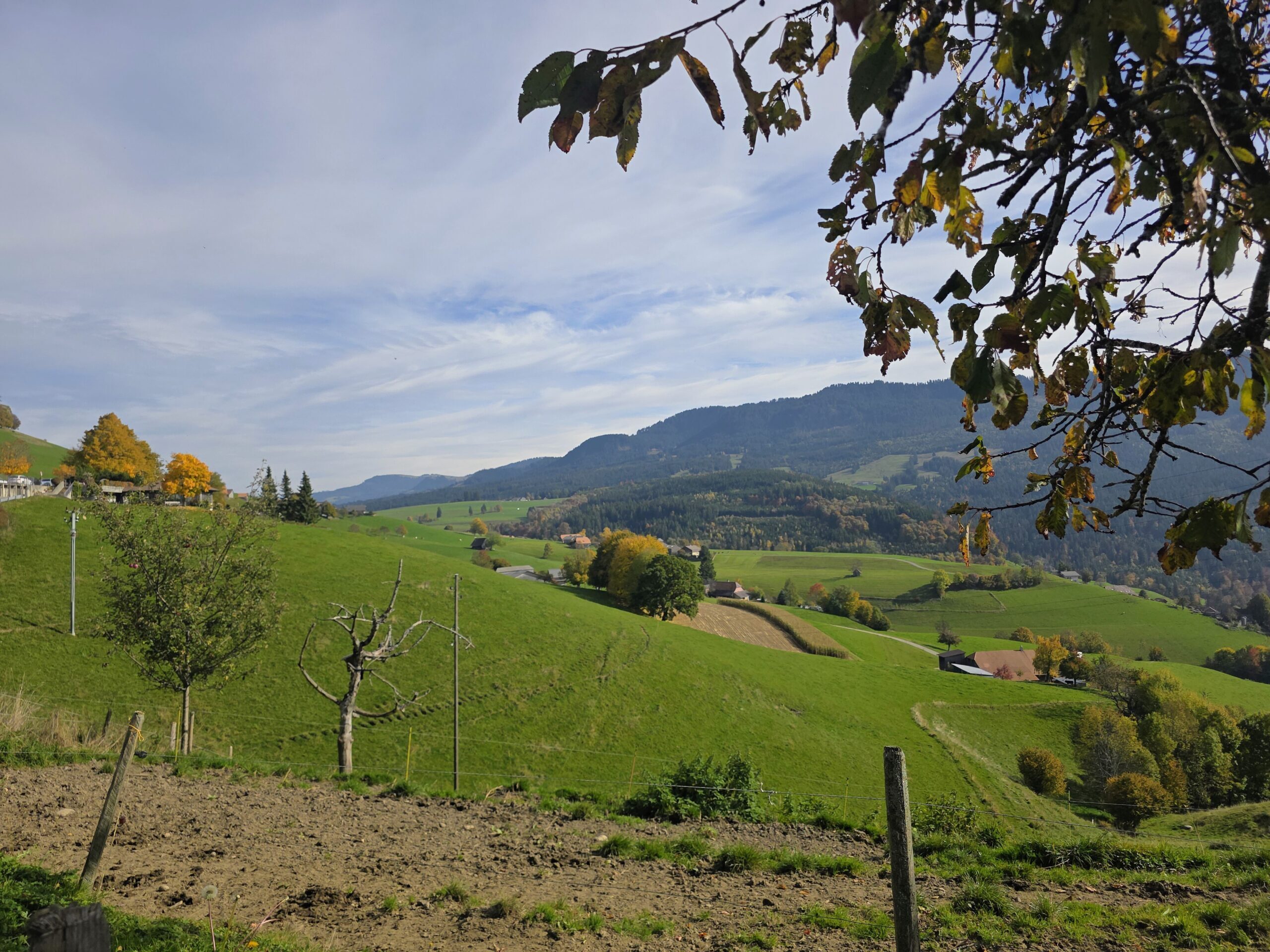
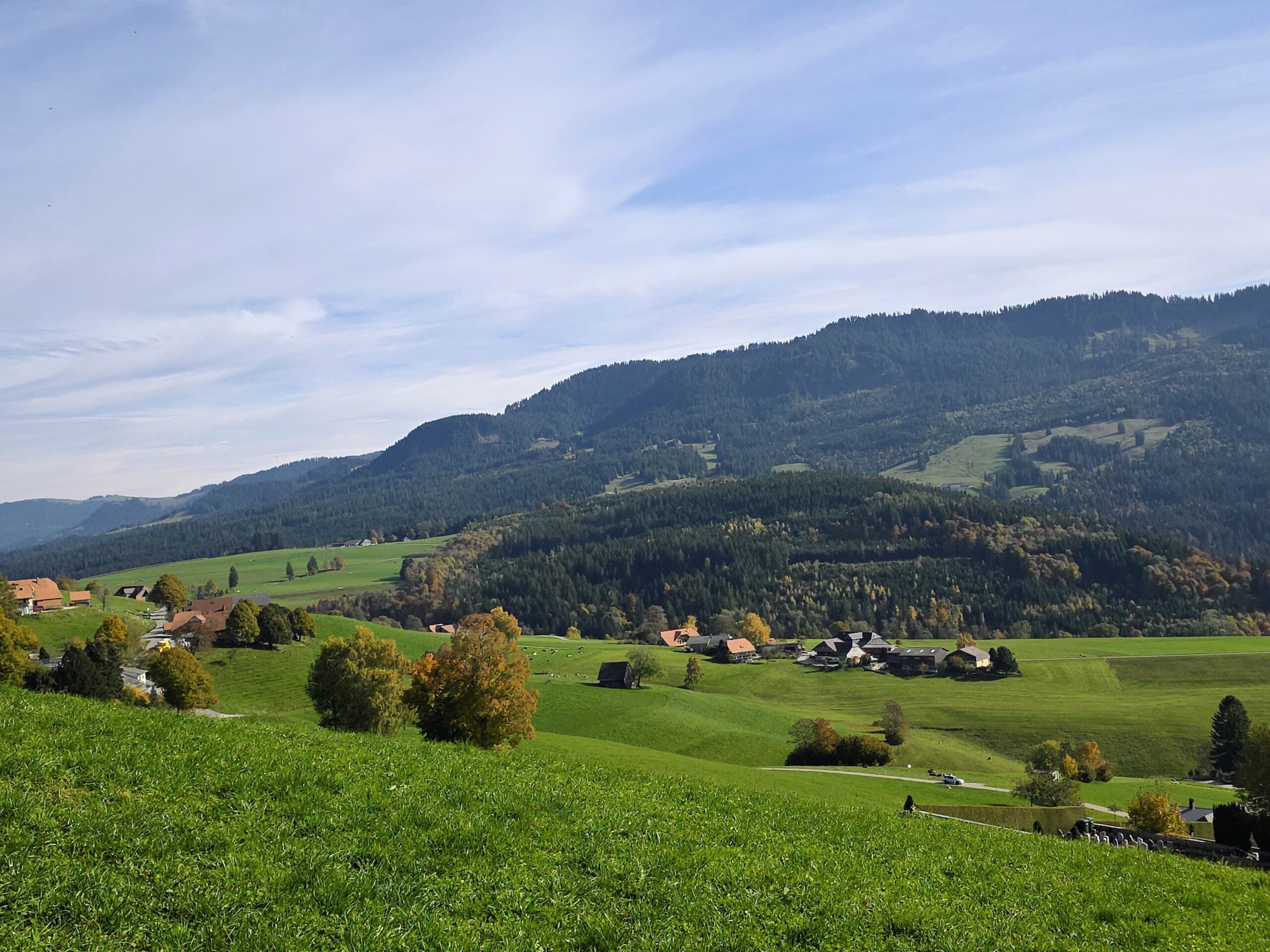
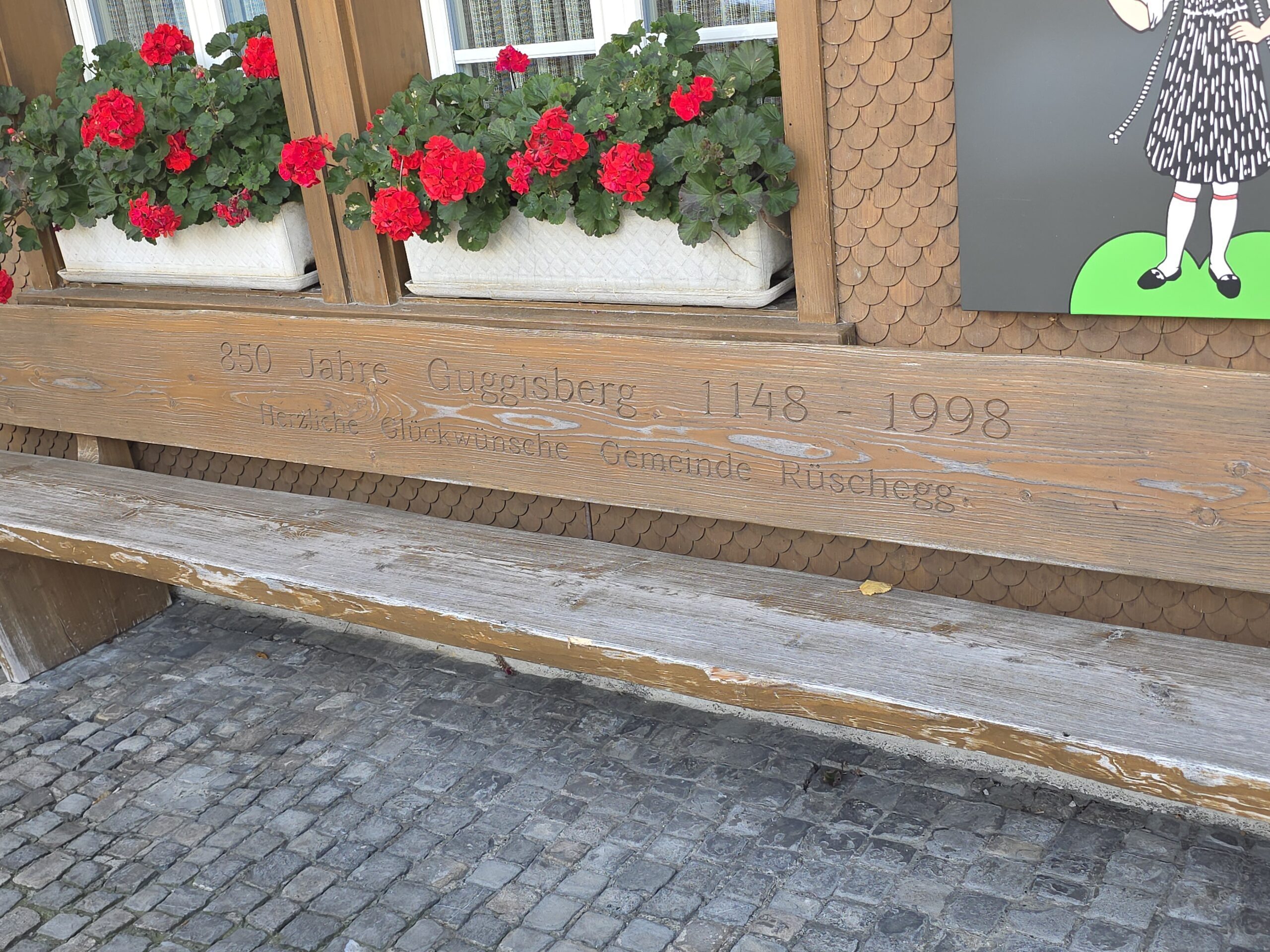
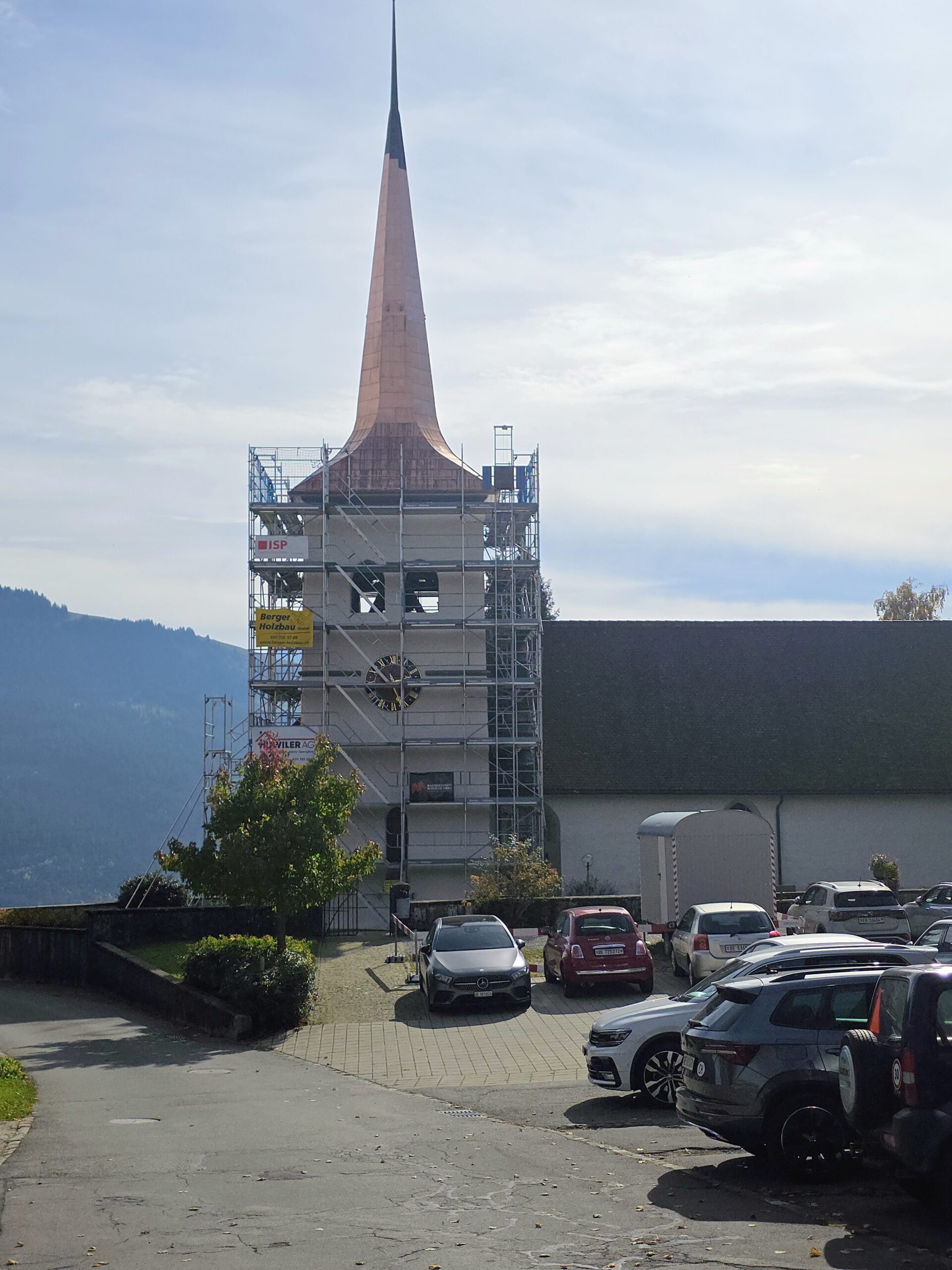
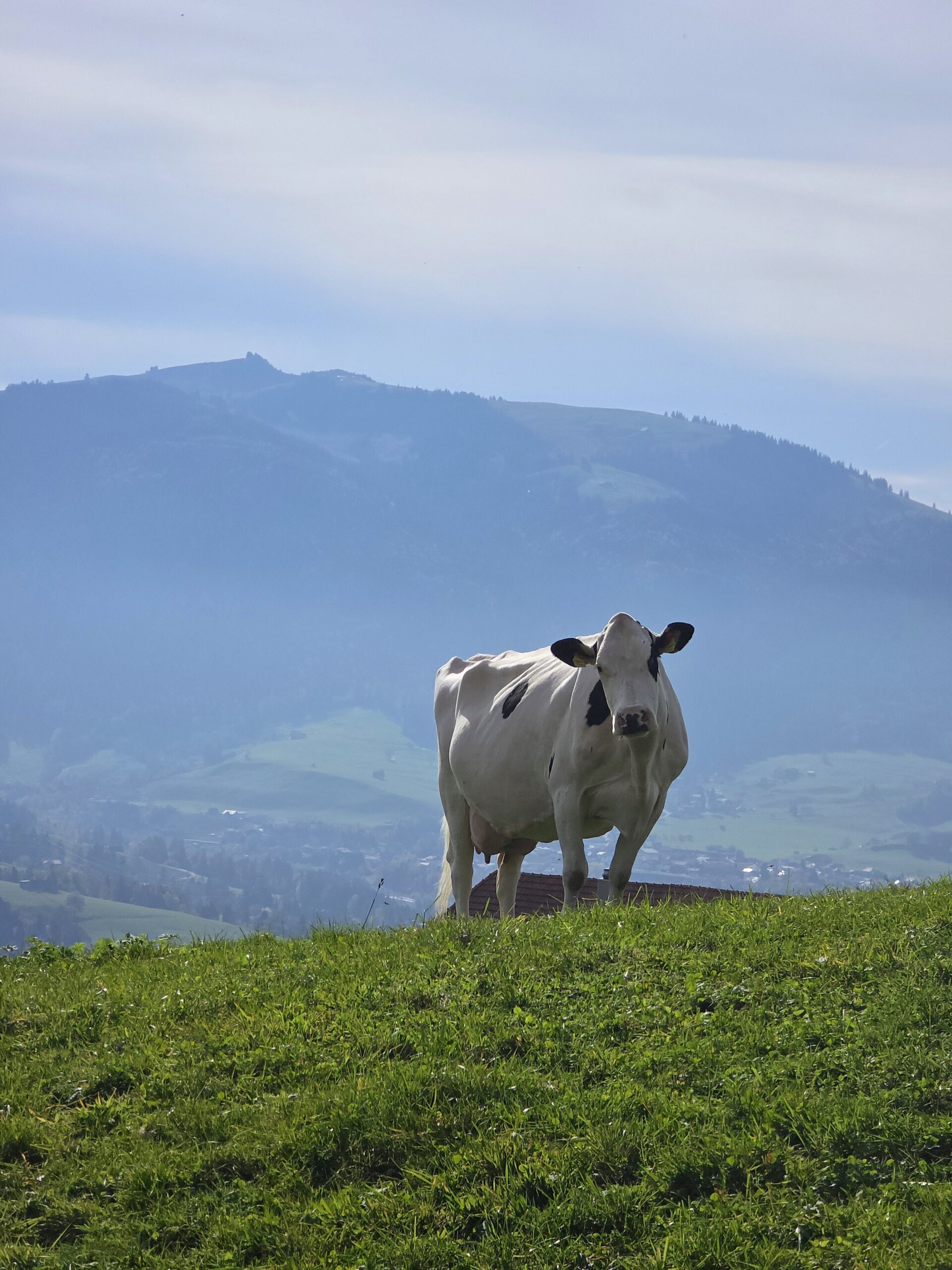
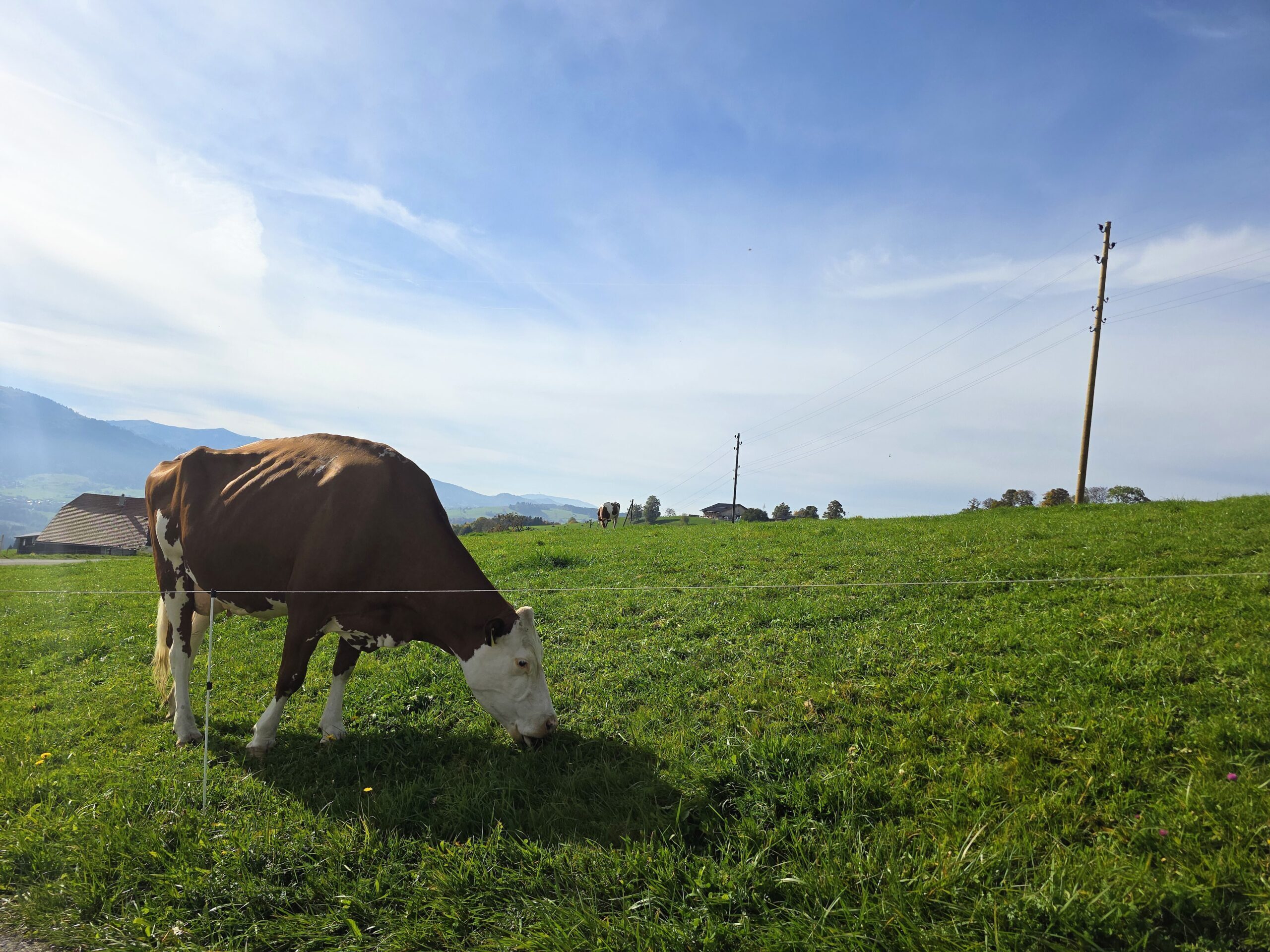
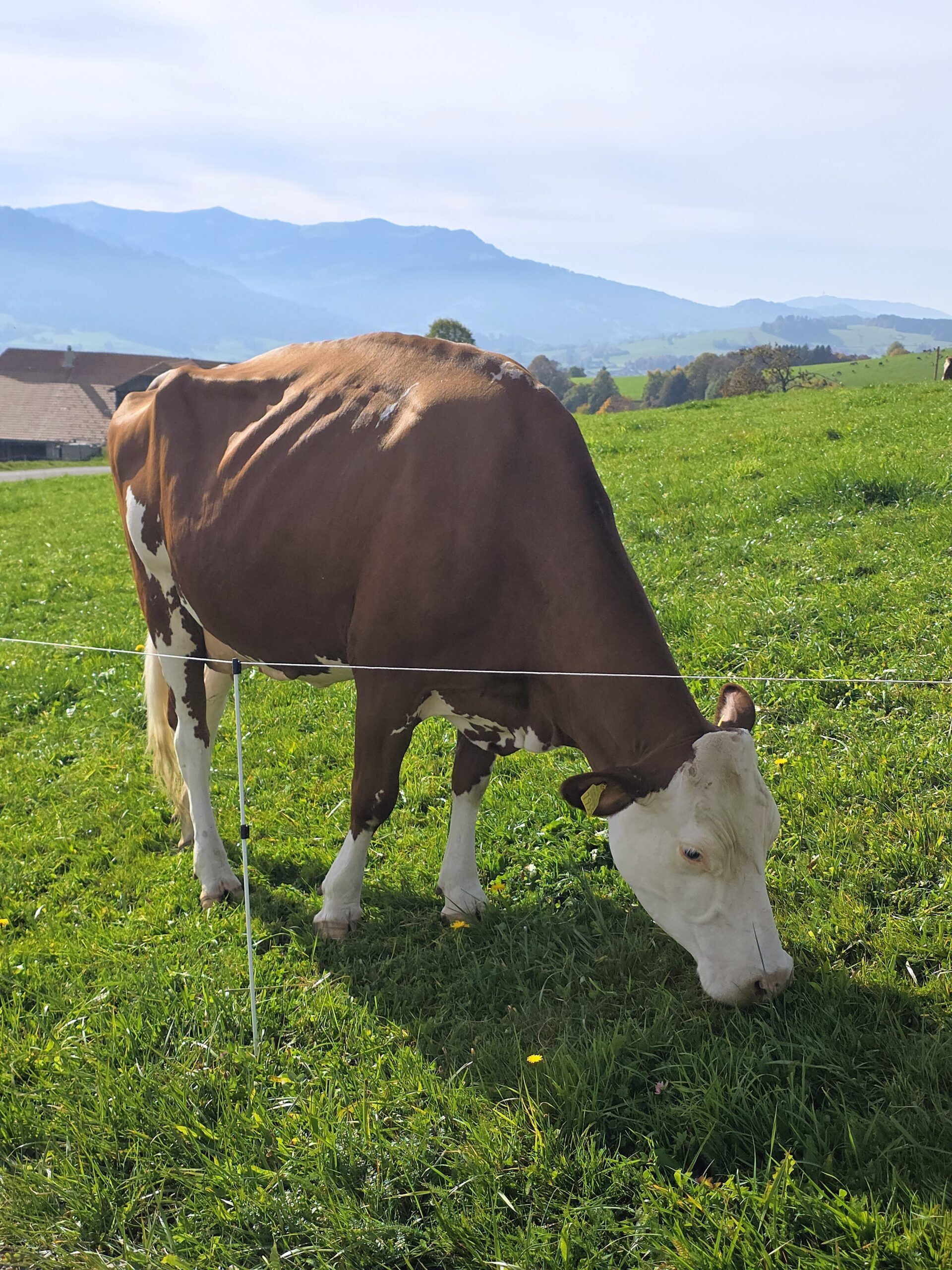
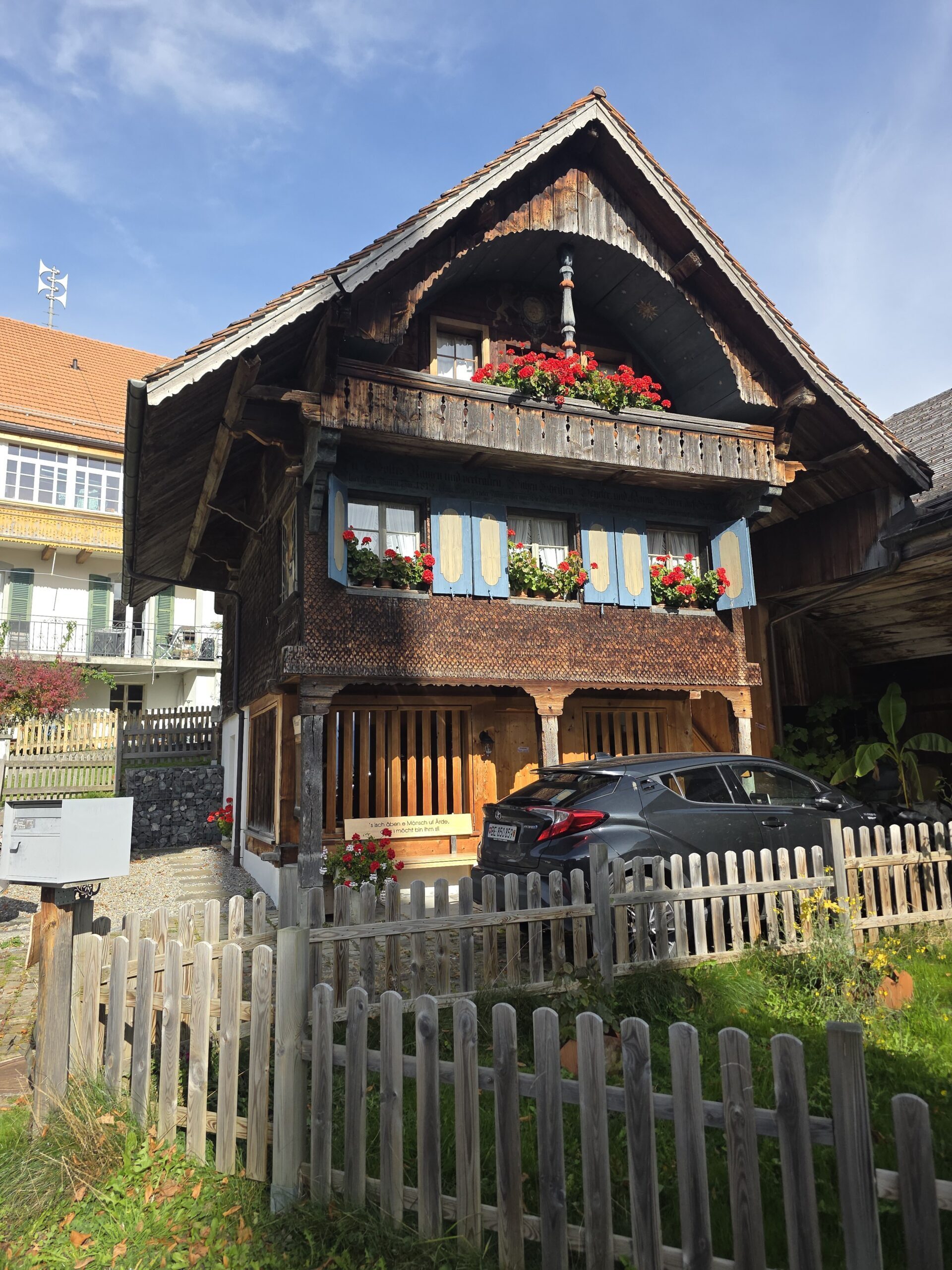
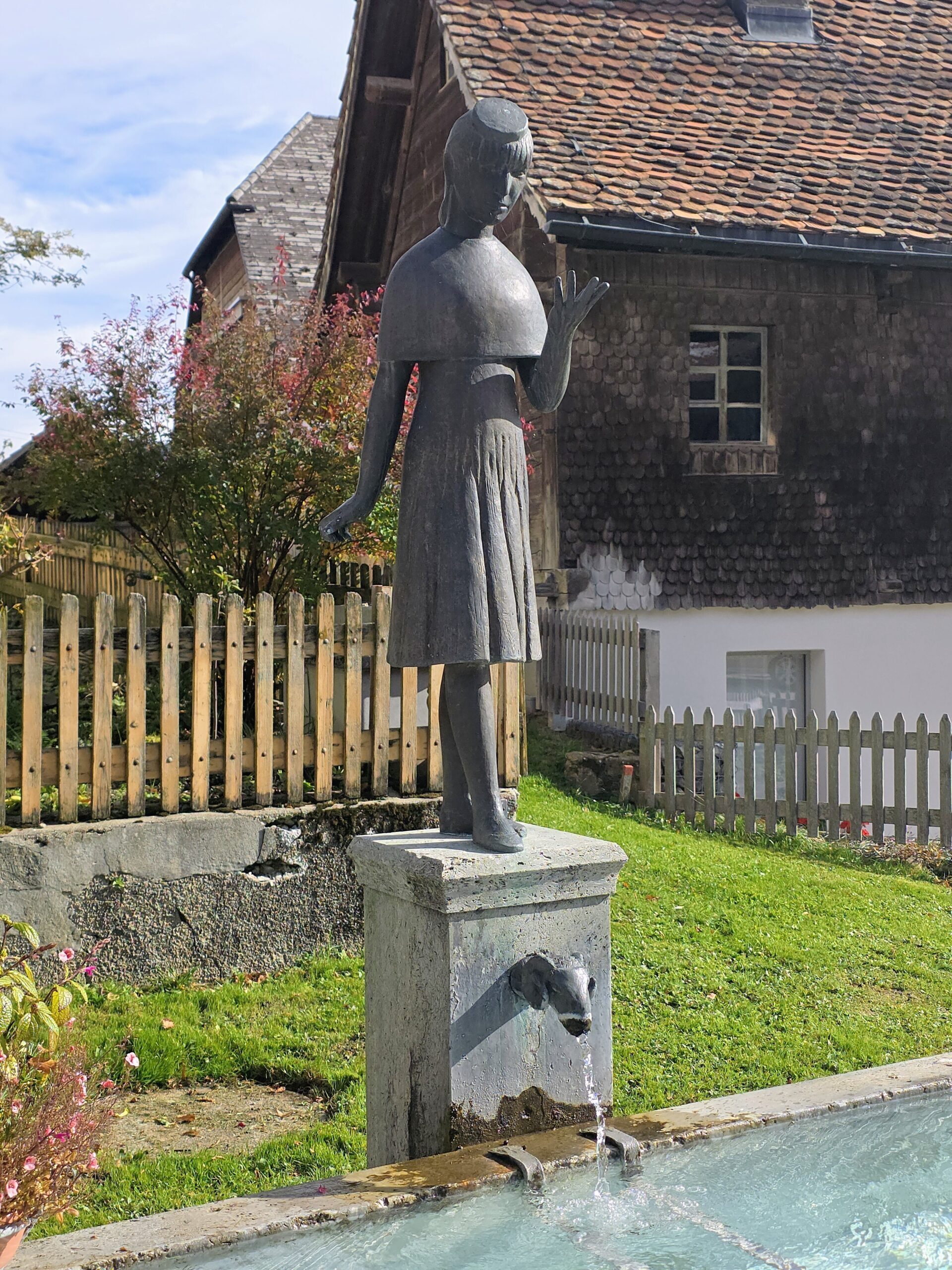
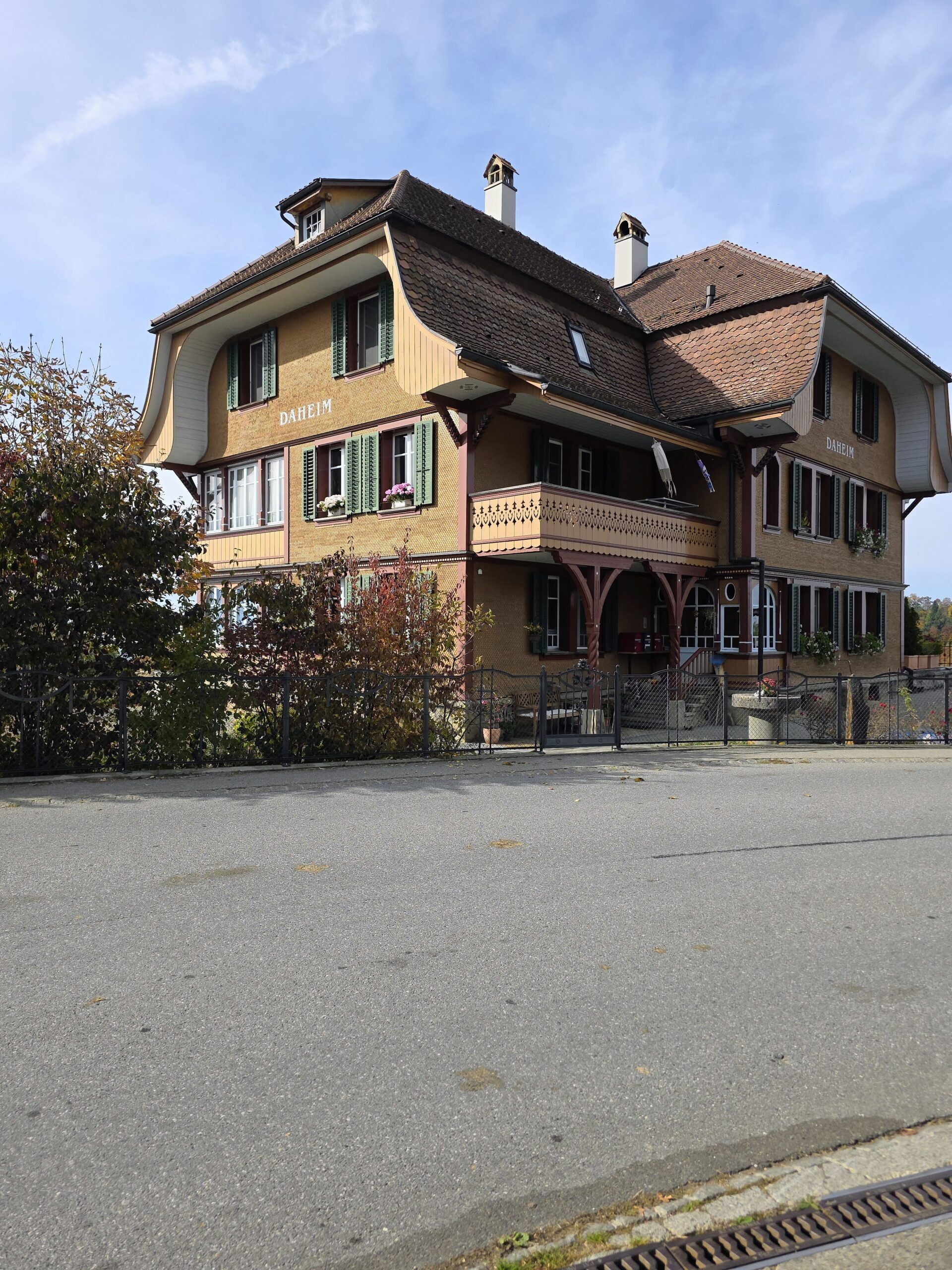
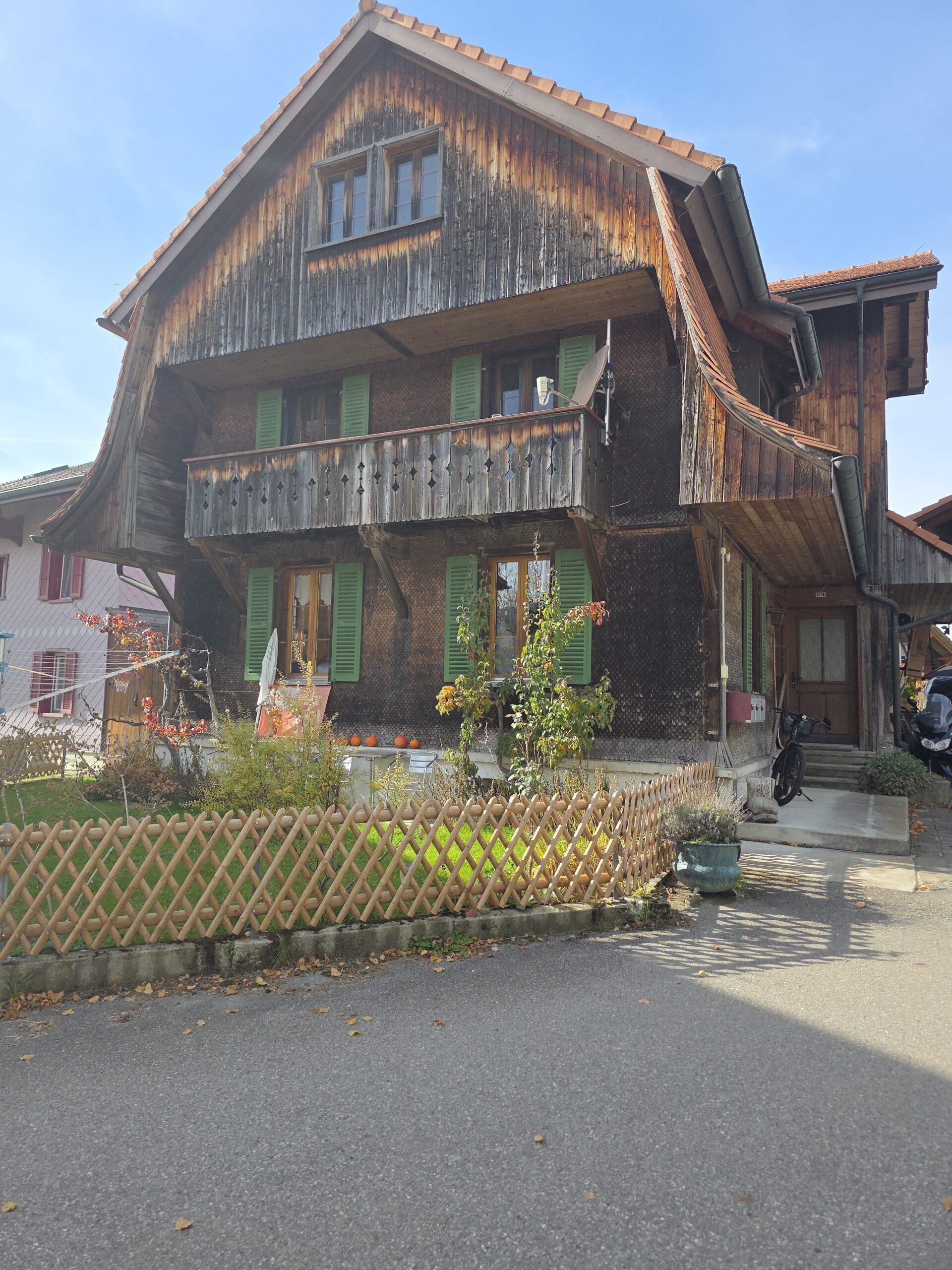
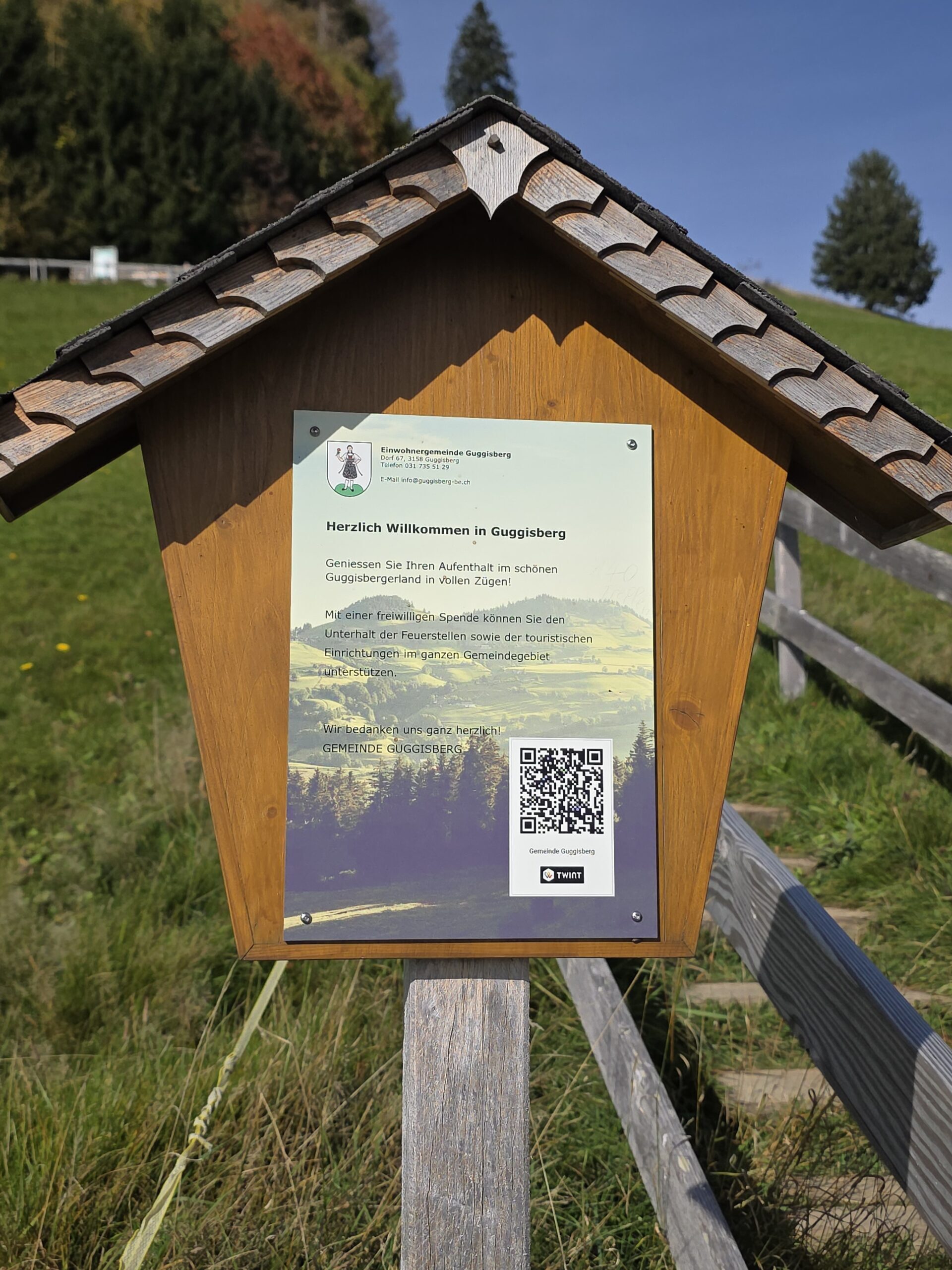
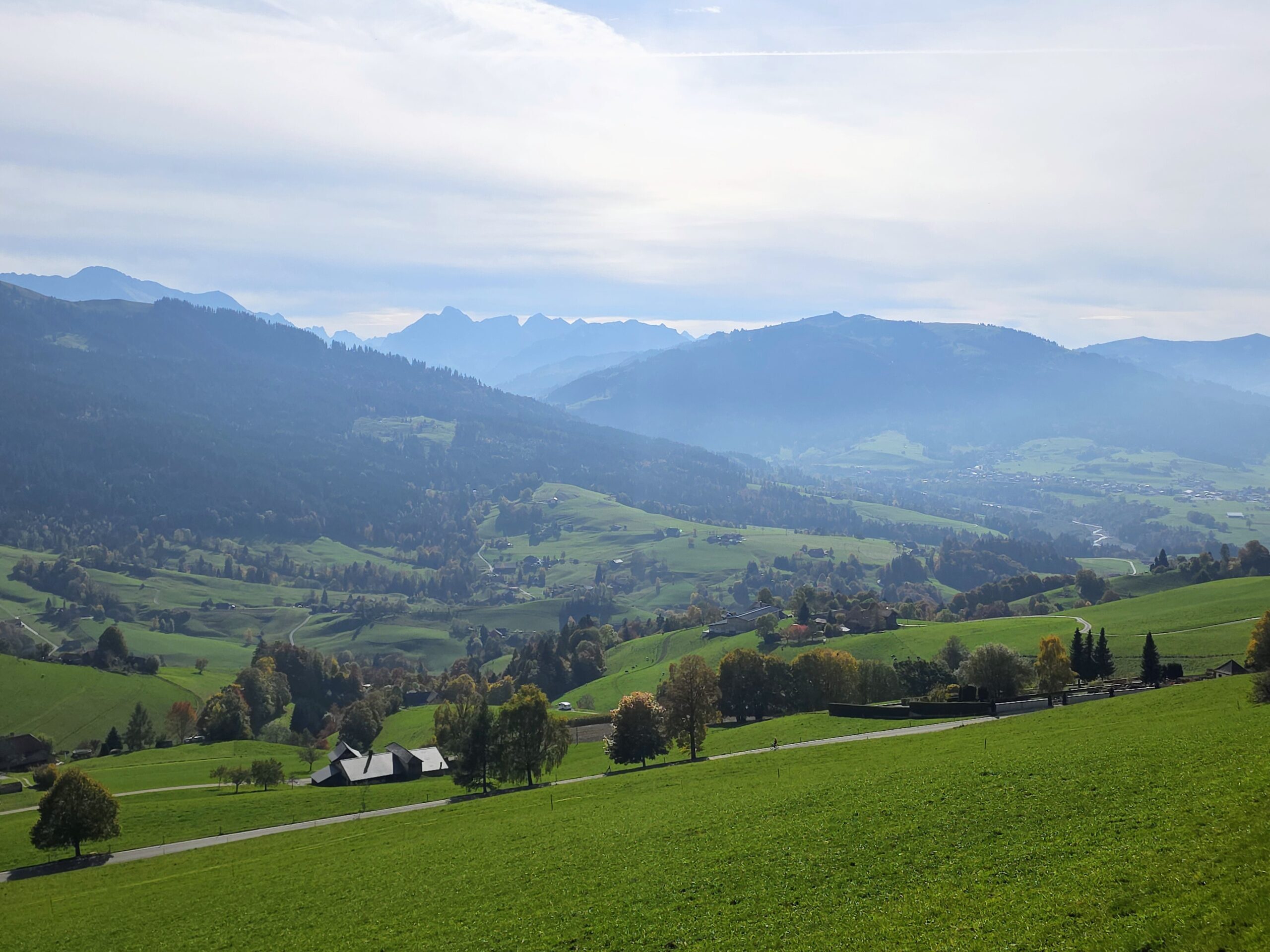
When we finally reached Guggisberg, it was everything I hoped it would be. Guggisberg is a small village nestled in the Swiss Prealps, about an hour south of Bern. It’s best known for its rolling green hills, wooden chalets, and sweeping views of the Gantrisch mountains. The town feels untouched by time. It is quiet, tidy, and surrounded by pastures where cowbells ring through the valley. We walked around for about an hour. We were delighted by the friendly locals and the stunning scenery around every corner. I wanted to visit the Vreneli Museum, but it was closed. It’s housed in an old “Stöckli” opposite the church and offers a guided dive into the legend of Vreneli and Hansjoggeli, the heroes of a local folk song. I walked over to the town’s famous church and to my surprise its spire had been restored to its original copper, shining bright instead of the weathered green patina I’d seen in photos. It appeared the magnificent clock on the bell tower was restored as well.
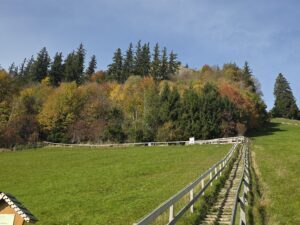
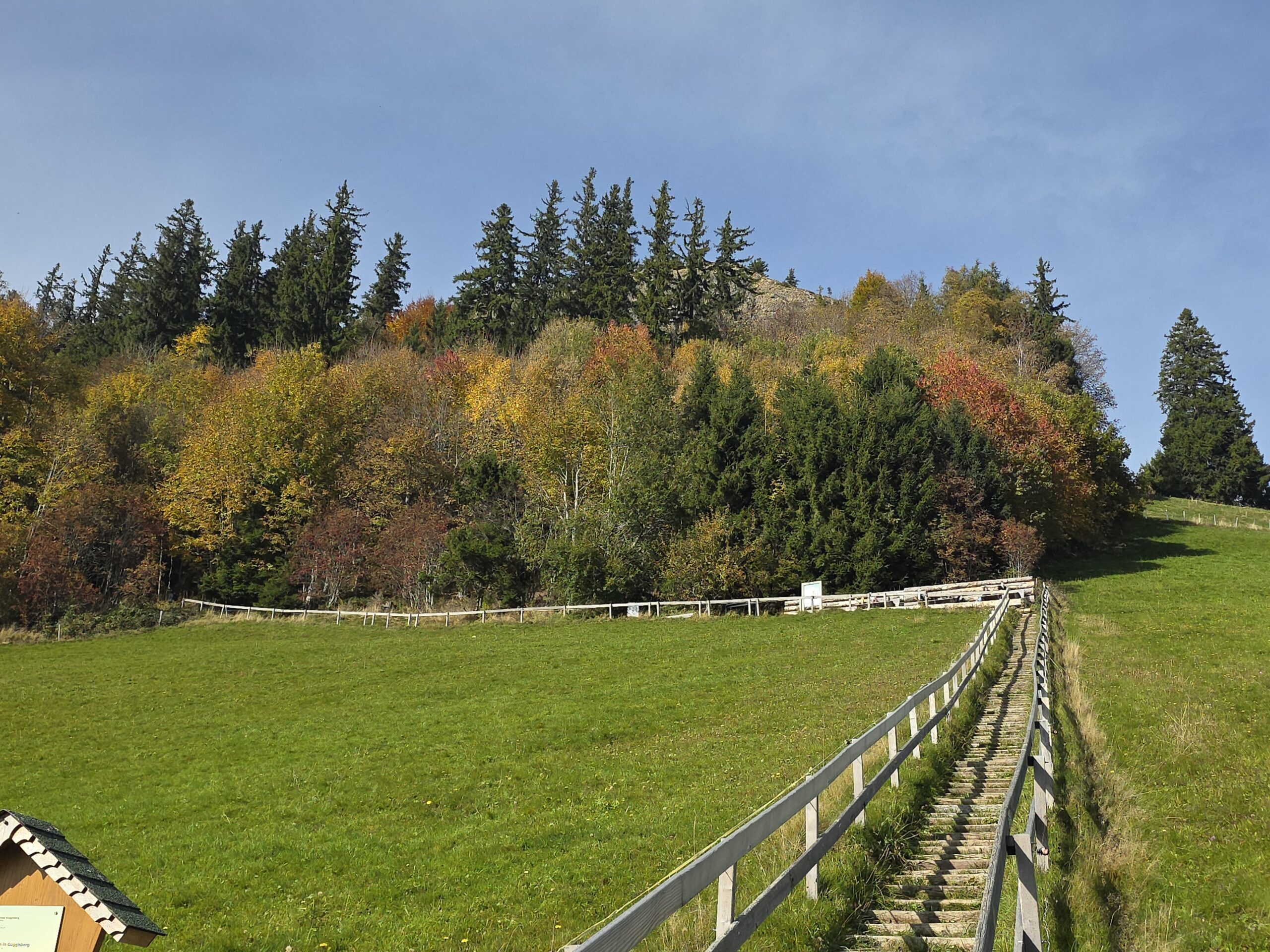
Just outside the village, the Guggershörnli rises above the valley. It is a modest peak, but one that offers panoramic views that stretch across the Prealps. From the top, you can see the patchwork of fields, forests, and villages that make this region so enchanting. I had planned to climb it, imagining the sense of connection it would bring to my ancestors’ land, but we didn’t have the time on this trip nor did I have the proper attire. Still, even seeing it from below added another layer to the experience of being back in Guggisberg. Someday, I hope to return to walk those trails and take it all in from the summit.
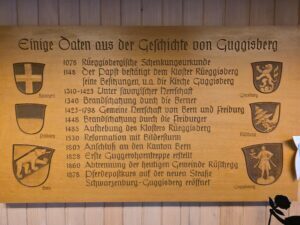
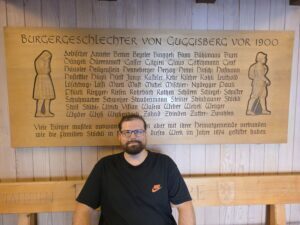
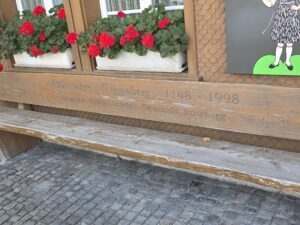
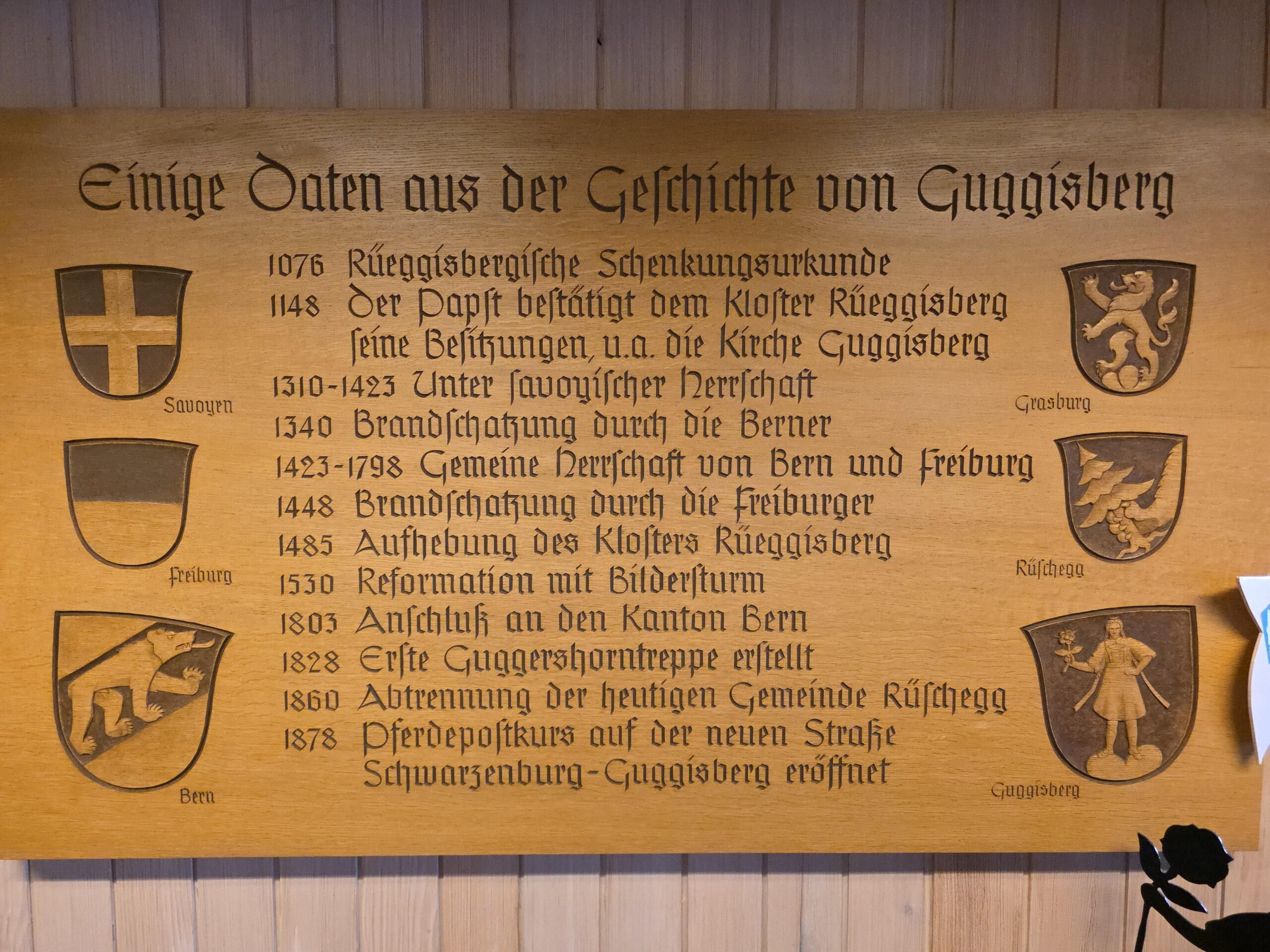
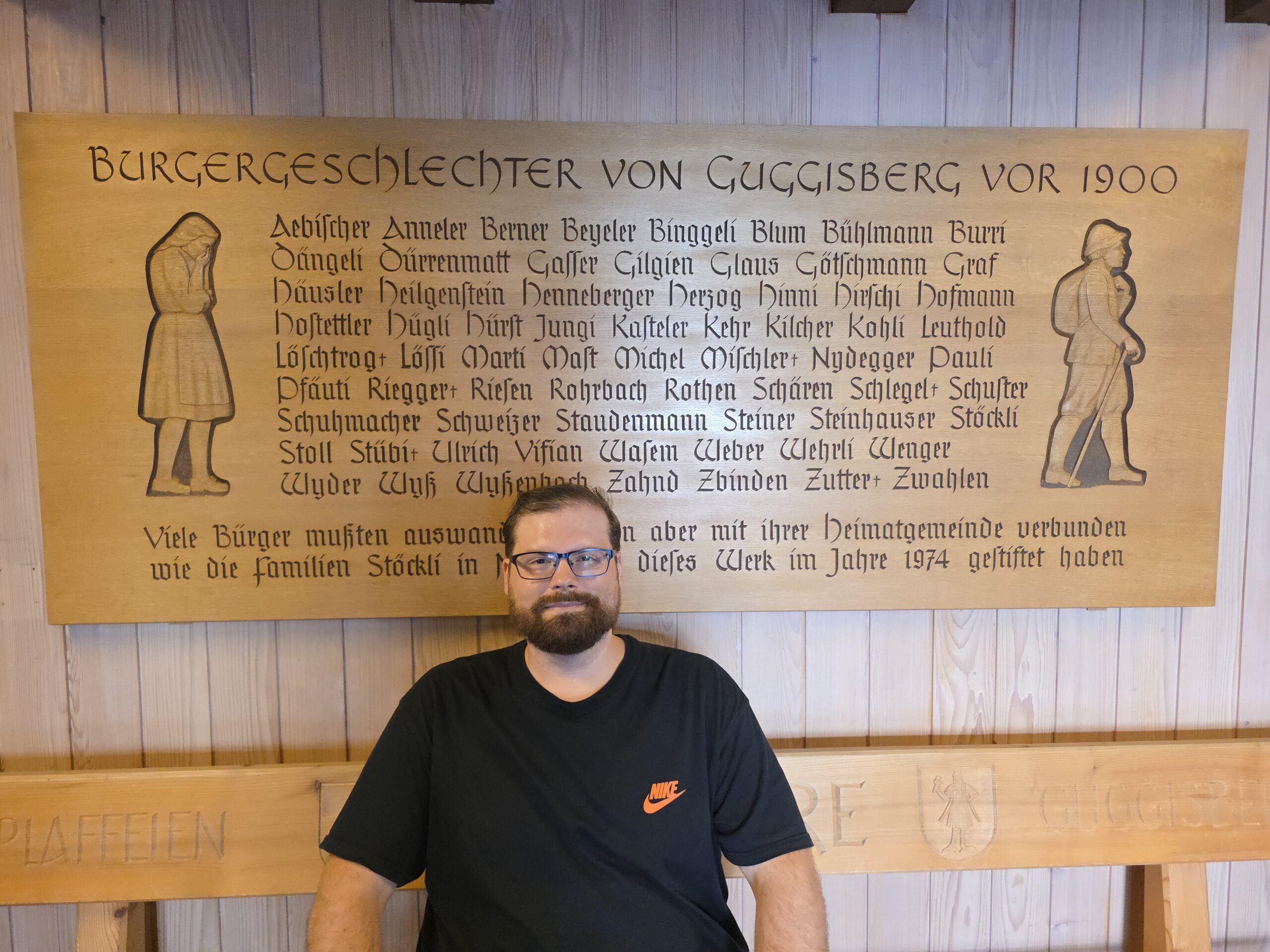
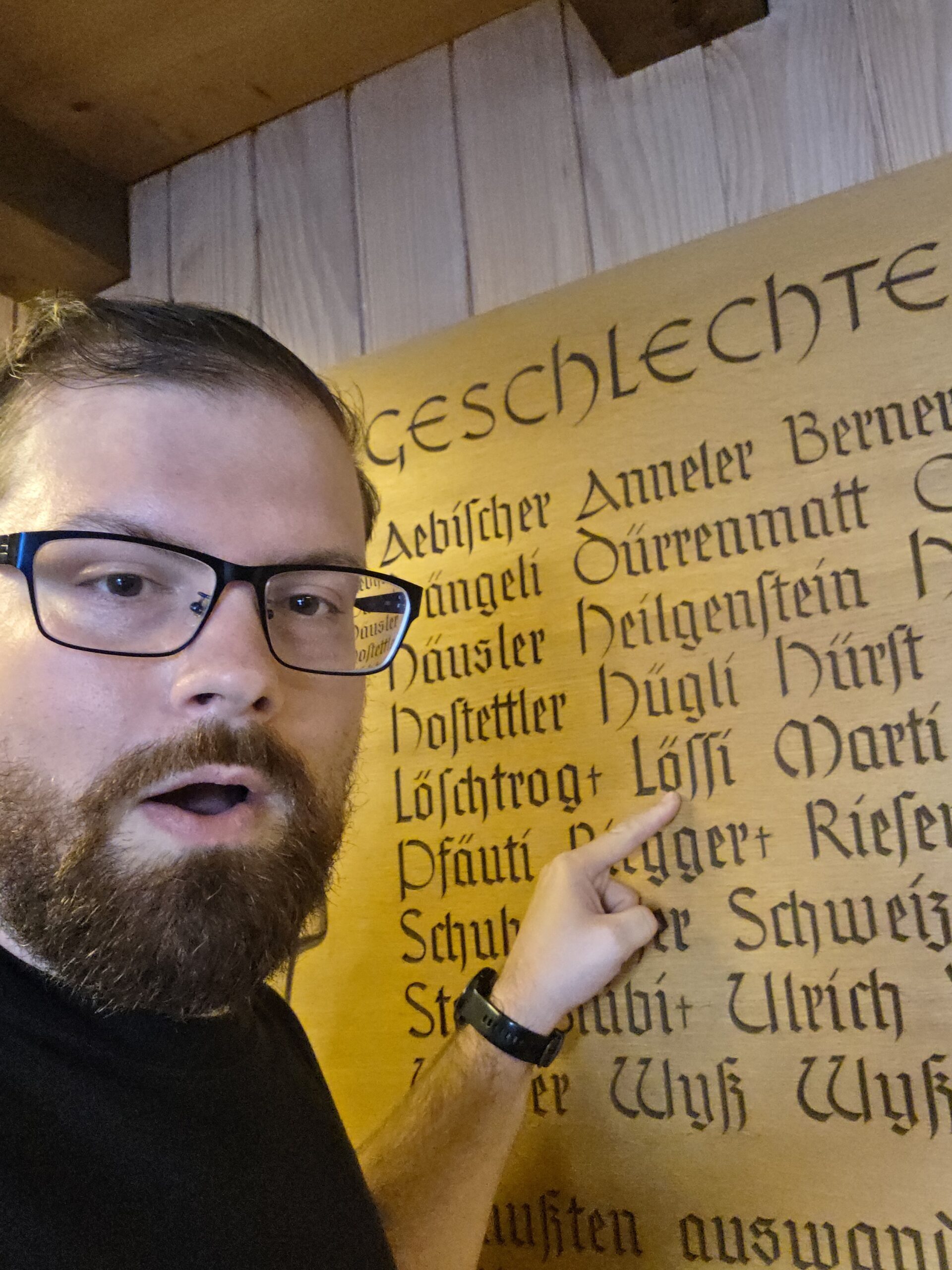
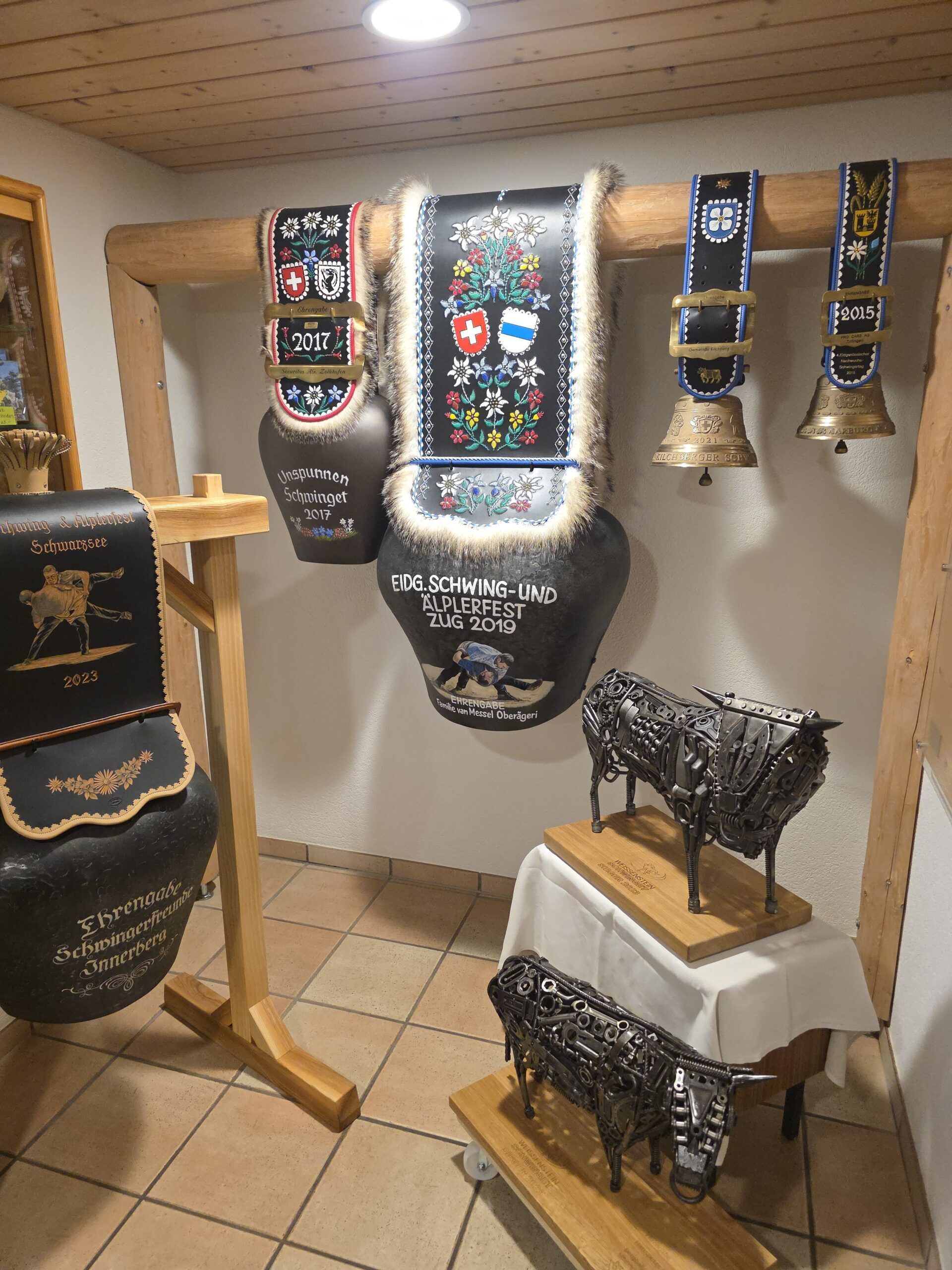
Just as we were about to leave, my boss spotted another building nearby with a sign that read Gemeindeverwaltung. It turned out to be the local government office. Inside was a display listing important moments in the town’s history. Then I saw a plaque titled “Bürgergeschlechter von Guggisberg vor 1900” — a register of family names before 1900.
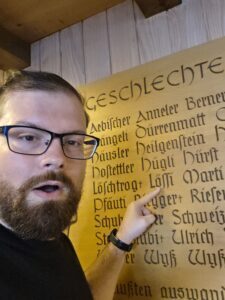
And there it was. My last name. Written in its original Swiss form. I felt a rush of happiness, fully overcome with joy. I’m home.
I finally had tangible proof beyond the old records and DNA results that my family was truly from here. I am walking the same streets as my ancestors did. On the plaque, I noticed many other Swiss surnames, many of which I have seen in marriage records during my research. The plaque also mentioned how many families were forced to emigrate during the 1800s.
Life in Switzerland during the mid-1800s was far from the postcard version we see today. The country was struggling through widespread poverty and famine, especially in rural mountain regions like Guggisberg. Harsh winters, crop failures, limited farmland, and growing inequality made it nearly impossible for many families to survive. Industrialization was just beginning in the cities, but opportunities were scarce in the countryside. Farmers often had no other choice but to sell their alpine pasture rights to outsiders. By 1850, Guggisberg was the poorest municipality in the canton of Bern. In 1860, the only solution was to divide it into the two municipalities of Guggisberg and Rüschegg. Between 1850 and 1880, tens of thousands of Swiss citizens left their villages in search of a better life with many heading for the United States. My great-great-great-grandfather was one of them, leaving Guggisberg in 1852, likely driven by the same desperation and hope that sent so many others across the Atlantic. He settled in Lackawanna County in Pennsylvania.
While reading my name in that tiny village, I realized I was the first person in my direct lineage to step foot back here in over 170 years. I felt like I had closed a circle. I owed it to myself, and to the sacrifices they made, to return home.
Sometimes I joke that if my ancestors had stayed and weathered the tough times in Switzerland, I might’ve grown up as a Swiss investment banker with a top-spec BMC bike, a couple of Rolexes, and an M5 in the driveway. Maybe that’s true. Or, maybe I’m exactly where I’m supposed to be.
Tschüss.