
800 Meters North
Not every part of a work trip feels like work. This one took us to the DMZ, to a hillside with a history I wasn’t expecting, and eventually to a barbeque in the mountains.
March 27, 2026
🇰🇷: Korean Demilitarized Zone in Yeoncheon
This is an enhanced excerpt from a post that covers the entire trip to Seoul.
The morning started with work. My first visit to our Seoul office, two meetings on the calendar, one of them mine to lead. On the way, I squeezed in a quick walk through Bukchon Hanok Village. By the afternoon, we were heading north.
I should say something before I describe what we saw, because it gives context for why this day carried more weight than a typical tourist stop.
I am genuinely fascinated by North Korea. Not from a dark tourism point of view. I’ve watched the documentaries, read the books, and followed the defector accounts. I don’t treat the North as a punchline, a villain, or an abstraction. I try to understand it honestly, because the people living inside it deserve at least that much from the outside world.
The framework that governs North Korean society is Juche, a state philosophy built on radical self-reliance, the idea that a nation and its people must depend on no one but themselves. It sounds almost principled when read in isolation. Dare I say its even sounds admirable. But Juche hardened into something catastrophic after the collapse of the USSR, when foreign support propping up Pyongyang evaporated almost overnight. Rather than open the country, the regime turned inward even further. Isolation became doctrine. Suffering became proof of resolve. The famine, the gulags, the generational poverty, the prison camps holding tens of thousands at any given time. All of it is indefensible. A ruling class that chose isolation over feeding its own people, and called their suffering proof of national strength. There’s no neutral framing for that. It’s a catastrophic failure of leadership inflicted on a populace who had no say in any of it. Understanding how it developed doesn’t excuse it. But understanding it matters if you want to be honest about the situation.
Here’s where it gets complicated, and I think it’s worth saying plainly: the authoritarian leadership is not the people. The 26 million people living in North Korea didn’t choose this. They were born into it. They have dreams, families, inside jokes, favorite foods, things that make them laugh. They are not a monolith of state propaganda any more than any other population is. They are people, doing their best inside a system designed to give them no other options.
The framing of one Korea as purely evil and the other as purely good is clean and comfortable, but it flattens the actual human story. That’s not a defense of the regime — it’s the opposite. The regime is the problem, not the people. Conflating the two is exactly what authoritarian governments want. It makes the suffering population invisible.
However, the full picture is more complicated than most people realize. Anyone who has done even a modicum of research on the North knows all about Kim Il-sung and the iron grip his family has held over its people. What fewer people know is that South Korea spent roughly its first four decades cycling through authoritarian rule of its own. Syngman Rhee governed until rigged elections triggered mass protests and forced him out in 1960. Park Chung-hee took power in a military coup the following year and ruled until his assassination in 1979. Then Chun Doo-hwan seized power through yet another coup and oversaw the Gwangju Uprising of 1980, where hundreds of pro-democracy civilians were killed by their own government. The economic miracle the South is rightfully proud of was built on the backs of a workforce that had very little say in the matter.
To be fair, the South isn’t without modern struggles too. The pressure to succeed is relentless and pervasive, woven deeply into societal norms. And, it starts young. Kids are crushed under academic stress before they hit their teens. Adults are too burnt out and too broke to date and the country is paying for it with one of the world’s lowest birth rates. South Korea logs more working hours per year than almost any other developed nation, and the weight of that shows up in staggering statistics. It has the highest suicide rate of all OECD nations. Unfortunately, suicide is now the leading cause of death for South Koreans under 50. And in late 2024, its own president declared martial law, was impeached, and is now serving a life sentence. It’s a jarring reminder that democracy, even in a strong country, is never something that just simply exists. It’s something you must choose and fight for.
The difference is that South Korea course-corrected. It built institutions, held people accountable, and kept pushing toward building a stronger and better country. North Korea never did that, and its people are still paying for that every single day. That gap, between a country that chose to change and one that refused to, is really what you’re seeing when you stand at the border.
What I actually believe is that the Korean people, both North and South, are the inheritors of a catastrophe neither of them chose. A peninsula brutally colonized and occupied by Japan, then divided by foreign powers at the end of a war they were barely a part of, and split permanently by a conflict driven largely by the ambitions of outside nations. The Koreans themselves were almost secondary to their own fate. The people on both sides of that line came from the same place. Many still have family on the other side. That’s not a metaphor. That’s a fact disappearing in real time as the generation old enough to remember grows smaller every year.
Standing at the DMZ, I wasn’t looking at a political abstraction. I was looking at the other half of a country that never got to decide who they wanted to be.
That perspective was already in my head when we pulled up to Typhoon Observatory. But seeing it with my own eyes made it feel different.
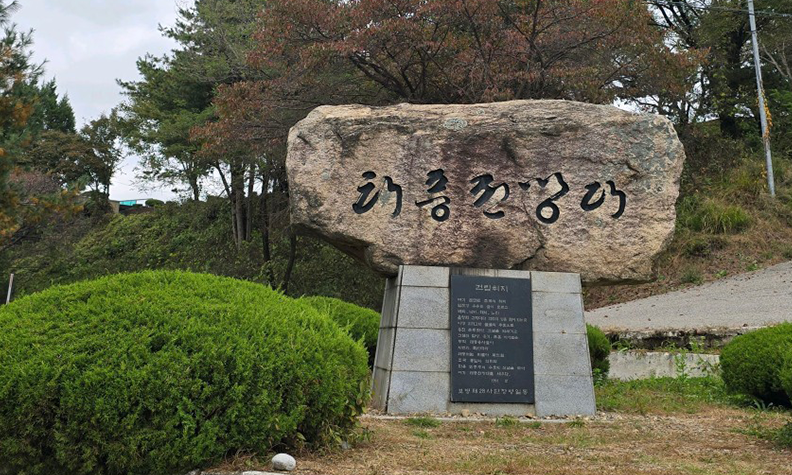
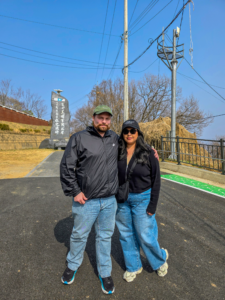
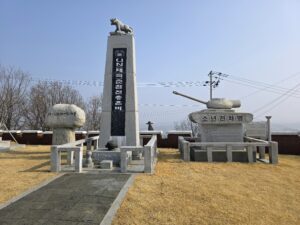
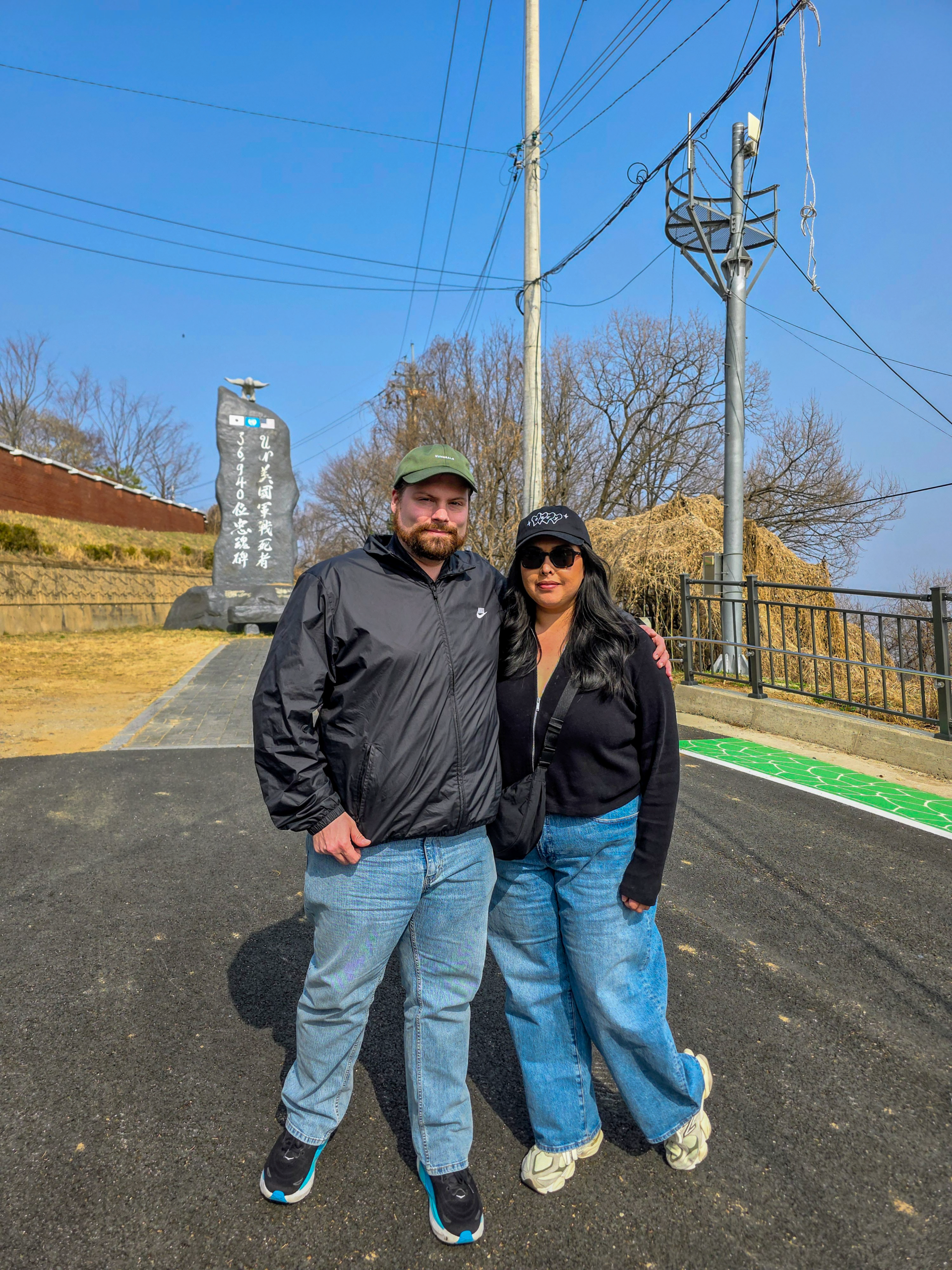
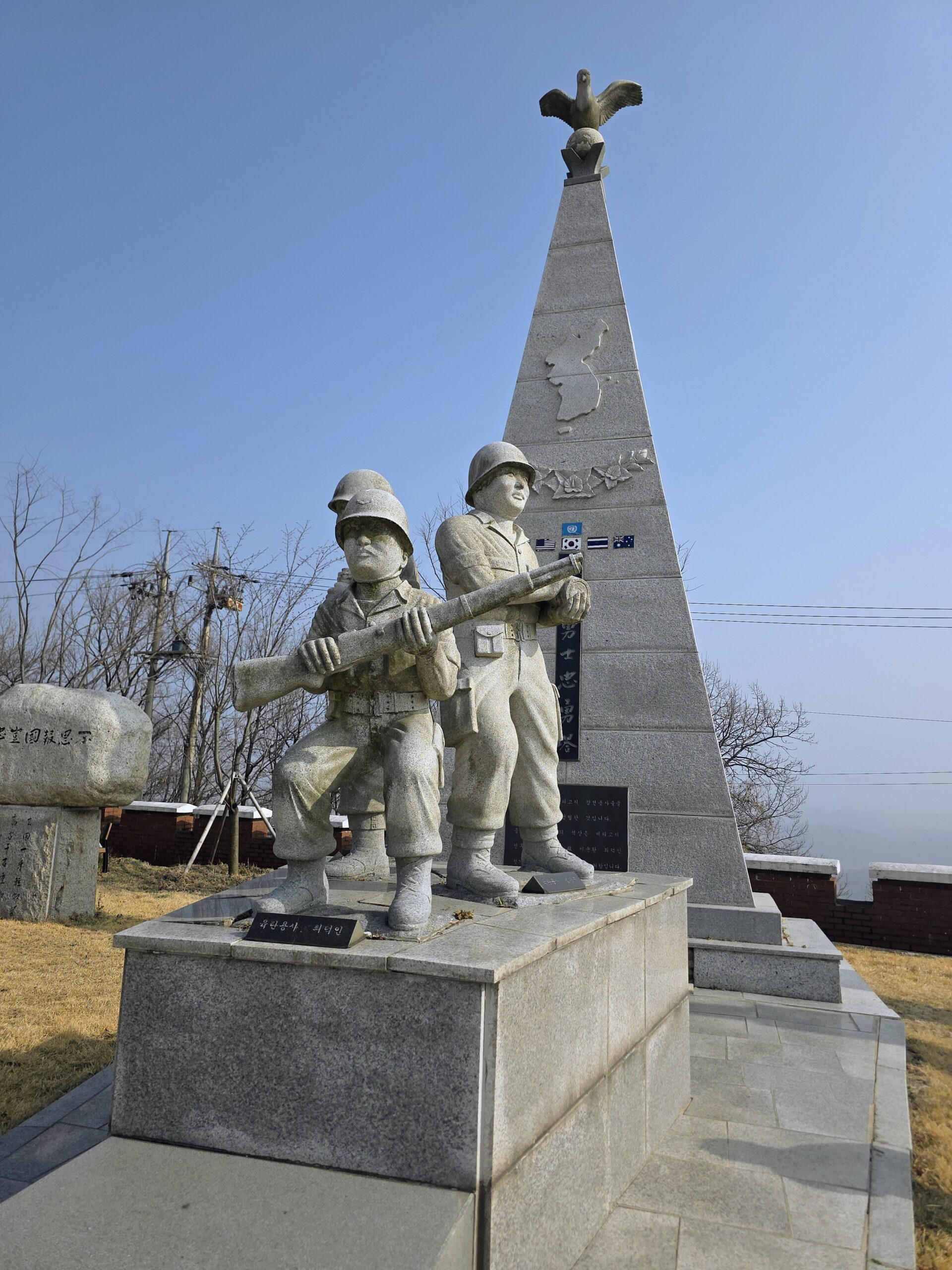
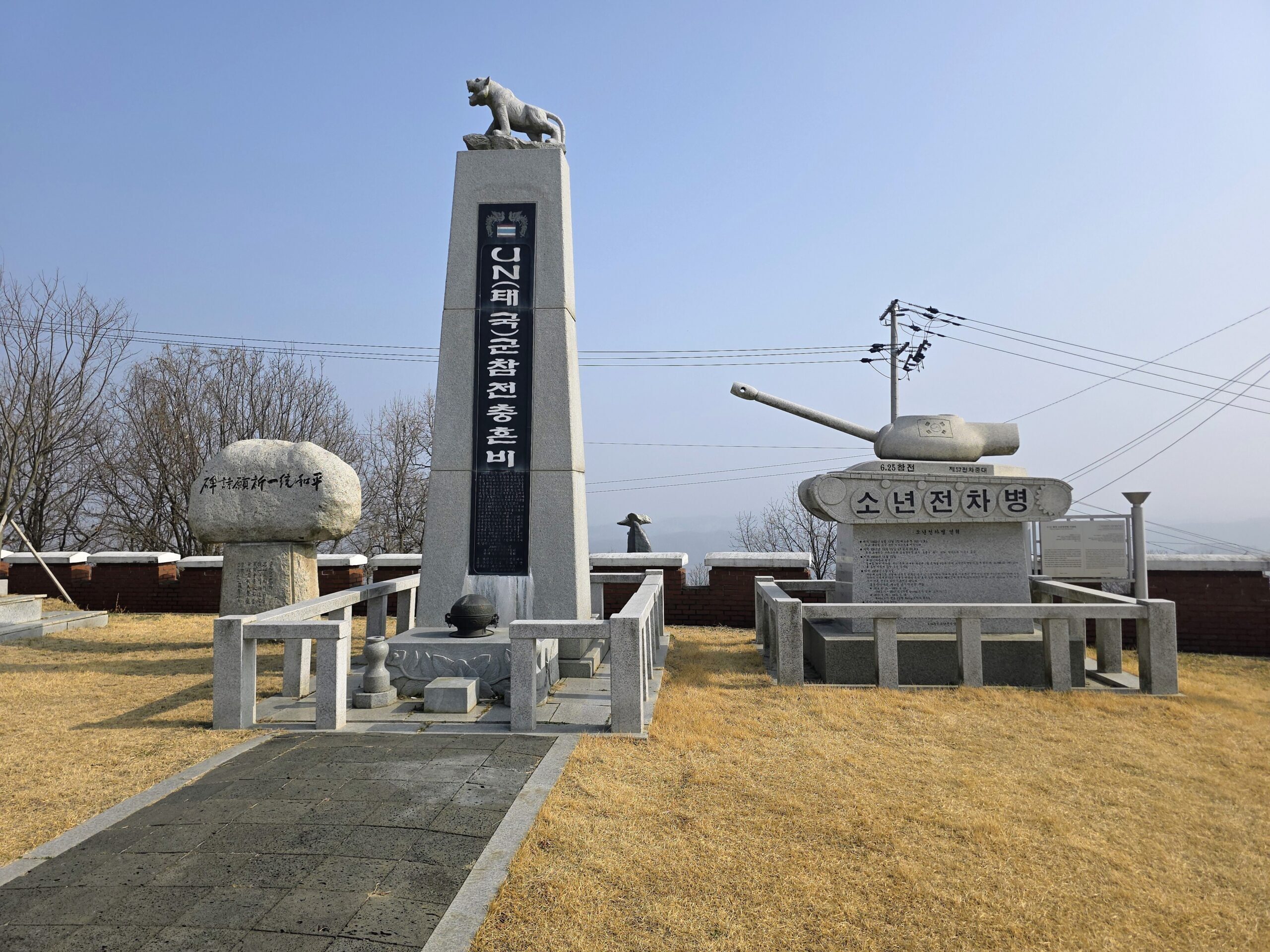
The Typhoon Observatory is one of the closest publicly accessible viewpoints to North Korea, just 65 kilometers from Seoul and 140 kilometers from Pyongyang. Most tourists visit the more well-known observation points. This one was different. Built in 1991 by the South Korean army on Suribong, the highest peak in the area, it sits only 800 meters from the Military Demarcation Line, with a North Korean checkpoint roughly 1.6 kilometers in the distance. After North Korea began installing barbed wire near the ceasefire line in 1968, South Korea followed suit along this stretch a decade later. That unbroken view of marshland, farms, and mountains stretching into the “Hermit Kingdom” is exactly what makes it so striking.
Looking out, the Imjin River cuts through the DMZ below, and beyond it, North Korea’s Ojang Farm stretches across the landscape. North Korean farmers hold working rights to that land, and in the spring you can spot them in the fields with the naked eye.
Photos facing north were forbidden, and I wasn’t about to pull out my phone and embarrass my colleagues at an active military installation. So I quietly listened and observed.
At one point the guide, speaking entirely in Korean, paused and singled me out as the only Western visitor in the group. He asked me to pronounce a word that sounded something like noreum, using the Korean ㄹ sound, which sits somewhere between an r, l, and d, and is notoriously difficult for English speakers.
He didn’t know that I had an ace up my sleeve. I’ve studied Japanese for years, and the Japanese “r” — as in らりるれろ — makes nearly the same sound. I said the word correctly. My colleagues let out giggles and gasps of surprise as our guide’s plan was foiled.
His point was that American troops stationed here during the Korean War struggled with this exact word, which is why the hill visible outside, called 놀음고지 (Noreum-goji), eventually became known simply as “Nori” on American maps.
But the hill itself carries a brutal history.
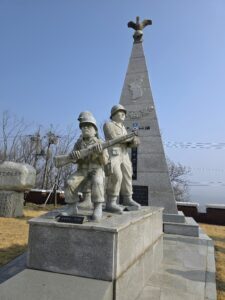
The Battle of the Noris in December 1952 was fought on two adjacent ridges named Big Nori and Little Nori. Over just four days on ground barely larger than a few football fields, UN artillery fired over 120,000 rounds. Mortars added another 31,000, and tanks fired thousands more. The bombardment was so intense that the hilltop was physically lowered by several meters. The soil that eroded down the slope gradually filled what had once been a watering hole for cattle, eventually forming the small half-moon shaped pond that sits calmly at the base of the hill today. Looking over what now appears to be a quiet hillside, it was hard to imagine the violence that literally reshaped the land itself. Most Americans know the Korean War happened. Not much beyond that. I didn’t either, honestly, until I was standing on it.
That evening the team drove north to a campsite near Pocheon-si. On the ride there, I asked questions about reunification and how South Koreans view the people of the North. I learned that a 2005 South Korean government survey found that roughly 720,000 people in South Korea reported having family in North Korea. The population of officially registered separated family members, however, is much smaller and has been declining rapidly as the surviving generation ages. As of the end of 2025, 101,148 of the 134,516 registered separated family members had died, leaving just 34,368 survivors. It’s a difficult fact to absorb. A family connection severed by circumstance, with time running out before it could ever be restored.
I also learned something that I’ll keep between the people in that car, but deeply moved me. For some South Koreans, the division isn’t just history. It’s still personal, still active, and still costly, playing out in quiet acts of generosity that happen entirely out of public view, at great effort, with no recognition. I thought about the warmth I had been shown throughout this trip, the way my colleagues had gone out of their way to include me, take care of me, make sure I felt welcomed. I couldn’t help but wonder if some of that same impulse was at work.
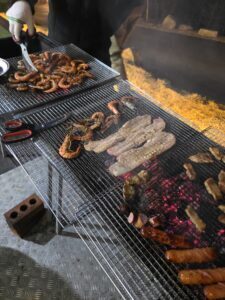
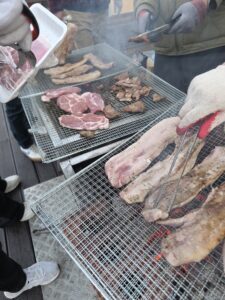
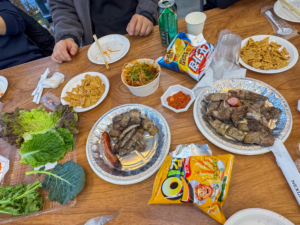
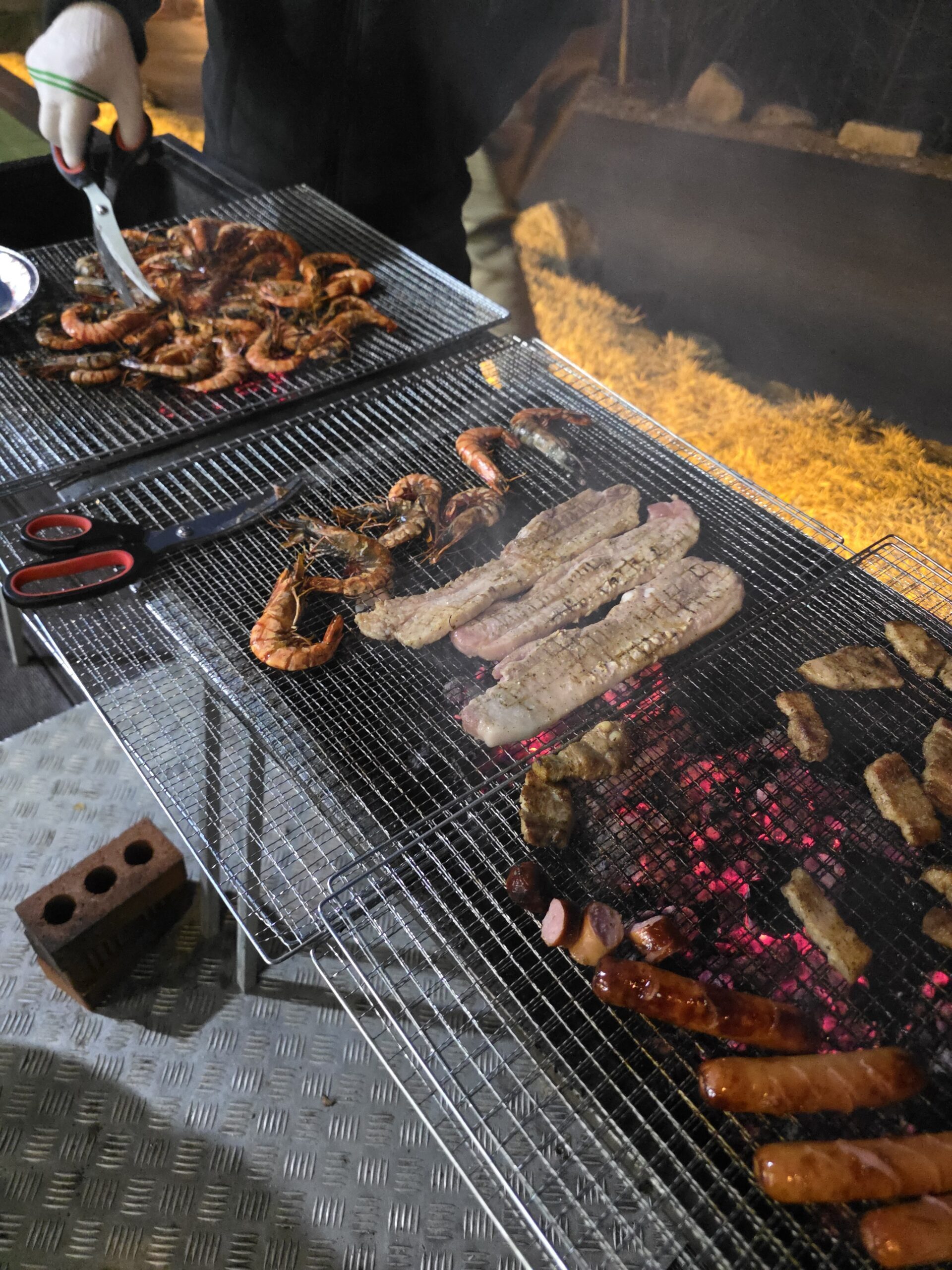
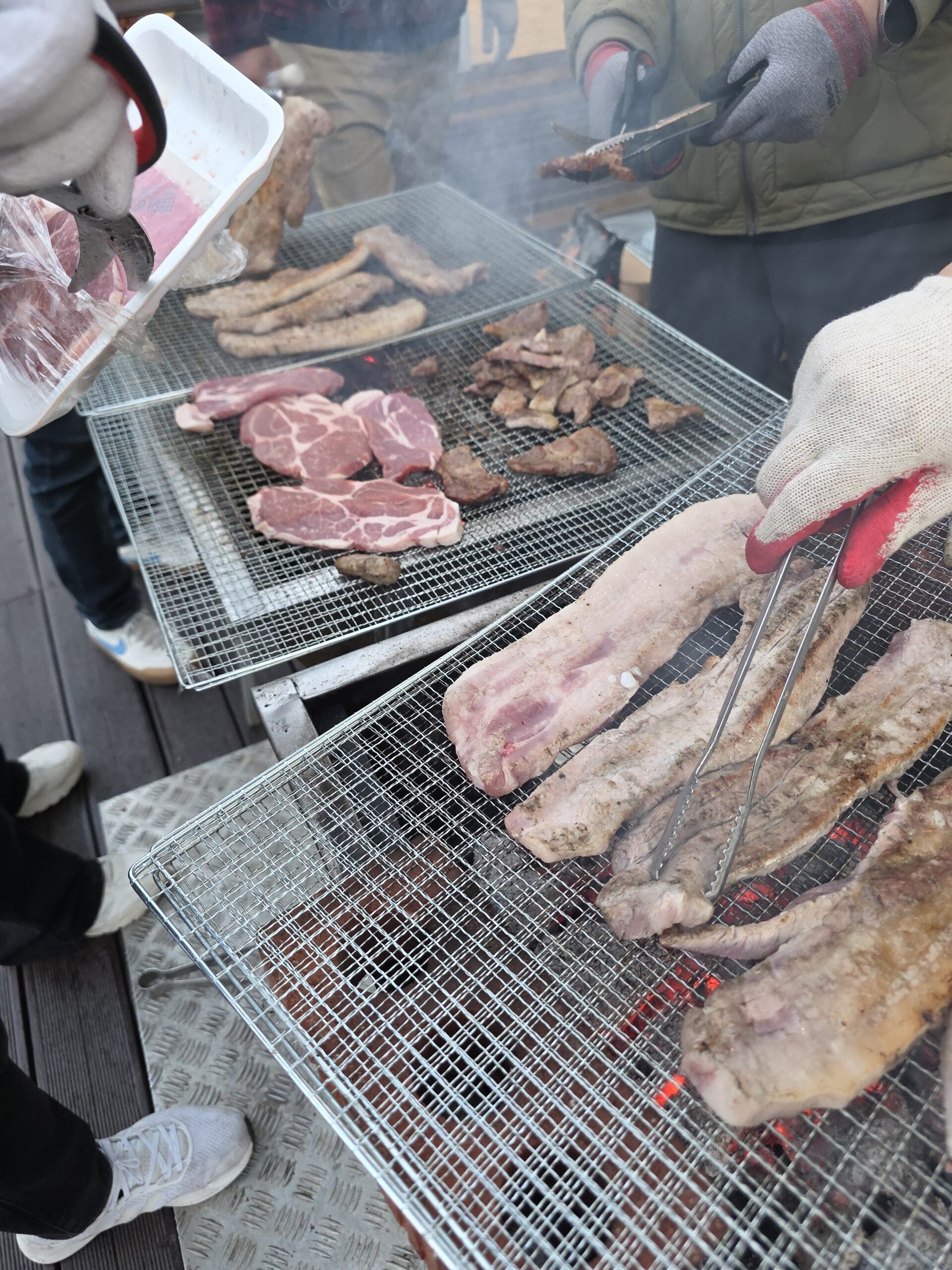
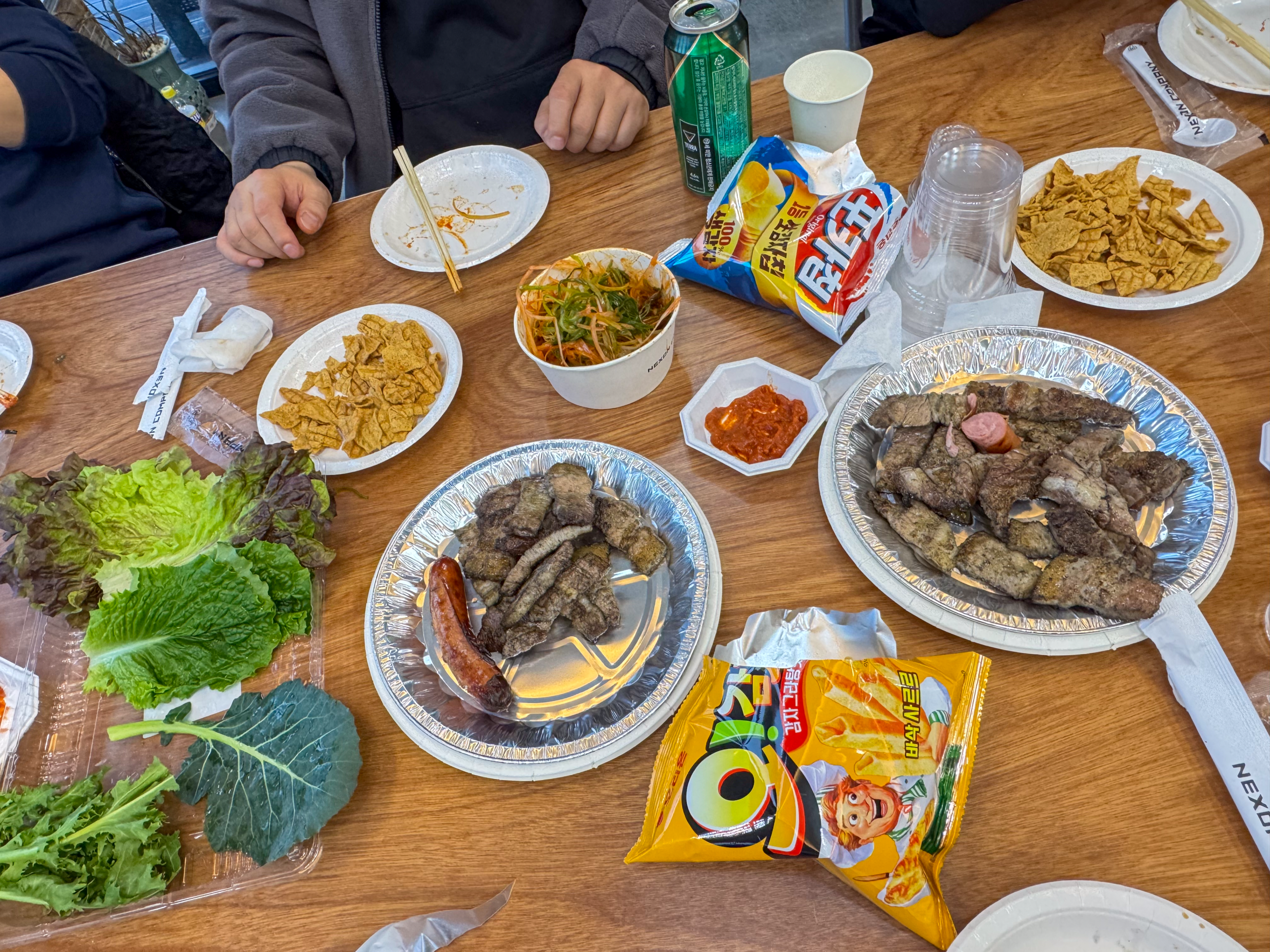
When we arrived at the campsite, it was clear this was no ordinary camp. Modern facilities, lakeside and mountain views, a full karaoke setup — glamping, if you will. Someone fired up a charcoal grill and what followed was hours of kalbi, pork belly, seafood, and snacks, smoke drifting through the mountain air. It was truly a night I will not forget. You know, since I wrote it down here.
I’ve stood in many places that carried history before. Ancient temples, battlefields, memorials. Most of them feel like the past, distant and preserved, safely behind glass in a museum. The DMZ is anything but. It feels like something unresolved. A wound that never fully closed. I left with more questions than answers. I think this is the only honest response when you visit a place like this. What I know for certain is that the Korean people, all of them, deserve better than the hand history dealt them. And somewhere, 800 meters north of where I stood, I hope they know that too.
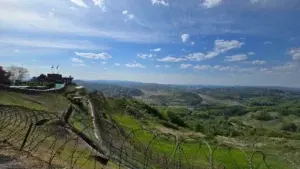
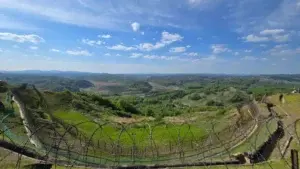
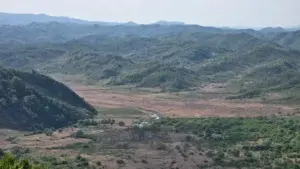
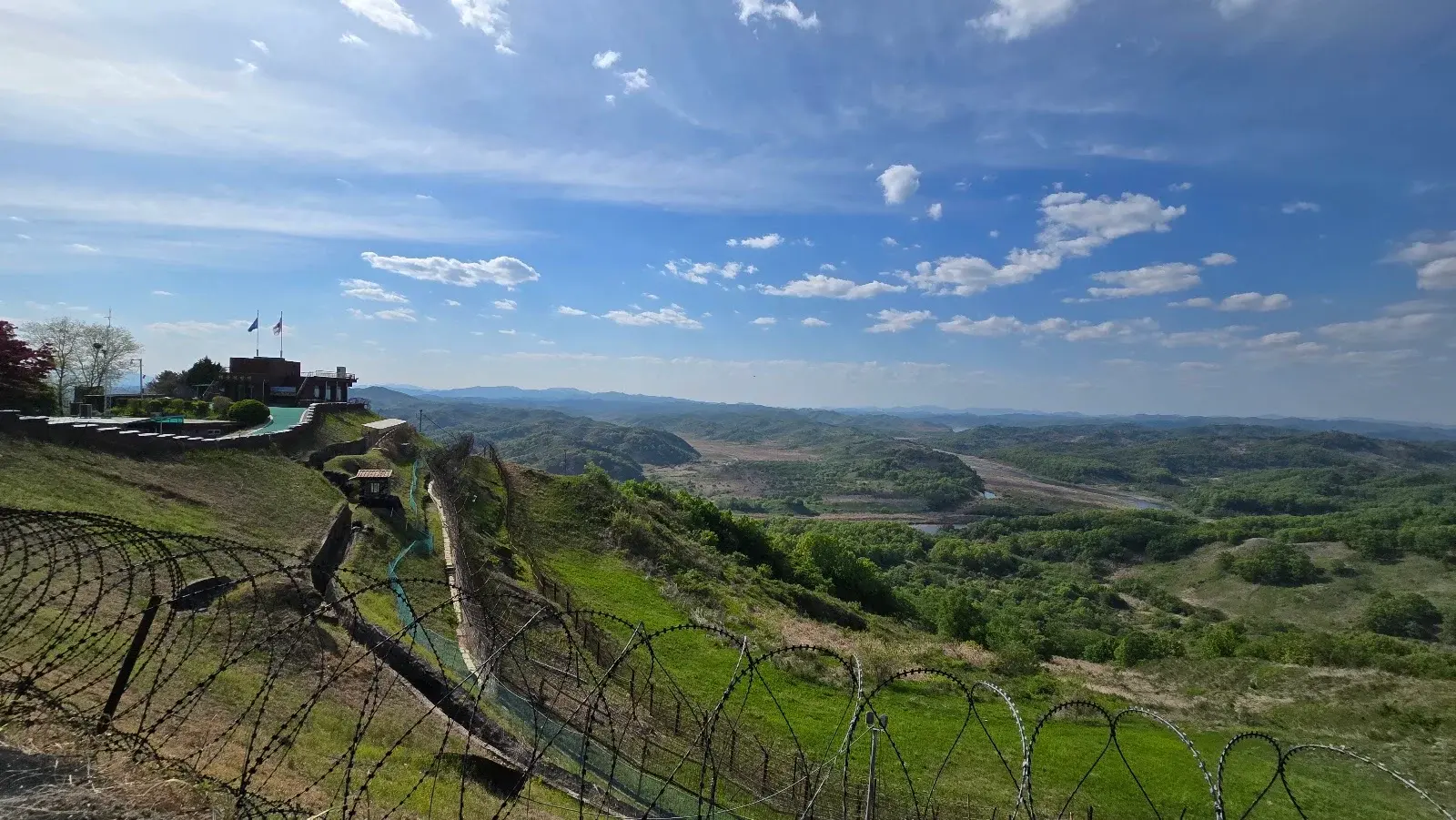
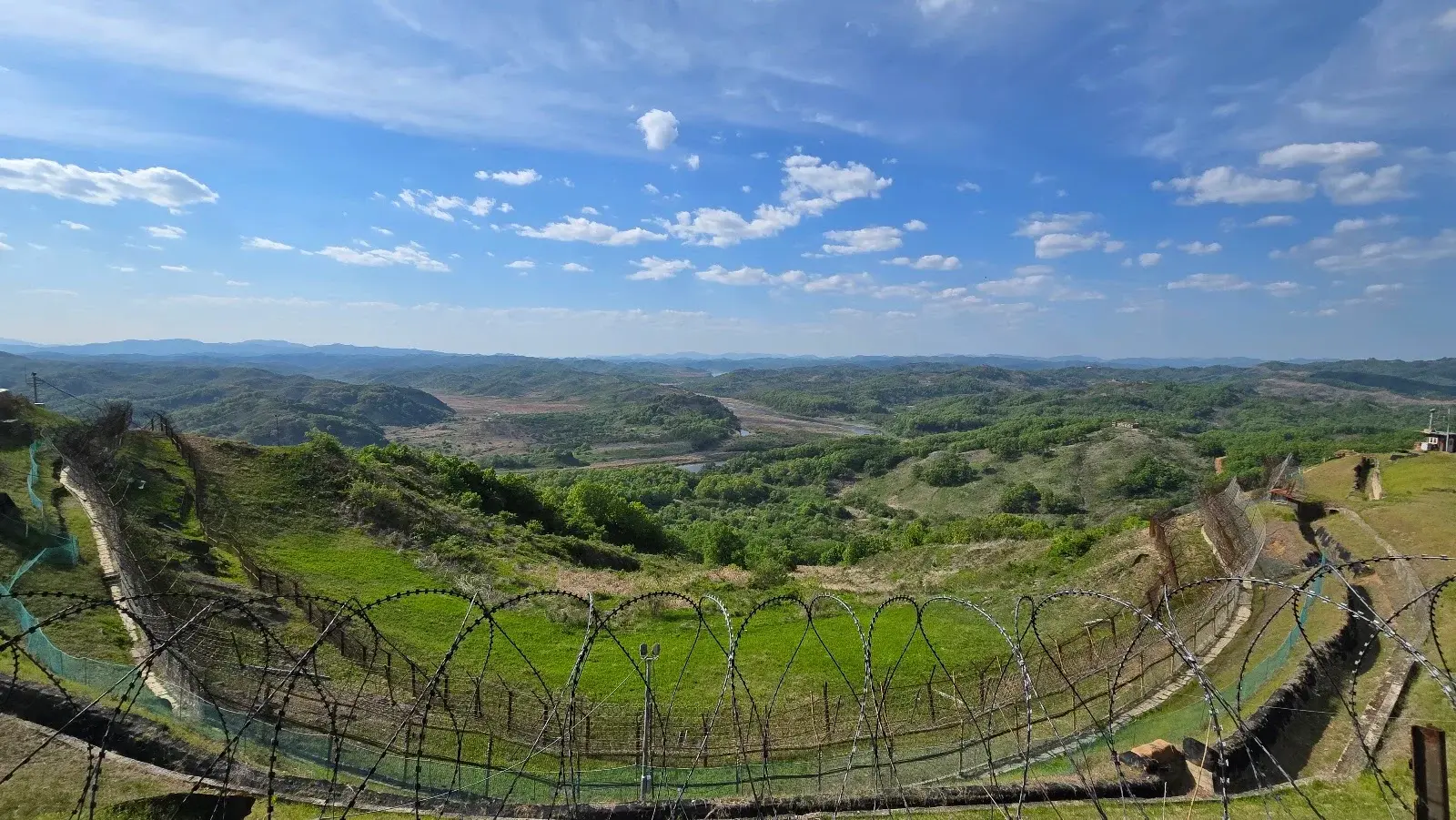
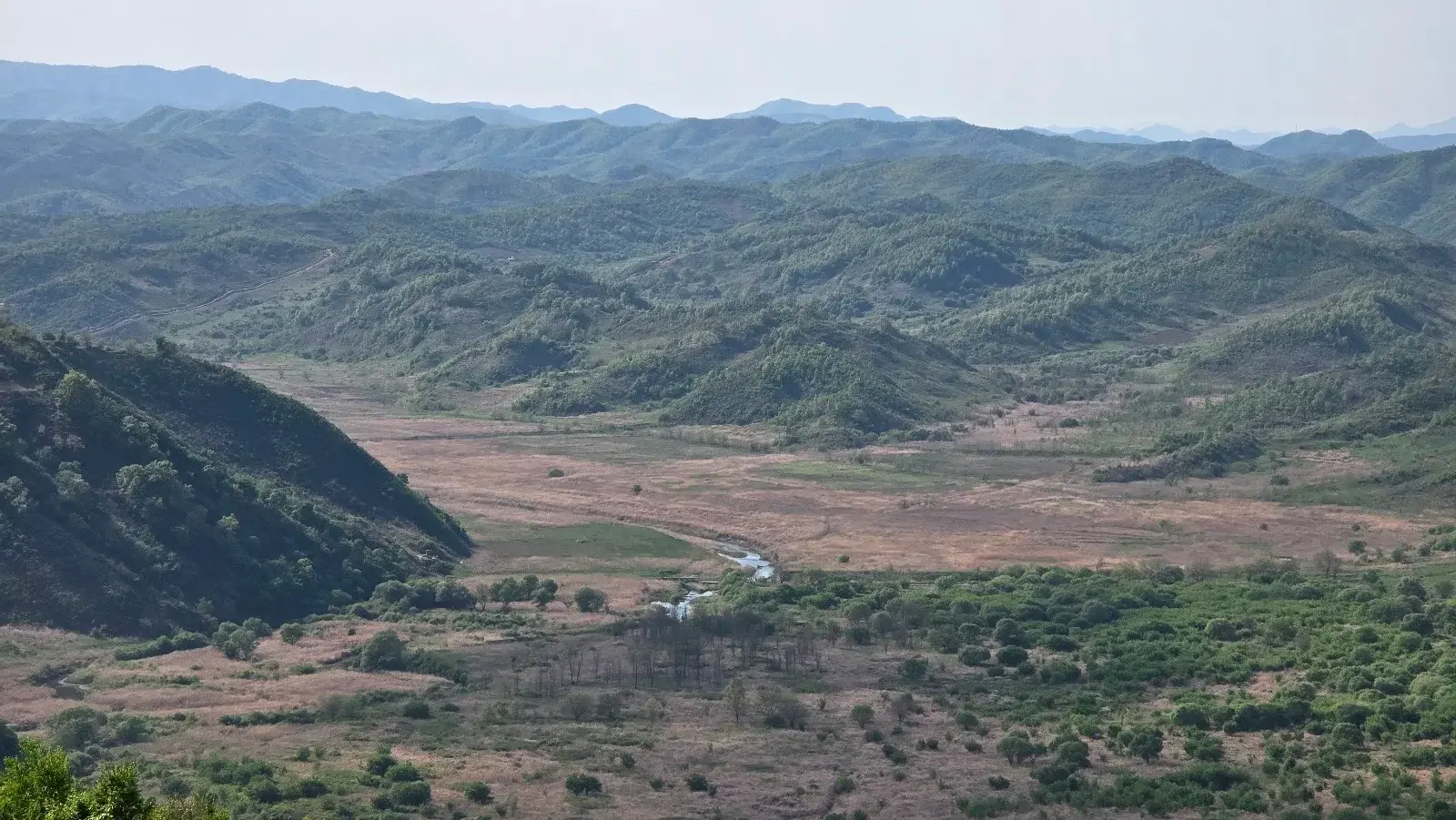
Photos of the North are sourced from MindTrip and remain the copyright of their respective owners. Photography facing north was prohibited at the observatory, so I’ve included these for context of what the landscape looks like from that vantage point.