Kebab Your Enthusiasm
My first experience with Armenian and Georgian food, and a dinner I wasn’t expecting.
NOAH Lieven
Rodenrijsstraat 150, 1062 JA Amsterdam, Netherlands
October 21, 2025
After the first long day at the RAI Convention Centre, we needed to find something to eat. A colleague suggested a place near the hotel. I asked what kind of food they served, and she replied, “Google says Caucasian.”
I couldn’t resist joking, “Oh, like beef stroganoff and maybe a tuna casserole?” I knew she meant food from the Caucasus, but I wasn’t exactly sure which countries that covered. As it turns out, the restaurant was Armenian and Georgian.
I had eaten plenty of Turkish and Lebanese food before, but Armenian and Georgian cuisine was largely unfamiliar territory. This dinner at NOAH Lieven gave me an introduction to both, and it turned out to be one of the more interesting meals of the trip.
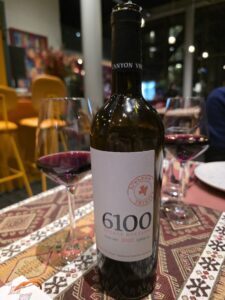
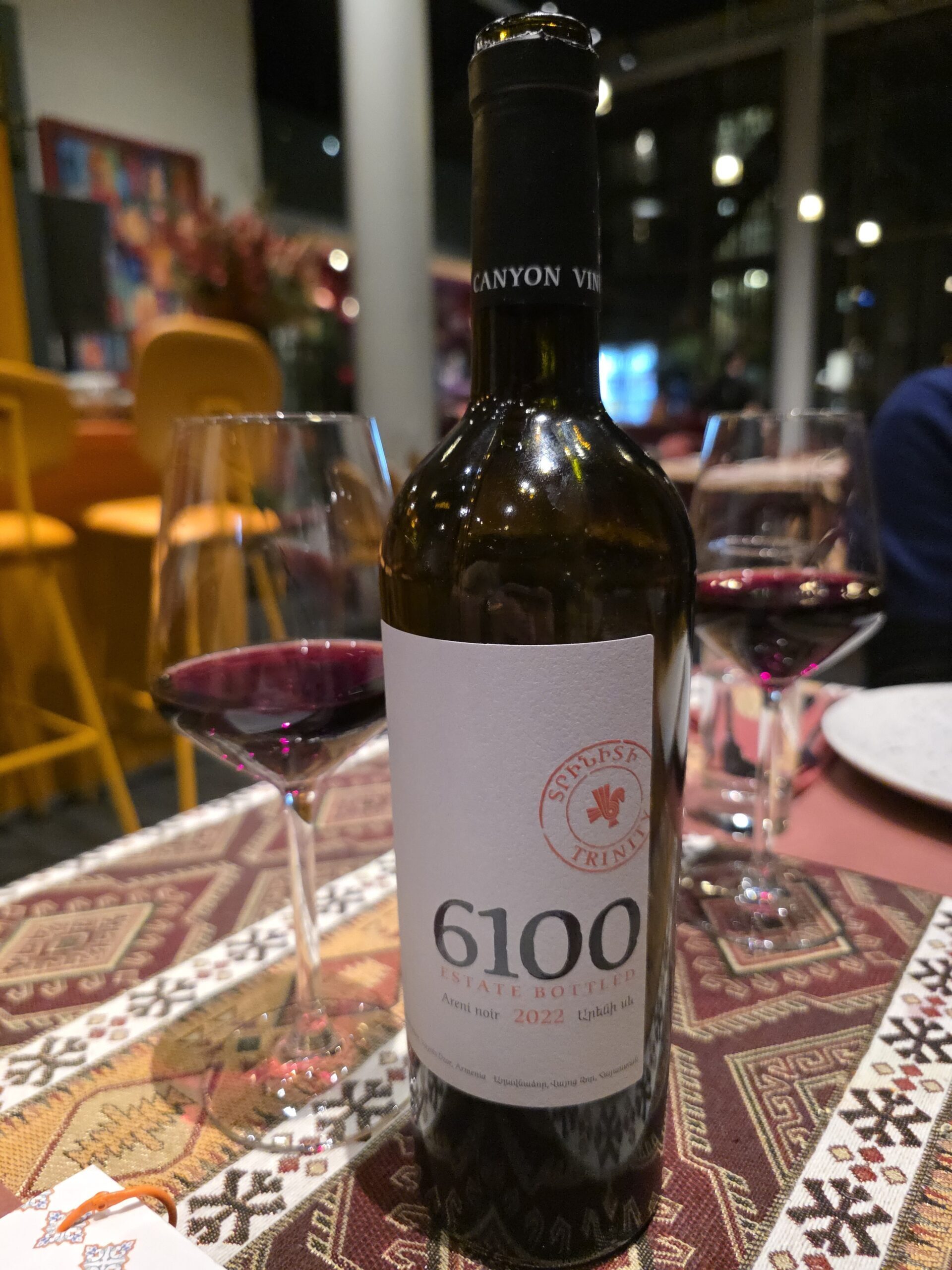
For most of us in the group, it was our first time trying Armenian food. We started with a local wine called Trinity 6100 Red, a dry red aged in Caucasian oak. It was beautifully balanced, with a deep finish. Our waitress shared the story behind its unusual name. The “6100” refers to the roughly 6,100 years of winemaking history associated with Armenia. In the Areni-1 cave complex, archaeologists discovered what is considered the world’s oldest known winery, with evidence of winemaking dating back to around 4100 BC. That’s quite a history to have behind a glass of wine!
I’m not much of a drinker nor am I a sommelier. There is no real reason other than I just don’t care for alcohol. But, on work trips I’ll occasionally have half a glass. After all, I’m trying wines that I would otherwise not be having back home due to cost or availability. I’m glad I tried this one. The wine was right up my alley: smooth, dry, with a finish of cinnamon. One of the things I enjoyed about discovering Armenian food in Amsterdam was learning a little about the traditions behind what we were eating, not just the food itself.
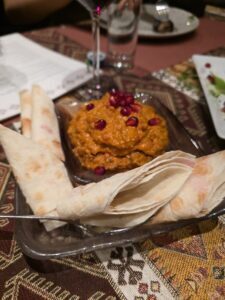
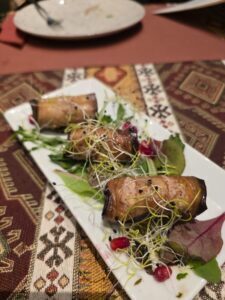
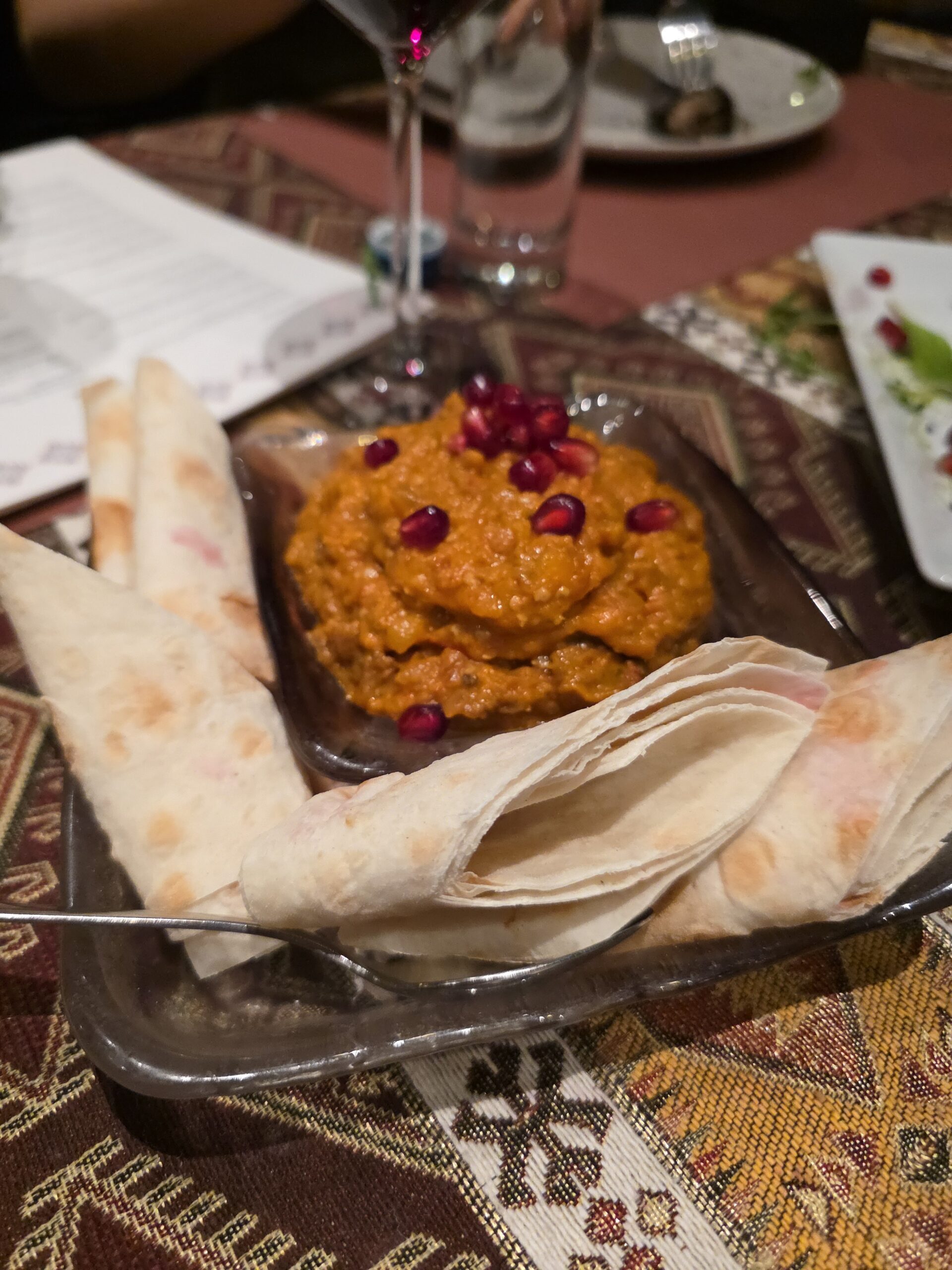
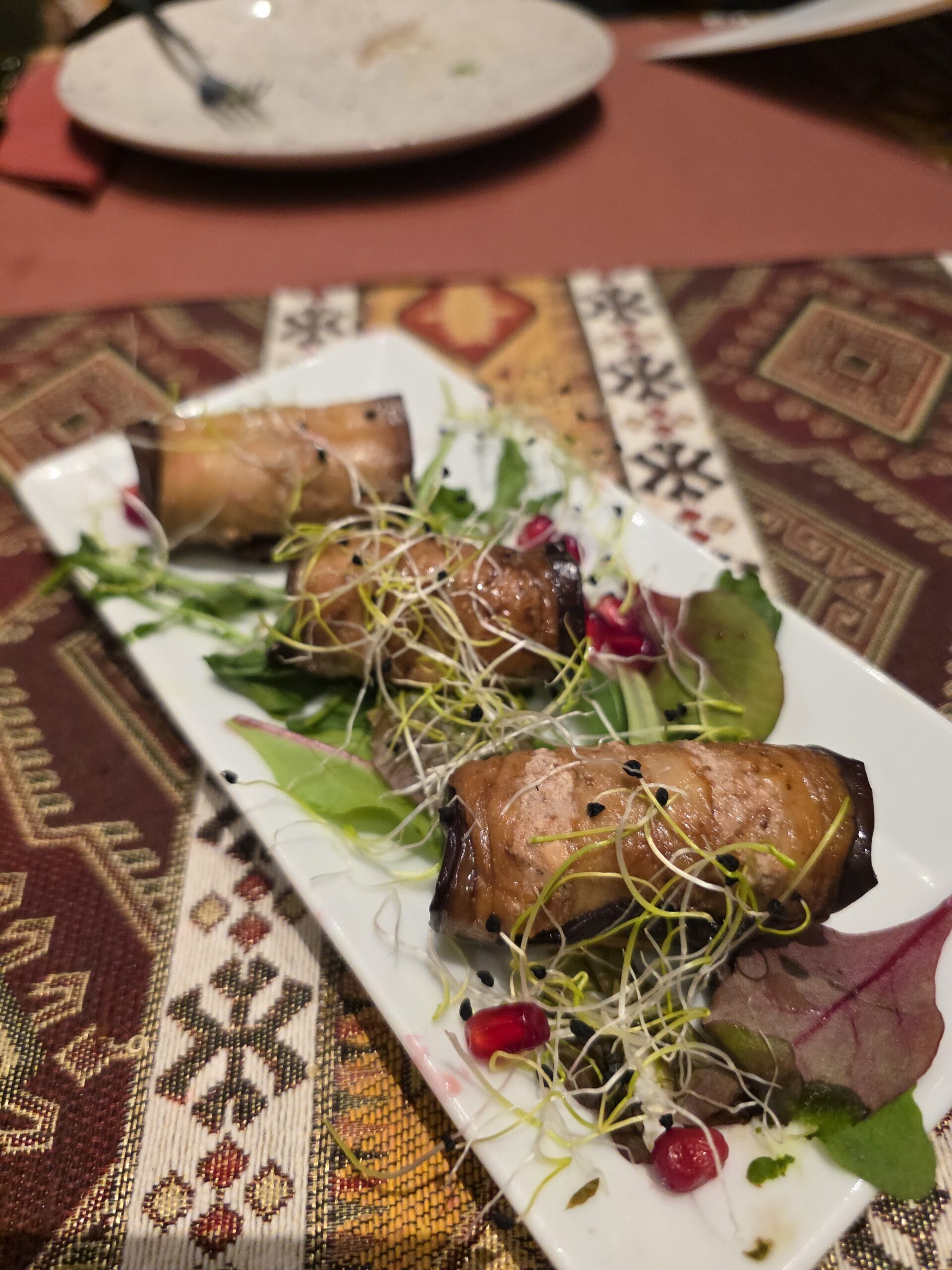
Then came the appetizers. The flavors were warm and familiar, similar to Turkish or Lebanese dishes, but lifted by bursts of tart pomegranate that added both brightness and color. We started with Aubergine Caviar, a smoky, flavorful spread similar to baba ghanoush but more vibrant and complex, garnished with pomegranate seeds and served with thin lavash bread. Then came the Georgian Badrijani, slices of charred aubergine stuffed with a savory walnut paste — my personal favorite of the night. Kind of like a dinner version of baklava.
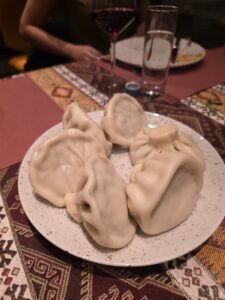
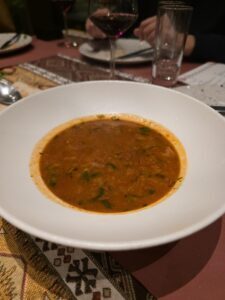
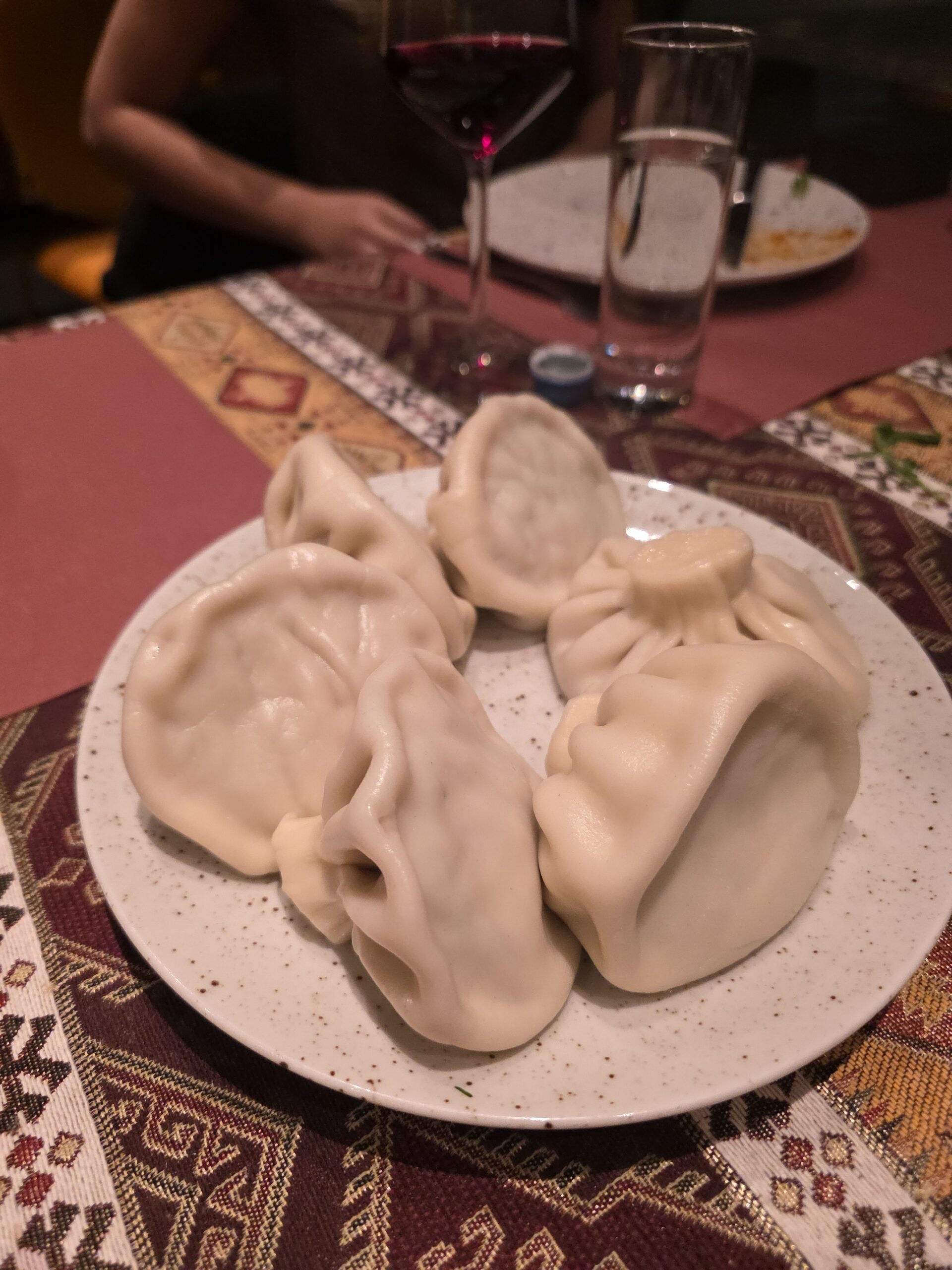
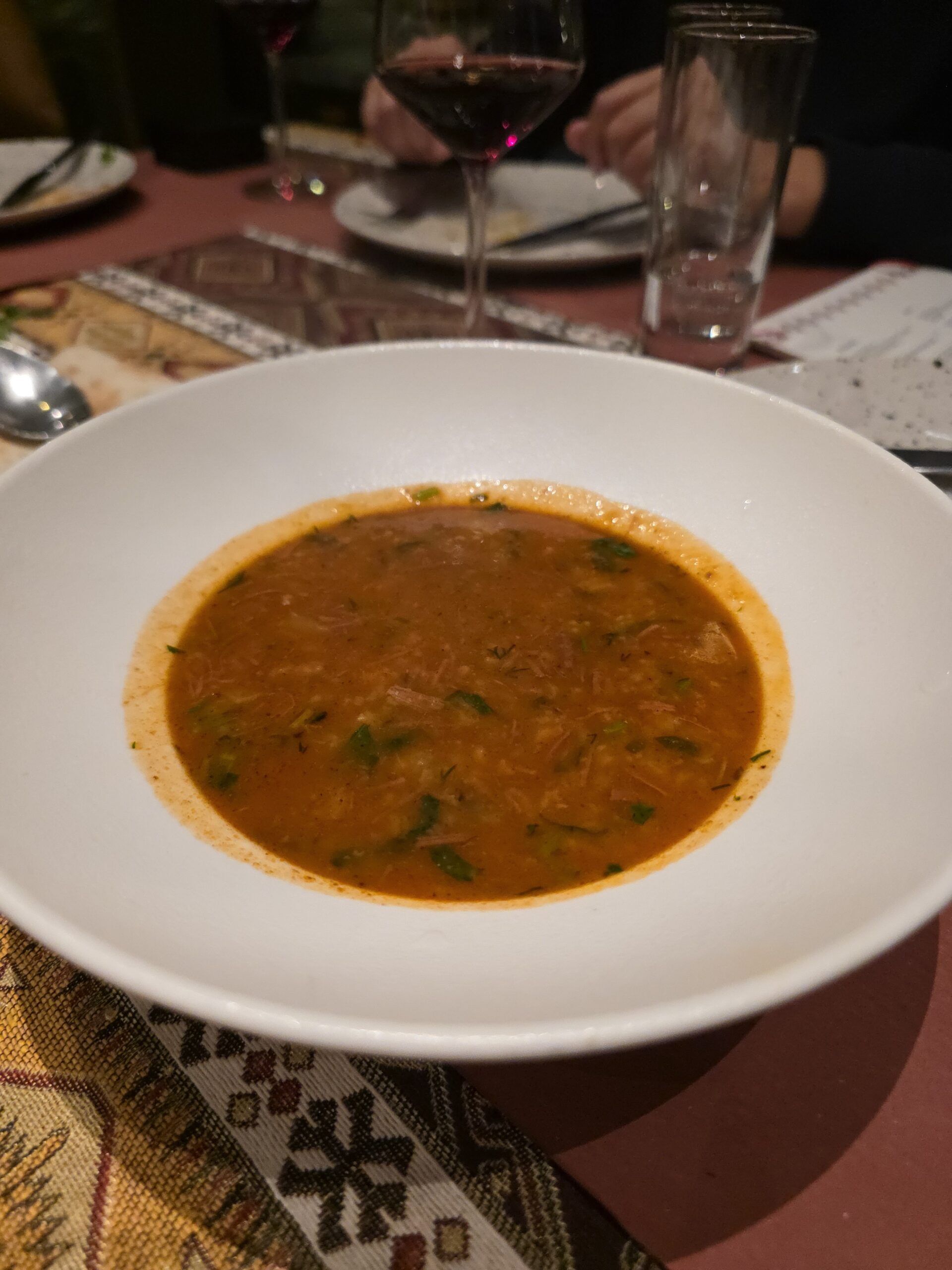
Next were Khinkali, large Georgian soup dumplings, along with a deeply satisfying Kharcho soup. I fell in love with the Kharcho. I’ve already decided I’m going to try making it myself sometime this winter. The Georgian dishes were a particularly good introduction to the region’s cuisine. I’d never tried Badrijani or Khinkali before, and both quickly became personal favorites.
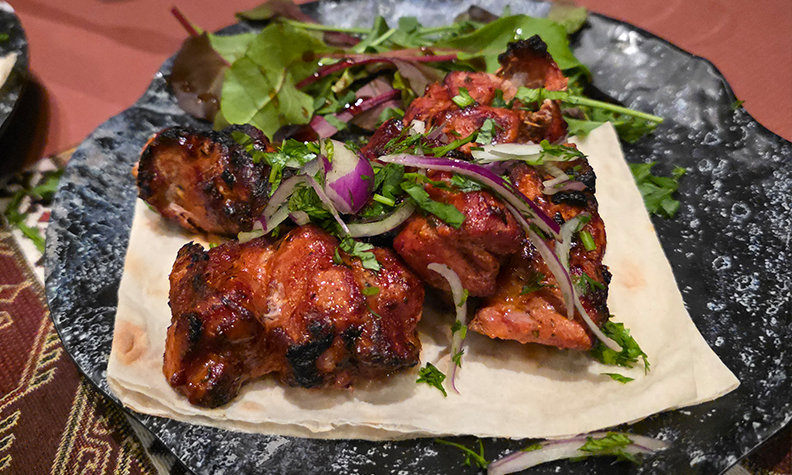
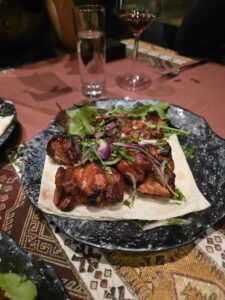
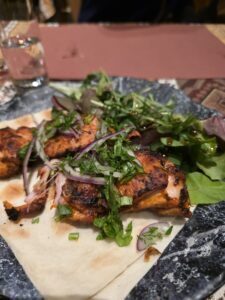
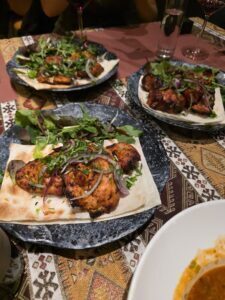
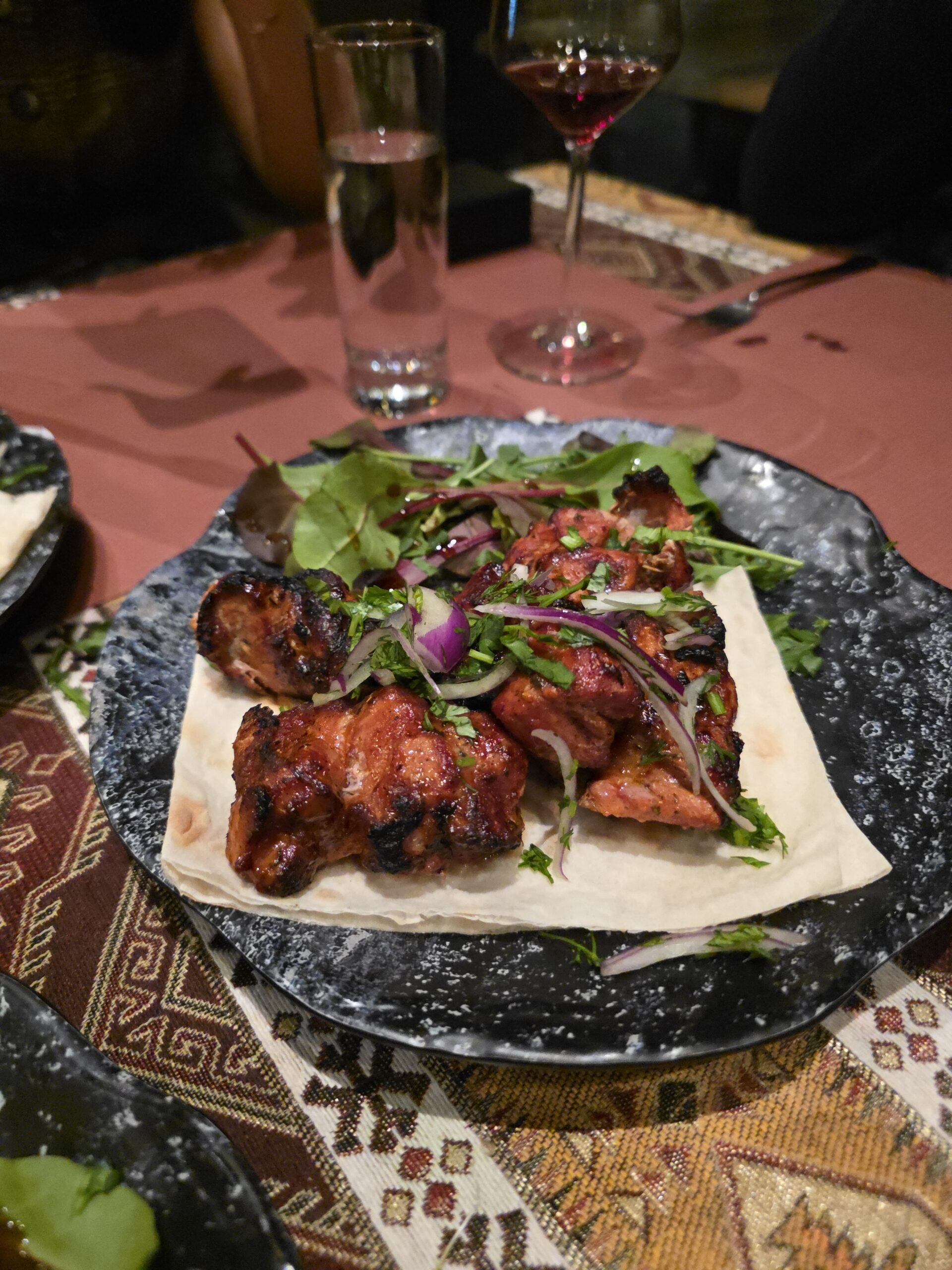
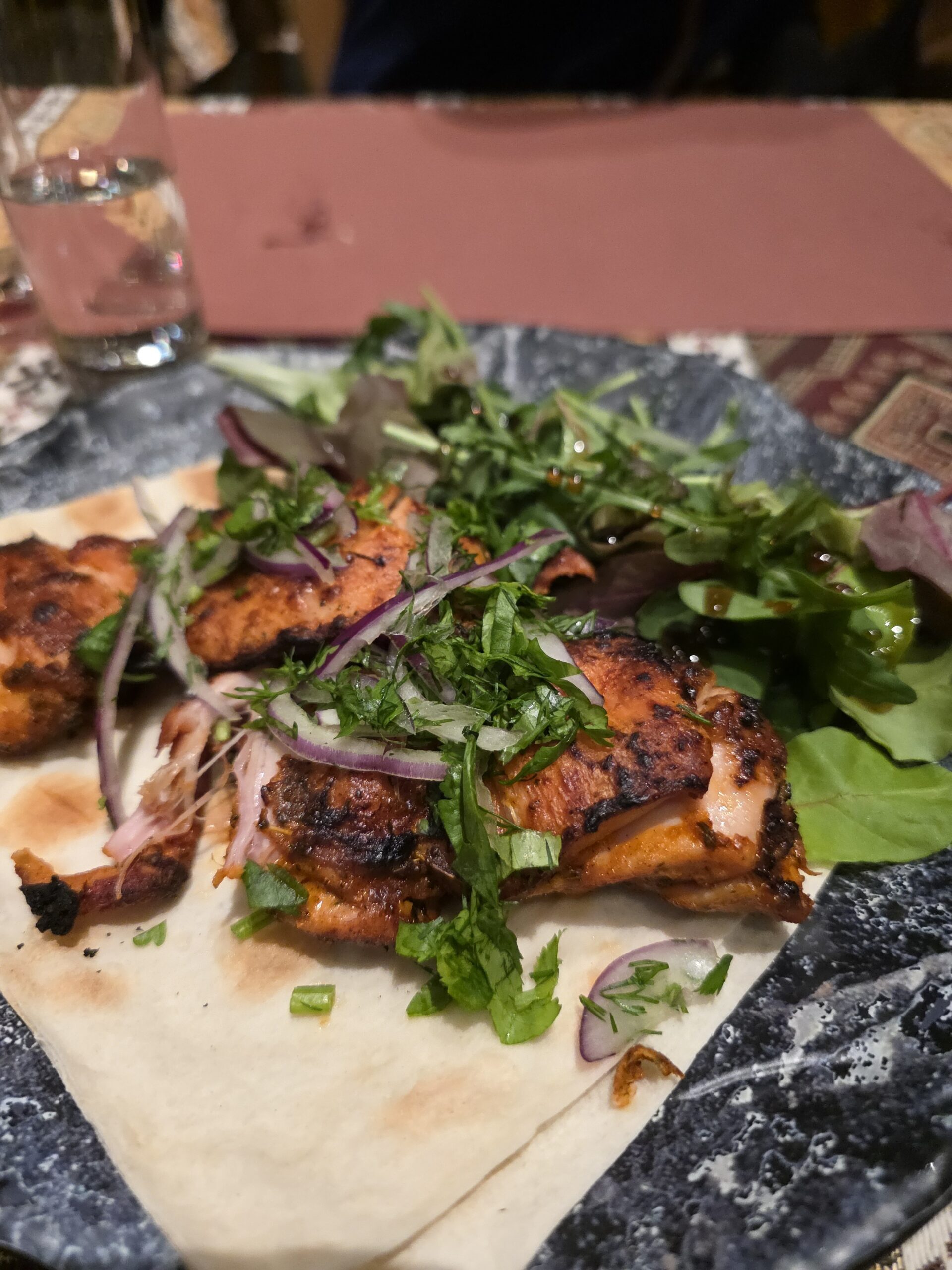
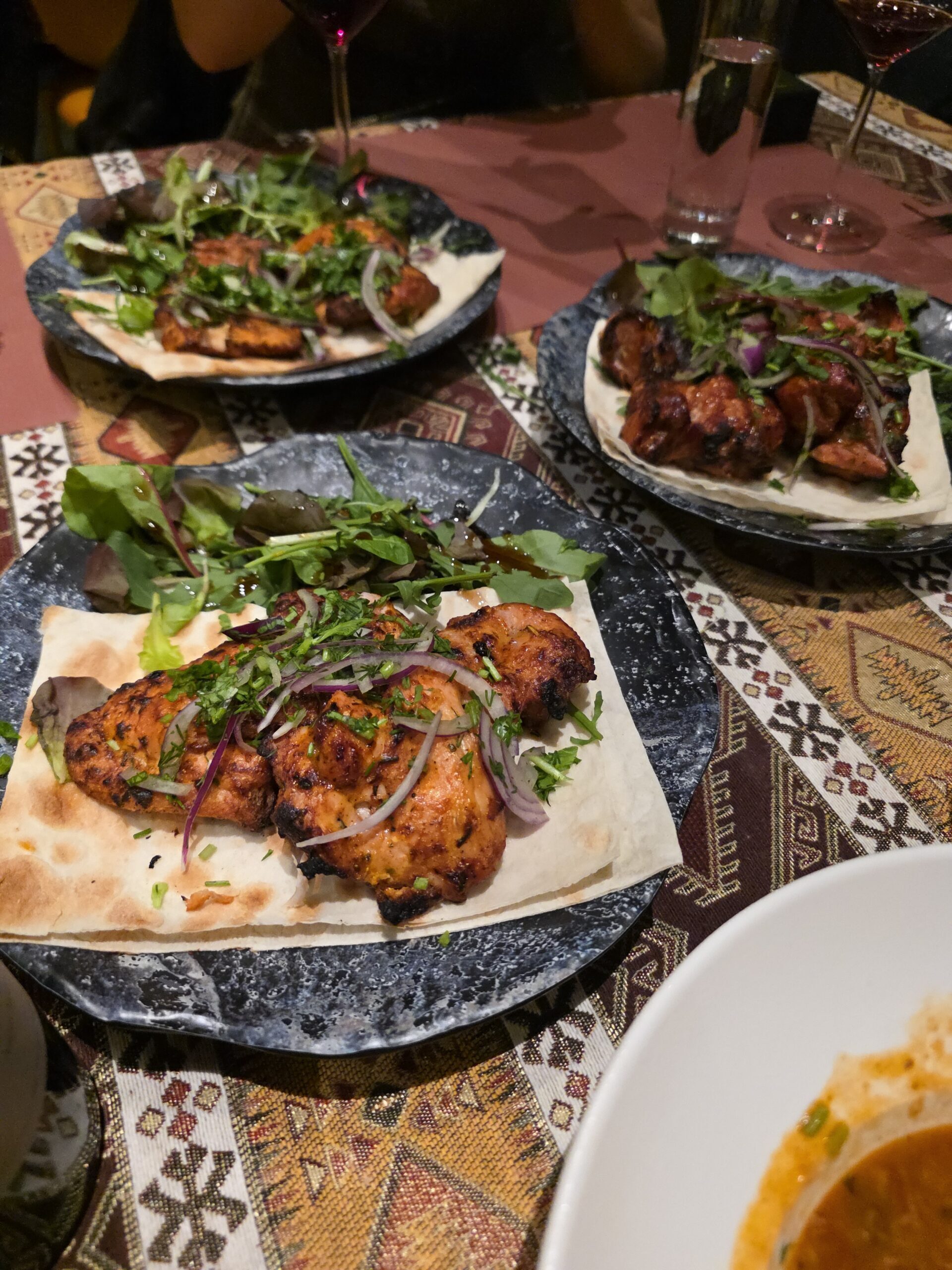
For the mains, we went classic — chicken and pork kebabs and shashlik — all served over lavash with herbs and vegetables. The meat had that perfect bit of char, smoky and crispy on the edges. Each bite was tender and full of that open-flame flavor. Simple, hearty, and exactly what I needed after a long day.
We finished the meal with a tea called Summer Drops. Quite a fitting end to such a colorful dinner, right? It started out a bright yellow, then slowly shifted to pink when I squeezed in lemon. Much like the food itself, it was unexpected, unassuming, and left a lasting impression on me.
If you’re curious about Armenian food in Amsterdam, NOAH Lieven is an interesting place to start, especially if you want to try Georgian dishes at the same time.